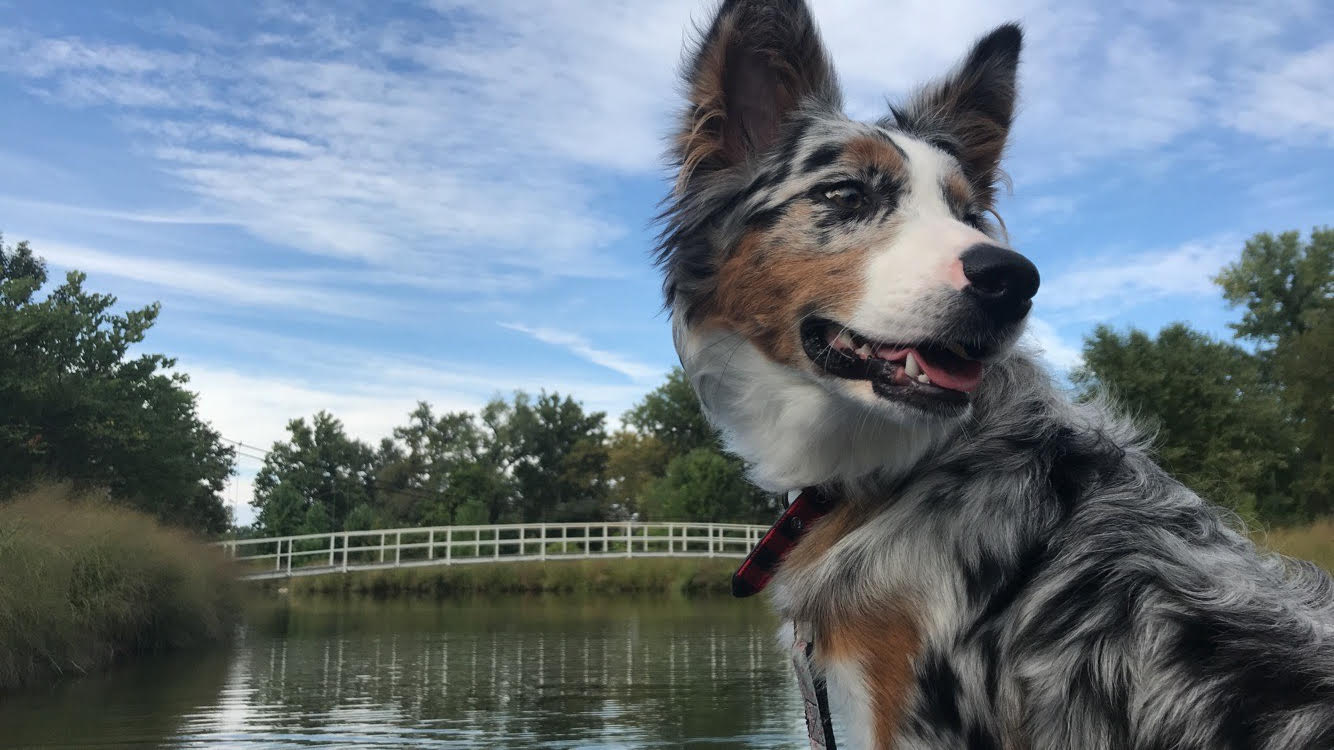
Breed Overview: The Working Dog That Never Clocks Out
Despite the name, Australian Shepherds were primarily developed in the American West during the 19th century, bred by Basque shepherds who migrated through Australia before settling in California. They were indispensable ranch dogs — herding cattle and sheep in rugged terrain, making rapid independent decisions, working in close partnership with ranch hands through long, demanding days.
The traits that made them exceptional at this work — extraordinary intelligence, intense focus, high drive, sensitivity to their human's cues, and relentless energy — are the same traits that create significant anxiety in a pet dog who has no ranch to work and eight hours a day with nothing to do.
Aussies consistently rank among the breeds most reported for behavioral issues stemming from anxiety and unmet needs. They are the breed most likely to be surrendered to rescue organizations by well-intentioned but underprepared owners who underestimated the commitment involved.
Why Australian Shepherds Are Prone to Anxiety
Multiple Concurrent Anxiety Drivers
Most anxiety-prone breeds have a primary anxiety driver — Border Collies are primarily noise-phobic, Golden Retrievers are primarily separation-anxious, Beagles are primarily pack-lonely. Australian Shepherds are unusual in that they carry multiple simultaneous anxiety predispositions that interact with each other:
- Separation anxiety from intense human bonding
- Noise phobia from hypervigilant environmental monitoring
- Herding compulsion anxiety from frustrated working drive
- Under-stimulation anxiety from high intelligence requiring constant engagement
When multiple anxiety types are present simultaneously, they amplify each other. An Aussie that's already separation-anxious will have a more severe noise phobia response. An Aussie that's cognitively bored will develop more intense herding compulsions. Addressing one anxiety type in isolation often produces incomplete results in this breed — the whole profile must be managed.
Herding Drive Without a Flock
Herding behavior is not a personality trait — it is a genetic drive that operates independently of training. An Aussie doesn't choose to herd children or chase bikes any more than a Beagle chooses to follow a scent trail. The drive activates automatically in response to movement, and without legitimate herding outlets, it finds the nearest available target.
Frustrated herding drive creates anxiety through a buildup of unspent arousal. An Aussie that has spent the day suppressing the urge to herd (often with great effort) is an Aussie that will be reactive, clingy, or destructive by evening. The drive needs expression, not just suppression.
The "Eye": Intensity as Anxiety Signal
Aussies share the herding dog's "eye" — the intense, unblinking stare used to control livestock through sustained visual pressure. When this stare is directed at children, other pets, or moving objects (cars, joggers), it signals that the dog's herding drive has been triggered and is escalating toward compulsive behavior. Catching this signal early and redirecting to legitimate activity is far more effective than intervention after the herding behavior has fully expressed.
Common Anxiety Triggers for Australian Shepherds
Owner Absence and Routine Disruption
Aussies bond intensely to their primary person and experience departure as a significant stressor. Unlike Golden Retrievers who miss "the family," Aussies typically miss their person specifically and monitor the environment for that person's return with persistent vigilance. Routine changes — new schedules, travel, houseguests — can destabilize an Aussie's sense of security rapidly.
Under-Exercise and Cognitive Boredom
A single 30-minute walk is grossly insufficient for this breed. An under-exercised Aussie is an anxious Aussie, and the anxiety will express through whatever channels are available: herding, destructiveness, excessive vocalization, or compulsive behaviors. Two hours of vigorous exercise plus 30 minutes of training is the baseline, not a goal.
Noise and Environmental Threat Signals
Aussies are hypervigilant environmental monitors — this was required for successful ranch work, where threats to livestock could come from any direction. In modern life, this hypervigilance makes them highly reactive to noise, unfamiliar people, and environmental change. Thunderstorm phobia is common, as is reactivity to fireworks, construction, and even television sounds that simulate threat.
Signs and Symptoms in Australian Shepherds
- Herding behavior directed at children, pets, or moving objects (circling, nipping, eye-stalk)
- Persistent, intense eye-stalk at walls, shadows, or light reflections (compulsive)
- Pacing, inability to settle despite adequate exercise
- Severe storms or noise reactivity — more intense than most medium breeds
- Destructive behavior at exits when left alone
- Excessive barking at environmental stimuli
- Spinning, tail-chasing, or other repetitive behaviors (anxiety-driven compulsion)
- Clingy behavior — refusing to be more than arm's reach from their person
Training and Management Strategies
The Daily Protocol: Exercise + Training + Enrichment
Managing Aussie anxiety requires a structured daily routine with three components, none of which can substitute for the others:
- Physical exercise (90-120 min): Running, fetch, frisbee, agility, swimming. Not walking — vigorous aerobic activity that genuinely tires them.
- Mental training (30 min): Obedience, trick training, scent work, puzzle toys. This is non-negotiable for a breed of this intelligence level.
- Structured rest: After exercise and training, teach a "settle" cue — place training on a specific mat with extended, rewarded duration. This teaches calmness as an active skill.
Legitimate Herding Outlets
For Aussies with strong herding drive, redirecting rather than suppressing is the most effective long-term strategy. Options include AKC Herding Instinct Tests (where Aussies can legally herd sheep), Treibball (herding large balls instead of livestock), disc/frisbee sports (which satisfy chase and eye-stalk drives), and structured agility (which provides directional control satisfaction). A Saturday morning Treibball session can reduce herding behaviors significantly throughout the following week.
Departure Desensitization for Separation Anxiety
Follow the same departure desensitization protocol as for other highly bonded breeds (see our Separation Anxiety Guide), but budget more time for progress in Aussies — 8-16 weeks rather than 4-8 weeks is realistic for significant improvement. Aussies notice departure cue changes quickly and will generalize their anxiety to new cues rapidly. Vary your departure routine deliberately.
Product Recommendations for Australian Shepherd Anxiety
Thundershirt — Size Medium
Most adult Aussies need Size Medium (chest 23-31 inches). The constant gentle pressure is effective at reducing hypervigilant arousal in this breed — apply before storms, before departures, and during high-stimulation environments. Many Aussie owners leave the Thundershirt on during car travel, which can be a high-anxiety context for this breed.
View on Amazon →Nina Ottosson Dog Brick Puzzle (Level 2)
Aussies require Level 2 or higher puzzle complexity — Level 1 puzzles are too simple and will be solved in under 2 minutes. The Dog Brick requires compartment-sliding and lid-lifting that provides 15-25 minutes of focused problem-solving. Use at departure as a bridge distraction and mental fatigue tool.
View on Amazon →Adaptil Calm Home Diffuser
For Aussies with separation anxiety, a continuous DAP diffuser in their primary alone-time room reduces baseline arousal levels. The pheromone effect works slowly (over 1-2 weeks) but consistently — pair with exercise and training protocols for best results.
View on Amazon →VetriScience Composure Pro
Fast-acting calming chews that work within 20-30 minutes. Ideal for Aussies because the formula is non-sedating — your dog stays mentally capable but calmer. Particularly useful for acute anxiety events (storms, fireworks) while longer-term training protocols take effect.
View on Chewy →When to See a Vet
Australian Shepherds warrant veterinary consultation, and often a veterinary behaviorist referral, when:
- Multiple anxiety types are present simultaneously and management isn't improving all of them
- Compulsive behaviors (spinning, shadow-chasing, self-directed repetitive behaviors) are worsening
- Herding behavior has escalated to biting that breaks skin
- Noise phobia is severe (escape attempts, self-injury, complete inability to function during storms)
Fluoxetine (Prozac) is highly effective for Aussies with concurrent anxiety types and has good long-term safety data. Clomipramine is also used specifically for the compulsive behavior component. Medication combined with a comprehensive behavior modification program is the most effective approach for complex multi-anxiety cases in this breed.