On this page
- Why dachshunds become velcro dogs
- Clingy vs separation anxiety
- Rule out pain and medical causes first
- Build independence without flooding them
- The independence ladder
- Enrichment that fits a dachshund nose
- Safe alone space (and IVDD-friendly setup)
- Helpful products
- When to get extra help
- Looking after yourself
- Bottom line
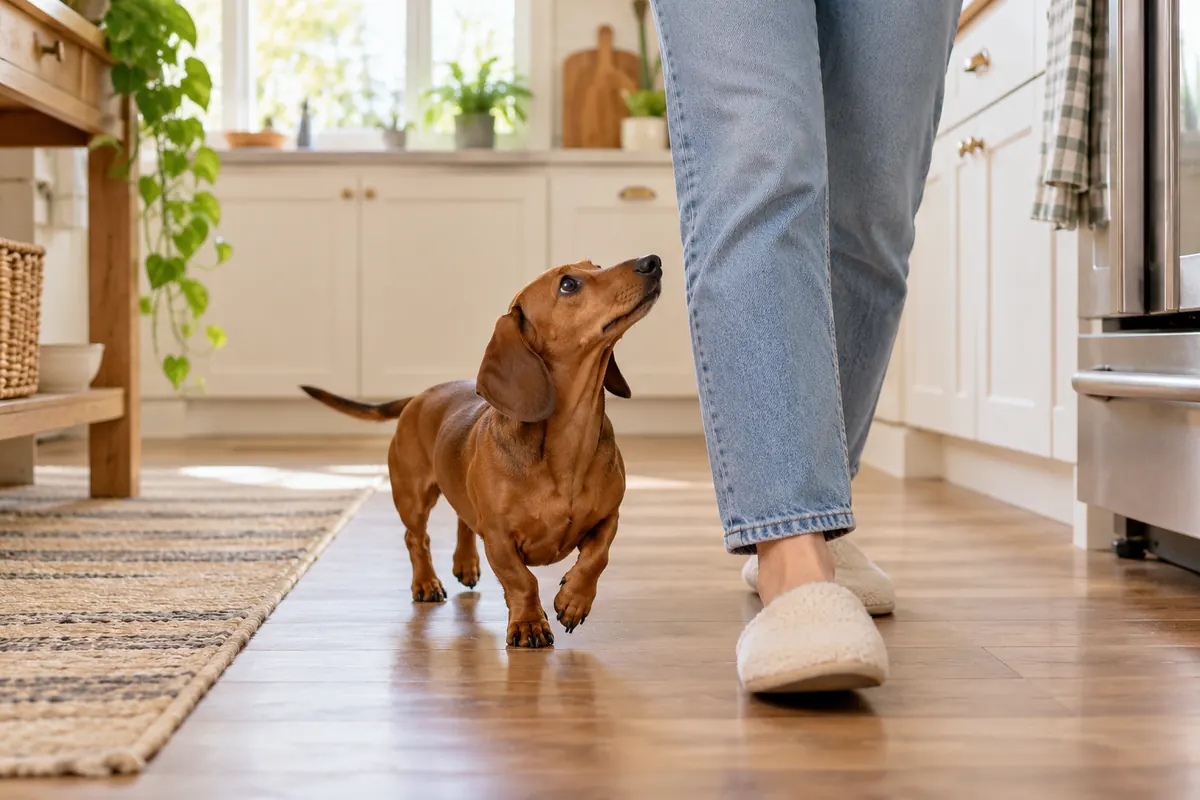
Your dachshund follows you into the kitchen, waits outside the bathroom, and notices every movement toward the door. Being your dog’s favorite person can feel wonderful—until they cannot relax without you or become distressed whenever you leave.
This guide explains normal attachment, separation-related distress, and medical problems that can look like clinginess. We are dog owners, not veterinarians, and we have not lab-tested the products mentioned here. The aim is comfortable independence, not less affection or forced separation.
Why dachshunds become velcro dogs
Dachshunds developed as hunting dogs working in partnership with people. Their history also required independent problem-solving underground, so hunting ancestry alone does not explain clinginess.
Today, many live as close companions and form strong attachments to familiar people. Your presence may predict meals, walks, warmth, play, and reassurance. Following you can become a useful habit.
Their small size also shapes daily experiences. Being carried, sharing furniture, and receiving help around larger animals or unfamiliar settings can make staying close especially appealing. That does not mean small dogs are inherently anxious.
Changes in routine may increase shadowing. A dog accustomed to constant company can find a new work schedule difficult. An unfamiliar home or frightening experience may also increase proximity-seeking.
Physical comfort matters too. A dachshund who suddenly wants more contact may be uncomfortable rather than simply becoming a “velcro dog.” Look at changes in movement, sleep, appetite, and behavior alongside attachment.
ThunderShirt Classic Anxiety Vest (Small)
A small-dog anxiety vest offers gentle pressure without a treat, and may support calmer practice if your dachshund comfortably tolerates it.
Check price on AmazonWe earn a small commission if you buy through this link, at no extra cost to you. Disclosure
Clingy vs separation anxiety
A normally attached dog may follow you, then settle when you become busy or leave briefly. They can enjoy your company without needing continuous access.
Separation anxiety involves distress associated with being apart. Possible signs include panic, persistent pacing or vocalizing, escape attempts, destruction, and house soiling that occurs during absences.
Compare these patterns:
- Normal attachment: Your dog watches you leave the room, then returns to resting.
- Possible distress: They repeatedly pace, whine, or scratch the barrier.
- Normal adjustment: They pause an activity briefly, then resume.
- Possible distress: They abandon food and cannot settle after your departure.
These observations are not a diagnosis. Chewing can reflect exploration or boredom, and accidents can have medical causes. Some distressed dogs are quiet, so barking is not the only signal.
A pet camera can show what happens when you are out of sight. Record manageable practice sessions rather than deliberately provoking panic. Note whether your dog struggles with separation itself, confinement, or particular departure cues.
Rule out pain and medical causes first
Sudden new clinginess needs a veterinary check, especially alongside movement changes, interrupted sleep, reduced appetite, or reluctance to be handled.
Dachshunds are predisposed to intervertebral disc disease, or IVDD. Problems with discs in the spine can cause pain and, in some cases, affect movement. Back discomfort may make a dog seek reassurance, hesitate to leave a bed, or resist being picked up.
Watch for a hunched posture, trembling, yelping, stiffness, or reluctance to move. Do not assume these signs are behavioral, and do not stretch or exercise your dog to see whether the problem disappears.
Weakness, dragging limbs, inability to walk, or difficulty controlling toileting needs prompt veterinary attention. Contact your vet for guidance and restrict unnecessary movement while arranging care.
Vision loss, hearing changes, other illness, and pain outside the back can also alter attachment. Follow any prescribed activity restrictions; an independence plan must fit the dog’s medical needs.
Build independence without flooding them
Flooding means exposing a dog to more than they can comfortably handle and waiting for them to get through it. A long absence is not useful practice if your dog spends it panicking.
Begin while you are home. Reward resting on a comfortable bed a short distance away. You can still offer affection; the goal is making another resting location feel safe.
Move briefly, then return while your dog remains relaxed. If they rush after you, make the next attempt easier rather than correcting them.
Practice departure cues separately. Pick up keys and put them down, or put on shoes before sitting nearby. Keep sessions ordinary and short.
During real absence practice, return before distress develops whenever possible. If your dog becomes worried unexpectedly, end the exercise calmly rather than waiting through panic for silence.
Build flexibility with easier repetitions between harder ones. Arrange company when unavoidable absences exceed your dog’s current ability. Exercise and enrichment help meet needs, but neither replaces gradual separation practice.
The independence ladder
This ladder is an example, not a deadline or a promise that every dachshund can manage hours alone. Start below 30 seconds if needed. Each larger step may require many smaller increases.
- About 30 seconds nearby: Let your dog rest while you sit slightly farther away in the same room.
- About one minute: Move around the room without encouraging your dog to follow.
- About two minutes: Practice small changes in position, returning to the resting area calmly.
- Briefly out of sight: Step through an interior doorway for seconds, gradually working toward a few comfortable minutes.
- About five minutes apart: Use a familiar setup while you remain nearby, checking that your dog truly settles.
- About ten minutes: Build short front-door departures through smaller increases rather than jumping straight to this duration.
- About 20–30 minutes: Repeat manageable departures at varied lengths, including easier sessions.
- About 45–60 minutes: Attempt only after shorter absences are comfortable, with toileting and health needs considered.
- Around one to two hours: Progress gradually and confirm behavior with recordings, not assumptions.
- A few hours, where appropriate: Consider only for an adult whose comfort, health, and bathroom needs allow it; arrange care otherwise.
Do not advance because a certain number of days has passed. Look for resting, comfortable movement, and normal engagement.
If pacing, whining, barrier scratching, or food refusal appears, step back. The ladder does not override veterinary advice or establish a universal maximum alone time.
Enrichment that fits a dachshund nose
Dachshunds’ hunting background makes scent-based activities a useful angle for enrichment. Start with easy searches on a level floor.
Scatter a small portion of your dog’s usual food in an accessible area or let them find visible pieces around a mat. Gradually make the search slightly more interesting without requiring jumping, climbing, or awkward stretching.
A snuffle mat or nose-work toy can provide a similar activity. Supervise first and remove it if your dog chews the fabric or tries to swallow parts.
A stuffed KONG Classic small may suit some dachshunds, but choose size for the individual dog and chewing style. Begin with easy-to-reach food before trying frozen stuffing.
Use tolerated, dog-safe ingredients and count fillings toward daily food intake. Avoid xylitol-containing products.
Introduce enrichment while you are present. If your dog stops engaging when you leave, shorten the separation; a more elaborate filling will not resolve panic.
Safe alone space (and IVDD-friendly setup)
Choose a familiar area that meets your dog’s comfort and safety needs. A crate can work for a dog who rests comfortably in it, but confinement is not a treatment for anxiety.
Build positive crate experiences with the door open before gradually practicing closure. Stop and reassess if your dog becomes frantic or attempts to escape.
A dog-proof room or pen may be preferable for some dogs. Check barriers, cords, swallowing hazards, and access to water as appropriate.
For an IVDD-friendly setup:
- Use soft, supportive bedding with an accessible edge.
- Keep essentials at floor level.
- Prevent jumping onto or off furniture.
- Provide secure traction on slippery floors.
- Avoid opportunities to climb or fall.
Ramps or suitable steps may reduce jumping in everyday life, but they are not automatically appropriate during an active back problem. Ask your vet what movement is permitted.
Medical confinement requires a specific plan. If prescribed rest causes distress, contact your vet rather than changing restrictions independently or relying on an anxiety product.
Helpful products
We earn a small commission if you buy through the Amazon links on this page, at no extra cost to you. Affiliate disclosure
These aids may support comfort or training, but they do not replace either. Choose around the individual dog and introduce one change at a time.
| Product type | Why it helps | Notes |
|---|---|---|
| ThunderShirt/anxiety vest for small dogs | May provide reassuring pressure for some dogs | Our editorial top pick; measure carefully and supervise introduction |
| Snuggle Puppy or similar heartbeat comfort toy | Offers a familiar comfort cue | Supervise; remove if your dog chews or swallows components |
| Composure-style calming chews | May support mild situational stress | Review ingredients and medication compatibility with your vet |
| KONG Classic small with frozen stuffing | Provides food-based enrichment | Check size, supervise, and discard damaged toys |
| Adaptil/ThunderEase collar or diffuser | May provide additional environmental support | Evidence is mixed; follow fit, placement, and replacement instructions |
| Snuffle mat/nose-work toy | Offers manageable scent exploration | Keep searches easy and supervise fabric chewing |
| Pet camera | Shows behavior during absences | Use observations to adjust practice, not extend distress |
Swipe the table sideways to see every column.
A small-dog anxiety vest is our top editorial support option because it does not require your dog to eat a supplement. Some dogs dislike pressure, however, and it cannot teach separation skills.
Choose by measurements rather than assuming all dachshunds need the same size. Check movement, warmth, skin comfort, and breathing. Ask your vet about use if back pain or another condition is present.
For calming chews, follow the label for your dog’s weight and ask your vet. Check especially carefully if your dog takes medication, is very young, pregnant, or has ongoing illness.
Diffusers and heartbeat toys have limits too. Evaluate whether your dog seems more comfortable rather than treating the purchase itself as progress.
When to get extra help
Use this checklist to decide when home practice needs professional support:
Why Are Dachshunds So Clingy?: when to get extra help
- Clinginess appeared suddenly or accompanies pain, stiffness, or reduced appetite.
- Your dog panics during even very brief separations.
- Escape attempts cause injuries or put your dog at risk.
- Destruction or house soiling repeatedly occurs during absences.
- Progress stalls despite consistently manageable practice.
- Your schedule makes avoiding overwhelming absences difficult.
- Aggression, severe distress, or major sleep changes develop.
Begin with a vet for possible medical causes. A qualified reward-based trainer can help with settling skills, while significant separation distress may require a certified behaviorist or veterinary behaviorist.
Share recordings and a brief history. Explain what happens, when it begins, and what you have tried. Urgent neurological signs or injuries should not wait for a training appointment.
Looking after yourself
Living with a dog who struggles to be apart can limit ordinary activities and leave you feeling guilty. Difficulty does not mean you have failed.
Keep practice manageable and record small improvements. Resting while you move nearby may be a meaningful step even when longer departures remain difficult.
Arrange trusted help where possible. Give clear instructions about your dog’s comfort limits, enrichment, and any back-related restrictions.
You do not need to withdraw affection to prove you are serious about training. Predictable companionship and carefully practiced distance can coexist.
If the plan becomes overwhelming, ask for professional help adjusting it. A workable routine matters for both of you.
Bottom line
Dachshund clinginess can reflect companionship, habit, uncertainty, or discomfort. Normal attachment is different from panic during separation, and sudden changes deserve a veterinary check.
Build independence in small, comfortable steps, use accessible scent enrichment, and protect your dog’s back. Calming aids may provide support, but progress depends on an appropriate health and training plan.