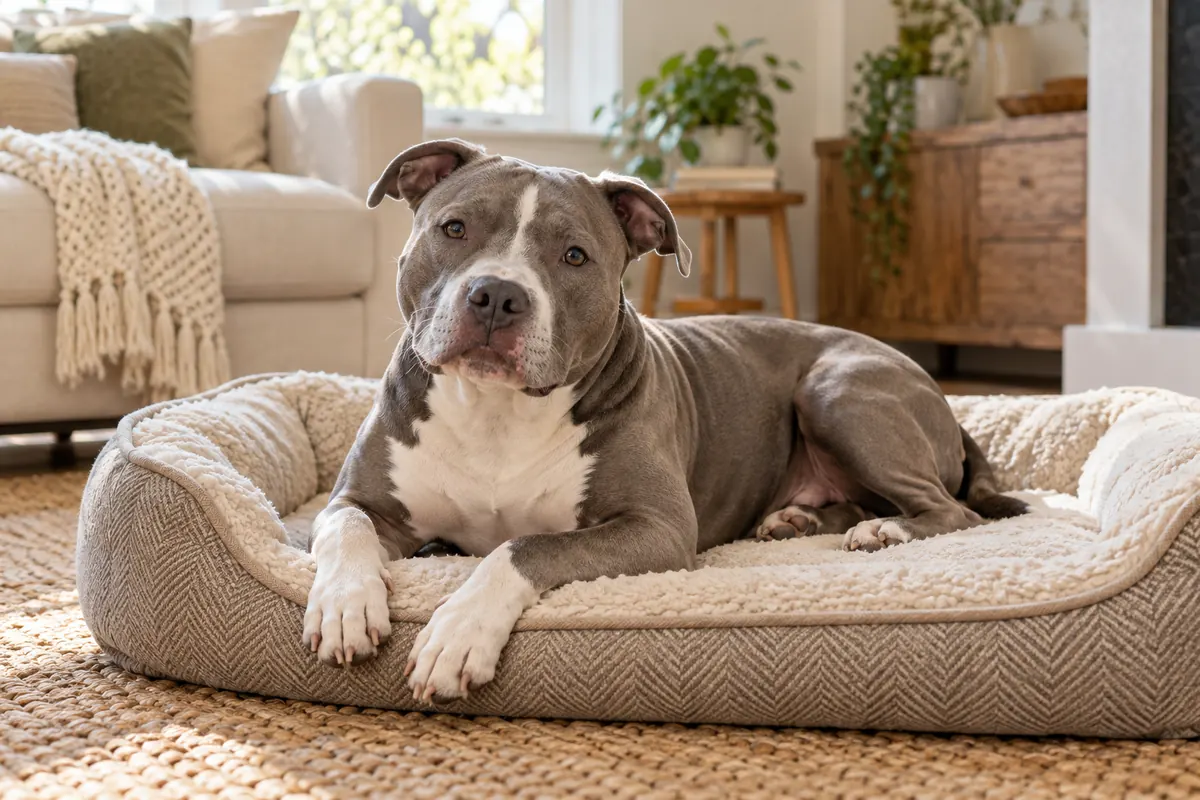
Pit bull-type dogs can become anxious through difficult separations, unfamiliar situations, changes in routine, or discomfort; breed alone does not explain the behavior. Start with a health check when needed, predictable routines, and gradual training that keeps your dog below panic.
- Build alone time gradually, using your dog’s comfort rather than a fixed schedule.
- Choose sturdy enrichment toys, supervise chewing, and replace damaged items.
- Crate escapes and self-injury need professional help, not stronger confinement alone.
On this page
- Why pit bulls can be prone to anxiety
- Separation anxiety and the "velcro pittie"
- Noise, visitors, and new places
- Rescue pit bulls: settling in after the shelter
- Independence training for a strong, social dog
- Products that can support a pit bull (not replace training)
- When to get professional help
- Pit bull deep-dive reading
- Bottom line
Your pittie follows you everywhere, chews when you leave, or hides when thunder starts. These behaviors need understanding rather than assumptions about the breed. Attachment, boredom, fear, confinement distress, and physical discomfort can look similar but require different responses.
This guide covers American Pit Bull Terriers, American Staffordshire Terriers, Staffy mixes, and other pit bull-type dogs, including rescues with unknown histories. Our product choices are editorial judgments, and we have not lab-tested them ourselves. Calming aids belong alongside training and appropriate veterinary care.
Why pit bulls can be prone to anxiety
“Pit bull” describes several breeds and mixes, not one uniform temperament. Your dog’s experiences, health, environment, and opportunities to learn matter more than a label.
Some pit bull-type dogs strongly enjoy human company. Trouble can develop when a dog has little practice with separation, encounters frightening situations, or experiences repeated changes in their home or routine.
Many are adopted from shelters or rescues with incomplete histories. That uncertainty does not prove mistreatment or explain every behavior. Focus on what your dog shows you now instead of guessing what happened before adoption.
Exercise and mental work help meet daily needs, but they are not the whole fix. A dog can be physically tired and still frightened of being alone.
Sudden restlessness, increased clinginess, or new irritability deserves a veterinary check. Pain and other health problems can affect behavior and make training harder.
KONG Extreme (Large, black)
A stuffed KONG Extreme offers durable food enrichment during comfortable alone-time practice, but needs supervision and cannot resolve separation panic.
Check price on AmazonWe earn a small commission if you buy through this link, at no extra cost to you. Disclosure
Separation anxiety and the "velcro pittie"
A “velcro pittie” prefers your company and may follow you between rooms. Following alone does not establish separation anxiety. The important question is whether your dog can relax when you are unavailable.
Watch for distress connected to departures:
- Pacing or whining when you pick up your keys.
- Persistent barking or howling after you leave.
- Scratching exits or attempting to escape.
- Drooling, frantic movement, or inability to settle.
- Destruction or toileting during absences.
- Refusing food they normally enjoy.
Record a short absence when it is safe. Does your dog settle after a brief adjustment, or remain distressed? Does the problem occur whenever you disappear, or mainly behind a closed crate door?
Chewing does not automatically mean anxiety. Puppies explore with their mouths, and dogs may chew from boredom. Conversely, an anxious dog may remain quiet while showing distress.
Can pit bulls be left alone? Some adults manage appropriate absences after gradual preparation, but there is no universal breed-specific limit. Age, bathroom needs, health, and observed comfort should guide arrangements.
Noise, visitors, and new places
A pitbull scared of thunder needs a comfortable retreat and reduced exposure. Offer a quiet interior room, close curtains, and use moderate background sound. Allow your dog to hide safely rather than pulling them out.
Practice with low-volume recordings on calm days, pairing manageable sounds with food or play. If your dog freezes, stops eating, or tries to leave, lower the challenge.
For visitors, provide distance and a quiet resting area. Ask guests to avoid looming, reaching over the head, or insisting on contact. Let your dog decide whether to approach.
Barking or lunging around strangers or other dogs can reflect fear, frustration, or several overlapping problems. Do not assume the cause from appearance alone.
Choose quieter walking routes and enough distance for your dog to observe without becoming overwhelmed. Skip forced greetings and crowded dog parks when your dog is uncomfortable. Prong collars, shock collars, and other punishment-based tools are not part of this plan.
Rescue pit bulls: settling in after the shelter
A newly adopted dog may cling, sleep heavily, explore cautiously, or become more active as they settle. There is no exact timetable every rescue must follow.
Begin with predictable meals, bathroom breaks, rest, and gentle activity. Keep early introductions manageable rather than inviting everyone over immediately.
Provide a quiet resting spot that people respect. Introduce household members and other animals carefully, using separation and supervision where needed. Do not leave unfamiliar dogs together without assessing compatibility.
Start alone-time practice with tiny, comfortable separations instead of waiting until your first full workday. Arrange support when necessary while you learn your dog’s needs.
Make notes about sleep, appetite, triggers, and recovery. These observations help you recognize progress and explain concerns to a vet or behaviorist. Contact the rescue for available information, while remembering that shelter behavior may differ from behavior at home.
Independence training for a strong, social dog
The aim is comfortable independence, not forcing your dog to stop seeking affection. Use a gradual plan:
- Meet basic needs. Offer appropriate exercise, bathroom breaks, food, and rest. Avoid exhausting your dog before every departure.
- Reward settling nearby. Introduce a resting mat or bed while you remain in the room.
- Add small movements. Step away briefly, then return while your dog stays comfortable.
- Practice out-of-sight moments. Start short enough to avoid distress and increase gradually.
- Build brief departures. Use recordings to check behavior and reduce duration if worry develops.
Practice departure cues separately: pick up keys without always leaving, or put on shoes before sitting down. Keep changes manageable.
Choose sturdy crates with secure construction, adequate space, and no sharp or damaged parts. However, a stronger crate does not treat panic, and confinement can increase distress for some dogs.
If your dog bites bars, bends doors, or injures themselves trying to escape, stop repeating that setup and seek help. A suitable dog-proof room may be an alternative, but assess its safety and your dog’s response.
Remove snagging hazards during confinement. Never punish damage discovered after returning; it does not teach your dog how to feel safe.
Products that can support a pit bull (not replace training)
Choose an aid for a specific purpose and introduce one change at a time. Watch comfort, recovery, and willingness to engage—not quietness alone.
Many pit bulls are strong chewers. Our guide to the best chew toys for aggressive chewers compares rubber, nylon and other materials and lists the hard chews to avoid.
Product links below go to Amazon. We earn a small commission if you buy, at no extra cost to you. Disclosure
KONG Extreme — our top pick for alone-time chewing
The black KONG Extreme uses rubber intended for tough chewers and can hold food for enrichment. We favor it for comfortable alone-time practice because it offers an appropriate chewing outlet and a manageable food activity.
Choose the manufacturer’s suitable size for your dog’s weight and chewing style. Start with an easy filling, using dog-safe food your dog tolerates, and count it toward daily intake. Avoid xylitol-containing ingredients.
Supervise use, inspect regularly, and remove damaged toys. KONG itself advises supervision and replacement when damage occurs. No toy is indestructible; a dog who removes pieces needs a different arrangement.
Use it during supervised separation practice. Do not assume it is safe to leave unattended or that a stuffed toy makes a full workday manageable.
If your dog abandons the food when you leave, shorten the absence rather than making the filling more challenging.
Check price on AmazonCalming chews (Composure) and Zylkene
VetriScience Composure contains L-theanine, thiamine, and a colostrum calming blend. It is an option to consider for mild situational stress, with modest expectations about individual results.
Many situational chews are given 30–90 minutes before a known trigger, provided that matches the specific product instructions. Follow the label for your dog’s weight and ask your vet.
Zylkene contains milk-derived alpha-casozepine and provides a capsule alternative for dogs who refuse treats. Use its own instructions rather than assuming it follows a chew’s schedule.
Ask your vet before introducing supplements if your dog takes medication, particularly behavior medicines, or has health concerns. Check age restrictions, pregnancy warnings, sensitivities, and the complete ingredient list.
Do not stack calming products without guidance. Strong jaws do not prevent choking: supervise swallowing and offer manageable pieces where appropriate. Never substitute human supplements.
Check price on AmazonZylkene on AmazonWhen to get professional help
Contact your vet for sudden behavior changes, persistent anxiety, or distress that disrupts sleep, eating, or daily life. Health problems may contribute.
Self-injury, repeated crate escapes, severe panic, and aggression need prompt professional support. A veterinarian or veterinary behaviorist can assess the problem; a certified behaviorist can help develop an individualized training plan.
If your dog has bitten or presents an immediate risk, prevent further exposure using secure separation and seek guidance. Do not force interactions to see whether the behavior happens again.
Bring recordings, symptom notes, and a list of medications and supplements. Injuries or suspected swallowing of toy pieces need veterinary attention rather than another product trial.
Pit bull deep-dive reading
For focused guidance, read Managing Separation Anxiety in Pitbulls, Understanding and Managing Clingy Behavior in Pitbulls, Thunderstorm and Fireworks Anxiety in Pitbulls, Pitbull Puppy Crate Training, and Socializing Your Pitbull: Preventing Fear Around Strangers.
For broader planning and product comparisons, continue with Best Calming Chews for Dogs, Dog Calming Products, and Separation Anxiety protocol.
Bottom line
Pitbull anxiety deserves an individual, compassionate plan. Begin with health, predictable routines, suitable enrichment, and gradual practice that avoids overwhelming your dog.
A KONG Extreme, wrap, supplement, or diffuser may provide support, but none replaces training or professional care. Strong construction matters; understanding the distress matters more.
Frequently asked questions
How long can a pit bull be left alone?
There is no single breed-wide allowance; age, health, bathroom needs, and comfort with separation matter. Build from brief absences your dog handles calmly and arrange care when your schedule exceeds their needs.
Why are pitbulls so clingy?
Some pit bull-type dogs enjoy close companionship, while uncertainty, routine changes, or discomfort can increase proximity-seeking. Following you is not automatically anxiety, but panic during separation or sudden clinginess deserves attention.
What should I do about crate escapes and destructive chewing?
Check whether the behavior reflects confinement distress, separation anxiety, unmet needs, or another problem. Bar-biting, escape injuries, and frantic destruction need professional help; a stronger crate alone is not the solution.
Are calming chews safe for pit bulls?
Suitability depends on the exact ingredients, your dog’s health, age, and medications—not the breed label. Follow the label, consult your vet, supervise swallowing, and avoid combining supplements without guidance.
Will a ThunderShirt fit my dog’s muscular chest?
It may, but measure chest circumference and compare it with the current manufacturer’s chart instead of choosing by breed. Check that the wrap stays comfortable during movement and does not restrict breathing or cause rubbing.