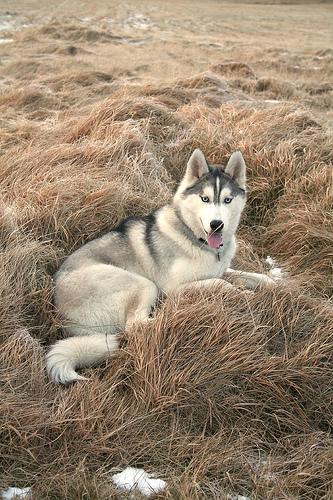
Breed Overview: The Sled Dog in a Studio Apartment
Siberian Huskies were developed by the Chukchi people of northeastern Siberia over thousands of years as sled dogs, hunters, and family companions. They ran in teams — never alone. Their psychological structure is built around the sled dog team: constant companionship, coordinated movement, shared effort, and the social support of their packmates through extreme environmental conditions.
The Husky's extraordinary endurance (bred to run 100+ miles a day in Arctic conditions), their pack orientation, their vocal communication style, and their independent thinking were all shaped by this working context. They are the product of an environment radically different from a suburban home, and the mismatch between what they're built for and how most pet Huskies actually live is the primary driver of the anxiety, destruction, and vocalization that Husky owners commonly experience.
Huskies also retain more wolf-like behavioral characteristics than many modern breeds — including their howling communication, pack dynamics sensitivity, and resistance to typical obedience training approaches that work well with more people-oriented breeds.
Why Huskies Are Prone to Anxiety
Pack Isolation: The Root Cause
Most dog breeds evolved in proximity to humans over 15,000 years, gradually developing attachment to individual human owners as their social anchor. Huskies evolved differently — their social anchor was the team. While they form attachments to their human family, their fundamental social need is for constant companionship: ideally canine companionship, and at minimum, regular human interaction throughout the day.
A Husky left alone for 8 hours is not simply bored — they are experiencing the absence of their social group, which for a Husky is experienced as profound isolation. The howling, the destruction, and the escape attempts that follow are not defiance. They are the behavioral expression of genuine distress from a deeply pack-oriented animal.
Exercise Deprivation: A Multiplier for Everything
Huskies were bred for endurance running. Their musculoskeletal system, cardiovascular capacity, and neurological reward wiring all evolved around sustained high-intensity movement. A Husky that receives a 30-minute walk has barely touched their exercise need — they are the canine equivalent of a marathon runner whose training program consists of walking to the kitchen.
Under-exercise doesn't just leave a Husky physically restless. It leaves them in a state of arousal-overload where their threshold for anxiety triggers is dramatically reduced. A properly exercised Husky and an under-exercised Husky experiencing the same trigger — a thunderstorm, a departure — will react in categorically different ways. Exercise is not an optional supplement to anxiety treatment in this breed; it is the primary treatment.
Why Standard Calming Products Largely Fail Huskies
Calming products — Thundershirts, DAP diffusers, supplements — are designed and tested primarily on companion breeds whose anxiety is driven by fear, noise sensitivity, or owner attachment. These products work by modulating the fear-anxiety response or providing comfort signals.
Husky anxiety is primarily driven by social deprivation and unmet physical drive — neither of which these products address directly. A Thundershirt on a Husky may reduce the intensity of their anxiety expression, but it cannot address the fundamental problem of social isolation and under-exercise. This is why Husky owners frequently report that products that worked for their previous (non-Husky) dog have minimal effect on their Husky.
Common Anxiety Triggers for Huskies
Extended Alone Time (Primary Trigger)
Any absence longer than 2-3 hours is potentially distressing for an unsocialized Husky. Unlike some breeds that settle after an initial distress period, Huskies can maintain high arousal for extended durations. Their vocalization during alone time is often sustained — not a brief protest but persistent howling that neighbors in multiple buildings can hear.
Under-Exercise
An under-exercised Husky is a reliably anxious Husky. There is no workaround for the exercise deficit in this breed. Doggy daycare, dog walkers, running, or cycling alongside the dog are all effective ways to meet this need — but the need must be met before any behavioral intervention has meaningful effect.
Heat Stress
Huskies are Arctic dogs with a thick double coat. They are physiologically intolerant of heat, and heat stress can trigger anxiety-like behavioral escalation — panting, pacing, inability to settle. In warm climates, manage the physical environment (AC, cool mats, shade) as part of anxiety management, as heat stress and anxiety can compound each other.
Signs and Symptoms in Huskies
- Sustained howling during owner absence — often beginning within minutes of departure
- Destructive behavior of unusual scale — walls, flooring, furniture, crates
- Escape attempts from yards, crates, and rooms
- Excessive panting and restlessness when under-exercised
- "Talking" — the famous Husky vocalization that serves as emotional communication
- Attention-seeking behaviors when owner is home but not actively engaged
- Inability to settle even in the evenings if exercise needs were unmet
Training and Management Strategies
Exercise: The Non-Negotiable Foundation
Two hours of vigorous exercise daily is the minimum for most Huskies. Effective exercise options include:
- Canicross: Cross-country running with a harness connecting dog to owner — most Huskies excel at this and love the pulling component
- Bikejoring: Running alongside or ahead of a bicycle — covers distance efficiently
- Off-leash running in a safely fenced large area
- Dog park (large, active dogs): Social plus physical — addresses both exercise and social needs simultaneously
Split the exercise into morning and evening sessions when possible. A morning run before departure significantly reduces daytime alone-time anxiety; an evening session burns remaining arousal and improves nighttime settling.
The Social Solution: Dogs and Daycare
For Huskies with severe separation anxiety, addressing the social deficit directly is often more effective than any behavioral protocol. Doggy daycare (4-5 days per week) provides the social environment Huskies evolved for and dramatically reduces alone-time distress on the days they attend. A second dog — ideally another active breed — can transform a solo Husky's experience of alone time.
Desensitization to Alone Time
Progressive desensitization works for Huskies but requires patience. Start with very short absences (30 seconds) and extend gradually over weeks. Always return before your Husky reaches peak distress — returning to a howling, panicked dog reinforces that distress produces your return. The goal is building the experience of your absence as brief, predictable, and non-threatening.
Product Recommendations for Husky Anxiety
Thundershirt — Medium or Large
Most Huskies fit Medium (chest 23-31 inches); larger males often need Large (chest 28-40 inches). While calming products have limited effectiveness as primary interventions for Huskies, the Thundershirt can reduce the intensity of anxiety expression during acute events (storms, car travel, vet visits). Best used as a supplementary tool alongside exercise and social management.
View on Amazon →Canicross / Bikejoring Harness
A properly fitted canicross harness is arguably the most important piece of equipment a Husky owner can own. Huskies were bred for pulling — a harness that allows them to pull while you run or cycle channels their sled dog drive constructively and provides the vigorous exercise that makes all other anxiety management possible. This is not a calming product; it is the foundation of a calm Husky.
View on Amazon →Adaptil Calm Home Diffuser
For Huskies, the Adaptil diffuser works best as a background support tool in combination with exercise and social management — not as a standalone solution. Run continuously in the room where your Husky spends alone time. May reduce the intensity of vocalization and pacing over 1-2 weeks of consistent use.
View on Amazon →Cooling Mat + Frozen KONG
For Huskies in warm climates, a cooling mat reduces heat-related behavioral escalation that compounds anxiety. Pair with a Large frozen KONG (black KONG Extreme to withstand Husky chewing power) stuffed with peanut butter or cream cheese. The cooling mat and KONG together create a departure-time routine your Husky can look forward to.
View on Amazon →When to See a Vet
Veterinary consultation is warranted for your Husky when:
- Self-injury has occurred during escape attempts or destructive episodes
- Exercise and social management interventions haven't reduced anxiety after 8 weeks
- Anxiety is preventing your Husky from functioning (eating, resting, settling at any point)
- Anxiety behaviors have worsened despite consistent management
Fluoxetine or clomipramine can help Huskies with severe anxiety by reducing baseline arousal, making them more responsive to behavioral interventions. Medication is most effective when combined with exercise, social management, and gradual desensitization — not used in isolation. Your vet can also rule out thyroid dysfunction, which can present as behavioral anxiety in this breed.