On this page
Why Are Chihuahuas So Clingy?
If you've wondered why are chihuahuas so clingy, the answer usually involves a combination of companionship, learned habits, and individual personality.
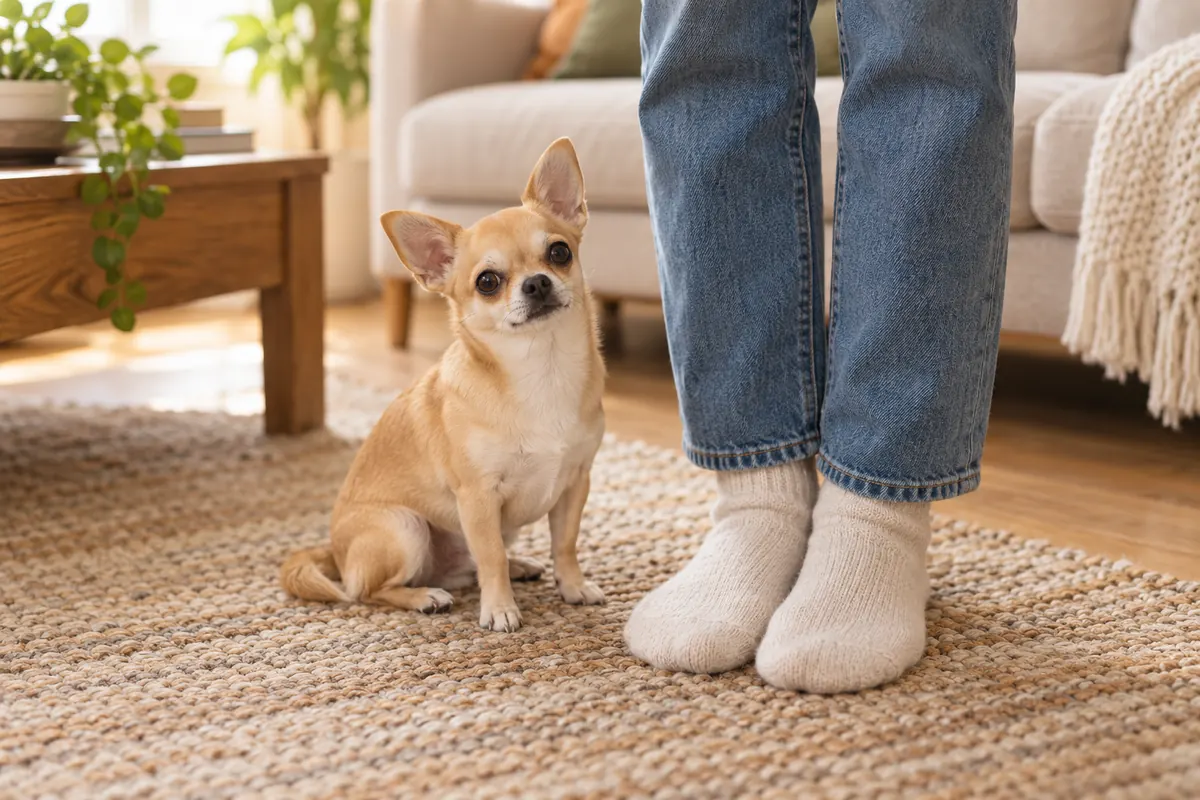
Chihuahuas are companion dogs. Unlike breeds developed primarily for independent tasks, they have a long history of living closely with people. Many enjoy physical contact, familiar routines, and staying near their favorite family members.
That attachment can make them wonderful companions, but it can also create the impression that they never want to be alone.
1. They form strong attachments
Your Chihuahua may follow you between rooms, curl up beside you, or wait outside the bathroom. These behaviors often reflect affection and familiarity rather than a behavioral problem.
2. Their small size can encourage security-seeking
Busy households, unfamiliar visitors, and larger animals may feel overwhelming to some small dogs. Your presence can become a familiar point of security. However, not every Chihuahua is timid, and small size alone does not cause anxiety.
3. Closeness becomes a learned habit
If your Chihuahua regularly receives attention when climbing into your lap or following you, those behaviors may become part of their daily routine. There is nothing inherently wrong with rewarding affectionate behavior.
4. They may dislike changes in routine
Moving homes, changes in working hours, or the arrival of a new family member can temporarily increase attachment-seeking behavior.
5. Some experience anxiety when separated
A Chihuahua who becomes distressed whenever you leave may need more than reassurance.
Are Chihuahuas Clingy or Just Affectionate?
So, are chihuahuas clingy by nature?
Many are affectionate and people-oriented, but individual personalities vary considerably.
The important distinction is whether your Chihuahua can settle comfortably without constant contact.
A dog that follows you into the kitchen and then naps peacefully is showing ordinary attachment.
A dog that repeatedly panics when you leave may be experiencing separation-related distress.
Clinginess becomes concerning when it interferes with eating, sleeping, relaxing, or normal daily activities. Sudden changes in attachment behavior also deserve attention because pain or illness can make dogs unusually dependent on their owners.
Chihuahua Separation Anxiety vs Clinginess
A clingy Chihuahua is not necessarily a Chihuahua with separation anxiety.
The difference becomes clearer when you look at what happens after you leave.
Normal clinginess may involve following you around the house, seeking cuddles, or preferring to sleep nearby. Once you leave, your Chihuahua may settle into a favorite bed, play with a toy, or nap.
Separation anxiety involves distress associated with being separated from an attachment figure or being left alone.
Some dogs bark or scratch at doors. Others show quieter signs that owners may never notice without a camera.
5 Quiet Signs of Chihuahua Separation Anxiety
- Refusing favorite treats: Your Chihuahua ignores food after you leave but eats when you return.
- Repeated pacing: Walking between the front door, sofa, and windows without settling.
- Soft whining: Quiet vocalizations that continue after departure.
- Constant door watching: Remaining unusually focused on the exit rather than resting.
- Restlessness or panting: Frequent position changes, lip licking, or unexplained panting during an absence.
These behaviors can have other causes, so they should be interpreted in context.
Try the Home-Camera Check
Use a simple indoor camera to observe your Chihuahua during a normal, manageable absence.
Watch what happens immediately after departure and whether your dog eventually settles. Do not deliberately extend an absence to provoke distress.
If your Chihuahua rests comfortably, affectionate clinginess may be the better explanation.
If distress begins repeatedly after you leave, read our dedicated guide: Chihuahua Separation Anxiety Strategies
For a broader approach, visit: Dog Separation Anxiety Guide
Seek veterinary guidance for persistent distress, unusual behavior changes, or symptoms that could reflect a medical issue.
Independence ladder for clingy Chihuahuas
Helping a clingy Chihuahua become more independent does not mean withholding affection. The goal is to teach your dog that brief periods apart can feel safe.
Progress through these steps at your Chihuahua's own pace.
- Reward calm resting: Offer a treat when your Chihuahua relaxes on their own bed while you're nearby.
- Create a little distance: Sit a few feet away and reward your dog for staying comfortably settled.
- Stand up briefly: Rise from your chair, then sit down again before your Chihuahua becomes concerned.
- Move across the room: Walk a short distance and return while your dog remains relaxed.
- Step out of sight: Try disappearing behind a doorway for just one or two seconds.
- Build to short intervals: Gradually progress toward five, ten, and thirty seconds if your Chihuahua remains comfortable.
- Practice brief room separations: Work toward one or two minutes with a comfortable resting area and familiar routine.
- Extend gradually: Once several minutes feel easy, consider longer absences using a camera to monitor behavior.
When to pause: If your Chihuahua starts pacing, whining persistently, refusing treats, or becoming unusually tense, shorten the exercise.
For dogs already experiencing genuine separation anxiety, use a structured behavior plan rather than repeatedly practicing stressful departures.
Fostering Independence in Chihuahuas
To help your Chihuahua become less dependent, start by gradually introducing periods of separation. Begin with short intervals where your Chihuahua is left in a safe space with familiar objects and gradually increase the duration. This approach helps build their confidence and teaches them that being alone is not a negative experience.
Positive reinforcement is essential during this process. Reward your Chihuahua with treats and praise when they remain calm during these separations. Consistent training and patience are vital in encouraging independence in your Chihuahua.
Addressing Anxiety-Driven Clinginess
Chihuahuas that exhibit clingy behavior as a result of anxiety may benefit from additional support. Consider using calming aids specifically designed for small dogs. Products such as pheromone diffusers can create a calming environment, reducing anxiety and promoting a sense of security.
Incorporate regular exercise into your Chihuahua's routine to help alleviate anxiety. Although they require only 30 minutes of exercise daily, this physical activity can significantly reduce stress levels, making them less likely to cling excessively.
Professional Training and Behavioral Therapy
If your Chihuahua's clinginess is deeply rooted in severe anxiety, professional training or behavioral therapy might be necessary. Certified dog trainers can provide tailored strategies to manage anxiety-induced behaviors and foster a more independent demeanor.
Behavioral therapy can also address underlying issues contributing to clinginess. Techniques such as desensitization and counter-conditioning can help your Chihuahua adjust to being alone, reducing their need for constant companionship.
Recognizing When to Seek Veterinary Advice
While managing clinginess at home is effective for many Chihuahuas, some cases require veterinary intervention. If your Chihuahua's anxiety is accompanied by symptoms such as excessive trembling or persistent barking, it may indicate a deeper health issue.
A veterinarian can assess whether medical conditions are contributing to your Chihuahua's behavior and recommend appropriate treatments. Consulting a professional ensures your Chihuahua receives comprehensive care tailored to their specific needs.
KONG Wobbler (Small)
A KONG Wobbler can encourage food exploration away from your feet during supervised practice. Check whether Small is manageable for your Chihuahua; start with an easy setup to avoid frustration. Limitation: The Wobbler may be bulky for a tiny Chihuahua and will not resolve distress about being separated. Alternative: A covered cave bed offers a cozy resting spot if your Chihuahua comfortably chooses enclosed spaces.
Check price on AmazonWe earn a small commission if you buy through this link, at no extra cost to you. Disclosure
ADAPTIL / ThunderEase Calming Spray
ADAPTIL / ThunderEase Calming Spray may provide additional support around bedding; follow label instructions and allow drying before access.
View on Amazon →Cozy Cave Bed
Provides a secure and comforting spot for your Chihuahua to retreat to during alone time.
View on Amazon →For more detailed strategies on managing anxiety in small breeds like Chihuahuas, explore our Small Dog Syndrome Guide where we delve into behavior management and training techniques.