On this page
Understanding Chihuahua Temperament and Anxiety
Chihuahuas are a breed that often exhibits high levels of anxiety, particularly when encountering new people or environments. Their small stature can contribute to feelings of vulnerability, making them more prone to fear-based reactions. Understanding this aspect of their temperament is crucial for effective socialization.
Many Chihuahuas develop what is commonly known as "Small Dog Syndrome," where they display aggressive or overly bold behaviors to mask their anxiety. This can be exacerbated by a lack of socialization, leading to increased fear when encountering strangers.
Why Chihuahuas Often Fear Strangers
Strangers can feel overwhelming when they tower overhead, reach down, or approach quickly. Individual temperament, health, and previous experiences matter more than assuming every Chihuahua is naturally fearful.
- Small size can make looming people and fast approaches feel threatening, especially without an easy escape route.
- Limited comfortable exposure early in life can leave unfamiliar people harder to navigate later.
- Rough handling or unwanted restraint may teach a dog to anticipate discomfort when someone reaches toward them.
- Avoiding all unfamiliar experiences at home can limit learning opportunities; provide safe exposure while continuing to protect your dog's boundaries.
Early Socialization: Key to Reducing Fear
Early socialization can significantly reduce anxiety in Chihuahuas. Introducing them to a variety of people, environments, and other animals at a young age helps them build confidence. Positive experiences during these early stages are essential for overcoming fear and anxiety around strangers.
Chihuahuas benefit from short, consistent exposure rather than overwhelming situations. Keeping interactions positive and rewarding can help your Chihuahua associate strangers with good experiences, easing their anxiety over time.
Socialization by Life Stage
The sensitive socialization period begins before many puppies come home and becomes less flexible during the early months; it is not a door that suddenly shuts. Continue positive experiences afterward, adjusting exposure to your dog's comfort and veterinary guidance.
- 8-16 weeks: Offer gentle exposure to calm people individually; discuss infection precautions with your vet and prioritize pleasant experiences.
- Teen months: Adjust difficulty as confidence changes; revisit easy experiences, allow retreat, and reward calm observation.
- Adults: Build positive associations at comfortable distances; keep practice manageable and progress without deadlines.
- Never: Force hugs, punish growling, flood with crowds, or restrain a dog for greetings.
Positive Reinforcement Techniques
Positive reinforcement is a powerful tool in managing a Chihuahua's anxiety. Rewarding calm behavior with treats or praise reinforces the idea that strangers are not a threat. Training sessions should be short but frequent, focusing on rewarding bravery and calmness.
Using tools like Thundershirts can also help provide a sense of security during socialization. These snug-fitting garments can reduce anxiety by applying gentle pressure, much like a comforting hug.
A Gentle Stranger-Socialization Plan
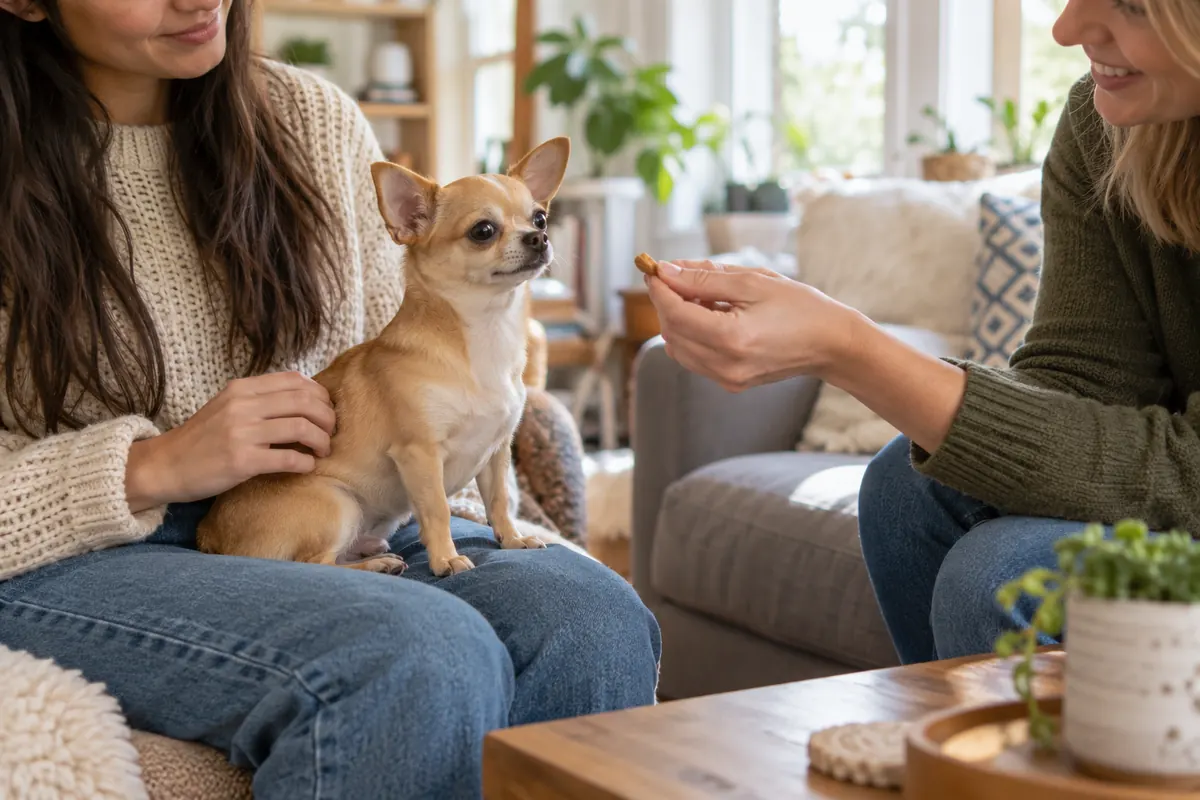
Choose one calm helper and a quiet place with room to move away. Success can mean watching comfortably without any physical greeting.
- Begin far enough from the helper that your Chihuahua can observe with a loose body; ask the person to stand sideways and ignore your dog.
- Give small treats when your dog notices the person; avoid using food to lure them closer than they would otherwise choose.
- Let your dog approach or retreat freely on a loose leash; the helper should avoid reaching, leaning over, or assuming sniffing means permission to pet.
- Keep sessions brief, including pauses away from the person; increase distance if your dog becomes tense, watchful, or reluctant to eat.
- End while your dog remains comfortable, then offer quiet downtime; repeat easy experiences before adding unfamiliar people or busier locations.
Identifying Signs of Anxiety in Chihuahuas
It's important to recognize signs of anxiety in Chihuahuas early to address them effectively. Common signs include trembling, excessive barking, and avoidance of new people or situations. Addressing these signs promptly can prevent the development of more severe anxiety-related behaviors.
Consulting with a veterinarian can provide further insight into your Chihuahua's anxiety and help develop a tailored plan to manage it. Professional guidance is particularly useful if anxiety persists despite socialization efforts.
Reading Chihuahua Stress Signals
Read signals together and consider what is happening around your dog. A small change in posture can be a useful reason to pause before distress escalates.
- Whale eye: showing the whites of the eyes while turning away.
- Freezing or becoming suddenly stiff when someone approaches.
- Repeated lip licking when no food is involved.
- A tucked tail combined with crouching or moving away.
- Growling: a warning to create distance, not a behavior to punish.
Gradual Introductions to New Experiences
Gradual introductions are key when socializing a Chihuahua. Start with familiar environments and slowly introduce new people and places. This staged approach helps build your Chihuahua's confidence without overwhelming them.
Respect your Chihuahua's comfort levels and do not force interactions. Allowing them to approach new situations at their own pace can reduce stress and encourage positive experiences.
Common Socialization Mistakes With Chihuahuas
- Picking your dog up to "say hi" removes escape choices; lift them for safety when needed, without inviting unwanted contact.
- Forcing lap time with guests can create fear; provide a separate resting spot and let your dog choose contact.
- Practicing only amid outdoor chaos makes learning harder; begin with quiet, predictable encounters.
- Skipping suitable calm adult dogs limits useful experiences; arrange carefully managed observation or meetings with healthy dogs that respect space.
For deeper clinginess and fear patterns, see our Chihuahua clingy guide and Chihuahua separation anxiety pages.