On this page
- Why apartment dogs react to hallway noise
- What your dog's reaction may mean
- Quick apartment noise fixes
- Hallway sound training plan
- Teach a calm "go to your mat"
- Deliveries, elevators and busy times
- When you're not home
- Being a good neighbor
- Helpful products
- Mistakes to avoid
- When to get extra help
- Bottom line
Your dog is asleep until a neighbor's door closes. Suddenly, they are at the entrance barking, and the next footsteps start the cycle again. Apartment life can deliver repeated close-range sounds without giving your dog an obvious way to understand them.
We are dog owners, not vets. This guide focuses on hallway and building noise rather than every type of barking. Our product suggestions reflect intended uses and limitations; we have not tested these products ourselves.
Why apartment dogs react to hallway noise
A hallway puts unfamiliar activity close to your dog's home boundary. Footsteps approach, voices stop outside, and an elevator opens without anyone entering your apartment.
Background sound can make some hallway noise less noticeable. Our guide to calming music, TV or white noise for a dog left alone covers speaker placement, safe volume and neighbor-friendly set-ups.
If hallway noise has led to barking complaints, our guide on what to do when a neighbor or landlord complains about barking covers how to reply to neighbors or a property manager and a two-week plan to reduce the noise.
Some dogs alert to changes, while others seem concerned about someone approaching their space. Fear, excitement, territorial responses, and frustration can overlap; you cannot determine motivation from bark volume alone.
Boredom or insufficient suitable activity can leave the entrance as the day's main entertainment. However, a well-exercised dog can still find building sounds frightening.
Puppies, newly adopted dogs, and dogs adjusting after a move may need extra help learning which sounds are ordinary. Past experiences, health, and individual sensitivity also matter.
Because hallway activity continues independently of training, practical changes are important from the start. Your dog needs opportunities to rest without constantly rehearsing a reaction.
Yogasleep Dohm Classic White Noise Machine
A white noise machine may soften sudden footsteps and door sounds, reducing startling for some dogs while you work on training.
Check price on AmazonWe earn a small commission if you buy through this link, at no extra cost to you. Disclosure
What your dog's reaction may mean
| What your dog does | What it may mean | First step |
|---|---|---|
| Gives a brief bark, then returns to rest | Alerting with relatively easy recovery | Acknowledge calmly and reward disengagement. |
| Rushes the door and repeatedly checks the gap | Heightened interest, concern, or a practiced monitoring habit | Increase resting distance and reduce access to the entrance. |
| Trembles, hides, or pants after footsteps | Fear or significant distress may be involved | Offer a quieter retreat and make training easier. |
| Barks mainly during prolonged inactivity | Unmet activity needs may contribute | Review sniffing, exercise, learning, and rest opportunities. |
| Reacts mainly when you are absent | Outside triggers, separation distress, or both | Record departures and compare behavior around sounds. |
| Freezes or growls when someone reaches for the door | Concern about close activity or approaching people | Stop crowding, manage access, and seek help if handling is unsafe. |
| Suddenly reacts to sounds previously ignored | Health, sensory, or contextual changes may contribute | Arrange veterinary advice rather than assuming a new habit. |
Swipe the table sideways to see every column.
These are possibilities, not diagnoses. Watch posture, timing, intensity, and recovery across several ordinary events.
Quick apartment noise fixes
Dog Anxious About Apartment Hallway Noise? How to Help: quick apartment noise fixes
- Move the bed to a quieter area farther from the front door.
- Try gentle white noise, a fan, or calm music at a comfortable volume.
- Block triggering sightlines through safe, permitted window or door coverings.
- Ask building management before adding door-gap products or altering entrance fittings.
- Use only a compatible draft stopper that preserves door closing, ventilation, and emergency access.
- Introduce a familiar gate or pen away from the door if barriers are comfortable.
- Keep suitable treats accessible for manageable sounds, beyond your dog's reach.
- Meet toilet, exercise, sniffing, and rest needs before predictable busy periods.
- Respond calmly instead of rushing toward the door or shouting.
A draft stopper may modestly reduce sound and odors under some doors, but it is not soundproofing. Never obstruct a required ventilation gap, fire-door seal, closer, or escape route.
White noise also has limits. Keep safety alarms audible and avoid trying to overpower bangs with high volume.
Hallway sound training plan
Desensitization means starting with exposure your dog can comfortably handle. Counterconditioning pairs that sound with something pleasant. Practice separately from the busiest building periods.
- Identify an easy starting sound. Note whether footsteps, latch clicks, voices, or elevator sounds are most relevant. Choose one mild recording rather than a mixed track containing unpredictable loud events.
- Prepare a comfortable location. Begin away from the front door, with room to retreat and small treats ready. Preview the recording without your dog present to check playback and avoid surprise advertisements.
- Start at very low volume. Play a brief sound quietly enough that your dog remains comfortable. A glance is acceptable; rigid watching, freezing, rushing, or food refusal means reduce difficulty.
- Pair the sound with food. Let the manageable sound occur, then deliver a small treat near your dog. Do not lure them toward the door or require obedience before providing the pleasant association.
- Repeat briefly and finish early. Use a few comfortable repetitions with pauses. End while your dog can disengage, rather than extending practice until barking appears.
- Change one feature gradually. After repeated comfortable sessions, modestly adjust volume, duration, or speaker position—not all together. Include easier repetitions and stop if tension develops.
- Add controlled real hallway sounds. With a helper and building permission where needed, practice one quiet footstep or gentle door movement. Start far enough away and avoid inconveniencing neighbors or blocking shared areas.
- Respond to ordinary manageable sounds. During daily life, pair mild events with rewards and invite a familiar mat behavior when appropriate. Uncontrolled loud events remain management situations, not mandatory training opportunities.
Recordings cannot reproduce every vibration, smell, or acoustic detail. If you cannot find a comfortable starting level, seek individualized guidance rather than continuing exposure.
Teach a calm "go to your mat"
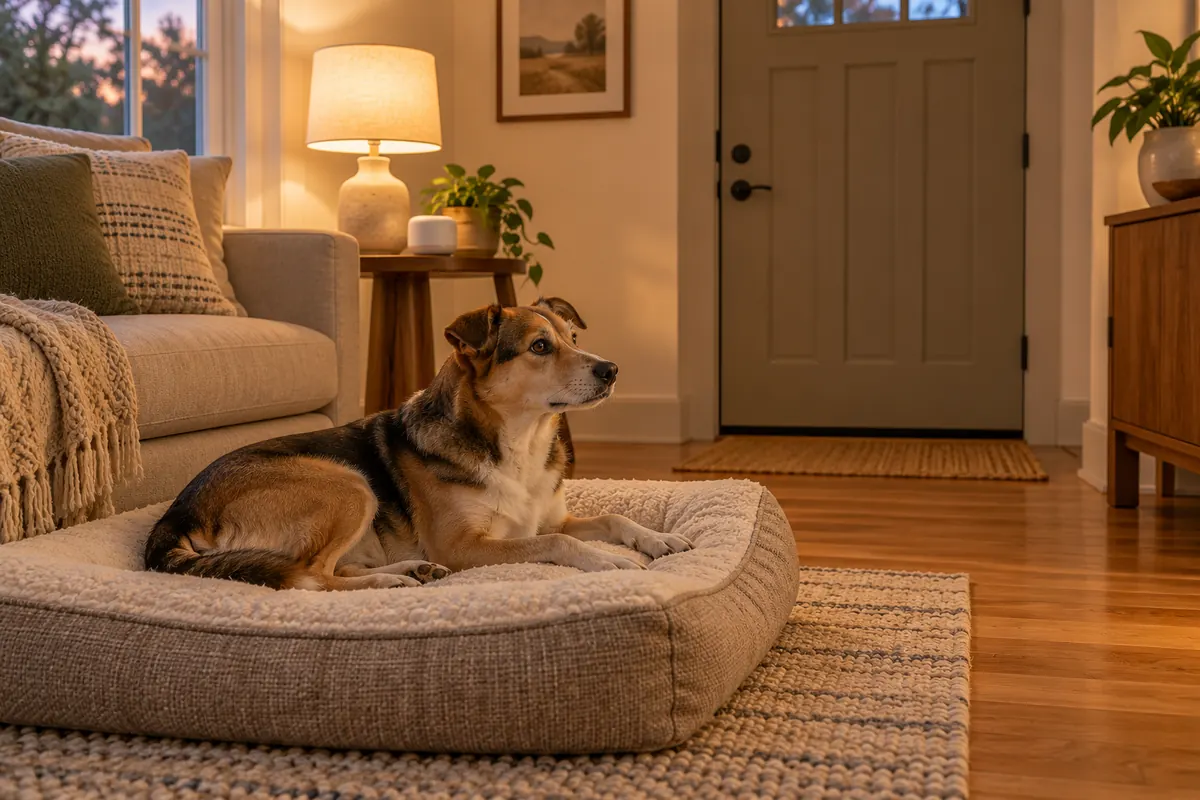
Teach the mat routine during quiet periods first. Choose a comfortable resting place away from the entrance, reward voluntary approach, and gradually reward relaxed pauses.
Add your cue once the behavior is becoming familiar. Build your own movement separately: stand, take a step, and return before your dog becomes worried.
Then introduce a mild hallway sound and reward your dog for orienting back toward you or the resting area. Do not demand a prolonged stay beside a frightening trigger.
A phrase such as “thanks, I've got it” can become a predictable transition cue. Say it calmly during easy practice, then guide your dog toward the familiar alternative and reward.
The words do not communicate that you have checked the building or magically remove fear. Their value comes from a repeated, comfortable sequence.
If your dog cannot respond, increase distance and reduce the challenge. Avoid repeating the cue louder.
Deliveries, elevators and busy times
Notice building patterns: morning departures, evening returns, cleaning rounds, or delivery windows. Prepare your dog's retreat before those periods rather than waiting for repeated barking.
Where available, use delivery instructions requesting a quieter drop-off or a notification instead of knocking. Do not ask anyone to compromise building security.
Before opening the door, secure your dog behind a familiar interior boundary. Keep visitors or delivery workers from unexpectedly reaching toward them.
For elevator trips, wait at a comfortable distance and allow space for people to exit. Choose another elevator or a quieter moment when practical; do not require a close greeting.
If hallway handling itself feels unsafe, get professional help rather than trying to combine a difficult outing with doorway training.
When you're not home
Use a camera to determine whether barking follows individual noises or starts around departure and continues without an obvious external trigger.
Persistent pacing, drooling, howling, exit checking, or inability to settle may suggest separation distress. Hallway reactivity and separation anxiety can coexist.
Keep the resting area away from the entrance, with familiar background sound if helpful. A tolerated pen may manage door access, but do not introduce confinement that causes panic.
Offer only familiar enrichment your dog can use safely. A food activity that delays barking does not establish comfort after the food ends.
Read our separation anxiety guide when absence appears central. Arrange company or other suitable support for departures your dog cannot yet manage.
Being a good neighbor
Acknowledge concerns calmly and ask for useful details: approximate timing, duration, and whether barking follows specific hallway activity.
Explain that you are working on management and training without promising an immediate deadline. Review building policies and discuss permitted changes with management.
Ask neighbors not to knock or make noises as a test. Planned practice should involve a willing helper and manageable sounds, not surprise exposure.
Respect shared spaces and keep training equipment inside your apartment. Do not leave a gate, mat, or other obstacle in a corridor.
If complaints create urgent housing pressure, seek help early. A practical care arrangement can reduce difficult episodes while longer-term training progresses.
Helpful products
Picks on this page are a research-based assessment of features and intended use — not hands-on testing. We earn a small commission if you buy through the Amazon links on this page, at no extra cost to you. Affiliate disclosure
| Product type | Why it helps | Notes |
|---|---|---|
| White noise machine: Yogasleep Dohm Classic | May soften sudden footsteps and door sounds. | Our top pick for management. Limitation: does not teach coping or block every bang. Alternative: a fan or calm music. |
| Stuffable chew toy like a KONG: KONG Classic | Offers familiar enrichment during manageable sound exposure. | Size appropriately, supervise initially, and discard damage. Limitation: choose the right size on the listing; a very worried dog may not eat. Alternative: a lick mat. |
| Lick mat: LUKITO lick mat 2-pack | Provides accessible licking with suitable food. | Supervise; remove if shredded and use xylitol-free ingredients. Alternative: a stuffed KONG Classic. |
| Exercise pen or baby gate: MidWest exercise pen | Helps manage access to the entrance. | Use only if barriers are comfortable; preserve emergency access. Limitation: introduce it gradually; a pen manages space but does not change how your dog feels. Alternative: a baby gate across a hallway or bedroom door. |
| Door draft stopper: MAXTID under-door draft stopper | May reduce sound and odors through a compatible gap. | Obtain approval where needed; preserve ventilation and fire-door function. Limitation: it softens sound and smells under the door but will not soundproof it; check building rules for entry doors. Alternative: a rolled towel along the door gap while you are home. |
| Calming bed: Best Friends by Sheri donut | Provides a familiar resting spot away from the door. | Match your dog's comfort and mobility; no new bed is required. Limitation: adds comfort, not distance from the door; not a chew toy. Alternative: your dog's existing bed moved to a quieter room. |
| Optional anxiety wrap: ThunderShirt Classic | May support some dogs during manageable stress. | Evidence is limited; introduce calmly and monitor fit and warmth. Alternative: skip the wrap and focus on sound masking and training. |
| Optional pheromone diffuser: ThunderEase diffuser | Provides background support for some dogs. | Evidence is mixed; follow placement instructions and combine with training. Alternative: a predictable routine and a quiet resting room. |
Swipe the table sideways to see every column.
Products support environmental management; they do not independently resolve fear. Introduce changes separately so you can judge the response.
Mistakes to avoid
Do not yell, punish, spray, or use shock or anti-bark collars. Suppressing sound does not establish emotional comfort and may add unpleasant associations.
Avoid letting your dog repeatedly patrol the entrance when each sound produces another intense episode. Offer an alternative resting arrangement without forcing isolation.
Do not arrange loud hallway practice to “get it over with.” Flooding can overwhelm rather than teach.
Avoid rewarding only an absence of sound while overlooking freezing or rigid vigilance. Comfortable posture and recovery matter.
For broader barking support, see our stop dog barking guide. For sensitivity across several kinds of sound, read our noise phobia guide.
When to get extra help
Dog Anxious About Apartment Hallway Noise? How to Help: when to get extra help
- Fear spreads beyond hallway sounds or begins suddenly.
- Your dog cannot rest between ordinary building events.
- Trembling, hiding, panting, or prolonged distress accompanies sounds.
- Doorway behavior creates bolting, snapping, or bite risks.
- Departure-related panic or escape attempts appear on camera.
- You cannot find a comfortable starting level for practice.
- Noise complaints or worsening behavior make the situation difficult to manage.
Start with your vet for health concerns or significant changes. A certified trainer using reward-based methods can help with manageable reactivity; severe fear or aggression may require a veterinary behaviorist.
Bring representative recordings and notes without deliberately provoking another episode.
Bottom line
Hallway sounds can feel close, unpredictable, and difficult for a dog to interpret. Reduce unnecessary exposure, create a comfortable resting area, and teach new associations through manageable practice.
A calm mat routine gives your dog another option, but should not become a demand to endure fear. Check absence-related patterns and seek help when ordinary building life remains overwhelming.