On this page
- Why fireworks plus alone time is so hard
- First choice: don't leave your dog alone
- July 4th timeline
- Set up a quiet room ahead of time
- Mask the sound
- Time walks and meals before dark
- Prevent escapes and check ID
- Check in while you're away
- If your dog panics while you're gone
- The next morning and the days around the Fourth
- Before you leave on fireworks night
- When to see the vet or a behavior professional
- Helpful products
- Bottom line
Having to work or travel on July 4th can feel especially difficult when your dog already has separation anxiety. You cannot control the neighborhood fireworks, but you can plan who stays with your dog, where they rest and who responds if things become too much.
We are dog owners, not vets or trainers, and the products mentioned here were chosen from research, not from personal product testing. This guide focuses on managing the absence: practical arrangements that support your dog without expecting a bed, toy or background sound to handle panic.
Why fireworks plus alone time is so hard
A dog who worries when you leave may already be listening for your return. Add unpredictable booms, flashes and unfamiliar activity outside, and settling can become much harder.
Your dog's usual comfortable absence is not a promise for fireworks night. A dog who rests during an ordinary evening may pace, pant, hide or scratch at an exit once the noise starts. Some dogs become very still instead, so silence alone does not show that everything is fine.
Treat the holiday as a time to protect your dog from overwhelming situations, rather than an opportunity to test their limits.
Yogasleep Dohm Classic White Noise Machine
A white noise machine may soften some outside sounds, helping a familiar room feel quieter without treating fireworks fear.
Check price on AmazonWe earn a small commission if you buy through this link, at no extra cost to you. Disclosure
First choice: don't leave your dog alone
Start with arrangements that put a trusted person beside your dog. Could you swap a shift, take turns attending an event, ask family or hire a sitter? Meet the sitter beforehand and practice a short visit while you are nearby; our pet sitter prep guide covers introductions and a care sheet, and our care options guide compares sitters, family, daycare and boarding.
Bringing your dog may work if the destination is quiet, secure and genuinely comfortable for them. A fireworks display, crowded outdoor gathering or parked car is not an alternative.
Quiet daycare or boarding may suit a dog who already relaxes there. Ask about evening staffing, nearby fireworks and whether someone can stay with a frightened dog. A new facility on a noisy holiday can add another difficult change.
Company may not remove fireworks fear, but it means someone can notice trouble and respond.
July 4th timeline
| When | What to do | Why |
|---|---|---|
| Four weeks before | Contact the vet about strong fireworks fear; request care cover. | Leaves time to discuss options and find available help. |
| Three weeks before | Introduce the quiet room during pleasant, ordinary moments. | Builds familiarity before noise arrives. |
| Two weeks before | Trial the sitter and low-volume sound masking. | Shows what your dog actually finds comfortable. |
| One week before | Confirm access, backup care, ID and emergency contacts. | Prevents last-minute gaps. |
| Days before July 4th | Expect scattered fireworks; adjust walks and care as needed. | Noise may begin before the holiday. |
| Earlier on July 4th | Offer a sniffy walk, usual meals and quiet rest. | Meets everyday needs before the busiest period. |
| Before leaving | Arrange the caregiver handover and check the room and camera. | Avoids an unsupported gap. |
| During fireworks | Monitor with the caregiver and activate backup help if needed. | Makes observation useful. |
| Next morning | Check outdoor areas for debris and resume a calm routine. | Supports safe toilet trips and recovery. |
Swipe the table sideways to see every column.
Set up a quiet room ahead of time
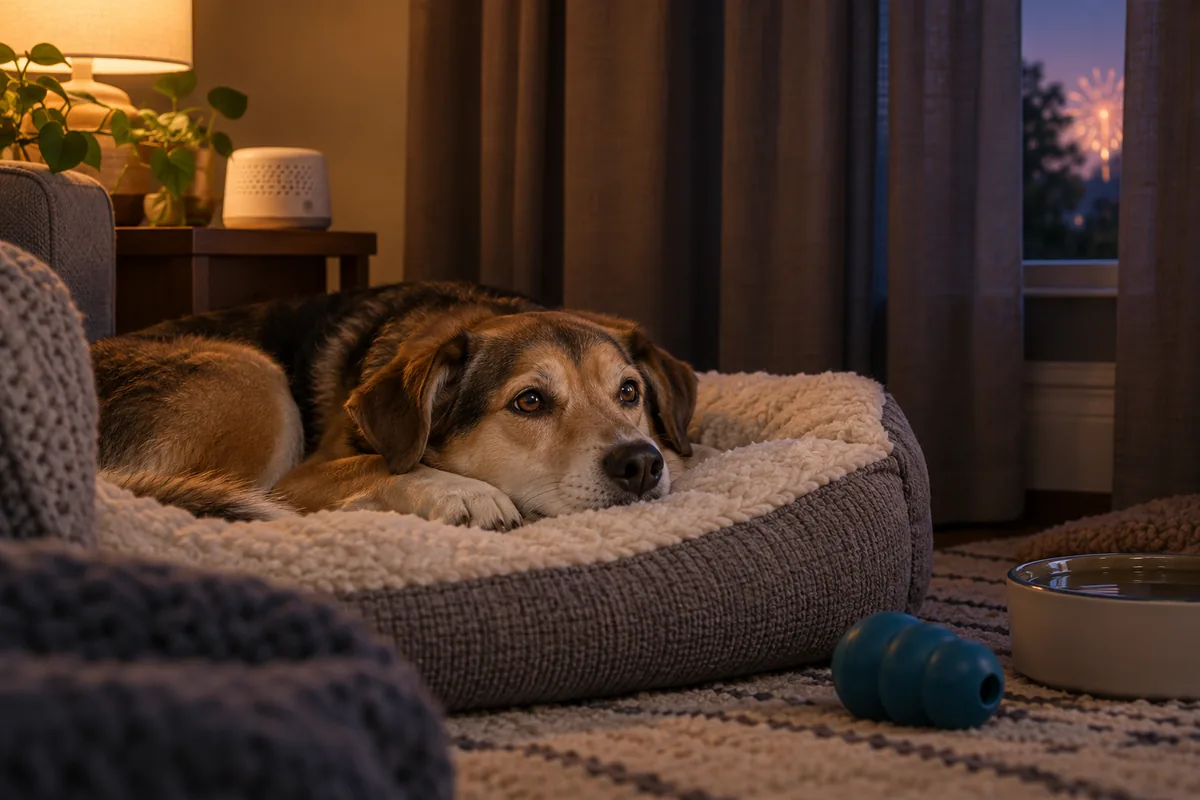
Choose an interior room or the quietest familiar area available. Close curtains, provide water and add your dog's usual bed or blanket. Remove cords, breakable items and anything they might swallow.
The room should be somewhere your dog chooses and has practiced using. Spend quiet time there together well before the holiday. Let them explore, rest or enjoy familiar food activities without pressure.
Do not introduce a locked room on fireworks night or shut a panicking dog inside and leave. If a closed door causes distress, change the arrangement and provide company. A caregiver can sit nearby while allowing access to other safe indoor space.
The ASPCA's Fourth of July safety tips suggest moving a noise-sensitive pet into an interior room with no windows, with soft music on, and offering an enrichment activity such as a KONG or a chew to keep them busy inside, away from the excitement.
Mask the sound
Try a white noise machine, fan, calm playlist or familiar TV program while you are home first (see does calming music or TV help a dog left alone?). Keep the volume comfortable and place equipment and cords out of reach.
Sound masking can soften some outside noise. Loud fireworks may still come through, and turning the volume up sharply can make the room more stressful.
Choose predictable audio without sudden shouting, barking or explosive effects. Use it during ordinary calm moments too, so switching it on does not become another sign that you are leaving.
If your dog seems more alert, restless or uncomfortable with the sound, turn it down or stop. If you will be home for part of the night, our fireworks night protocol covers the display hours themselves.
Time walks and meals before dark
Plan the main walk and meal before the usual evening activity, while keeping close to your dog's normal routine. Allow time for sniffing, toileting and settling afterward.
Fireworks can start in daylight. Check outside before leaving and choose a quieter route if necessary. Keep your dog securely leashed, including for yard toilet trips if there is any escape risk.
Do not force a frightened dog through a long walk. Offer another brief, supported toilet opportunity when conditions are quieter. Your caregiver needs a plan for later toilet needs too; an early walk does not remove them.
Offer familiar food without pressure. Refusing food or seeming unwell is a reason to contact the vet early.
Prevent escapes and check ID
Check windows, screens, exterior doors and gates before the evening begins. Keep your dog indoors between supervised toilet trips, and explain door rules to everyone entering the home.
A screen or partially open window is not secure containment. Move furniture away from windows if your dog might climb toward them.
Check that the ID tag is readable and its phone number is current. Confirm the microchip registration has your current contact details; having a chip and having usable registration details are separate things.
Make sure your caregiver has a suitable leash and knows how your dog's harness or collar fits. Avoid unnecessary arrivals and departures during the loudest period.
Check in while you're away
Position a camera so you can see your dog's resting area and likely exit route. Test the connection before leaving. Tell a sitter about any recording equipment and agree how updates will work.
Look for relaxed posture, comfortable breathing and the ability to rest. Watch for repeated pacing, trembling, panting, drooling, hiding without settling or attempts to escape.
A camera only shows what happens. It cannot provide company or keep your dog safe during panic. Have a named backup person who is available, comfortable with your dog and able to enter the home.
A neighbor checking in can help, but brief visits do not replace continuous company for a dog who needs it.
If your dog panics while you're gone
Contact the backup person immediately and return yourself if possible. Do not keep watching escalating distress while hoping your dog will eventually settle.
Ask the person to stay calmly nearby, secure exits and let your dog choose a comfortable indoor spot. They should avoid dragging the dog from hiding or forcing interaction. Never scold or punish fear-related barking, chewing or accidents.
Do not use the camera speaker automatically. A disembodied voice can confuse or upset some dogs.
Escape attempts, injury or severe, continuing distress need veterinary advice promptly. Trouble breathing, collapse or serious injury require emergency care. The response plan should include the nearest available veterinary service and permission for your caregiver to seek help.
The next morning and the days around the Fourth
Check the yard and walking area for spent fireworks, sharp debris, food and other litter before your dog explores. Keep the first outing calm and supported.
For the rest of the summer, our summer schedule guide covers camps, day trips, vacations and keeping your dog safe from the heat while you are out.
If your dog gets into fireworks, glow sticks or party food, contact your vet or ASPCA Animal Poison Control at (888) 426-4435. Do not wait for symptoms or try a home treatment.
Return to familiar meals, walks and rest, while allowing for a tired or unsettled dog. Avoid increasing alone-time practice immediately after a difficult night.
Keep the care plan available beyond July 4th. Neighbors may set off fireworks on surrounding evenings, so listen before walks and confirm whether your backup person remains available. The same planning works for New Year's Eve; see our Christmas and New Year's plan.
Before you leave on fireworks night
July 4th When You Can't Be Home: A Plan for a Dog Left Alone During Fireworks: before you leave on fireworks night
- Confirm someone familiar can stay with your dog where needed.
- Confirm a backup person and their availability.
- Test keys, entry codes and caregiver access.
- Share your number and veterinary contacts.
- Prepare the familiar quiet space.
- Close curtains and secure windows.
- Check exterior doors and gates.
- Remove cords, breakables and swallowing hazards.
- Provide fresh water and comfortable bedding.
- Check ID tags and microchip contact details.
- Offer a suitable walk and toilet break.
- Offer the usual meal without pressure.
- Start familiar sound masking at a comfortable volume.
- Test the camera view and connection.
- Agree exactly what triggers a call or return.
- Arrange later toilet breaks and the caregiver handover.
When to see the vet or a behavior professional
A dog with strong fireworks fear should see the vet weeks before the holiday to discuss options; our noise phobia guide explains longer-term sound work. Follow any existing veterinary plan and ask questions before the night itself.
Contact the vet early for food refusal, signs of illness or a sudden behavior change. Do not assume every new symptom is fear.
If your dog panics quickly, injures themselves, fights barriers or cannot settle even with company, ask for help from a qualified reward-based behavior professional alongside your vet.
Longer-term separation anxiety work involves gradual practice within what your dog can comfortably manage. Fireworks night is not the time to push that practice further.
Helpful products
Picks on this page are a research-based assessment of features and intended use — not hands-on testing. We earn a small commission if you buy through the Amazon links on this page, at no extra cost to you. Affiliate disclosure
| Product type | Why it helps | Notes |
|---|---|---|
| White noise machine: Yogasleep Dohm Classic | May soften some outside sounds in the familiar room. | Our top pick. Limitation: it masks some sound, but loud fireworks can still be heard and it does not treat fear; it plugs into a standard US 120V outlet. Alternative: a fan, TV or calm audio playlist you already own. |
| Pet camera: Furbo 360° camera | Shows how your dog copes between updates. | Limitation: it needs 2.4GHz Wi-Fi and only shows what happens; it cannot comfort your dog or keep them safe. Alternative: a neighbor or friend checking in. |
| Rubber food toy: KONG Classic | Offers familiar enrichment when your dog is comfortable eating. | Limitation: it is enrichment, not a treatment for fireworks fear or panic, and many frightened dogs won't eat. Alternative: a scatter of food earlier in the evening. |
Swipe the table sideways to see every column.
Use only toys your dog has already handled safely. Eating from a toy does not prove they will remain comfortable after it is empty.
Bottom line
Arrange company first, prepare the quiet space beforehand and have someone ready to respond. If leaving your dog alone during fireworks would exceed what they can manage, change the care arrangement rather than relying on sound masking or a camera.