On this page
- Why the holiday season is hard for a dog with separation anxiety
- Map out December before it starts
- December planner
- Parties, shopping and nights out
- Visitors and decorations
- Holiday food and decoration dangers
- Christmas Day
- New Year's Eve: fireworks and late nights
- Back to normal in January
- Holiday season checklist
- When to get extra help
- Helpful products
- Bottom line
December can fill quickly with office parties, shopping, services and family visits. For a dog with separation anxiety, these plans may mean longer absences at unusual times—or a noisy house that suddenly becomes empty.
We are dog owners, not vets or trainers, and we have no ties to any sitter, daycare or care service. This guide focuses on getting through the season at home, from early December to New Year's Day on Friday, January 1, 2027, with realistic care arrangements and familiar routines.
Why the holiday season is hard for a dog with separation anxiety
The difficulty is often the combination of changes. Children may be home from school, visitors stay overnight and meals or walks happen later. Your dog gets extra company, then everyone leaves for dinner.
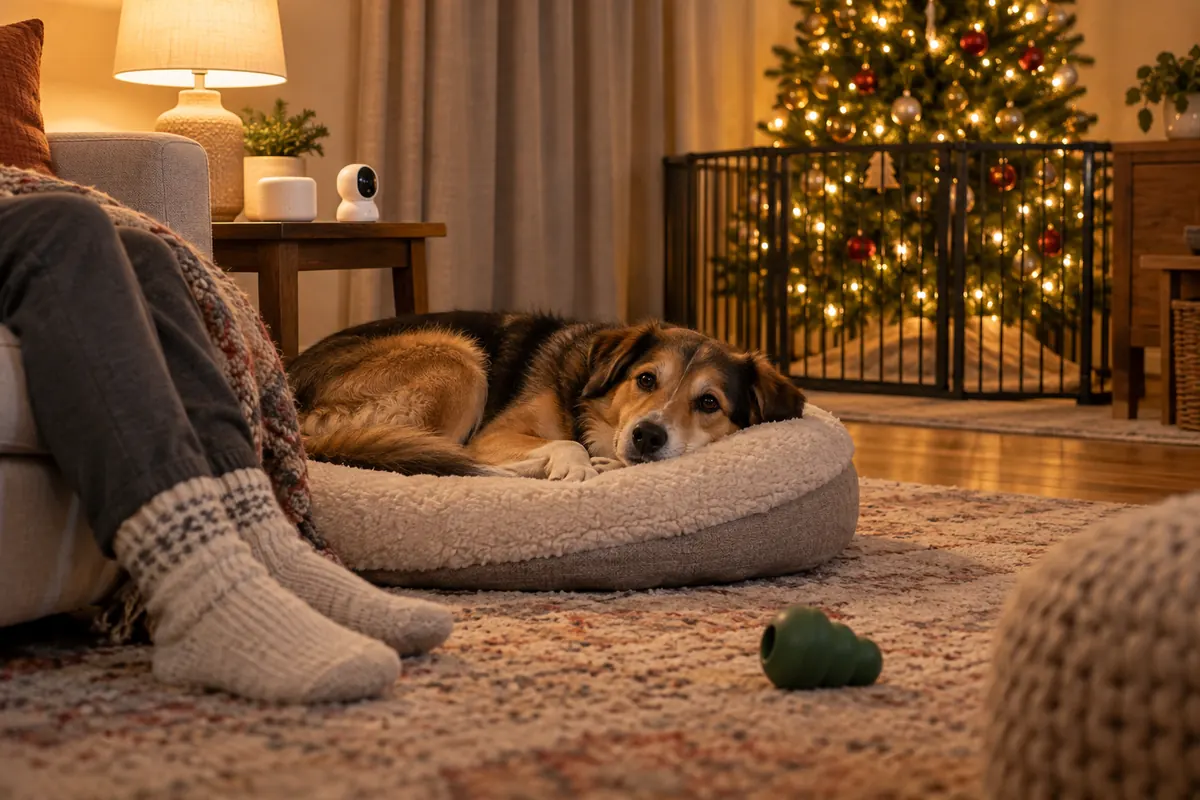
Decorations also change familiar spaces. A tree may occupy a resting corner, furniture moves and delivery activity increases. A dog may need help finding a comfortable place to rest amid the bustle.
New Year's Eve adds another challenge: late outings alongside fireworks and unexpected bangs. A dog distressed about separation may also be frightened by noise.
A busy day does not mean your dog will cope with a quiet evening alone. Plan around your dog's observed comfort rather than assuming activity or company earlier will make a longer absence manageable.
Furbo 360° Dog Camera
A pet camera shows how your dog copes during holiday absences, helping you spot when the care plan needs adjusting.
Check price on AmazonWe earn a small commission if you buy through this link, at no extra cost to you. Disclosure
Map out December before it starts
Use one calendar for outings and dog care. Include travel time, shopping stops, late finishes and the possibility of delays. Write down who leaves last and who returns first.
Mark any gap beyond what your dog currently handles comfortably. Arrange a familiar carer, suitable daycare or taking turns at home before the day arrives.
The ASPCA's separation anxiety advice recommends avoiding absences outside training while working on the problem, with options such as a family member, friend or sitter staying with the dog, or suitable doggy daycare.
Do not treat the holiday calendar as a deadline for training progress. If an event exceeds your dog's ability, change the care arrangement rather than rushing the dog.
December planner
This is an example to adapt to your household and your dog's needs.
| Date or event | Risk for your dog | Plan | Backup |
|---|---|---|---|
| Office party evening | Later departure and uncertain return | Familiar sitter stays for the full gap | Household member returns early |
| Holiday shopping day | Errands take longer than expected | Take turns shopping or arrange company | Shorten the outing |
| Visitors staying over | Less rest and changed household routines | Preserve a quiet area and regular breaks | Familiar person stays with the dog elsewhere |
| Christmas Eve service or dinner out | Everyone leaves at an unusual time | Confirm suitable company before leaving | Split attendance or stay home |
| Christmas Day | Crowds, food and frequent door opening | Assign dog-care and doorway responsibilities | Take turns providing quiet company |
| Post-Christmas visits | Sudden empty house after extra company | Keep absences easy and use care cover | Choose a shorter visit |
| New Year's Eve | Fireworks, late outings and escape risk | Trusted person stays home through the noisy period | Cancel or change the night out |
| First workday in January | Longer absence after the holiday routine | Reassess short departures and confirm care | Continue temporary cover |
Swipe the table sideways to see every column.
Parties, shopping and nights out
Be specific when booking care. A drop-in visit is different from someone staying, and a sitter may have other holiday commitments. Explain what your dog does when alone and ask exactly when they would be without company.
Working in retail, a warehouse or delivery over the holidays? Our holiday work shifts guide covers changing shift schedules, late finishes and easing back in January.
Sitter canceled for Christmas week or New Year's Eve? Our pet sitter cancellation guide has a ranked backup list, a backup plan table and a handover sheet for any stand-in.
A dog walker can help with exercise and toilet needs in milder situations. A brief walk does not cover a dog who panics before and after the visit.
Daycare suits some dogs, but only if they enjoy the setting and its hours fit the outing. Trial a new carer or arrangement before relying on it during a long evening.
Our care options guide and pet sitter preparation guide can help. If you are traveling rather than staying home, use our Thanksgiving and holiday travel guide and boarding guide.
Visitors and decorations
Give your dog a familiar place to rest away from the busiest activity. Keep their bed and water accessible, and avoid moving everything at once if possible.
Hosting a graduation party in May or June instead? Our graduation season guide covers a quiet resting area, a dedicated person for your dog and party food hazards.
A calm room can provide a break, but someone your dog is comfortable with may need to stay there too. Never shut a panicking dog away and leave them to cope. Introduce any gate or boundary gently while you are available.
Set clear guest rules: allow voluntary greetings, leave the resting dog undisturbed and check before offering food. Adults should supervise children around the dog; children should not hug, crowd or follow a stressed dog.
Choose an adult to manage arrivals and outside doors. Ask guests not to open gates or let the dog out without checking.
Holiday food and decoration dangers
Keep chocolate, grapes and raisins, xylitol-containing products and fatty scraps out of reach. Food gifts under the tree may smell inviting even through wrapping, so store them somewhere inaccessible.
Tinsel, ribbon, lights, cords and ornaments can create swallowing, injury or electrical hazards. Secure the tree, manage access and place tempting decorations where your dog cannot reach them. A pet gate is useful only if it safely prevents access and your dog does not climb or chew it.
Clear wrapping and ribbon as gifts are opened. Keep trash and unattended plates secure, and tell guests that the dog's food comes through the designated caregiver.
If your dog eats something risky, contact your vet or the ASPCA Animal Poison Control Center at (888) 426-4435 promptly (a consultation fee may apply). Keep packaging or ingredient details and note what was eaten and when. Do not induce vomiting unless a veterinary professional tells you to.
Christmas Day
Begin with a recognizable morning: a toilet opportunity, suitable walking or sniffing time, usual food and a chance to settle. You do not need a perfectly normal schedule, but familiar events can provide structure.
Assign someone to notice when the dog needs a break. Yawning, retreating, restlessness or difficulty settling are reasons to reduce activity rather than encourage more greetings.
Offer quiet company away from the crowd. A familiar food toy may help a comfortable dog enjoy that break, but do not use it to keep a worried dog in an overwhelming situation; it is enrichment, not a treatment for panic.
If the family goes out, use the care arrangement already planned. Christmas Day does not make an unsupported absence easier for the dog.
New Year's Eve: fireworks and late nights
Do not leave an anxious dog alone during midnight fireworks. Arrange for someone the dog trusts to be home, and plan around the whole noisy period rather than the countdown alone. Fireworks may begin earlier or continue afterward.
The same planning works in summer: see a July 4th plan for a dog home alone during fireworks, with a timeline from four weeks out to the next morning.
Talk to your vet well before New Year's Eve if your dog has a history of panic or an existing noise or anxiety plan. Follow that plan and clarify any questions in advance.
Prepare a familiar den or resting area with water and bedding. Close curtains, keep windows and outside doors secure, and offer company without forcing interaction or preventing safe hiding.
A fan, calm music or white noise may soften some sound. Test it beforehand at a comfortable volume; louder sound is not necessarily better. Sound masking does not treat separation anxiety or noise phobia.
Plan the final toilet trip before the expected fireworks begin, using secure equipment. If another trip is needed later, prioritize safety and keep it brief. Check that the ID tag and microchip contact details are current, because a startled dog can bolt.
Our noise phobia guide and fireworks protocol cover those topics separately.
Back to normal in January
After late nights and extra company, rebuild the usual walk, meal and sleep pattern gradually. Give your dog undisturbed rest and restore any resting space changed for decorations.
Is your dog new this holiday season? Our new holiday dog guide covers getting a newly adopted or gifted dog ready for the first day back at work, with a countdown and a first workday checklist.
January often brings snow days and icy sidewalks too; see a winter plan for a dog with separation anxiety for short-walk days, a warm, safe home and a snowstorm backup plan.
Check short departures before assuming your dog can immediately handle the previous workday routine. Use a camera, watch live and keep the first attempts easy enough that you can return before worry develops.
If distress appears, return calmly and make the next practice easier. Keep care cover available while you reassess.
Our after-vacation guide covers returning to routine, and the training plan explains gradual absence work. A difficult day is information to use, not a reason to push harder.
Holiday season checklist
Christmas and New Year's Plan for a Dog With Separation Anxiety: holiday season checklist
- Map outings and dog care on one calendar.
- Include travel time, late finishes and possible delays.
- Identify gaps beyond your dog's current comfort.
- Confirm carers and their actual availability.
- Trial unfamiliar care arrangements before relying on them.
- Keep regular toilet, food and activity opportunities.
- Preserve a quiet resting place with company when needed.
- Explain guest, child and doorway rules.
- Secure the tree, lights, cords and ornaments.
- Keep tinsel, ribbon and food gifts inaccessible.
- Save your vet and emergency clinic contacts.
- Arrange trusted company for New Year's Eve.
- Discuss any existing noise or anxiety plan with the vet early.
- Check ID tags and microchip contact details.
- Prepare curtains, water and a familiar resting area before fireworks.
- Plan care cover for the return to work in January.
When to get extra help
Contact your vet if your dog is not eating, suddenly changes behavior, seems unwell or develops severe panic. Do not assume every new problem is caused by holiday excitement.
Injury, dangerous escape attempts or possible ingestion of risky food or decorations need prompt veterinary advice. Severe signs such as collapse or trouble breathing require emergency care.
Ask a qualified, reward-based behavior professional for help if your dog cannot settle with available carers or struggles with tiny absences. It is reasonable to simplify plans or miss an outing while you arrange safer support.
Never punish barking, damage or accidents, use bark-control devices, or leave your dog to cry until quiet.
Helpful products
Picks on this page are a research-based assessment of features and intended use — not hands-on testing. We earn a small commission if you buy through the Amazon links on this page, at no extra cost to you. Affiliate disclosure
| Product type | Why it helps | Notes |
|---|---|---|
| Pet camera: Furbo 360° camera | Shows how your dog copes during holiday absences | Our top pick. Limitation: it needs Wi-Fi and only shows what happens; it cannot comfort your dog or replace the person at home on New Year's Eve. Alternative: an old phone or laptop on a video call. |
| White noise machine: Yogasleep Dohm Classic | May soften some party sounds and fireworks | Limitation: it masks some sound but does not treat separation anxiety or noise phobia, and it will not block loud bangs. Alternative: a fan or calm music you already own. |
| Rubber food toy: KONG Classic | Offers enrichment during comfortable quiet time | Limitation: it is enrichment, not a treatment for panic, and some anxious dogs will not eat; eating does not prove your dog is fine throughout an absence. Alternative: scatter part of a meal on a mat. |
Swipe the table sideways to see every column.
Supervise new toys and keep equipment cables out of reach. If your dog refuses food or seems unwell over the holidays, call your vet early rather than waiting it out. A camera supports observation; it cannot replace the person needed at home on New Year's Eve.
Bottom line
Plan company before committing to December's outings, protect familiar routines and make gatherings manageable for your dog. Keep food and decorations safely out of reach, stay with an anxious dog during New Year's Eve fireworks and rebuild easy departures as January begins.