On this page
- Why sitters are hard for anxious dogs
- Sitter options for an anxious dog
- How to choose the right sitter
- Introduce the sitter slowly
- Sitter care sheet
- A two-week prep plan
- Prevent escapes and keep your dog safe
- Signs your dog is struggling while you're away
- Helpful products
- Checking in without stressing the sitter
- Coming home calmly
- When to get extra help
- Bottom line
Leaving a nervous dog with someone else involves more than handing over a key. Your sitter needs to understand what makes your dog comfortable, what creates fear, and how to respond when things do not go as planned.
We are dog owners, not vets. This guide helps you prepare practical, individualized care rather than promising that every dog will settle after a few meetings. Our product suggestions reflect intended uses and limitations; we have not tested these products ourselves.
Why sitters are hard for anxious dogs
A sitter changes familiar patterns: who opens the door, attaches the leash, prepares dinner, and remains overnight. Your absence may be difficult even when the new person behaves gently.
Handing your dog between two homes works a lot like a sitter handover. Our guide to dog separation anxiety after a breakup or shared custody has a handover day checklist and a two-home agreement table.
Taking your dog on the trip instead? Our guide to traveling with a dog who has separation anxiety covers hotels, rentals and family visits, plus how to choose who watches your dog at your destination.
Not sure whether a sitter or a kennel suits your dog better? Our guide to boarding a dog with separation anxiety covers questions to ask a facility, red flags on a tour and what to pack.
If you need cover on every workday rather than just for trips, our guide on working full time with a dog that has separation anxiety compares workday cover options and includes a workday readiness checklist.
Still deciding who should look after your dog? Our guide to care cover options for a dog with separation anxiety compares family, sitters, drop-in visits, daycare and more, with questions to ask and a weekly care schedule.
Care cover is also one of the quickest ways to calm things down after a noise complaint. See our guide on what to do when a neighbor or landlord complains about barking for a two-week plan and reply templates.
A dog who fears unfamiliar people may need distance before accepting routine care. A dog with separation distress may welcome a sitter but still struggle when that sitter leaves.
Some dogs relax with any trusted company; others remain distressed when a particular person is absent. Do not assume that a booking automatically solves separation anxiety.
The practical goal is safe care and comfortable company. Friendship can develop gradually, but your dog does not need to enjoy petting to have a workable arrangement.
Furbo 360° Dog Camera
A treat-tossing camera can show settling and emerging problems between agreed check-ins; reliable Wi-Fi and an available caregiver remain essential.
Check price on AmazonWe earn a small commission if you buy through this link, at no extra cost to you. Disclosure
Sitter options for an anxious dog
| Option | Best for | Watch out for |
|---|---|---|
| In-home house sitter | Dogs comfortable at home who benefit from familiar surroundings | “Overnight” may still include lengthy daytime absences; clarify actual coverage. |
| Extended daytime sitter | Dogs needing company while owners work | Confirm breaks, arrival times, backup coverage, and maximum time left alone. |
| Drop-in visits | Dogs who comfortably manage the intervals between visits | Feeding and toilet visits do not address panic throughout the gaps. |
| Boarding in a sitter's home | Dogs already comfortable with that person and property | Other animals, unfamiliar exits, household activity, and overnight settling. |
| Boarding facility | Dogs who tolerate the setting and its care routine | Noise, handling, group exposure, staffing, and unattended periods vary. |
| Familiar friend or neighbor | Dogs relaxed with an established person | Familiarity does not replace clear instructions, availability, or handling skills. |
Swipe the table sideways to see every column.
An in-home sitter is often a useful starting choice, but choose according to your dog's demonstrated comfort. Ask exactly when they will be present.
How to choose the right sitter
Ask for specific experience with fearful dogs, rather than accepting “I love dogs” as sufficient preparation.
Useful questions include:
- How do you respond when a dog hides, freezes, or growls?
- Will you avoid forced greetings and use reward-based handling?
- What happens if you cannot safely attach the leash?
- Can you maintain the agreed routine and alone-time limits?
- Who provides backup if you become unavailable?
- What is your emergency veterinary procedure?
Discuss bite history, guarding, escape attempts, and handling difficulties honestly. Withholding that information puts everyone at risk.
Check references and relevant insurance or business arrangements. If the sitter names a qualification, verify what it covers.
Look for someone willing to follow boundaries and say when a situation exceeds their skills. A sitter's role is care, not improvising behavior treatment during your trip.
Introduce the sitter slowly
Plan two or three short meetings as a starting framework, with more time if needed. The number is not a deadline for trust.
Begin in a quiet setting with room to retreat. Ask the sitter to avoid staring, looming, reaching, or following your dog.
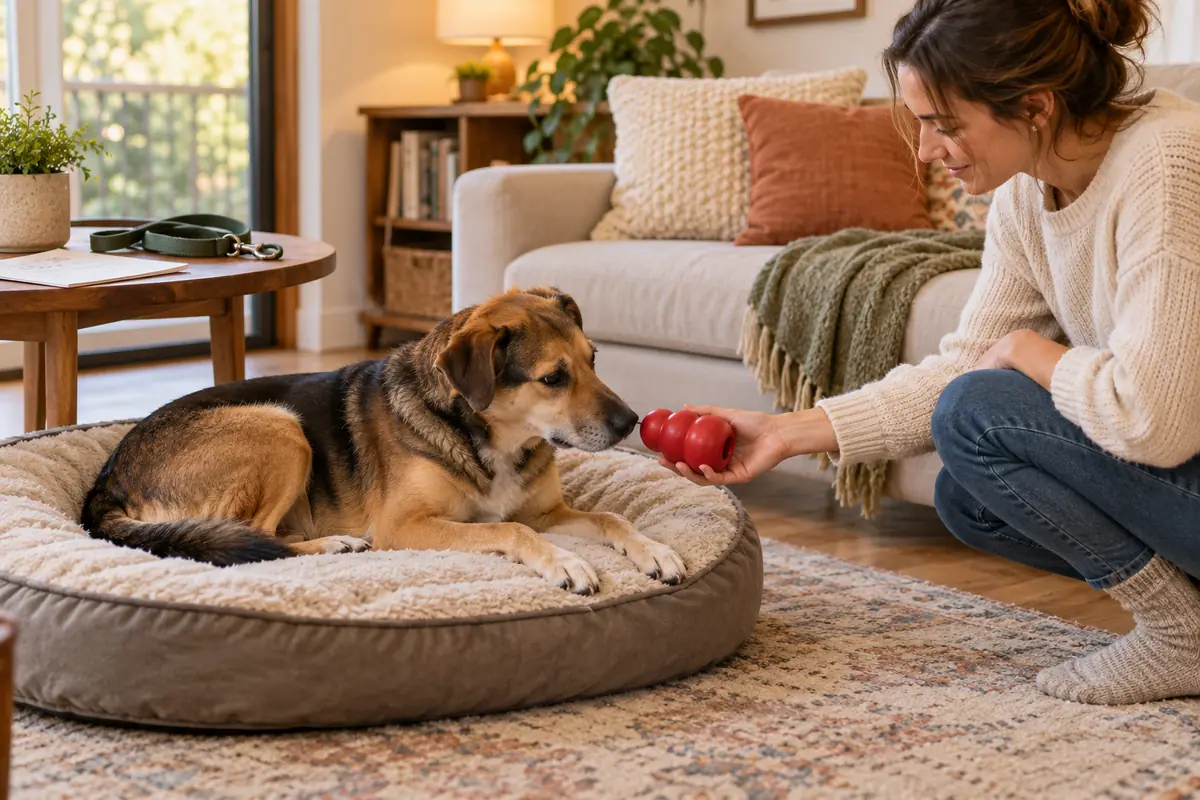
Treats should initially be tossed gently to a comfortable location rather than offered from the hand. Tossing slightly away can allow the dog to collect food without approaching. Never lure a worried dog closer than they would choose.
Let your dog approach or remain elsewhere. Sniffing the sitter does not automatically invite touching.
Later meetings can include watching familiar routines and practicing necessary care. Do not progress to leash handling merely because the dog accepts food. If safe essential handling remains impossible, seek professional help before relying on the arrangement.
Sitter care sheet
Fill this out clearly and leave both an accessible copy and a digital version.
How to Prep a Pet Sitter for an Anxious Dog: sitter care sheet
- Daily routine: meal times, rest periods, toilet patterns, bedtime, and the current comfortable alone-time limit.
- Feeding: exact food, portions, storage, approved treats, allergies, and enrichment included in daily intake.
- Walks: equipment, fitting checks, preferred routes, weather limits, and situations to avoid.
- Triggers: people, dogs, noises, handling, barriers, and early signs of discomfort.
- Calm-down plan: retreat location, helpful distance, welcomed comfort, and actions that make matters worse.
- Safety: door procedure, fencing concerns, identification, microchip details, and lost-dog response.
- Health care: existing conditions and any vet-prescribed instructions, with demonstration where needed.
- Contacts: owner, backup decision-maker, regular vet, and emergency clinic.
- Emergency arrangements: transport, veterinary authorization, payment process, and when to seek help immediately.
- Communication: agreed updates, camera locations, recording permissions, and escalation thresholds.
Keep instructions concrete. “Give space and call me if leash attachment is unsafe” is more useful than “he can be nervous.”
A two-week prep plan
Start earlier for substantial fear or separation distress. This schedule organizes preparation rather than promising readiness.
- Two weeks before: assess the care need. Work out actual absence lengths, including travel delays. Contact your vet about severe anxiety or health concerns, and choose a sitter arrangement with enough companionship.
- Around two weeks before: hold the first meeting. Keep it brief and low pressure. Let the sitter ignore your dog initially and toss approved treats only if appropriate. End before stress builds.
- During the following days: repeat an easy introduction. Use another short meeting to observe comfort. Allow voluntary approach, then demonstrate familiar routines without expecting the sitter to handle everything.
- About a week before: rehearse essential care. If comfortable, practice meal preparation, a quiet walk, and safe door transitions. Have the sitter demonstrate the agreed equipment checks and explain the care plan back to you.
- Several days before: conduct a short trial absence. Leave only for a duration the dog can manage with the sitter, staying nearby and reachable. Observe settling and reassess promptly if distress or handling problems appear.
- After the trial: revise the arrangement. Discuss what happened, including eating, rest, toileting, and recovery. Arrange longer coverage or professional help if the trial reveals that brief visits are inadequate.
- Before departure: finalize instructions and supplies. Prepare familiar food, bedding, equipment, contacts, and emergency authorization. Agree on updates, backup care, and what the sitter should do without waiting for your reply.
- Departure day: make a calm handover. Allow toileting and suitable activity, then normal settling. Avoid a rushed introduction or dramatic farewell. Confirm the sitter is present and the dog secure before opening the exterior door.
Prevent escapes and keep your dog safe
Fearful dogs may bolt during arrivals, deliveries, or leash transitions. Write a door procedure that everyone can follow.
Use a double-door rule where possible: secure the dog behind a familiar interior barrier before an exterior door opens, then close that door before releasing the barrier. This is a transition procedure, not permission to confine a panicking dog.
Check harness fit and leash connections before each outing. Keep identification tags on for outings and microchip contact details current. Remove collars, tags, and harnesses before crating because they can snag.
Avoid off-leash outings and unfamiliar dog parks during the booking. Inspect yard gates and fencing; do not assume a fenced yard is secure for an escape-prone dog.
If handling cannot be done safely, the sitter should not corner or grab the dog. Use the prearranged backup plan and contact appropriate help.
Signs your dog is struggling while you're away
Ask the sitter to report persistent pacing, panting in a cool room, drooling, prolonged hiding, repeated vocalizing, food refusal, or inability to rest.
Also report guarding, freezing during handling, and attempts to escape. These are information about the dog's comfort, not reasons to punish.
The first response is to reduce pressure: stop unnecessary interaction, provide distance, and allow access to a familiar retreat. Calm contact is fine if the dog seeks it.
Do not force a walk or greeting to “work through” fear. Contact the owner and follow the written escalation plan; injuries, breathing difficulty, collapse, or suspected poisoning require urgent veterinary help.
For departure-related vocalizing, see dog barking when left alone. Our separation anxiety guide provides broader training context.
Helpful products
Picks on this page are a research-based assessment of features and intended use — not hands-on testing. We earn a small commission if you buy through the Amazon links on this page, at no extra cost to you. Affiliate disclosure
| Product type | Why it helps | Notes |
|---|---|---|
| Furbo-style treat-tossing pet camera: Furbo 360° Dog Camera | Shows settling and possible problems between agreed check-ins. | Our top pick for observation; requires reliable Wi-Fi and does not replace a sitter. |
| KONG Classic stuffed toy | Offers familiar enrichment during manageable departures or settling. | Introduce beforehand; size appropriately and remove damaged toys. |
| Lick mat: LUKITO 2-pack | Provides an easy food activity for a dog who enjoys it. | Supervise; remove if shredded and use xylitol-free ingredients. |
| Familiar calming donut bed: Best Friends by Sheri donut | Preserves a recognizable resting spot. | Use an existing preference; buying a new bed is unnecessary. |
| ThunderEase/ADAPTIL pheromone diffuser | Optional background support in the resting area. | Evidence is mixed; follow placement instructions. |
| ThunderShirt-style snug anxiety wrap: ThunderShirt Classic | May support some dogs during manageable stress. | Use only if already tolerated; demonstrate fit and monitor warmth. |
| Familiar exercise pen or crate: MidWest exercise pen | Offers a managed space for a confinement-comfortable dog. | No new crate immediately before travel; stop if panic occurs. |
Swipe the table sideways to see every column.
The sitter should never use enrichment or a camera to justify exceeding the agreed alone-time limit.
Checking in without stressing the sitter
Agree on predictable updates, such as after arrival and during an evening review. Ask for useful observations: eating, toileting, rest, handling, and anything unusual.
Disclose cameras before booking. Agree on their locations, audio or recording use, and privacy boundaries; never place them in private sleeping or bathroom areas.
Test remote speech and treat dispensing beforehand. Either can unsettle some dogs, so disable interactive features if they increase searching or agitation.
Avoid sending a message about every movement you see. If something concerns you, ask for context. Establish which problems require an immediate call and which belong in the routine update.
Coming home calmly
Arrange the handover so exterior doors remain secure. Let your dog approach at their own pace rather than crowding them with attention.
Offer a toilet opportunity and resume familiar routines. An enthusiastic greeting is not proof the sitting arrangement failed; review the full record instead.
Ask about sleep, appetite, walks, and recovery. Thank the sitter for reporting difficulties honestly, and use that information to improve future care.
When to get extra help
How to Prep a Pet Sitter for an Anxious Dog: when to get extra help
- Your dog cannot comfortably share space with the proposed sitter.
- Essential handling, leash attachment, or transport cannot be done safely.
- Growling, snapping, guarding, or bite history requires an individual safety plan.
- Separation causes panic, escape attempts, or self-injury despite company.
- Appetite, drinking, toileting, sleep, or physical comfort changes significantly.
- Trial care repeatedly worsens distress or fails to provide adequate coverage.
- Travel is approaching without a safe, workable arrangement.
Consult your vet before the trip when anxiety is severe. Medication options can be discussed ahead of time, with any prescribed plan rehearsed as directed rather than improvised on departure day.
Seek a qualified, reward-based trainer, certified applied animal behaviorist, or veterinary behaviorist whose expertise fits the problem.
Bottom line
A successful sitter arrangement starts with the right level of care, gradual introductions, and clear instructions. Familiar surroundings help only when the dog also feels safe with the person providing care.
Use trial visits to make the plan concrete. If your dog remains frightened or essential handling is unsafe, revise the arrangement before travel rather than hoping they will adjust under pressure.