On this page
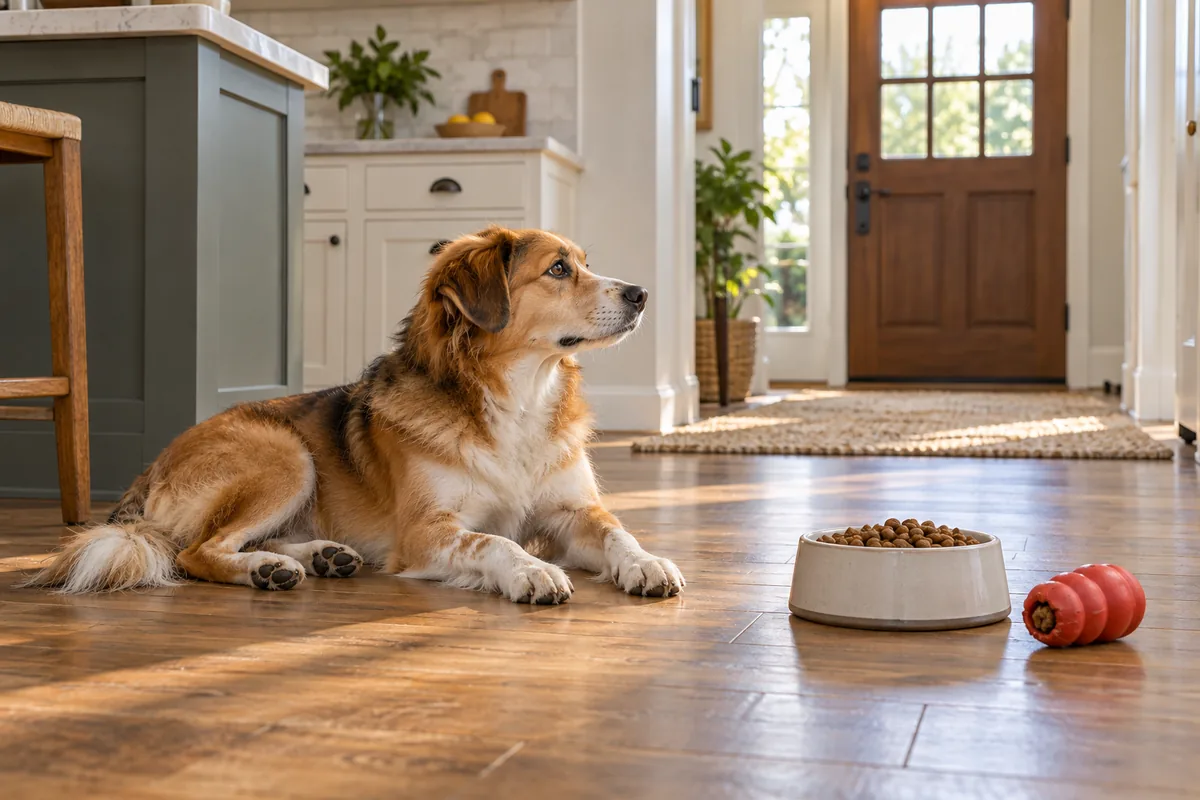
You leave breakfast before work and return to an untouched bowl. Then your dog eats while you unpack your bag. It is understandable to wonder whether they are being selective, waiting for company, or feeling too worried to eat.
We are dog owners, not vets. This guide helps you observe the pattern, recognize health concerns, and build a practical feeding plan. Our product suggestions reflect intended uses and limitations; we have not tested these products ourselves.
Why some dogs won't eat when left alone
Eating requires a dog to feel comfortable enough to focus on food. If your departure leads to vigilance, pacing, or watching the door, a meal may become less important than monitoring your absence.
Some dogs pause eating when a person moves away, then resume when company returns. That pattern can involve distress, a learned feeding routine, or both.
Other dogs simply are not hungry at the scheduled time. Treats, enrichment fillings, or a recent meal may explain an untouched bowl without anxiety.
The distinction matters. A more tempting filling will not teach comfortable separation if your dog is frightened. Equally, a relaxed dog who prefers eating later does not automatically need an anxiety diagnosis.
KONG Classic Stuffable Dog Toy
A familiar stuffed KONG can offer pleasant food enrichment during comfortable short absences, supporting positive associations without replacing separation training.
Check price on AmazonWe earn a small commission if you buy through this link, at no extra cost to you. Disclosure
Anxiety, boredom, schedule, or medical?
Separation distress becomes more concerning when food refusal accompanies pacing, persistent vocalizing, drooling, exit checking, or escape attempts.
A dog who rests comfortably, drinks normally, and eats their usual amount later may have a different feeding preference or schedule. However, appearing quiet is not enough: some worried dogs remain still and watchful.
Boredom may mean a dog finds a familiar bowl less interesting than a manageable searching activity. Food refusal alone does not establish boredom, and harder puzzles can create frustration.
Medical causes remain important even when timing seems linked to your absence. Dental discomfort, nausea, pain, digestive illness, and other health problems can affect appetite.
For the broader behavior checklist, see Separation Anxiety or Boredom? 10 Signs. If separation distress seems likely, also read the separation anxiety guide.
Cause check
| What you see | Likely cause | What helps first |
|---|---|---|
| Food is untouched alongside pacing, howling, or exit checking | Separation distress is a concern | Shorten practice absences, arrange support, and seek assessment. |
| Your dog rests comfortably and eats normally at another time | Meal timing, fullness, or an established routine may contribute | Review the complete daily food schedule and overall intake. |
| Your dog eats only with you beside the bowl | Learned social routine, discomfort, or separation concern | Observe posture and practice tiny, comfortable changes in distance. |
| Appetite is reduced whether you are home or away | A medical or broader appetite problem needs consideration | Contact your vet before treating it as a training issue. |
| Eating stops after a hallway noise or appliance starts | Environmental worry or distraction may contribute | Offer a quieter, familiar meal location and observe recovery. |
| Eating is comfortable in a bowl but stops with a puzzle | Difficulty, access, or equipment preference may be involved | Return to an easy familiar setup rather than increasing the challenge. |
Swipe the table sideways to see every column.
These are possibilities, not diagnoses. Several causes can overlap, so interpret the whole pattern.
48-hour observation checklist
This is an information-gathering framework, not permission to postpone care or withhold food for two days.
Dog Won't Eat When Left Alone: 48-hour observation checklist
- Record all meals, treats, chews, and enrichment fillings, including what your dog actually consumes.
- Compare appetite when you are present, nearby, out of sight, and away during manageable absences.
- Position a camera to show the bowl, resting area, and exit; secure cables beyond reach.
- Note whether your dog approaches, sniffs, freezes near, or ignores the food after departure.
- Record pacing, vocalizing, drooling, door checking, and whether relaxed rest occurs.
- Check whether food is accessible and whether noise, slippery flooring, or other pets affect the location.
- Note drinking, toileting, energy, weight concerns, vomiting, and other physical changes.
- Save representative clips and contact your vet promptly if health or welfare concerns appear.
Do not provoke a longer episode to obtain better footage. Use naturally occurring observations and comfortable practice, staying able to respond.
Vet rule-outs before training
Ask your vet about appetite changes, especially if the pattern is new, intake is inadequate, or weight is falling.
Useful observations include:
- Difficulty chewing, dropping food, or sensitivity around the mouth.
- Vomiting, diarrhea, repeated swallowing, or apparent nausea.
- Pain, unusual tiredness, or changes in movement.
- Changes in drinking, urination, or stool.
- Recent medication, diet, or health changes.
Your vet can decide which examination or investigations are appropriate. Do not assume eating treats rules out illness.
The PDSA's appetite guidance advises prompt veterinary attention when a dog has eaten nothing for more than 24 hours. Seek advice sooner for puppies, medically vulnerable dogs, refusal of water, weakness, vomiting, or other symptoms. Do not treat that interval as a safe waiting period for every dog.
A calm alone-time feeding plan
The goal is comfortable separation with adequate nutrition, not making your dog eat through fear. Continue meeting feeding needs while you practice.
- Establish a comfortable baseline. Offer the usual food in a familiar, quiet location while you remain nearby. Notice relaxed eating, posture, and interruptions before introducing any separation.
- Simplify food access. Use an ordinary bowl or very easy enrichment. Avoid introducing unfamiliar ingredients and a new puzzle together; you need to know what changes the response.
- Move slightly while remaining visible. Shift your chair or take one step away during comfortable eating. Return casually before worry appears. If eating stops or posture stiffens, reduce the change.
- Practice independence away from meals too. Reward relaxed resting while you move nearby. Your dog should have chances to learn comfortable distance without every exercise depending on food.
- Add brief out-of-sight moments. Step around a doorway for a moment only when easier movement is comfortable. Do not close a gate or crate door if confinement itself causes distress.
- Introduce a familiar stuffed toy. Offer it while home first, with easy access to suitable food. Once use is comfortable and safe, include it during a very short, manageable departure.
- Observe the whole absence. Use a camera to check what happens before eating, during the activity, and after it ends. Increase duration only when behavior supports it, not simply because food disappeared.
- Maintain care and review progress. Arrange company when necessary absences exceed tolerance. If food refusal, distress, or inadequate intake persists, involve your vet and a qualified behavior professional rather than escalating difficulty.
If your dog becomes upset, return calmly and make future practice easier. You do not need to wait for them to eat before helping.
Tools that make food feel safer
Start with environment rather than equipment. A quiet spot, nonslip footing, and freedom from competition may matter more than a different feeder.
A stuffed toy or lick mat can provide a pleasant focus, but it is not magic. Choose accessible fillings and count them within daily intake. Use only xylitol-free ingredients.
For help choosing between these tools, see lick mat vs snuffle mat vs puzzle feeder. Practice any new item while you are home first, and keep it easy.
Free-feeding does not treat separation distress. Leaving dry food available may make intake harder to track, while wet or perishable food should not sit out throughout a workday.
Scheduled meals can make observation easier, but avoid rigidly removing food to pressure an anxious dog into eating. Agree on an appropriate schedule with your vet when intake or health is a concern.
Do not replace a balanced diet with an expanding collection of rich toppings. Familiar food and manageable practice usually provide clearer information than changing every meal.
Helpful products
Picks on this page are a research-based assessment of features and intended use — not hands-on testing. We earn a small commission if you buy through the Amazon links on this page, at no extra cost to you. Affiliate disclosure
| Product type | Why it helps | Notes |
|---|---|---|
| KONG Classic or similar stuffable toy | Offers familiar food enrichment during comfortable short absences. | Our top pick as optional support; size appropriately, supervise initially, and discard damage. |
| Suction lick mat: LUKITO 2-pack | Holds a thin layer of suitable food for easy licking. | Supervise; suction does not prevent chewing or ingestion. |
| Slow feeder bowl: Outward Hound Fun Feeder Slo Bowl | Offers a structured mealtime activity during comfortable practice at home. | Not for dogs struggling with access or already eating reluctantly. Start on the easiest level at calm meals while you are home; a bowl that frustrates your dog adds stress. |
| West Paw Toppl or similar | Provides an alternative accessible food-enrichment format. | Start easy; check size, cleaning instructions, and chewing behavior. |
| Snuffle mat: AWOOF snuffle mat | Adds scent searching before departure. | Use under supervision; unsuitable for dogs who swallow fabric. |
| Pet camera: Furbo 360 Dog Camera | Confirms whether your dog approaches food and what happens afterward. | Secure cables; recordings support assessment, not diagnosis. |
| Foldable exercise pen: MidWest foldable pen | Creates a managed meal and resting area for a barrier-comfortable dog. | Do not use confinement that increases distress. A foldable safe meal zone when a crate feels too tight; watch early sessions for climbing or panic. |
| ADAPTIL/ThunderEase pheromone diffuser | Optional background support in a familiar room. | Evidence is mixed; combine with environmental care and training. |
Swipe the table sideways to see every column.
No item should be used to distract your dog into an absence they cannot manage. Remove equipment your dog tears apart or swallows.
Puppies, adults, and seniors
Puppies need frequent, age-appropriate meals and care. Do not use skipped food as an independence exercise or assume a young puppy can wait until you return from work. Ask your vet promptly about reduced intake.
For adults, compare total daily intake with the dog's usual pattern. A dog who eats an appropriate amount later may need a schedule adjustment, while ongoing inadequate intake needs assessment.
Seniors may experience dental discomfort, pain, illness, or sensory and cognitive changes affecting feeding. A new preference for company at meals should not automatically be labeled habit.
Dogs with medical feeding requirements need an individual plan. Do not change meal timing or access without discussing those needs.
If someone else will be feeding your dog while you are away, see our guide on how to prep a pet sitter for an anxious dog for a written feeding and care sheet, gradual introductions, and a short trial absence.
What not to do
Do not yell, punish, use shock devices, or force-feed. These approaches do not build a safe association with food or separation.
Avoid waiting until your dog finally starts eating and then immediately slipping out for a long absence. Food can become a warning that you are about to disappear.
Do not deliberately make your dog hungrier so they must choose between distress and eating. Maintain nutrition while working at an easier separation level.
Avoid repeatedly testing increasingly tempting foods when the dog is visibly worried. That can obscure the problem and create digestive upset.
Finally, do not measure success by an empty toy alone. Comfortable resting afterward matters too.
When to get extra help
Dog Won't Eat When Left Alone: when to get extra help
- Appetite is reduced when you are home as well as away.
- Weight is dropping or overall intake is repeatedly inadequate.
- Food refusal occurs with vomiting, diarrhea, pain, weakness, or drinking changes.
- A puppy, senior, or medically vulnerable dog develops reduced appetite.
- Departures trigger pacing, howling, drooling, or escape attempts.
- Your dog cannot tolerate even an easy starting point for practice.
- Necessary absences exceed current comfort or interfere with reliable feeding.
Start with your vet for health concerns. For recurring separation distress, involve a qualified, reward-based behavior professional or veterinary behaviorist.
Seek urgent advice for severe symptoms, collapse, breathing difficulty, or suspected ingestion of something harmful.
Bottom line
A dog who eats only when you return may be worried, following a learned routine, or simply not hungry earlier. Observe the whole pattern and rule out health problems when appetite or wellbeing changes.
Maintain adequate nutrition, make food easy and comfortable, and rebuild separation gradually. Eating is one useful observation—not a test your dog must pass before receiving help.