On this page
- Do slow feeders and lick mats help anxious dogs?
- Which tool fits your dog? Quick decision table
- Slow feeders, lick mats, and puzzles compared
- How we chose these picks
- How to introduce a slow feeder or lick mat safely
- Your 7-day calm mealtime routine
- Signs it's more than mealtime enrichment
- Helpful products
- Bottom line
Your dog finishes breakfast before you put the food bag away, then paces around looking for more. Or perhaps you want a quiet food activity while you work nearby. Slow feeders, lick mats, and puzzles offer different ways to make eating more engaging.
We are dog owners, not vets, and these picks are a research-based assessment rather than our own product testing. This guide focuses on matching the tool to your dog, introducing it without frustration, and recognizing when a feeding problem needs more than enrichment.
Do slow feeders and lick mats help anxious dogs?
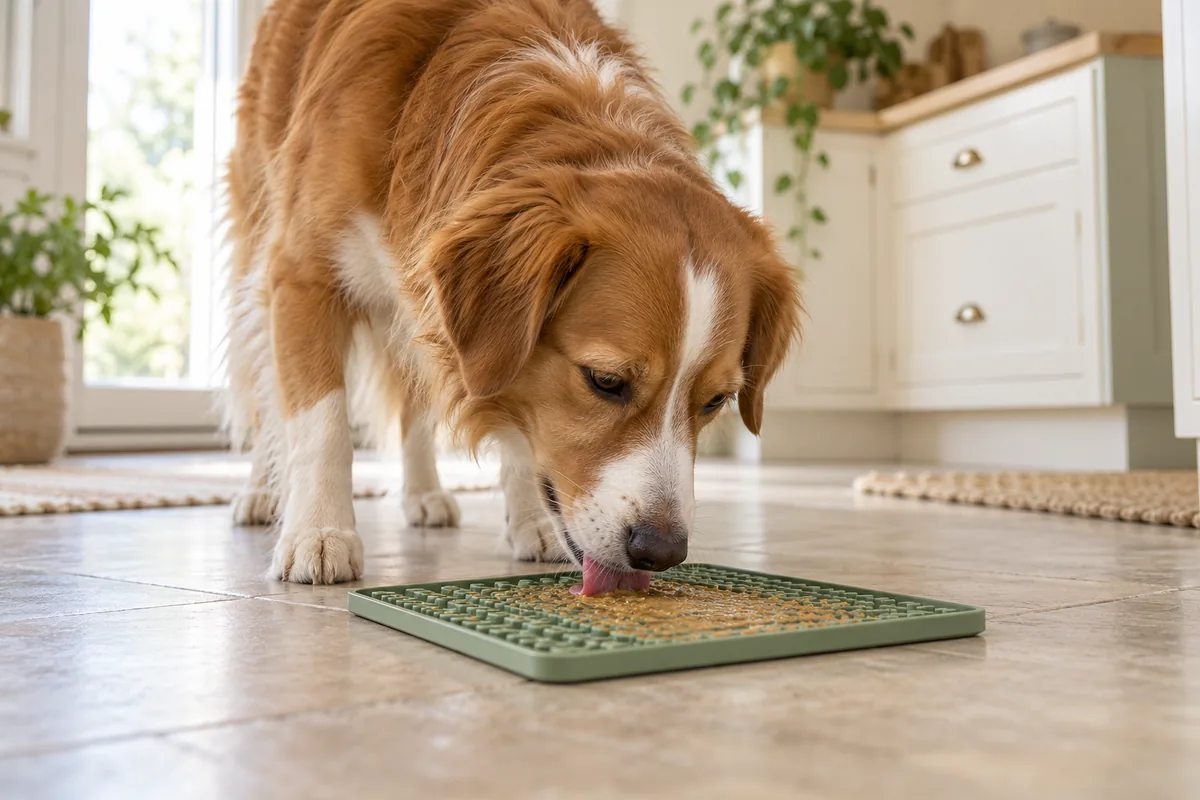
A slow feeder puts obstacles between your dog and their food. A lick mat spreads a small amount of suitable food across a textured surface. Food puzzles and stuffable toys add searching, licking, or manipulating an object.
These activities can provide a manageable focus and help some dogs settle into a routine. However, being occupied is not the same as feeling comfortable when alone.
Evidence for treating anxiety with a particular feeder or mat is limited. Avoid assuming that licking automatically produces a specific chemical or hormonal effect, or that longer eating proves reduced anxiety.
These tools do not independently treat separation anxiety, noise fear, or compulsive gulping caused by medical issues. Pair enrichment with appropriate exercise, rest, gradual training, and professional help when needed.
If your dog finishes a food toy and immediately begins pacing or howling, the toy may have delayed visible distress rather than resolved it. Shorten practice absences instead of simply making the food harder to reach.
A stuffed toy or lick mat can also help in a quieter room on cleaning day — see our guide on helping a dog scared of the vacuum cleaner for when food helps and when your dog needs more distance.
And if your dog ignores the food toy or lick mat until you come home, read dog won’t eat when left alone before you add harder puzzles.
Not sure which tool to start with? Our side-by-side guide, lick mat vs snuffle mat vs puzzle feeder, compares how each one works, which suits which kind of anxious dog, and a simple 7-day rotation.
Outward Hound Fun Feeder Slo Bowl
Outward Hound Fun Feeder offers gulpers a straightforward maze bowl, with different designs to match food portions and muzzle access.
Check price on AmazonWe earn a small commission if you buy through this link, at no extra cost to you. Disclosure
Which tool fits your dog? Quick decision table
| Your dog | Best tool | Why |
|---|---|---|
| Gulps regular meals but remains comfortable eating | Easy maze slow-feeder bowl | Separates food into accessible sections without introducing a complicated task. |
| Enjoys licking soft food | Flat textured lick mat | Offers a simple, stationary activity with a thin food layer. |
| Likes moving objects to release food | Treat-dispensing puzzle or stuffable toy | Adds manageable manipulation and problem-solving. |
| Enjoys searching and does not chew fabric | Snuffle mat | Turns part of a meal into a scent-searching activity. |
| Comfortably uses an unfrozen mat | Lightly chilled or partly frozen mat | Can provide a modest next step if food remains easy to access. |
| Has a short muzzle or struggles with deep grooves | Shallow, widely spaced feeder | Reduces difficulty reaching food; observe breathing and posture. |
| Tears up mats or swallows pieces | Individually assessed alternative | Flexible mats and fabric may be unsuitable, even under a familiar routine. |
| Panics when you leave | Behavior plan with suitable enrichment as support | A feeding tool cannot make an intolerable absence comfortable. |
Swipe the table sideways to see every column.
Slow feeders, lick mats, and puzzles compared
| Type | Best for | Not for | Cleaning |
|---|---|---|---|
| Raised maze slow-feeder bowl | Dogs who gulp meals and can navigate the channels | Dogs who cannot reach food comfortably, chew the bowl, or become frustrated | Scrub channels and undersides; use a dishwasher only when permitted. |
| Flat textured lick mat | Supervised licking of suitable soft food | Dogs who bite, fold, or swallow flexible material | Clean grooves, edges, and suction cups after every use. |
| Puzzle feeder or treat-dispensing toy | Dogs who enjoy accessible problem-solving | Dogs who guard, destroy, or become distressed by the task | Disassemble permitted parts and remove food trapped inside. |
| Snuffle mat | Comfortable scent searching with dry food | Fabric shredders, dogs who swallow strips, or unsuitable wet-food use | Shake out crumbs, inspect fabric, and wash according to instructions. |
| Frozen lick-mat protocol | Dogs already comfortable with the mat and its filling | Dogs who bite frozen material, have dental discomfort, or find it frustrating | Clean after thawing and use; freezing does not replace washing. |
Swipe the table sideways to see every column.
Here, “raised maze” means raised ridges inside a bowl, not necessarily an elevated feeding stand. Choose feeding height according to your dog's needs and veterinary advice, rather than assuming elevation improves gulping.
How we chose these picks
We prioritized accessible food, stable placement, appropriate size, cleaning access, and clear material limitations.
Outward Hound Fun Feeder is our top pick for gulpers who need a simple first slow-feeder. The range includes different maze designs and capacities, allowing owners to choose something manageable rather than automatically selecting the hardest pattern.
The manufacturer's listing on Amazon describes top-rack dishwasher cleaning. Confirm the instructions for the exact model you purchase.
For lick mats, we favor a manageable texture and secure placement. Suction cups can reduce sliding on a compatible surface, but they do not make a mat safe to leave with a dog who chews it.
For puzzles and stuffable toys, the useful question is whether your dog can obtain food comfortably. Durability claims do not remove the need for supervision and inspection.
How to introduce a slow feeder or lick mat safely
Start during a quiet period while you are home. Keep other animals and approaching children away so your dog can investigate without competition.
Choose the correct size for the dog's mouth and meal portion. A feeder that holds the meal may still have channels too narrow for comfortable access. Watch for awkward scraping, repeated pawing, or attempts to overturn it.
Use familiar food first. Place a small portion in easy-to-reach areas, and offer the rest normally if needed. Do not require your dog to solve a difficult puzzle to receive their meal.
For a lick mat, start with a thin smear of suitable food, such as your dog's usual wet food. Check peanut butter ingredients every time: it must be xylitol-free. The FDA warns that xylitol is dangerous to dogs; suspected ingestion needs immediate veterinary advice.
Count fillings within daily food intake. Rich spreads can add more food than expected, and dogs with dietary restrictions may need their vet's guidance before new ingredients.
Supervise every new mat or toy. Remove damaged equipment, and stop if licking changes into tearing or swallowing material. Do not abruptly grab an item from a guarding dog; create space and seek qualified help.
For frozen mats, first establish comfortable unfrozen use. If the product permits freezing, try a thin layer that remains easy to lick, allowing it to soften if needed. Stop if your dog bites at it, seems uncomfortable, or abandons it.
Wash thoroughly after use. Work a suitable brush into grooves and around suction cups, rinse well, and dry before storing. Inspect after dishwasher cycles rather than assuming every recess is clean.
Your 7-day calm mealtime routine
These days organize introduction, not a schedule for increasing difficulty. Repeat a comfortable stage whenever needed, and keep ordinary meal access available.
- Day one: Observe a normal meal. Note gulping, posture, coughing, pacing, and whether other pets create pressure. Choose a quiet feeding area and one appropriate tool rather than buying several at once.
- Day two: Introduce a small portion in the easiest configuration. Use shallow channels or a thin smear of familiar food. Stay nearby without hovering, and watch whether your dog eats comfortably.
- Day three: Repeat the same easy setup. Look for a loose body and manageable access rather than trying to maximize duration. Make the task easier if your dog paws, bites, or repeatedly overturns it.
- Day four: Build a predictable sequence. Offer an appropriate potty opportunity or relaxed sniffing activity, allow settling, then feed in the same quiet location. Avoid intense excitement immediately around food preparation.
- Day five: Adjust one feature if useful. Spread food slightly farther through the bowl or mat, or offer a simple scent search. Keep the food familiar so difficulty and ingredients do not change together.
- Day six: Practice ordinary nearby activity while your dog eats. If considering frozen use, test a permitted, lightly frozen thin layer under supervision instead of combining it with a departure.
- Day seven: Review comfort, cleanup, and safety. Keep the tool only if it suits your dog. If adding enrichment to separation practice, use an already safe, familiar setup within your dog's comfortable absence limit.
Record more than meal length. Comfortable posture, reduced competition, easy food access, and the ability to rest afterward are more useful than a stopwatch alone.
Signs it's more than mealtime enrichment
Slow Feeders and Lick Mats for Anxious Dogs: Do They Help?: signs it’s more than mealtime enrichment
- Gulping or appetite changes began suddenly or accompany weight changes.
- Your dog repeatedly coughs, gags, regurgitates, or struggles to swallow.
- Eating appears painful, or your dog avoids chewing normally.
- Repeated licking or swallowing continues away from food activities.
- Your dog tears up and swallows mats, toys, or fabric.
- Growling, snapping, or guarding makes feeding interactions unsafe.
- Departures trigger panic, persistent vocalizing, or escape attempts despite food enrichment.
Arrange veterinary advice for new or persistent physical symptoms. Swallowed material can cause an obstruction; contact your vet promptly if ingestion is suspected rather than waiting for obvious illness.
A swollen abdomen with repeated attempts to vomit but little or nothing produced is an emergency, especially with restlessness or weakness. Cornell's emergency guidance identifies this combination as a possible sign of bloat.
For guarding or separation distress, involve a qualified, reward-based behavior professional alongside your vet. Avoid punishment or deliberately taking food away to “teach manners.”
Helpful products
Picks on this page are a research-based assessment of features and intended use — not hands-on testing. We earn a small commission if you buy through the Amazon links on this page, at no extra cost to you. Affiliate disclosure
| Product type | Why it helps | Notes |
|---|---|---|
| Outward Hound Fun Feeder slow bowl | Divides meals around ridges to slow access. | Our top pick for a simple first slow-feeder; match capacity, groove spacing, and difficulty to your dog. Our link opens the Notch pattern, the brand’s easiest “Slow” level; choose Small, Medium or Large on the listing. |
| Silicone lick mat with suction cups | Holds a thin layer of suitable food for supervised licking. | Secure only to compatible surfaces; suction does not prevent chewing or ingestion. |
| West Paw Toppl or similar treat-dispensing puzzle | Offers accessible food enrichment with room to adjust difficulty. | Check size and care instructions; keep any filling accessories out of the dog's reach unless intended for use. |
| Snuffle mat | Encourages searching for dry food among fabric folds. | Supervise and remove if your dog chews strips or shakes the mat rather than searching comfortably. |
| KONG Classic stuffable toy | Provides licking and food manipulation during manageable settling practice. | Choose appropriate size and durability, supervise initially, and discard damaged toys. |
| ThunderShirt / anxiety vest | May offer additional support for some dogs during noise or storms. | Optional companion aid, not a feeder or treatment for fear; introduce calmly and monitor fit and temperature. |
Swipe the table sideways to see every column.
Choose one useful starting tool rather than treating the table as a shopping list. A simple bowl that your dog uses comfortably is preferable to a collection of frustrating puzzles.
Ongoing costs include replacement equipment, suitable fillings, and cleaning time. Consider whether narrow channels or multiple moving parts fit your daily routine before buying.
Bottom line
Slow feeders and lick mats can make eating more measured and provide enjoyable enrichment. They are most useful when food remains accessible, equipment stays intact, and the activity fits a calm, predictable routine.
They do not independently treat separation anxiety, noise fear, or medical reasons for gulping. Start easy, supervise, clean thoroughly, and seek help when symptoms extend beyond ordinary mealtime behavior.