On this page
Buying a crate can feel like the obvious next step when your dog chews furniture or struggles alone. But the right purchase depends on why that behavior happens. A dog who needs a familiar resting area has different needs from one who panics behind a closed door.
If chewing and damage are the reason you are shopping, start with our guide for a dog destructive when left alone. It helps you work out whether the cause is boredom, puppy chewing or panic before you buy anything.
After a household move, many owners set up a crate or pen as a temporary safe den in the new place — pair that setup with our dog anxiety after moving timeline rather than treating confinement as the whole plan.
We are dog owners, not vets, and these picks are a research-based assessment rather than our own product testing. This guide helps you compare practical features, recognize unsafe confinement, and decide whether a crate, pen, or dog-proofed room fits your dog.
First: is a crate right for your dog?
A crate or pen is a management tool, not a treatment for separation anxiety. It can limit access to household hazards, but it cannot make a frightened dog comfortable being alone. For puppies learning to settle alone, pair crate or pen setup with our puppy separation anxiety week-by-week plan.
Has your vet ordered crate rest after surgery or an injury? Confinement can be much harder for a dog with separation anxiety. Our guide to separation anxiety during crate rest or recovery after surgery covers what to ask your vet, quiet enrichment that fits rest and what to do if your dog panics in the crate.
Not sure whether to crate a new dog the first time you leave? Our guide to leaving your dog alone for the first time explains safer set-ups and how to check comfort while you are still home.
If your dog bends bars, chews the tray or hurts themselves trying to get out, a stronger crate is usually not the answer. Our guide on dog escaping the crate or room when left alone explains the injury risks and safer set-ups to try while you train.
First, observe your dog while you remain home. Can they enter voluntarily, rest with the door open, and remain relaxed during a brief closure? A recording helps reveal what changes when you move away.
If your dog drools heavily, frantically chews bars, bends wire, digs to escape, or injures teeth or paws, stop crating. Do not shut a panicking dog in a stronger crate.
Instead, consider a pen or dog-proofed room only if your dog tolerates that alternative. Some dogs panic behind any barrier and need human company while you arrange veterinary and behavioral help.
Never leave collars or tags on a dog in a crate; remove harnesses and other snag hazards too.
MidWest iCrate Double-Door Wire Crate with Divider (measure your dog)
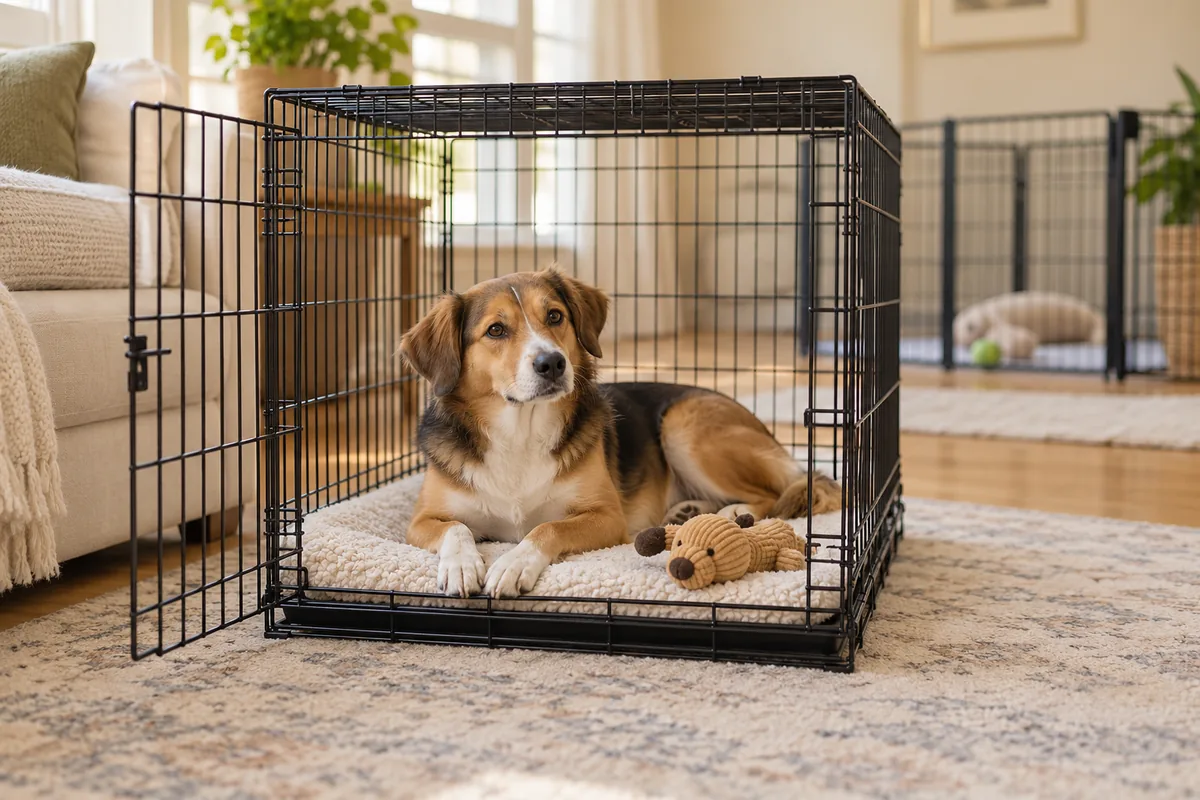
A correctly sized wire crate with a divider offers ventilation, easy cleaning, and adjustable puppy space for dogs comfortable with confinement.
Check price on AmazonWe earn a small commission if you buy through this link, at no extra cost to you. Disclosure
Crate or pen? Quick decision table
| Your dog's situation | Best setup | Why |
|---|---|---|
| Already sleeps comfortably in a closed crate | Correctly sized crate | Maintains a familiar resting arrangement without unnecessary change. |
| Growing puppy comfortable with confinement | Wire crate with divider, plus frequent care | Adjusts usable space as the puppy grows; does not replace potty breaks. |
| Comfortable behind a barrier but wants more movement | Appropriately sized exercise pen | Provides separate areas for resting and moving around. |
| Distressed in a crate but relaxed in a familiar room | Dog-proofed room | Removes close confinement while controlling access to hazards. |
| Climbs or jumps pen panels | Tolerated dog-proofed room | Avoids repeated climbing attempts and potential falls. |
| Panics in crates, pens, and closed rooms | Caregiver support and professional assessment | Changing hardware alone does not address the distress. |
| Calm in confinement but damages lightweight equipment | Carefully assessed heavy-duty crate | May suit a material-strength problem once panic and unsafe chewing are ruled out. |
Swipe the table sideways to see every column.
No setup makes an unsuitable absence appropriate. Plan water, potty opportunities, movement, and companionship around your dog's needs.
Crate types compared
| Type | Best for | Not for | Upkeep and cost |
|---|---|---|---|
| Wire folding crate with divider | Dogs comfortable with visibility and airflow; growing puppies | Bar chewing, wire bending, frantic escape attempts | Usually a lower-cost starting option; clean the tray and wire joints, dry thoroughly, and budget for replacement trays or bedding. |
| Plastic/airline-style kennel | Dogs who prefer more enclosed sides; some travel uses | Dogs who chew plastic, dislike enclosed spaces, or need more airflow | Moderate initial cost; wash shell seams and door hardware, inspect cracks, and check replacement-part availability. |
| Heavy-duty aluminum or steel crate | Calm-in-crate dogs whose size or chewing damages ordinary equipment | Panic, frantic biting, self-injury, or using strength to suppress escape behavior | High initial cost; inspect welds, edges, hinges, and latches, clean drainage areas, and consider weight and replacement-part costs. |
| Soft fabric crate | Calm, crate-trained dogs during supervised travel or temporary stays | Anxious confinement, scratching, chewing, or dogs learning crate skills | Often portable; wash according to instructions, inspect mesh and zippers, and expect fabric replacement if damaged. |
| Furniture-style crate | Calm, non-chewing dogs in a household living area | Chewers, escape attempts, or designs with inadequate ventilation | Often a higher-cost decorative choice; clean spills promptly and inspect wood, finishes, and inaccessible corners. |
Swipe the table sideways to see every column.
“Airline-style” describes a design, not automatic approval for every flight. Check your carrier's current requirements separately. A travel kennel also does not automatically provide crash protection in a vehicle.
How we chose these picks
We considered usable space, ventilation, cleaning access, door placement, divider availability, material limitations, and whether parts can be replaced.
The MidWest iCrate double-door wire crate with divider is our top pick for most dogs who are already calm in a crate. Two doors offer placement flexibility, while the divider and removable tray make everyday use practical. Confirm what the particular listing includes.
That judgment is about useful features, not evidence that this crate reduces anxiety. None of these materials makes confinement suitable for a panicking dog.
Before buying, check the exact model's dimensions, assembly instructions, return conditions, and replacement-part availability.
How to size a crate
Measure your dog rather than choosing solely by breed or weight:
- Measure from the nose to the base of the tail, then add a few inches for a starting length.
- Measure from the floor to the top of the head while sitting naturally, then add a few inches for starting height.
- Check usable interior dimensions, including width. Exterior measurements may overstate the available space.
- Confirm your dog can stand naturally, turn around, sit comfortably, and lie on their side without being cramped.
For upright ears, ensure adequate clearance rather than forcing a lowered posture.
A divider can reduce the usable length of a larger crate for a growing puppy. Move it as needed; your puppy must still have comfortable movement.
Too-small signs include crouching, difficulty turning, and being unable to stretch out. A very large crate may allow a puppy to toilet away from the sleeping area, but extra space is not inherently wrong for a house-trained adult.
Never reduce space to discourage panic-related movement or accidents.
If your dog is having accidents in the crate, our guide to a dog peeing or pooping when left alone covers medical causes, how long dogs can comfortably wait, and when a crate setup itself may be the problem.
Choosing a playpen instead
A playpen can suit a dog who tolerates barriers but dislikes a small enclosure. Choose enough room for comfortable movement, water, and a resting area.
Check panel height, bar spacing, connectors, and stability. Consider your dog's actual jumping, climbing, and pushing behavior rather than choosing by weight alone.
On smooth flooring, panels may slide. Use the manufacturer's approved setup and suitable floor protection without creating chewable edges or gaps where paws can become trapped.
The MidWest foldable metal exercise pen is a practical type to consider, provided the model suits your dog's size and behavior.
Test a pen while you are present. Repeated climbing, chewing, or frantic circling means reassess rather than leaving to see what happens. A familiar dog-proofed room may be better, but only if your dog relaxes there.
Accessories that actually help
A crate cover may reduce visual distractions for some dogs. Others dislike it or become too warm. Keep ventilation clear and fabric beyond chewing reach; never cover a distressed dog to hide the behavior.
A washable crate pad can add comfort if your dog does not shred or swallow bedding. Choose a close-fitting pad without loose ties, and remove it if damaged.
A stuffable food toy or lick mat may occupy a comfortable dog during practice. Introduce it under supervision first. Remove anything your dog can tear apart or swallow, and do not use food to distract them while closing them in beyond their tolerance.
A pet camera helps check actual behavior — our best pet cameras for separation anxiety guide compares Furbo, Petcube, and Wyze. Position cords out of reach and look for relaxed posture and rest, not silence alone. Remote talking unsettles some dogs, so skip that feature if it prompts searching or agitation.
The comfortable crate introduction (7 steps)
Progress according to behavior, not a calendar. Start after potty needs are met, in a comfortable room, with the door secured open.
- Offer meals near the open crate. Begin far enough away that your dog eats comfortably. Do not push or place your dog inside.
- Move food gradually toward the entrance. Allow voluntary investigation and retreat. If your dog stretches forward while keeping their body outside, make the task easier.
- Feed inside with the door open. Position the bowl only as far in as your dog comfortably chooses. Let them leave when finished.
- Introduce a momentary door movement. Close and reopen briefly while staying beside the crate, before worry starts. Stop if your dog stiffens or stops eating.
- Build brief closed-door comfort nearby. Reward relaxed behavior and increase slowly. Include easy repetitions, and meet potty or other needs rather than expecting prolonged waiting.
- Add small movements away. Stand, step aside, or briefly leave sight, returning before distress. A dog comfortable with you nearby may need separate practice when you disappear.
- Practice very short actual absences. Use a camera and stay close enough to return promptly. Extend only after comfortable repetitions; arrange care for absences beyond current ability.
Do not wait for exhausted silence after panic. Stop the exercise and make the next attempt easier; significant distress calls for professional guidance.
Stop signs: when to quit crating
Crates & Pens for Anxious Dogs: How to Choose: stop signs
- Heavy drooling, persistent panting, or escalating vocalizing occurs during confinement.
- Your dog bites or frantically chews bars, doors, or crate edges.
- Wire bends, hardware loosens, or escape attempts damage the enclosure.
- Your dog has bloody paws, injured nails, damaged teeth, or mouth injuries.
- Repeated digging, lunging, or throwing the body against the crate occurs.
- Your dog cannot settle despite a careful introduction and appropriate care.
- Closing the crate consistently produces distress that is absent in a roomier, tolerated setup.
Stop closed-crate sessions and arrange a safer, tolerated alternative. Seek prompt veterinary care for injuries, and involve a qualified behavior professional for recurring panic.
An enclosure advertised as an “escape proof dog crate” cannot promise safety for a distressed animal. Stronger walls can leave the fear unchanged while increasing injury risk.
Helpful products
Picks on this page are a research-based assessment of features and intended use — not hands-on testing. We earn a small commission if you buy through the Amazon links on this page, at no extra cost to you. Affiliate disclosure
| Product type | Why it helps | Notes |
|---|---|---|
| MidWest iCrate double-door wire crate with divider | Offers flexible door access, adjustable puppy space, and straightforward tray cleaning. | Our top pick for most calm-in-crate dogs; confirm dimensions, included parts, and secure assembly. |
| Petmate Sky Kennel / Vari Kennel plastic crate | More enclosed sides may suit dogs who prefer less visual activity. | Check ventilation, interior space, and hardware; travel requirements need separate confirmation. |
| Heavy-duty aluminum crate for strong chewers | May address equipment durability for a dog comfortable with confinement. | Costly; not suitable for suppressing panic. Persistent crate biting needs assessment, not simply thicker material. |
| MidWest foldable metal exercise pen | Creates a larger managed area for dogs comfortable behind barriers. | Choose appropriate height and spacing; supervise initial use and stop climbing or frantic escape attempts. |
| Crate cover | May soften visual activity around a resting dog. | Preserve airflow, monitor temperature, and keep material out of chewing reach. |
| Washable crate mat | Adds a removable, cleanable resting surface. | Not for dogs who shred or ingest bedding; inspect regularly. |
| KONG Classic or lick mat | Provides manageable food enrichment during comfortable practice. | Match size and durability to the dog; supervise first and remove damaged items. |
| Pet camera | Reveals settling, pacing, escape attempts, and changes after departure. | Keep cords inaccessible; monitoring does not replace timely help or a behavior plan. |
Swipe the table sideways to see every column.
Most ongoing costs involve cleaning, laundry, replacement bedding, damaged parts, and enrichment supplies. Budget for caregiver support too when your dog cannot yet manage necessary absences.
Bottom line
The best crate for an anxious dog is one the dog can use comfortably and safely. For many calm-in-crate dogs, a correctly sized wire crate with a divider is a sensible starting choice.
For dogs distressed by close confinement, a tolerated pen or dog-proofed room may be better. Panic, frantic escape attempts, and injuries are reasons to stop crating and seek help—not reasons to buy stronger bars.