On this page
- Why moving stresses dogs
- Signs your dog is struggling after a move
- Moving timeline
- Before the move
- Moving-day checklist
- The first 72 hours in the new home
- Weeks 1 to 3: settling in
- Not eating, accidents or barking in the new house
- Leaving your dog alone in the new home
- Helpful products after a move
- Senior and rescue dog notes
- When to get extra help
- Bottom line
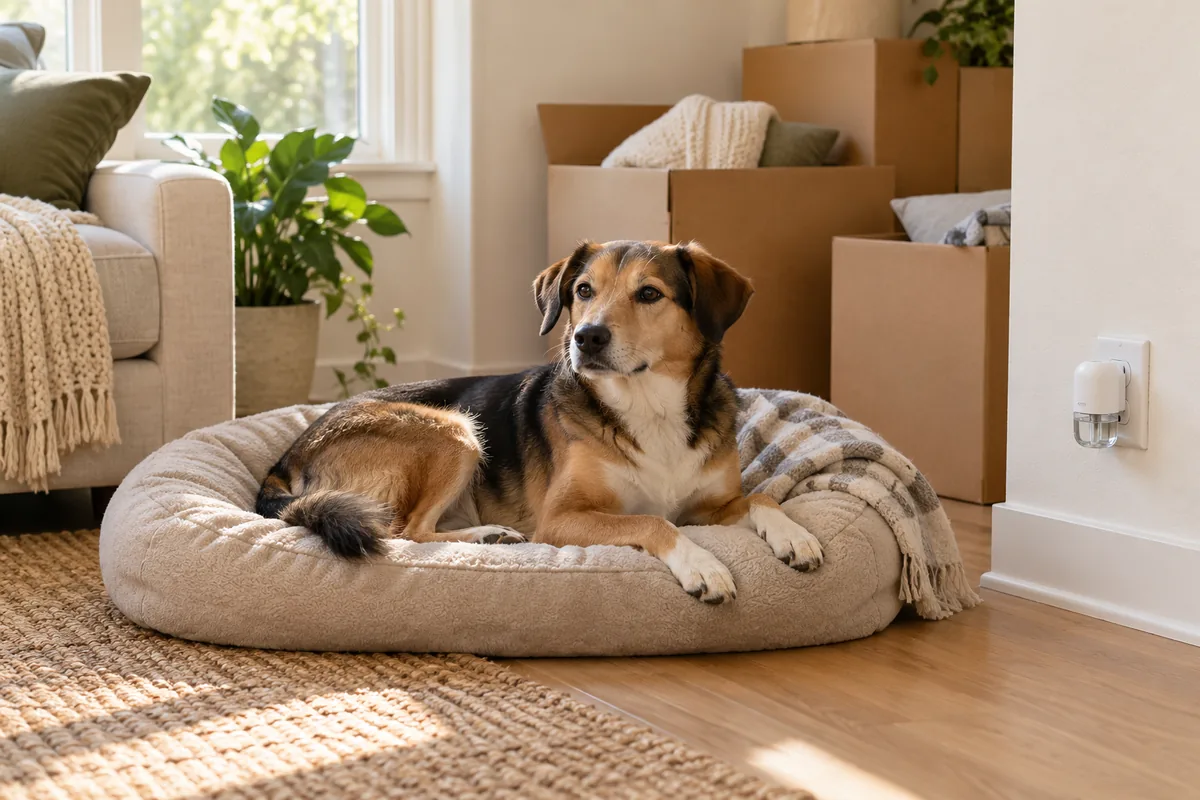
The boxes arrive, the front door keeps opening, and your normally settled dog starts following you everywhere. Later, they bark at hallway sounds or refuse dinner. A move changes much of the environment your dog uses to predict what happens next.
We are dog owners, not vets. This guide offers a practical settling-in plan without promising a deadline. Our product suggestions reflect intended uses and limitations; we have not tested these products ourselves.
Why moving stresses dogs
Dogs learn the sounds, smells, routes, and routines of home. Moving changes those cues, sometimes alongside travel, unfamiliar people, disrupted sleep, and less predictable attention.
Did the move happen because of a breakup, or does your dog now live between two homes? Our guide to dog separation anxiety after a breakup or shared custody covers calm handovers, a two-home agreement and a travel bag checklist.
A short stay away can stir up the same worry as a move. Our guide to traveling with a dog who has separation anxiety covers settling your dog into hotels, rentals and family homes for a few nights.
Stress can begin during packing. Furniture shifts, boxes appear, and usual resting places disappear before the dog reaches the new property.
At the destination, ordinary events may feel unfamiliar: an elevator, neighbors above, a refrigerator cycling, or a different route to the yard. Your dog may stay alert because those sounds have not yet become background.
Some dogs show adjustment stress for days to a few weeks, but that is a broad planning expectation, not a measured rule for every dog. Watch whether eating, resting, exploring, and recovery gradually improve.
ThunderEase Dog Calming Pheromone Diffuser Kit
A pheromone diffuser may provide optional background support in the familiarized safe room; results vary, and routine and training remain essential.
Check price on AmazonWe earn a small commission if you buy through this link, at no extra cost to you. Disclosure
Signs your dog is struggling after a move
Common changes include pacing, hiding, whining, clinginess, barking, reduced appetite, and toileting accidents. Your dog may also sleep lightly or repeatedly check doors and windows.
These behaviors can reflect uncertainty, but they are not specific to stress. Pain, illness, travel-related discomfort, or access to something harmful during unpacking can produce similar changes.
Look at intensity and recovery. Brief caution followed by eating and rest differs from persistent panting, frantic escape attempts, or inability to settle.
Keep short notes: what happened, the surroundings, how long it lasted, and what helped. Patterns are more useful than labeling every unfamiliar behavior anxiety.
Moving timeline
| When | What to do | Why it helps |
|---|---|---|
| 2 weeks before | Preserve routines, introduce packing gradually, and arrange moving-day care. | Reduces avoidable disruption and last-minute decisions. |
| Moving day | Keep your dog with a trusted caregiver or in a secure, quiet room; transport safely. | Limits exposure to open doors, noise, and unloading traffic. |
| First 72 hours | Establish one familiarized room, frequent toilet opportunities, and quiet rest. | Provides a manageable starting point while essential routines resume. |
| Weeks 1–3 | Expand exploration, learn quiet walking routes, and rebuild comfortable separation. | Allows new surroundings and absences to become familiar gradually. |
Swipe the table sideways to see every column.
If the move is sooner, prioritize safety, identification, food, water, bedding, and reliable care rather than trying to complete every preparation.
Before the move
Keep meals, walks, toilet opportunities, and sleep as predictable as practical. Introduce boxes in manageable amounts rather than surrounding your dog with sudden packing activity.
Maintain a quiet resting area and teach household members not to disturb the dog there. Avoid repeatedly relocating that space as each room is packed.
Keep familiar bedding aside. If it is clean and safe, there is no need to wash away every familiar smell immediately before moving.
Arrange a sitter, friend, or family member your dog already knows. If that is unavailable, identify a room away from loading activity and plan who will supervise.
Update microchip contact information and identification details. Locate a veterinary clinic near the new home and plan continuity of any existing care.
For a dog with known travel fear, discuss arrangements with your vet before moving day.
Moving-day checklist
Dog Anxiety After Moving House: moving-day checklist
- Confirm who is responsible for your dog throughout loading, travel, and unloading.
- Use a trusted caregiver or a secure quiet room away from open exterior doors.
- Tell movers and household members which room must remain undisturbed.
- Pack accessible food, water, bowls, medication supplies if applicable, and familiar bedding.
- Check identification details and use a well-fitted leash and harness for transitions.
- Use an appropriate vehicle restraint or travel kennel your dog can tolerate.
- Plan toilet breaks and safe weather conditions; never leave your dog in a hot vehicle.
- Prepare the new resting room before allowing your dog into unloading traffic.
A crate is useful only if your dog is comfortable with it. Do not introduce unfamiliar confinement during the busiest part of the move.
The first 72 hours in the new home
- Prepare one safe room. Choose a comfortable, ventilated room away from unloading. Remove cords, packaging, chemicals, and swallowable objects. Add water, familiar bedding, and a place to retreat.
- Offer a quiet toilet opportunity. Use a leash initially, including in an unfamiliar fenced yard. Check gates, gaps, and possible escape routes before relying on the boundary.
- Allow exploration at your dog's pace. Begin with the prepared room and nearby areas. Let your dog investigate or rest without touring every room, meeting visitors, or approaching frightening objects.
- Restore familiar care routines. Use the usual food and bowls where possible. Keep meals, outings, and bedtime recognizable, allowing extra toilet opportunities while your dog learns the new layout.
- Protect uninterrupted rest. Reduce unnecessary visitors and noisy activity near the resting area. Stay nearby if helpful, without constantly encouraging your dog to interact.
- Keep separations manageable. Avoid immediately leaving for the length your dog tolerated previously. Begin with comfortable nearby movement and brief absences, arranging company when needed.
- Review health and progress. Note eating, drinking, toileting, sleep, and recovery from noises. Seek advice for concerning symptoms rather than assuming every change will disappear after unpacking.
The first three days are an organizational framework, not a deadline for being settled.
Weeks 1 to 3: settling in
Expand access gradually as your dog becomes comfortable and rooms become safe. Keep the resting area consistent rather than moving the bed each time furniture changes.
Take familiar, manageable walks around the neighborhood. Quiet routes and sniffing opportunities are often easier than immediately visiting busy parks or meeting every nearby dog.
For new sounds, allow distance and reward comfortable observation. Do not force exposure until your dog stops reacting. Close curtains or change resting location when passing activity repeatedly triggers barking.
In apartments, consider elevators, shared corridors, nearby doors, and sounds from adjoining units. Choose quieter outing times when possible.
If hallway sounds keep your dog on alert in the new place, see our guide for a dog anxious about apartment hallway noise for quick changes you can make today and a gradual sound training plan.
In houses, inspect fencing and gates carefully, and supervise early yard visits. A yard does not replace walks, companionship, or separation practice.
Adjust according to behavior. A difficult day may mean reducing activity and returning to easier routines, not increasing exposure to catch up.
Not eating, accidents or barking in the new house
Reduced appetite can accompany stress, but it also occurs with illness or pain. Offer the usual diet in a quiet location and avoid repeatedly introducing rich new foods.
Contact your vet about a meaningful appetite change. The PDSA advises prompt veterinary attention when a dog has eaten nothing for more than 24 hours. Seek advice sooner for puppies, medically vulnerable dogs, refusal of water, vomiting, weakness, or other symptoms; do not use that interval as permission to wait.
For accidents, temporarily revisit house-training basics. Offer frequent trips, accompany your dog to the new toilet area, and reward appropriate toileting. Clean accidents thoroughly without punishment.
New-house barking may respond to unfamiliar sounds or views. Record the trigger, soften avoidable stimulation, and reward relaxed recovery. Persistent departure-linked barking requires a different investigation from brief alerts at hallway sounds.
Leaving your dog alone in the new home
Comfort with separation does not automatically transfer between properties. Moving can bring back previous difficulties or reveal problems that were not obvious before.
Start with easy practice while you are home: relaxed resting, a step away, and brief moments out of sight. Then try very short actual departures, staying close enough to return promptly.
Use a camera to observe posture, pacing, vocalizing, and settling. Increase only when your dog remains comfortable, mixing easier repetitions with modest changes.
A familiar food toy may help, but eating does not rule out distress. Watch what happens when it finishes.
Arrange a caregiver for absences beyond current tolerance. If you suspect separation anxiety, see Separation Anxiety or Boredom? 10 Signs and discuss recurring distress with your vet or a qualified behavior professional.
Helpful products after a move
Picks on this page are a research-based assessment of features and intended use — not hands-on testing. We earn a small commission if you buy through the Amazon links on this page, at no extra cost to you. Affiliate disclosure
| Product type | Why it helps | Notes |
|---|---|---|
| ADAPTIL/ThunderEase pheromone diffuser | May provide background support in the prepared safe room. | Our top pick as optional support; evidence is mixed. Plug in before arrival if possible, following the label. |
| MidWest iCrate or wire crate | Creates a familiar managed resting area for a confinement-comfortable dog. | Measure your dog; do not force use if barriers trigger panic or escape attempts. |
| MidWest foldable exercise pen | Gives a foldable safe zone when a crate feels too tight. | Watch early sessions for climbing or panic; alternative to a closed crate. |
| KONG Classic or similar stuffable toy | Offers familiar food enrichment during manageable settling practice. | Choose suitable size and durability; supervise initially and discard damaged toys. |
| Lick mat: LUKITO 2-pack | Provides accessible licking with appropriate food. | Supervise, remove if shredded, and use xylitol-free ingredients. |
| Anxiety vest like ThunderShirt | May support some dogs during manageable situational stress. | Measure chest girth; optional support with supervised introduction. |
| Familiar calming donut bed | Preserves a recognizable resting place from the old routine. | Use your dog's existing preference; a new bed is not necessary. Bring the familiar bed from the old home when you can; measure for size; a bed is comfort, not a cure. |
| Pet camera: Furbo 360 Dog Camera | Shows how your dog copes with separation in the new property. | Secure cables and check recordings rather than relying only on alerts. |
Swipe the table sideways to see every column.
Keep diffuser vents unobstructed and follow the specific product's placement and replacement instructions. It is not a sedative and cannot replace environmental adjustments or training.
Introduce optional aids separately. Familiarity and safe use matter more than buying several products at once.
Senior and rescue dog notes
Senior dogs may find changed routes, slippery floors, or unfamiliar nighttime layouts difficult. Provide nonslip paths, easy bed access, and gentle lighting where needed.
Pain or sensory changes can also affect adjustment. New nighttime pacing, confusion, or difficulty moving deserves veterinary attention rather than being attributed solely to the move.
A rescue dog may have experienced several transitions, although an unknown history does not prove trauma. Keep introductions manageable and allow choice about contact and exploration.
Avoid treating any fixed settling-in formula as a rule. Some dogs relax quickly; others need longer support or professional help.
When to get extra help
Dog Anxiety After Moving House: when to get extra help
- Your dog stops eating, refuses water, or shows other physical symptoms.
- Vomiting, diarrhea, weakness, pain, or unusual toileting appears.
- Escape attempts, barrier biting, or self-injury occurs.
- Persistent pacing, panting, hiding, or vocalizing prevents normal rest.
- Departures trigger panic or you cannot find a comfortable practice level.
- Fear, guarding, or aggression makes ordinary interactions unsafe.
- Distress worsens or continues without a clear improving trend.
Seek urgent care for severe symptoms, breathing difficulty, collapse, or suspected poisoning or ingestion. Do not wait several weeks simply because adjustment can take time.
For ongoing emotional distress, start with your vet and involve a qualified, reward-based behavior professional or veterinary behaviorist.
Bottom line
Moving changes the cues your dog uses to feel comfortable at home. Familiar routines, a manageable resting space, gradual exploration, and rebuilt separation practice can support adjustment.
Follow progress rather than a deadline. When health changes, panic, or persistent distress appears, seek help instead of assuming your dog only needs more time.