On this page
- Why a breakup can unsettle a dog
- Adjusting or separation anxiety?
- When one person moves out
- First week after one person moves out checklist
- Shared custody: keeping two homes consistent
- Two-home agreement
- Calm handovers
- Handover day checklist
- Travel bag for two homes checklist
- When your dog can't be left alone yet
- Is shared custody right for your dog?
- Mistakes to avoid
- When to get extra help
- Helpful products
- Bottom line
A breakup can leave you managing a new home, a different schedule and a dog who suddenly follows you everywhere. That is a lot of change at once. A simple care plan can make the dog's part of that change more manageable.
We are dog owners, not vets, trainers or lawyers. This guide focuses on routines, handovers and alone-time support. Custody agreements for pets are a legal question to check locally; your dog's behavior can help guide the everyday care arrangements.
Why a breakup can unsettle a dog
When one person moves out, familiar patterns disappear. The morning walker may be gone, bedtime changes, or the house becomes empty during hours when someone previously stayed home.
A dog going between two homes also encounters different sounds, resting places and departures. Even a familiar person may now leave through an unfamiliar door.
Some dogs adapt comfortably. Others become more watchful, seek extra contact or struggle when left. These changes do not tell us exactly what the dog understands about the breakup. They tell us to look closely at what has changed and what support is needed.
If relocation is involved, our dog anxiety after moving guide covers settling into unfamiliar surroundings.
Furbo 360° Dog Camera
A pet camera shows how your dog copes in each home, helping both carers adjust practice and arrange suitable company.
Check price on AmazonWe earn a small commission if you buy through this link, at no extra cost to you. Disclosure
Adjusting or separation anxiety?
The following patterns are clues, not a diagnosis. Medical problems, unfamiliar noises and unmet toilet needs can overlap with behavior concerns.
| What you see | More likely adjusting to change | More likely separation anxiety |
|---|---|---|
| Following you | Can still rest away from you | Cannot settle when you move out of reach |
| Waiting by the door | Checks briefly, then moves away | Remains there pacing or scratching |
| Quiet behavior | Loose body and comfortable sleep | Rigid posture, trembling or hiding |
| Vocalizing | Brief sounds followed by relaxation | Persistent barking or howling after departure |
| Chewing | Explores accessible belongings | Frantic damage focused on exits |
| Food toy use | Eats, finishes and rests | Abandons familiar food when you leave |
| Toileting indoors | Long gap or unfamiliar toilet routine | Occurs during short absences with other distress |
| Two-home behavior | Settles after exploring | Repeatedly becomes distressed when left in either home |
Swipe the table sideways to see every column.
A dog may also cope in one home and struggle in the other. That difference is useful information, not evidence that either person has done something wrong.
When one person moves out
Write down what that person used to provide: walks, meals, company, play and bedtime care. Replace those practical supports before expecting the dog to manage the new schedule.
If someone previously worked from home, your dog may now face genuine alone time for the first time. Previous comfort with one person leaving does not show they can cope with everyone leaving.
Keep meals, walks and sleep reasonably familiar. Offer gentle attention and opportunities to rest independently without suddenly withdrawing affection.
Film a tiny absence while watching live. Return before worry starts; if stress appears, return calmly and make the next practice easier. Our separation anxiety training plan explains how to build from that starting point.
Our guide to separation anxiety after losing a companion also discusses routine changes when a familiar household member is no longer present.
First week after one person moves out checklist
Dog Separation Anxiety After a Breakup or Shared Custody: first week after one person moves out checklist
- List the care tasks that need replacing.
- Keep familiar food and feeding arrangements.
- Preserve a comfortable sleeping place.
- Plan suitable walks and toilet breaks.
- Check the home for moving-related hazards.
- Record a short, comfortable absence.
- Note when the first signs of worry appear.
- Arrange company for longer necessary absences.
- Offer calm activities and undisturbed rest.
- Avoid introducing several new rules at once.
- Record appetite, sleep and toilet changes.
- Contact the vet about recent behavior changes.
Shared custody: keeping two homes consistent
Consistency does not require identical houses. Aim for the same basic expectations and a familiar order of events: walk, food, toilet opportunity, then rest.
Agree on cue words, furniture access and how each person responds to worry. A dog allowed on the sofa in one home may need a clearly taught alternative in the other; avoid repeatedly correcting them for rules they have not learned.
Use one shared log. Record the home, absence length, first worry sign, settling and anything unusual that day. Missing observations stay unknown rather than becoming “a good day.”
Agree on the same conservative training level, while allowing either home to use an easier step. Comfort does not automatically transfer between locations.
Two-home agreement
| What to agree | Why it matters | Example |
|---|---|---|
| Meal times and food | Keeps feeding predictable | Similar meal windows and usual food |
| Walk and toilet routine | Prevents avoidable discomfort | Toilet break before every absence |
| Cue words | Reduces confusion | Both use “bed” for settling |
| Furniture rules | Makes expectations clearer | Provide the same alternative resting cue |
| Resting space | Gives the dog a familiar destination | Blanket in a quiet corner |
| Alone-time practice level | Avoids pushing beyond current comfort | Use the last comfortable step; shorten if needed |
| Care cover | Prevents unsupported long absences | Confirm sitter before workdays |
| Shared observations | Helps identify patterns | Record behavior and timestamps after practice |
| Health concerns | Prevents important information being missed | Report appetite changes before handover |
| Delays and backup care | Protects the dog when plans change | Named backup person confirms availability |
Swipe the table sideways to see every column.
Calm handovers
Choose a quiet, secure place and keep the exchange brief and gentle. Prepare belongings beforehand so the dog is not waiting through a lengthy packing process.
Secure the dog before opening outside doors, and make sure the receiving person has control before the other person releases the leash. Avoid crowding or pulling the dog between people.
A friendly goodbye is fine. Repeated departures and returns can make the transition harder to follow. Afterward, offer a toilet opportunity, a quiet sniff and time to settle with the receiving person nearby.
If handovers repeatedly trigger distress, change the setting or routine and seek qualified help. Do not force repeated difficult exchanges as practice.
Handover day checklist
Dog Separation Anxiety After a Breakup or Shared Custody: handover day checklist
- Confirm the time and secure meeting place.
- Share any health or behavior changes.
- Report the last meal and toilet break.
- Explain how the dog slept.
- Update the latest comfortable practice level.
- Confirm care cover at the receiving home.
- Pack familiar items before the exchange.
- Check collar, harness and leash fit.
- Secure the dog before opening doors.
- Keep greetings and goodbyes gentle.
- Allow settling time after arrival.
- Record how the dog copes afterward.
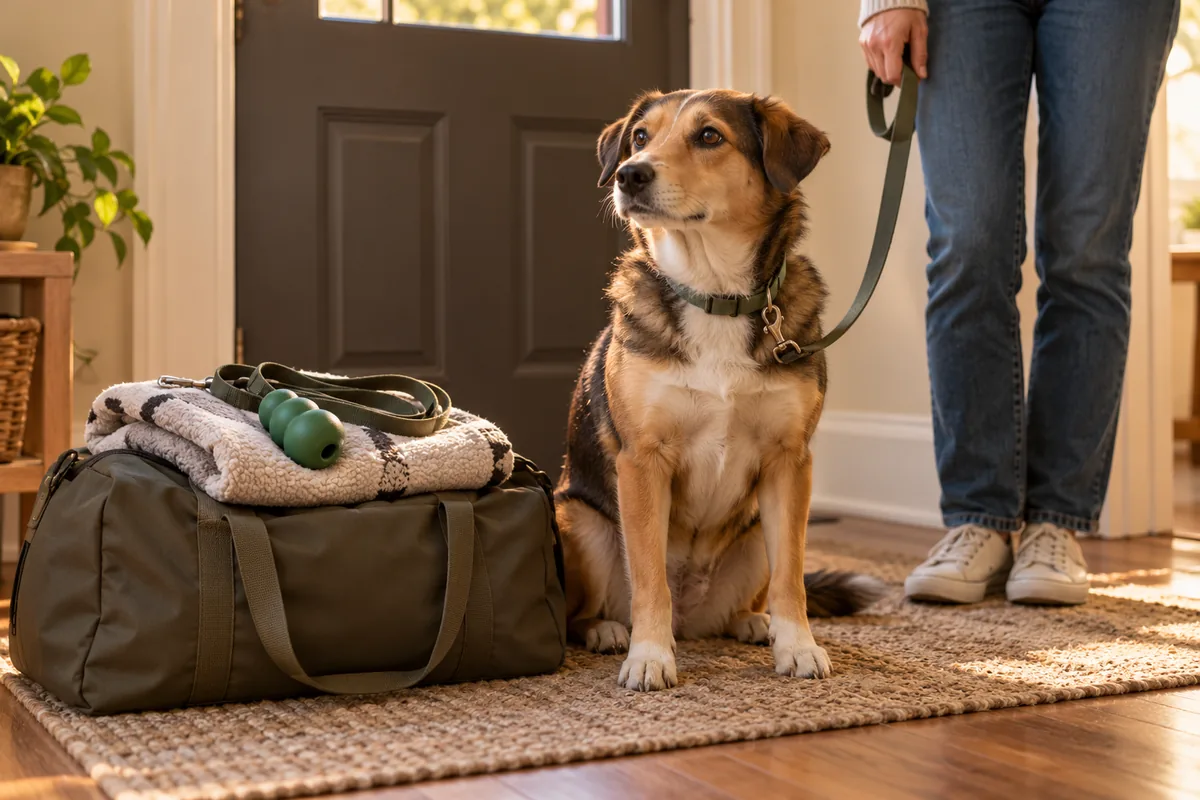
Travel bag for two homes checklist
Check that each item suits your dog; clothing and soft items are unsuitable for dogs who swallow fabric.
Dog Separation Anxiety After a Breakup or Shared Custody: travel bag for two homes checklist
- Familiar bed or blanket.
- Usual food in a secure container.
- Clear feeding notes.
- Familiar food and water bowls.
- Correctly sized, undamaged rubber food toy.
- A familiar toy the dog safely enjoys.
- Well-fitting harness or collar.
- Secure leash.
- Waste bags.
- Towel for wet walks.
- Vet and emergency contact details.
- Access to the current shared care log.
When your dog can't be left alone yet
The immediate priority is covering absences beyond your dog's comfort while training happens separately.
The ASPCA's separation anxiety advice describes treatment as helping a dog tolerate being alone by gradually getting used to short absences. While you work on it, the ASPCA suggests avoiding leaving the dog alone except during training, for example by having a family member, friend or sitter stay with them, or using doggy daycare.
Choose company your dog actually finds reassuring. Some dogs settle with any familiar carer; others remain upset when a particular person leaves. Trial the arrangement rather than assuming another person's presence is enough.
A walker can meet toilet and exercise needs, but a brief visit does not cover panic before and after it. Our care options guide and pet sitter preparation guide can help.
Practice tiny absences on calm days, increase only while relaxed, and shorten the next attempt after worry. Use our departure cues guide if bags or keys already trigger distress.
Is shared custody right for your dog?
Look at repeated observations from both homes: comfortable sleep, normal appetite, relaxed movement and recovery after handovers. Consider the travel itself and whether each home can provide suitable company.
A single difficult arrival does not settle the question. However, repeated distress, poor rest or worsening behavior deserves a change in the care plan.
For some dogs, one stable home with visits works better than switching. That is a fair option to consider around the dog's welfare and the arrangements available.
Compare similar short absences rather than testing which home can manage the longest one. Our how long can a dog be left alone guide covers general needs, but anxiety can make much shorter gaps difficult.
Mistakes to avoid
Do not assume a dog comfortable alone in the old home will immediately cope in a new one. Avoid combining a handover, unfamiliar confinement and a long absence.
Never punish accidents, damage or vocalizing, use bark-control devices, or leave a distressed dog to cry until quiet. Never shut a panicking dog in a crate and leave.
Do not use recordings to assign blame or leave out difficult sessions from the shared log. Keep notes factual: “paced near door after departure,” rather than “was difficult.”
Food activities from our enrichment guide can support comfortable settling. They cannot make an absence safe simply by keeping the dog occupied briefly.
When to get extra help
Dogs Trust's separation anxiety advice explains that changes in behavior are often influenced by physical health. Seek veterinary advice if behavior has recently changed.
Contact your vet promptly about injuries, escape attempts, persistent food refusal or other health concerns. Avoid repeating the situation that led to injury while arranging help.
A qualified, reward-based behavior professional can help when panic starts quickly, either home cannot manage safe practice, or the dog is getting worse. Share clips and observations from both locations so the plan reflects the whole picture.
Helpful products
Picks on this page are a research-based assessment of features and intended use — not hands-on testing. We earn a small commission if you buy through the Amazon links on this page, at no extra cost to you. Affiliate disclosure
| Product type | Why it helps | Notes |
|---|---|---|
| Pet camera: Furbo 360° camera | Shows coping and settling in each home | Our top pick. Limitation: it needs Wi-Fi and only shows what happens; it cannot comfort your dog or replace care cover. Alternative: an old phone or laptop on a video call. |
| Stuffable rubber food toy: KONG Classic | Provides a familiar calm activity in both homes | Limitation: an anxious dog may ignore food when alone, and it only lasts a short time. Alternative: scatter a few kibbles or a supervised snuffle game. |
| Soft washable bed: Best Friends by Sheri donut bed | Offers a familiar resting place when traveling | Limitation: a bed is comfort, not a fix for anxiety, and some dogs chew or ignore a new bed. Alternative: a familiar blanket or an old unwashed T-shirt from home, if safe for your dog. |
Swipe the table sideways to see every column.
These picks are chosen from research, not from personal product testing, and none of them replaces company or a gradual training plan. Our best pet camera guide explains recording options. Place equipment and cables out of reach, and agree on recording privacy in each household.
Bottom line
Help your dog through the change with familiar routines, calm handovers and honest observations from both homes. Build alone time gradually, arrange company beyond current comfort, and adjust the living arrangement if repeated switching is making life harder for the dog.