On this page
- Why travel is hard for dogs with separation anxiety
- Should your dog come at all?
- Before you book
- Where you're staying: what to plan
- Trip packing list for an anxious dog
- The first hour after arrival
- Settle-in plan for the first day
- Hotels
- Vacation rentals
- Staying with family or friends
- When you need to go out without your dog
- Who watches the dog when you go out?
- The trip home
- Mistakes to avoid
- When to get extra help
- Helpful products
- Bottom line
Taking your dog on vacation can solve one problem—finding care at home—while creating another. Dinner reservations, museums, weddings and even checking in can involve separations your dog is not ready to handle in an unfamiliar place.
A workable trip starts with those ordinary moments, not just the destination. We are dog owners, not vets or trainers. This guide helps you plan accommodation, company and familiar routines so traveling together does not depend on leaving your dog to struggle.
Why travel is hard for dogs with separation anxiety
New rooms bring unfamiliar smells, footsteps, doors and sleeping arrangements. Your dog also loses the familiar surroundings that may help them rest at home.
The ASPCA’s separation anxiety advice identifies changes such as moving to a new residence or a changed schedule as possible triggers. A temporary stay is different from moving, but unfamiliar surroundings still deserve a cautious plan.
Assume your dog will manage less alone time away than at home. Comfortable home absences do not automatically transfer to a hotel, rental or relative’s house.
KONG Classic Stuffable Dog Toy
A familiar stuffed rubber food toy offers some comfortable dogs a quiet activity while settling beside you somewhere new.
Check price on AmazonWe earn a small commission if you buy through this link, at no extra cost to you. Disclosure
Should your dog come at all?
Consider the whole trip: transport, accommodation, activities, sleep and care. A quiet stay with familiar people may suit your dog better than a busy itinerary involving repeated handovers.
Ask whether someone can remain with them whenever needed. If the answer depends on them suddenly managing several hours alone, change the plan.
A familiar sitter or carefully trialed boarding arrangement may be kinder for some dogs. Compare our boarding guide and care options guide. Neither travel nor boarding suits every anxious dog.
Before you book
Ask the property directly whether dogs may be left unattended, including with a sitter. Confirm restrictions involving crates, shared areas, size, other animals and housekeeping. Read the current written policy rather than relying on a booking-site label.
Choose practical surroundings: easy potty access, reliable cooling, secure exits and room to rest away from busy corridors. Ground-floor access may help some households, but check the actual layout.
Plan dog-friendly activities and identify a backup caregiver. Review our car travel anxiety guide before departure if the journey itself is difficult.
Where you're staying: what to plan
| Place | Biggest risk | What to plan |
|---|---|---|
| Hotel | Corridor activity, staff entry and prohibited unattended stays | Confirm policies and arrange company for outings |
| Vacation rental | Unfamiliar hazards and assumptions about secure fencing | Inspect rooms and boundaries before allowing exploration |
| Family home | Open doors, busy visitors and unclear responsibility | Name the adult watching the dog at each handover |
| Friend’s home with pets | Social pressure, guarding or incompatible animals | Separate resting and feeding areas; gradual introductions |
| Campground or cabin | Wildlife, outdoor noise, heat and escape opportunities | Secure handling, suitable shelter and constant care arrangements |
| Long-drive stop | Bolting when doors open or someone leaving the dog in the vehicle | Leash before exit and take turns for human errands |
| Multi-stop trip | Repeated disruption without enough recovery | Fewer locations and protected quiet time |
Swipe the table sideways to see every column.
Trip packing list for an anxious dog
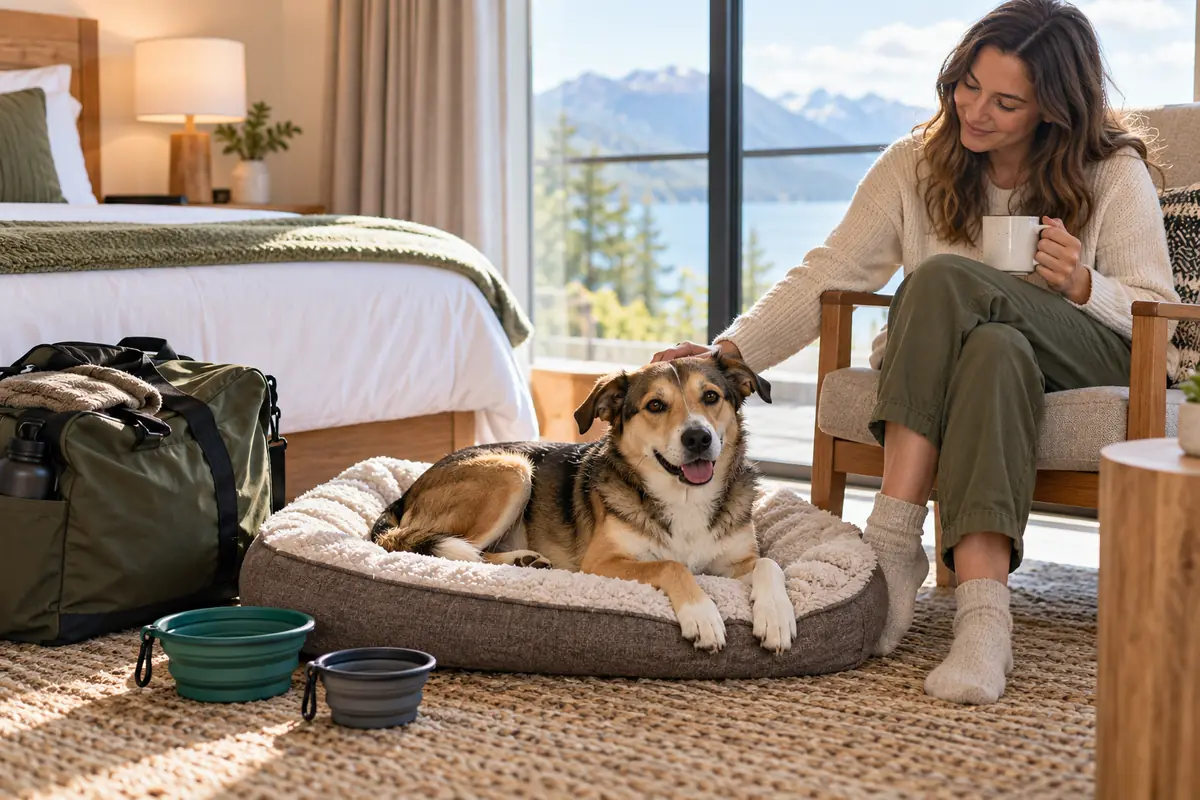
Pack familiar items your dog already uses safely. Check accommodation restrictions before bringing bedding or equipment.
Traveling With a Dog Who Has Separation Anxiety: Hotels, Rentals and Visiting Family: trip packing list for an anxious dog
- Usual food with enough for unexpected delays.
- Familiar food and water bowls.
- Fresh water for the journey.
- Familiar bed or blanket.
- A suitable stuffed rubber food toy.
- Safe, familiar enrichment supplies.
- A secure leash and well-fitting harness.
- Current identification and microchip contact details.
- Waste bags and cleanup supplies.
- Towels and a spare washable blanket.
- Relevant health and vaccination records.
- Your vet’s contact information.
- Details of an emergency clinic near the destination.
- A written care sheet for anyone helping.
- Confirmed sitter details and a backup plan.
- Any familiar travel restraint or comfortable crate used safely.
A crate belongs on the list only if your dog already relaxes in it. Never use one to contain panic in an unfamiliar room.
The first hour after arrival
If practical, let one person check the room while another stays with your dog. Look for accessible rubbish, dropped food, cords, unsecured windows and doors that open unexpectedly.
Offer a quiet potty and sniffing opportunity, then let your dog investigate the accommodation at their own pace. Avoid a stream of greetings or an immediate outing to a crowded attraction.
Set out familiar bedding and water, and stay nearby while they rest. Offer their familiar food toy if they want it. Refusal can indicate worry, although appetite changes can also have physical causes.
Settle-in plan for the first day
This sequence is flexible. Your dog’s comfort matters more than completing every activity.
| Time | What you do | Why it helps |
|---|---|---|
| Before entering | Check exits, hazards and room conditions | Prevents avoidable surprises |
| On arrival | Offer a calm potty and sniffing opportunity | Meets immediate needs after travel |
| After entering | Allow gradual exploration with you present | Gives your dog time to gather information |
| Once the space is familiar | Arrange water, bedding and an optional familiar food activity | Establishes a recognizable resting routine |
| Later that day | Follow ordinary meal and walk patterns where practical | Adds predictability |
| First evening | Keep plans quiet and confirm overnight arrangements | Protects rest before another busy day |
Swipe the table sideways to see every column.
Hotels
Never leave your dog alone in a hotel room if they may panic. Barking, scratching, door damage and escape attempts can affect their safety, neighboring guests and staff.
Coordinate housekeeping so someone responsible remains with your dog or takes them out. A “do not disturb” request does not replace a care plan or override property procedures.
Ask where potty breaks are permitted and how to reach them without overwhelming your dog. If a required crating policy conflicts with your dog’s comfort, choose different accommodation rather than forcing confinement.
Vacation rentals
A private rental may be quieter, but privacy does not establish that alone time is allowed or comfortable. Confirm unattended-pet rules and whether an outside sitter may enter.
Check fences in person. Photographs may not show loose panels, low sections or gaps beneath gates. Keep your dog supervised outside rather than assuming the yard is secure.
Choose a resting spot away from busy windows. Our guide to dog anxiety after moving offers ideas for introducing unfamiliar surroundings without rushing independence.
Staying with family or friends
Agree on dog care before arrival. “Someone will be around” is too vague if everyone assumes somebody else is responsible.
Explain door and gate routines, safe handling and whether your dog settles with other people. Keep children and resident pets from disturbing the dog’s resting or feeding space.
Let greetings be optional. Your dog does not need to accept hugs, lap time or play to be polite.
Name the adult taking over before you leave a room or the property. Trial that handover while you remain available to return.
When you need to go out without your dog
Plan coverage before booking the activity. Take turns, choose a dog-friendly alternative or use a caregiver your dog has met and tolerated comfortably.
Do not treat the vacation as a chance to test a long absence. Where property rules permit and your dog is comfortable, any practice should begin with very short separations and immediate ability to return.
Dogs Trust’s separation anxiety advice describes plans progressing to very brief absences and gradually changing how the dog feels about being left. Our separation anxiety training plan explains that work; an unfamiliar room calls for an easier starting point.
General guidance in How Long Can a Dog Be Left Alone? cannot establish your dog’s limit in a new setting. A camera can provide information, but cannot replace company or stop an escape attempt.
Who watches the dog when you go out?
| Option | Good for | Watch out for |
|---|---|---|
| One traveling companion stays | Dogs comfortable with that person | Agree fair turns and realistic activity plans |
| Familiar family member or friend | Dogs who already relax with them | Confirm actual availability and trial the new setting |
| Vetted local sitter at the accommodation | Dogs comfortable with another caregiver | Property permission, secure access and an introductory meeting |
| Care at a sitter’s home | Dogs who settle comfortably there | Resident pets, sitter absences and unfamiliar barriers |
| Carefully assessed daycare | Social dogs who enjoy that environment | Required health records, overstimulation and rest opportunities |
| Taking the dog on the outing | Activities genuinely suitable for the dog | Heat, crowds, restrictions and travel fatigue |
Swipe the table sideways to see every column.
Use our pet sitter guide for care instructions. Check experience, handling methods, emergency procedures and backup arrangements before relying on a new caregiver.
The trip home
Protect rest before departure and plan suitable potty and water stops. Use your dog’s familiar travel restraint, and secure them before opening vehicle doors.
Never leave your dog in a parked car, including during meal or shopping stops. Take turns or choose an arrangement where the dog can safely accompany you.
At home, return to familiar routines without immediately testing a long absence. Travel fatigue does not prove emotional readiness. If separation seems harder, resume easier practice and appropriate care cover.
Mistakes to avoid
Do not assume “pet-friendly” means unattended dogs are permitted, or that another person’s presence automatically reassures your dog.
Avoid a packed first day, forced greetings and unfamiliar confinement. Never shut a panicking dog in a crate.
Do not punish barking or damage, use aversive collars or leave your dog to cry until exhausted. A food toy cannot make an overwhelming absence manageable.
Finally, avoid keeping an unsuitable itinerary simply because it is booked. Shortening or changing a trip can be the most practical response to significant distress.
When to get extra help
Talk to your vet before travel if your dog panics quickly, has injured themselves or is not improving. The ASPCA advises ruling out medical issues before behavior work.
Dogs Trust also recommends veterinary advice when behavior has recently changed. Do not assume every new symptom away from home is anxiety.
Seek prompt veterinary help for injury, dangerous escape attempts or illness signs. A qualified, reward-based behavior professional can help assess travel and care arrangements.
If your dog remains very distressed, shorten the trip or switch to a previously trialed, suitable care option. Do not move them into unfamiliar boarding without assessing whether that would be safer.
Helpful products
Picks on this page are a research-based assessment of features and intended use — not hands-on testing. We earn a small commission if you buy through the Amazon links on this page, at no extra cost to you. Affiliate disclosure
These picks are chosen from research, not from personal product testing. They are practical supports, not a fix on their own, and none of them replaces company or a care plan for outings.
| Product type | Why it helps | Notes |
|---|---|---|
| Stuffable rubber food toy: KONG Classic | Offers a familiar activity during quiet time beside you | Limitation: a stressed dog usually ignores food, so not eating it is useful information, but the toy won't fix distress. Alternative: supervised scatter feeding on a towel. |
| Lick mat: LUKITO 2-pack | Provides some comfortable dogs with a quiet food activity | Limitation: it helps calm dogs settle but can be chewed up, so supervise at first and only leave it with dogs who don't chew it. Alternative: a frozen stuffed food toy. |
| Collapsible travel bowls: SLSON collapsible 2-pack | Make carrying food and water bowls convenient | Limitation: just a convenience; they don't reduce anxiety, and some dogs chew silicone. Alternative: your dog's usual bowls from home. |
Swipe the table sideways to see every column.
Inspect toys and bowls for damage, keep food quantities appropriate and wash items after use. A familiar routine matters more than adding new equipment.
Bottom line
Travel with an anxious dog works best when company, rest and safe handling are built into the itinerary. Check policies, bring familiar things and assume unfamiliar places require more support. Change the trip when necessary rather than asking your dog to endure panic.