On this page
- Why Thanksgiving week is hard for a dog with separation anxiety
- Bring your dog, hire a sitter, or board?
- Holiday decision table
- Book early and do a trial run
- Visiting relatives with your dog
- Hosting guests at home
- Holiday food dangers and who to call
- Keep alone time within what your dog can handle
- Getting back to normal after the holiday
- Thanksgiving week checklist
- When to get extra help
- Helpful products
- Bottom line
Thanksgiving is Thursday, November 26, 2026. For families with a dog who has separation anxiety, the holiday plan needs to cover more than the drive or dinner: it also needs to cover who is with the dog when everyone goes out.
We are dog owners, not vets or trainers, and we have no ties to any sitter, boarding or care service. This guide helps you choose a workable arrangement, prepare for a busy household and return to your usual routine without expecting your dog to cope with too much at once.
Why Thanksgiving week is hard for a dog with separation anxiety
Holiday life can change several familiar things together. Your dog may travel somewhere new, meet a carer, sleep in a different room or experience a house full of people followed by sudden quiet.
Even at home, meals, walks and departures may shift. Visitors can bring noise and excitement, while open doors, luggage and food create extra management needs.
Taking your dog with you does not automatically solve the problem. A dog who copes with a short absence at home may struggle in an unfamiliar house. Likewise, a dog who enjoys a sitter's visit may not yet be comfortable when you leave.
The useful question is: who will be with the dog, where will they rest and what happens if the plan changes?
Furbo 360° Dog Camera
A pet camera shows how your dog copes with a carer or quiet space, helping you adjust the holiday plan.
Check price on AmazonWe earn a small commission if you buy through this link, at no extra cost to you. Disclosure
Bring your dog, hire a sitter, or board?
Choose according to your dog's observed comfort, not the option that looks simplest on paper. Consider travel, the destination, your planned outings and the availability of familiar company.
If the sitter you booked falls through, our pet sitter cancellation guide walks you through the first hour, who to call in which order and how to change your plans so your dog is not left alone.
An in-home sitter preserves the surroundings but may still need an introduction. Boarding can work for some dogs who enjoy the environment and staff contact; others find the noise or time alone difficult.
A trusted friend or relative may be a good fit if they can provide the actual level of company required. Being nearby is different from being available throughout the hours your dog needs support.
If you bring your dog, agree on a care plan with your hosts before traveling. Our general travel guide and boarding guide explore those choices in more detail.
Holiday decision table
| Option | Best for | Watch out for | What to ask |
|---|---|---|---|
| Bring your dog | A dog comfortable traveling and staying with you in a suitable home | Unfamiliar rooms, other pets and outings where dogs cannot come | Can someone stay with the dog during every planned outing? |
| In-home sitter | A dog who benefits from familiar surroundings and accepts the carer | Visits may leave longer gaps than the dog can manage | Will you stay, and when would the dog be alone? |
| Boarding | A dog who has shown comfort with the facility and its care arrangements | Noise, unfamiliar routines and overnight periods without company | Who is present overnight, and what happens if the dog becomes distressed? |
| Friend or family | A dog already comfortable with that person and setting | The carer may have holiday plans or underestimate the support needed | Can you follow the routine and provide company for the required hours? |
Swipe the table sideways to see every column.
Book early and do a trial run
Thanksgiving is a busy travel period, and sitters and boarding facilities can fill early. Start inquiries as soon as your plans take shape, especially when your dog needs someone to stay rather than make brief visits.
The same early booking and trial-run approach works for a March or April getaway; our spring break guide adds a week-by-week planner and a plan for when the kids are home all week.
Booking early and doing a trial run work for summer trips too, and our summer schedule guide adds camps, day trips and heat safety while you are out.
Describe the behavior honestly: what your dog does, when it starts and what company helps. Confirm opening hours, arrival and collection arrangements, emergency procedures and a backup for delays.
Do a trial before the holiday. Begin with a short sitter visit while you remain available, then assess an easy handover. For boarding, a suitable day stay may help you assess the setting before considering an overnight trial.
Ask for specific observations: eating, resting, pacing, vocalizing and recovery after you leave. A trial is information, not a pass-or-fail test. Change the plan if your dog struggles.
Use our pet sitter preparation guide to organize instructions.
Visiting relatives with your dog
Ask your host to prepare a quiet area before arrival. Bring familiar bedding, usual food, bowls and a toy your dog safely enjoys. After a toilet and sniffing opportunity, allow time to explore and settle with you nearby.
For a longer road trip with several overnight stops, our drive-day plan for a cross-country move covers breaks, meals and hotel nights without leaving your dog alone.
A quiet bedroom can provide relief from the gathering, but it should not become a place to shut a panicking dog away. Arrange for someone the dog is comfortable with to stay there when needed.
Plan the big meal outing, Black Friday shopping and other dog-free activities in advance. Take turns staying, choose dog-friendly plans or arrange a suitable local carer. Do not leave your dog alone in a strange house because the outing is expected to be short. If the drive itself is stressful, see our car travel anxiety guide.
Introduce other pets cautiously and provide separate feeding and resting areas. Adults should supervise children around the dog; children should not hug, crowd or disturb a resting or stressed dog.
Never leave your dog alone in a parked car.
Hosting guests at home
If you are hosting, set door rules before guests arrive. Choose an adult to manage the dog during arrivals, and tell visitors not to open gates or outside doors without checking.
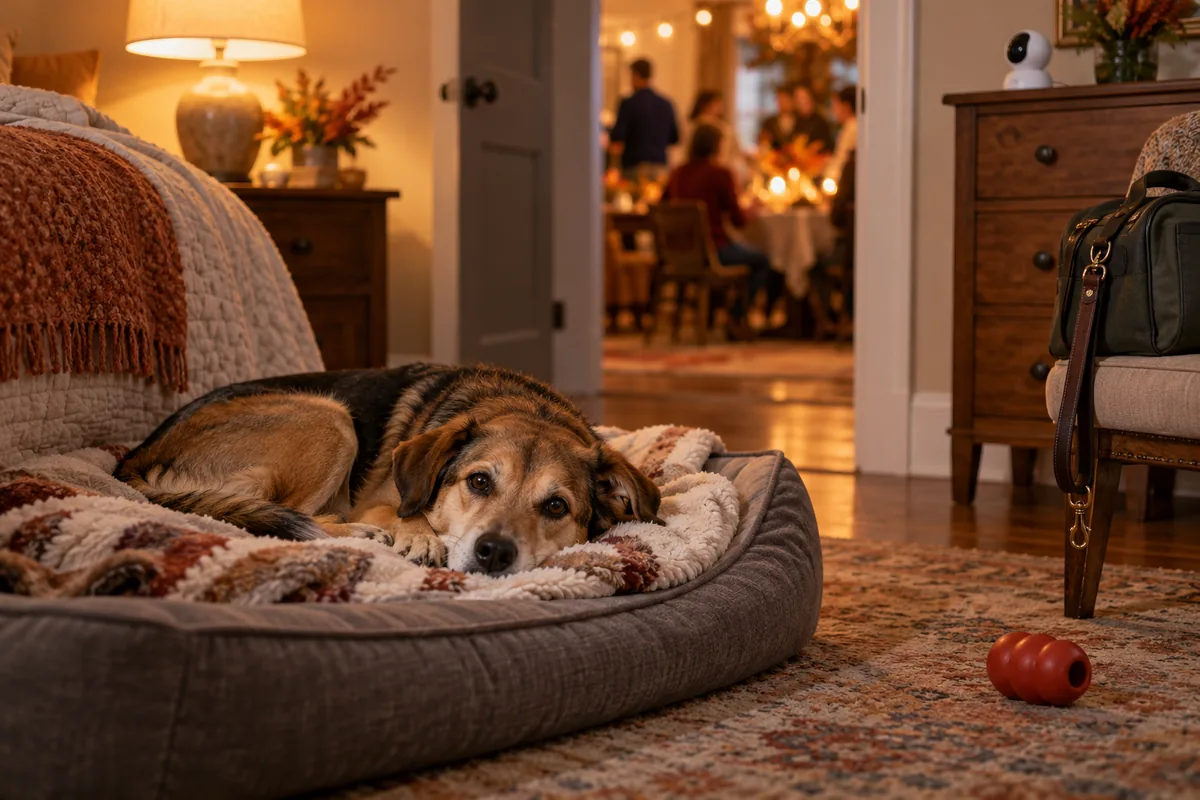
Create a calm room or resting area away from the busiest traffic. Let the dog choose whether to interact. A familiar person can sit with them during noisy periods instead of expecting them to remain alone behind a closed door.
Tell guests to leave the dog's bed and food toy undisturbed. If your dog guards food or space, keep interactions safely managed and seek professional guidance rather than forcing contact.
Keep walks, meals and toilet opportunities reasonably familiar. A busy party is not a substitute for suitable activity or sleep. Tell everyone that treats must come through the person responsible for feeding the dog.
Holiday food dangers and who to call
Keep serving dishes, plates and trash out of reach. Ask guests not to sneak food, even if they believe a small amount is harmless.
Turkey bones can splinter or cause choking or obstruction. Fatty scraps can cause serious digestive trouble. Onions, grapes and raisins, and products containing xylitol are also risky for dogs.
If your dog eats something concerning, contact your veterinarian or the ASPCA Animal Poison Control Center at (888) 426-4435 promptly (a consultation fee may apply). Keep packaging or ingredient information and note roughly what was eaten and when. Do not wait for symptoms or try to induce vomiting unless a veterinary professional instructs you.
Trouble breathing, collapse, choking or other severe signs need emergency veterinary care. Save the nearest 24/7 emergency animal hospital's details for your destination before traveling.
Keep alone time within what your dog can handle
Holiday plans do not change your dog's current ability to cope. Include travel delays, restaurant waits and shopping time when planning care.
The ASPCA's separation anxiety advice recommends avoiding absences outside training while working on the problem, using arrangements such as a family member, friend or sitter staying with the dog, or suitable doggy daycare.
Do not assume comfort at home transfers to the destination. Use easier steps and suitable company in the new setting. If tiny practice absences are appropriate, watch live video and remain close enough to return promptly.
If distress appears, return calmly and make the plan easier. Do not wait for silence or use a food toy to carry the dog through an absence they cannot handle; a food toy is enrichment, not a treatment for panic.
Our care options guide and training plan explain the wider approach.
Getting back to normal after the holiday
After travel or a busy household, give your dog time for familiar meals, walks and undisturbed rest. Unpack hazards and restore their usual resting area.
Is a college student coming home for Thanksgiving? Our college move-out guide explains how to keep some of your dog's new routine during the visit and keep the goodbye calm.
If a winter storm could delay your trip home, a winter plan for a dog with separation anxiety covers lining up a nearby backup person before the forecast turns.
Staying home for December? Our guide to a Christmas and New Year's plan for a dog with separation anxiety covers holiday parties, visitors, Christmas Day and New Year's Eve fireworks.
Check how your dog handles short departures before returning to a longer routine. Being comfortable before the trip does not guarantee the same starting point afterward.
Use easier practice if needed and keep care cover available. A setback does not mean all previous progress is lost. Our after-vacation guide covers rebuilding the routine after a period of extra company.
Thanksgiving week checklist
Thanksgiving and Holiday Travel With a Dog Who Has Separation Anxiety: thanksgiving week checklist
- Three to four weeks before: Compare bringing the dog, a sitter, boarding and trusted family care.
- Three to four weeks before: Contact suitable carers and confirm availability.
- Before booking: Explain your dog's behavior and actual company needs.
- Before booking: Ask about overnight care, emergencies and delays.
- Before the holiday: Arrange a suitable sitter visit or day-stay trial.
- Before the holiday: Review the trial and change plans if needed.
- Before travel: Ask your vet about concerns and follow any existing vet plan.
- Before travel: Pack familiar bedding, food, bowls and safe activities.
- Before arrival: Agree on care during meals out and shopping.
- On arrival: Offer a toilet break, gentle exploration and quiet company.
- During gatherings: Manage doors, children, other pets and food.
- During outings: Keep absences within current comfort and use care cover.
- Before returning: Confirm pickup or handover plans and backup arrangements.
- The weekend after: Restore familiar routines and check short departures on camera.
When to get extra help
Contact your vet well before the trip if your dog panics quickly, has injured themselves or is not coping with the proposed care arrangement. Follow any existing veterinary plan or prescription and ask about holiday arrangements in advance.
Do not assume new food refusal, lethargy or other changes are simply stress. Call the vet for advice, particularly if your dog is not eating, seems unwell or has suddenly changed behavior.
Injury, dangerous escape attempts or possible ingestion of risky food need prompt attention. A qualified, reward-based behavior professional can help you choose a safer care plan if your dog cannot settle with the available options.
Shortening or changing the holiday is sometimes the practical choice. It is reasonable to prioritize an arrangement your dog can manage.
Helpful products
Picks on this page are a research-based assessment of features and intended use — not hands-on testing. We earn a small commission if you buy through the Amazon links on this page, at no extra cost to you. Affiliate disclosure
| Product type | Why it helps | Notes |
|---|---|---|
| Pet camera: Furbo 360° camera | Shows how your dog copes with a sitter or in a quiet room | Our top pick. Limitation: it needs Wi-Fi (check the Wi-Fi where you are staying) and only shows what happens; it cannot comfort your dog. Alternative: ask the sitter or host for short videos. |
| Portable travel dog bed: FurHaven Trail Pup travel bed | Gives your dog a familiar place to rest in a new house | Limitation: a familiar bed can be a comfort, but it does not treat anxiety, and some reviewers find the padding thin. Use it as bedding, never as a reason to shut a panicking dog away. Alternative: pack your dog's own blanket or bed from home. |
| Rubber food toy: KONG Classic | Offers enrichment during calm, supervised quiet time | Limitation: it is enrichment, not a treatment for panic, and some stressed dogs will not eat; eating does not prove your dog is comfortable. Alternative: scatter part of a meal on a mat. |
Swipe the table sideways to see every column.
Supervise new items before relying on them. If your dog stops eating or seems unwell during the trip, call your vet early rather than waiting it out. Keep food toys away from other pets if sharing could cause tension.
Bottom line
Choose holiday care around your dog's comfort, book early and trial the arrangement. Plan who stays during every dog-free outing, protect quiet rest and keep food and doors safely managed. Afterward, return to familiar routines and rebuild easy absences as needed.