On this page
- Why winter can make separation anxiety harder
- Exercise and sniffing on short-walk days
- Keep practicing alone time on snow days
- The first week back after time at home
- Winter week planner
- Keep your home warm and safe while you're out
- Winter hazards: antifreeze, ice melt and paws
- Your snowstorm backup plan
- Before you leave on a winter day
- When to see the vet or a behavior professional
- Helpful products
- Bottom line
A snowy week can quietly change everything your dog expects: the morning walk gets shorter, the family stays home, and darkness arrives before dinner. When normal departures return, a dog who already finds alone time difficult, or has separation anxiety, may struggle more.
We are dog owners, not vets or trainers, and the products mentioned here were chosen from research, not from personal product testing. This winter plan focuses on manageable routines, comfortable practice and cold-weather safety, without expecting extra exercise or a new toy to solve distress.
Why winter can make separation anxiety harder
Winter does not automatically cause separation anxiety. It can, however, change the conditions that helped your dog cope.
Heading somewhere warmer for the season instead? Our snowbird season guide covers the trip south, settling into a winter rental, condo or RV park and readjusting at home in spring.
Shorter walks may mean less movement, sniffing and time exploring. Snow days can replace ordinary absences with constant company. Then work or school resumes, sometimes with a longer commute because of the weather.
Early darkness changes the home environment too. Your dog may now spend the end of an absence in a dark room, or hear snowplows and delivery activity outside. If the clocks have just changed too, our daylight saving time guide covers shifting the routine gradually.
Restlessness after a shortened walk is not necessarily separation anxiety. Look at what happens when you leave. Repeated pacing, howling, panting, drooling, scratching at exits or being unable to rest suggest distress that needs attention.
New clinginess can also reflect discomfort or illness. Do not assume the season explains a sudden change.
Furbo 360° Dog Camera
A pet camera helps you notice changes in settling during winter absences, provided your home still has power and Wi-Fi.
Check price on AmazonWe earn a small commission if you buy through this link, at no extra cost to you. Disclosure
Exercise and sniffing on short-walk days
Think about replacing opportunities, rather than matching outdoor miles indoors. A few calm activities spread through the day may be more manageable than one intense session.
Try an easy food search on a familiar mat, a supervised snuffle game or finding a toy placed in plain sight. Begin simply so your dog succeeds without becoming frustrated. Use part of their usual food allowance when appropriate. Our enrichment for anxiety guide and lick mat vs snuffle mat vs puzzle feeder comparison have more indoor ideas.
For gentle movement, walk together between rooms or practice familiar cues on a nonslip surface. Avoid indoor sprinting, sharp turns and repeated jumping, especially for dogs with mobility problems.
Offer a safe rubber food toy afterward if your dog enjoys one; it is enrichment, not a treatment for panic. Watch first to check that they do not tear off or swallow pieces.
Keep outdoor toilet opportunities available when conditions allow. Indoor games do not replace toileting, and tiredness does not remove fear of being alone. Let your dog settle after activity before beginning a practice absence.
Keep practicing alone time on snow days
Being snowed in does not mean you need to stop all practice. It also does not mean you should suddenly keep your dog behind a closed door for hours.
Summer break brings the same challenge for weeks at a time; our summer schedule guide covers practice while the kids are home, plus heat safety.
Start with something already comfortable: resting on their bed while you move around, a brief room-to-room gap or a tiny departure. Some dogs find barriers difficult, so choose the starting point that keeps your dog relaxed.
Use a camera or a recording to check. Return before worry develops whenever possible. If your dog becomes distressed, return calmly and make the next attempt easier; do not wait for silence while panic continues. Never scold or punish barking, chewing or accidents.
Actual departures should happen only when access is safe. Stay inside if steps, sidewalks or entrances are hazardous.
Continue normal affection and company between sessions. The goal is comfortable experience apart, not making your dog feel rejected while everyone is home.
The first week back after time at home
Before work or school resumes, record a short, manageable absence to see where your dog is now. Their previous comfortable duration may have changed. Our after-vacation re-entry plan and Christmas and New Year's plan cover the holiday stretch in more detail.
Bring walks, meals and rest closer to the returning schedule gradually. Rehearse winter departure cues too: boots, a heavy coat, gloves and keys. Handle them during ordinary moments without always leaving.
Arrange care for the parts of the day your dog cannot currently manage. A family member, sitter or suitable daycare may cover the gap; our care options guide compares them. A walker can meet toilet and activity needs, but a brief visit does not support a dog who panics immediately before and after it.
During the first week back, review footage and keep practice easy. Do not use the first workday as a test of whether your dog will manage a long absence.
Winter week planner
| Situation | Risk for an anxious dog | What to do |
|---|---|---|
| Short-walk day | Less sniffing and movement may leave the dog restless. | Add gentle indoor movement, food searches and quiet rest. |
| Snow day with everyone home | Comfortable alone-time practice disappears. | Keep tiny, relaxed practice gaps where safe. |
| First day back after the holidays | A familiar absence may now feel difficult. | Check the current starting point and arrange care cover. |
| Cold snap | Drafts and reduced outdoor opportunities affect comfort. | Check heating, bedding, water and supported toilet breaks. |
| Power outage | Heating, cameras and communication may fail. | Activate a nearby caregiver and a warm indoor backup location. |
| Storm keeps you away | The absence extends beyond the dog's comfort level. | Ask a confirmed local person to arrive before the gap grows. |
| Icy sidewalks | Walks become risky or uncomfortable. | Choose a safer route and replace missed activity indoors. |
| Early darkness | The resting area changes before you return. | Use a familiar lamp safely and check the camera view. |
Swipe the table sideways to see every column.
Keep your home warm and safe while you're out
Check the thermostat before every absence. Avoid a daytime setting chosen only to save energy if it leaves your dog uncomfortable. There is no single safe temperature for every dog; size, coat, age, health and housing conditions all matter.
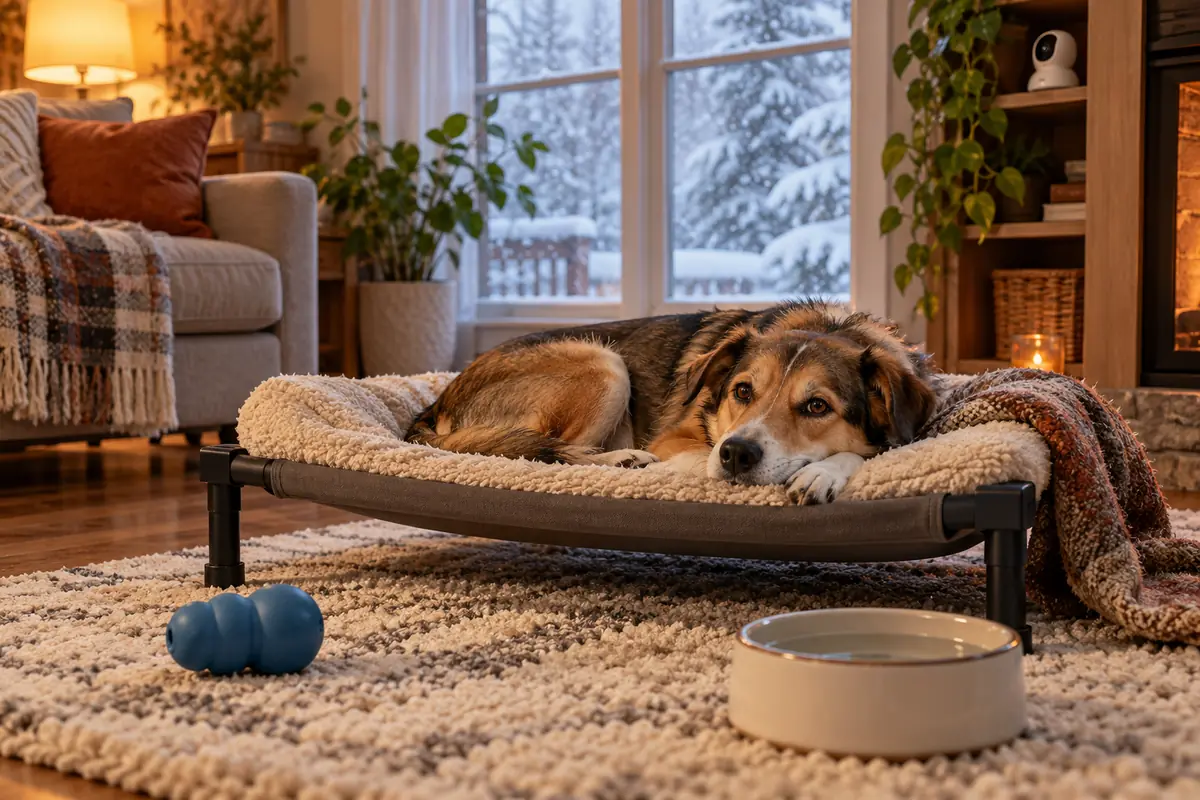
Provide a comfortable bed away from drafts and cold exterior doors. A raised bed needs a stable surface, suitable padding and easy access. An older dog should not have to climb or jump to reach warmth.
Keep water available and place it where your dog can reach it easily.
Switch off portable space heaters before leaving. Do not depend on an unattended fireplace or exposed heat source to keep your dog warm. Protect cords and keep bedding away from heating equipment.
Never leave your dog outside, in a garage or in a car as a winter alone-time arrangement.
Plan for loss of heat before it happens. A camera may go offline when power fails, and a silent app does not confirm that the house is comfortable.
Winter hazards: antifreeze, ice melt and paws
The ASPCA's cold weather safety tips advise keeping pets inside, washing and drying their paws after each walk, cleaning up antifreeze spills, keeping ice melts out of reach and giving them a warm place to sleep, off the floor and away from drafts.
Store antifreeze and ice melt securely, including bags brought indoors and products carried on shoes. Keep your dog away from vehicle leaks and unfamiliar puddles.
After walks, gently clean and dry the paws, checking between the toes for packed snow, salt and irritation. Look for redness, cracks, limping or repeated licking. Painful paws can make settling harder and deserve veterinary attention.
Do not assume an ice-melt product is harmless because of reassuring packaging. Prevent access and follow its handling instructions.
If your dog may have swallowed antifreeze or ice melt, call your vet or ASPCA Animal Poison Control at (888) 426-4435 immediately. Do not wait for symptoms or try a home treatment. Keep the packaging available if you can do so safely.
Your snowstorm backup plan
Choose a nearby person before the forecast becomes urgent. Someone in your building or neighborhood may be more reachable than a sitter who must drive across town.
Confirm that they are comfortable handling your dog and that your dog accepts their company. Test keys and entry arrangements, including what happens if an electronic lock or garage opener loses power.
Agree when they should act. For example, they might take over when your expected return is delayed beyond the planned care window. They need instructions for meals, toilet breaks, safe handling and veterinary contact.
If heat fails, identify a warm indoor place your dog can go with a caregiver when travel is safe. Do not ask anyone to take dangerous roads.
A neighbor's quick check is useful, but a dog who needs company may require that person to stay.
Before you leave on a winter day
Winter and Dog Separation Anxiety: Snow Days, Short Walks and Cold Snaps: before you leave on a winter day
- Check the forecast and likely travel delays.
- Confirm the absence fits your dog's current comfort level.
- Arrange company for any unsupported gap.
- Confirm the nearby backup person is available.
- Check caregiver keys and building access.
- Share veterinary contacts and care instructions.
- Check the thermostat and heating.
- Provide a warm bed away from drafts.
- Leave fresh, accessible water.
- Switch off portable space heaters.
- Secure fireplace access and heating cords.
- Put antifreeze and ice melt out of reach.
- Offer a safe toilet break and suitable activity.
- Clean, dry and check paws afterward.
- Leave only enrichment your dog has used safely.
- Test the camera and prepare for it going offline.
- Use safe lighting if darkness will arrive before you return.
- Confirm what happens if roads close or heating fails.
When to see the vet or a behavior professional
Contact the vet early if your dog refuses food, seems unwell or develops a sudden behavior change. New trembling, restlessness, accidents or clinginess should not automatically be treated as winter boredom.
Strong distress, self-injury or attempts to break through exits need prompt help; our separation anxiety red flags guide explains which signs are urgent. Seek urgent veterinary care for collapse, breathing difficulty or serious injury.
A qualified reward-based behavior professional can help adjust alone-time practice when your dog cannot settle or progress has stalled. Meanwhile, arrange company so necessary absences do not repeatedly overwhelm them. Our guide to finding separation anxiety help in the US explains the options.
A difficult winter period does not mean you have failed. It means the current plan needs to match your dog's needs and the conditions outside.
Helpful products
Picks on this page are a research-based assessment of features and intended use — not hands-on testing. We earn a small commission if you buy through the Amazon links on this page, at no extra cost to you. Affiliate disclosure
| Product type | Why it helps | Notes |
|---|---|---|
| Pet camera: Furbo 360° camera | Shows how your dog settles during winter absences. | Our top pick. Limitation: it needs 2.4GHz Wi-Fi and power, so it can go offline in an outage, and it only shows what happens; it cannot comfort or warm your dog. Alternative: a neighbor checking in. |
| Rubber food toy: KONG Classic | Offers indoor enrichment before or during comfortable practice. | Limitation: it is enrichment, not a treatment for panic, and many anxious dogs won't eat when alone; a determined chewer can damage it. Alternative: sniff games before leaving. |
| Warm padded dog bed: Best Friends by Sheri donut bed | Provides a soft, warm resting place away from drafts and cold floors. | Limitation: it does not treat anxiety, and some distressed dogs chew bedding, so check it for damage. Alternative: a thick folded blanket on a stable surface off the floor. |
Swipe the table sideways to see every column.
Check beds and toys for chewing damage. Eating from a toy is one observation, not proof your dog feels comfortable throughout an absence.
Bottom line
Keep winter routines flexible but familiar: safe activity, comfortable rest and small amounts of successful alone-time practice. Pair a warm indoor setup with nearby backup care so snow, darkness or a delayed commute do not push your dog beyond what they can manage.