On this page
- Why tornado warnings are hard for a dog with separation anxiety
- Choose your shelter spot with your dog in mind
- Practice calm trips to the shelter spot
- Tornado season plan
- Build a small shelter kit for your dog
- Dog shelter kit checklist
- During a tornado warning
- If you're at work when a warning comes
- After the all-clear
- When to see the vet or a behavior professional
- Helpful products
- Bottom line
A tornado warning can turn an ordinary room into a hurried gathering place. For a dog who struggles with separation or being moved behind barriers, rushing, alarms and worried people may make that transition harder.
We are dog owners who researched this topic, not vets, trainers, product testers or emergency officials, and the products mentioned here were chosen from research, not from personal product testing. Follow local officials, National Weather Service warnings and official preparedness guidance for shelter-location and alert guidance; this article focuses on preparing your dog to join that plan.
Why tornado warnings are hard for a dog with separation anxiety
Your dog may notice people moving quickly, doors closing and familiar routines stopping. A smaller shelter space can feel unfamiliar even when the whole family is there.
Some dogs become distressed behind barriers. Others worry when separated from a particular person, so moving the dog away from the household may add another difficulty.
The ASPCA's page on separation anxiety describes separation anxiety as distress when dogs are left alone or separated from the people they're attached to, and explains that treatment focuses on gradually teaching the dog to be comfortable alone.
Storm fear and separation distress can overlap, but they are not identical. A dog who settles with you in ordinary circumstances may still fear alarms or thunder.
Preparing the route and resting place can remove some unfamiliarity. It cannot promise calm during dangerous weather, and safety instructions always take priority.
MidWest iCrate Double Door Folding Dog Crate
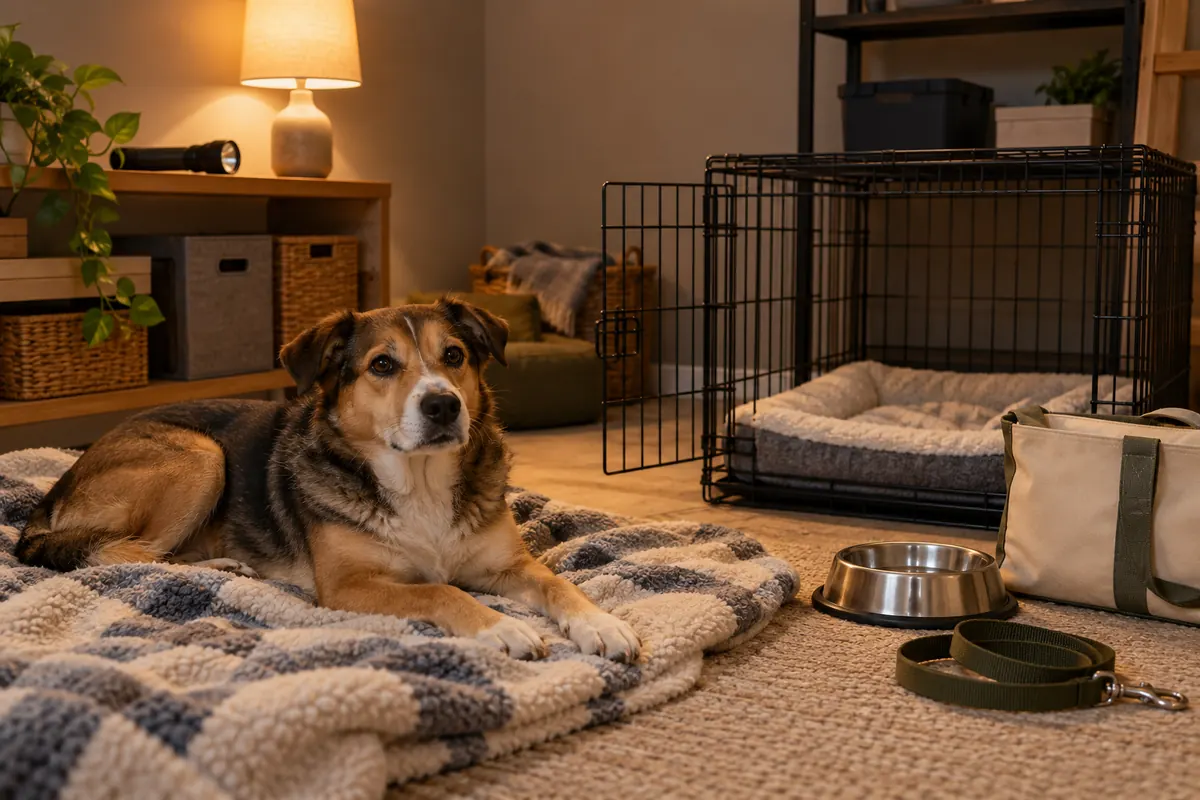
A folding wire crate your dog already rests in calmly can give them a familiar resting place at the shelter spot while you stay beside them. Only useful if your dog is already comfortable in a crate; choose the size on the Amazon page.
Check price on AmazonWe earn a small commission if you buy through this link, at no extra cost to you. Disclosure
Choose your shelter spot with your dog in mind
Use local officials, National Weather Service guidance and official preparedness guidance to identify the appropriate shelter arrangement for your home. Do not choose a room solely because your dog likes it. If officials tell you to evacuate rather than shelter in place, our hurricane and wildfire evacuation guide covers a dog go-bag and leaving together.
Once the location is established, consider how your dog will reach and use it. Are stairs difficult? Is the route cluttered? Can everyone fit without blocking access?
Ask for official guidance ahead of time if your home does not offer an appropriate shelter location. This article cannot determine whether a particular room or building is safe.
Place a familiar mat where your dog can rest near a person without obstructing the household. Remove accessible chemicals, cords and swallowing hazards.
If using a crate, check its size and placement beforehand. It is a familiar resting tool for a comfortable dog, not protective tornado equipment or a substitute for an appropriate shelter. Our crates for anxious dogs guide covers sizing and a gradual introduction.
Practice calm trips to the shelter spot
Begin well before storm season, during ordinary quiet weather. Walk toward the shelter location, reward willing movement and return to normal activities.
Build up to short visits with a familiar mat, pleasant attention or small food rewards. Let your dog sniff and investigate without crowding them.
If stairs or flooring cause hesitation, work at an easier point rather than pulling the dog along. Mobility concerns deserve a discussion with your vet.
Practice the whole household moving calmly, including the person responsible for the dog. Keep equipment familiar and the route clear.
You do not need loud alarm recordings to teach the route. This is about making movement and settling familiar, not testing noise tolerance.
If your dog is uncomfortable entering the room or crate, seek help before storm season. During an actual warning, do not delay sheltering to repeat a training exercise.
Tornado season plan
Use these checkpoints alongside official guidance. Early spring is a useful reminder to review the plan, not an indication that tornadoes only occur then.
| When | What to do | Why it helps |
|---|---|---|
| Early spring, before the local storm season | Review official shelter and warning guidance. | Establishes the household safety plan first. |
| During calm-weather preparation | Clear the route and check access for your dog. | Reveals practical obstacles before rushing occurs. |
| Before severe weather threatens | Practice short visits with familiar bedding. | Makes the location and movement less novel. |
| At a household practice session | Assign who handles the dog and supplies. | Reduces confusion about responsibilities. |
| When concerning weather is forecast | Review official updates and confirm any care arrangement while travel is safe. | Avoids depending on last-minute rescue trips. |
| When a warning applies | Follow official shelter instructions immediately. | Keeps emergency action ahead of training or packing. |
| While sheltering | Keep your dog accompanied and securely managed. | Limits separation and escape opportunities. |
| When officials indicate it is safe to emerge | Check conditions before moving the dog. | Accounts for hazards after the warning. |
| In the days afterward | Restore routine and review comfortable alone time. | Supports recovery without pushing through distress. |
Swipe the table sideways to see every column.
Build a small shelter kit for your dog
Ready.gov's “Prepare Your Pets for Disasters” page says pets should be included in your family's emergency plan and suggests building an emergency kit for your pet, including a larger kit if you are sheltering in place. It also suggests putting familiar items such as favorite toys, treats or bedding in the kit, and bringing pets indoors at the first sign or warning of a storm.
Keep a compact dog kit at the shelter location or somewhere accessible without delaying your movement. Review it regularly and replace expired food, damaged equipment or outdated records.
Include familiar items your dog already uses. A warning is not the moment to introduce a new chew, restraint or unfamiliar enclosure.
Keep water and cleanup supplies available, and make sure another adult knows where everything is stored. The kit supports the household's wider emergency supplies; it does not replace them.
If the kit is not within reach when a warning comes, do not delay sheltering to gather it.
Dog shelter kit checklist
Tornado Season With a Dog Who Has Separation Anxiety: dog shelter kit checklist
- Well-fitting collar with current ID tag.
- Familiar harness, if normally used.
- Leash for supervised handling.
- Spare leash.
- Familiar mat or blanket.
- Comfortable crate or carrier, if appropriate.
- Familiar crate pad, if used safely.
- Clean drinking water.
- Water bowl.
- Usual food in a sealed container.
- Small familiar food rewards.
- A safe chew or rubber food toy.
- Waste bags.
- Absorbent towels.
- Cleanup supplies stored safely.
- Vaccination and relevant veterinary records.
- Regular and emergency veterinary contacts.
- Current photo of your dog.
- Microchip number and registration details.
- Short handling and care instructions.
- Designated helper's contact information.
- Flashlight stored with the household supplies.
Keep the checklist practical for your dog. Do not leave a chew or bedding item available if they shred or swallow it.
During a tornado warning
Follow local officials and National Weather Service instructions immediately. Use the plan you prepared; do not wait for your dog to appear worried before acting.
When there is safe advance preparation time, have your dog nearby and ready for supervised leash handling or their familiar crate. The purpose is to avoid searching when urgent action is needed.
Stay together where possible and use a steady, ordinary voice. Offer quiet contact if your dog seeks it, without holding them tightly or forcing interaction.
A crate is only suitable for a dog already comfortable inside. Do not leave a panicking dog confined; a panicking dog can injure itself trying to escape, and our crate escape guide explains the warning signs. Seek veterinary and behavior support ahead of future warnings if this is a known difficulty.
Do not delay your own shelter to search for a pet, retrieve supplies or finish a practice routine. Never leave your dog outside, tied up or alone in a car during a storm.
If you're at work when a warning comes
Plan this situation before severe weather arrives. A nearby trusted person may be able to stay with your dog earlier in the day or help while conditions are safe.
Give them tested access, the official household shelter plan and concise handling instructions. Agree that their own safety comes first. They must not travel through danger or delay their own shelter to reach your dog.
If forecasts create concern, explore suitable company in advance rather than relying on someone to arrive after a warning starts. Any caregiver needs an appropriate shelter plan too. Our care options guide compares sitters, daycare and family help for a dog who can't be left alone.
Once a warning occurs, follow safety instructions where you are. Do not put yourself at risk driving home.
You cannot control every sudden event from work. A prepared local arrangement is useful, but it is not a promise of access. If you need assistance, contact appropriate local services when safe and follow their instructions.
After the all-clear
Follow official information about when it is safe to emerge. Quiet weather or a silent alarm alone should not guide that decision.
Before letting your dog move around, check the home and yard for sharp debris, damaged fencing, exposed wires and other hazards. Avoid unsafe areas and follow official directions.
Keep your dog leashed for necessary outdoor trips. Familiar boundaries may be damaged, and unexpected sounds may still startle them.
Your dog may seek more company afterward. Offer rest and a recognizable meal, walk and bedtime routine without forcing activity.
Restart alone-time practice at an easier level when your dog is comfortable. Record short sessions and arrange company for longer absences if needed.
Watch whether your dog resumes normal eating, sleep and activity. Persistent changes deserve veterinary attention rather than an assumption that they simply need time.
When to see the vet or a behavior professional
A dog with strong distress should see the vet before storm season where possible. Discuss difficulty with shelter movement, confinement and travel between parts of the home.
Contact your vet early if your dog refuses food, seems unwell or has a sudden behavior change. Panting or restlessness can involve physical discomfort as well as fear.
Escape attempts, self-injury or panic that does not settle need prompt help. Serious injury, collapse or breathing difficulty require emergency veterinary care. Our separation anxiety red flags guide explains which signs are urgent.
A qualified reward-based behavior professional can help make practice visits and handling more comfortable. Never punish barking, accidents, damage or reluctance to move; anxious behavior is distress, not disobedience.
Our noise phobia guide and ThunderShirt review cover fear of sounds and storm-support options in more detail. They do not replace the official shelter plan or veterinary care.
Helpful products
Picks on this page are a research-based assessment of features and intended use — not hands-on testing. We earn a small commission if you buy through the Amazon links on this page, at no extra cost to you. Affiliate disclosure
| Product type | Why it helps | Notes |
|---|---|---|
| Folding wire crate your dog already knows: MidWest iCrate | Offers a familiar resting place at the shelter spot beside the household. | Our top pick, but only useful if your dog is already comfortable in a crate; choose the size on the Amazon page. Limitation: a panicking dog can injure itself trying to escape, and a crate is not tornado protection. Alternative: a familiar bed or mat with a person beside the dog. |
| Rubber food toy: KONG Classic | Provides familiar enrichment during calm practice visits. | Limitation: it is enrichment, not a treatment for panic, and many scared dogs won't eat during a storm; pick a size your dog can't swallow. Alternative: calm petting, if welcomed, and quiet company. |
Swipe the table sideways to see every column.
Introduce equipment before threatening weather. A food toy is enrichment, not a treatment for panic, and eating does not prove your dog feels comfortable throughout the event.
Bottom line
Choose the shelter arrangement through official guidance, then help your dog become familiar with joining you there. Keep supplies ready, prepare a realistic workday plan and never delay your own shelter to search or train.