On this page
- Why evacuation is hard on a dog with separation anxiety
- Make your evacuation plan before the season
- Evacuation plan by stage
- Dog evacuation go-bag
- ID, records and practice runs
- Leave early, together
- If you have to be split up
- At a shelter, hotel or family home
- Coming home and settling back in
- When to see the vet or a behavior professional
- Helpful products
- Bottom line
Evacuating with a dog who has separation anxiety means planning for more than transport. You may need somewhere quiet to rest, a caregiver who understands separation distress and a workable alternative if you cannot stay together.
We are dog owners who researched this topic, not vets, trainers, product testers or emergency officials, and the products mentioned here were chosen from research, not from personal product testing. Prepare ahead where possible, but always follow local officials' evacuation orders and current safety instructions. Your dog's care plan should help you leave safely, not hold you back.
Why evacuation is hard on a dog with separation anxiety
A sudden departure can remove nearly everything familiar at once: home, routine, resting places and sometimes the person your dog relies on most.
Crowded spaces, strangers and unfamiliar confinement may add difficulty. A dog who manages short absences at home may panic when left in temporary accommodation.
Some dogs settle with another trusted person. Others remain distressed when a particular family member leaves, even with company present. Knowing that difference beforehand helps you choose caregivers.
Watch for pacing, howling, panting, drooling, exit scratching or attempts to escape. Quietness alone does not prove comfort.
During an emergency, prioritize safe transport and supported care. This is not the time to test how long your dog can manage alone.
MidWest iCrate Double Door Folding Dog Crate
A crate your dog already rests in calmly can give them a familiar resting place during evacuation travel and temporary stays. Only useful if your dog is already comfortable in it; choose the size on the Amazon page.
Check price on AmazonWe earn a small commission if you buy through this link, at no extra cost to you. Disclosure
Make your evacuation plan before the season
Know your evacuation zone, where applicable, and the routes recommended by local officials. Identify more than one possible destination because access and availability can change.
Live where tornado warnings mean sheltering in place rather than leaving? Our tornado season guide covers practicing calm trips to your shelter spot, a small dog kit and keeping your dog with you during a warning.
Ready.gov's “Prepare Your Pets for Disasters” page says pets should be included in your family's emergency plan. It says that if local officials ask you to evacuate, your pet should evacuate too, and that pets left behind may end up lost or injured. It also notes that many public shelters and hotels do not allow pets inside, so know a safe place you can take your dog before an emergency happens.
Call ahead and check possible arrangements: friends or relatives outside the affected area, pet-friendly lodging, boarding facilities or an emergency shelter that takes pets. Do not assume any place will accept your dog or have space.
The ASPCA's disaster preparedness page also says not to leave your pets behind and to arrange a safe haven ahead of time: ask your vet for a list of boarding kennels, ask your local animal shelter whether it provides emergency shelter or foster care, identify pet-friendly hotels or motels outside your immediate area, and ask friends and relatives outside the area whether they could take your pet. It also suggests choosing a designated caregiver.
Ask specifically whether you and your dog can remain together, what records are required and how an anxious dog would be managed.
Evacuation plan by stage
Warning terminology and instructions vary locally. Follow current official directions rather than waiting for a particular label.
| Stage | What to do | For an anxious dog | Have ready |
|---|---|---|---|
| Start of hurricane or fire season | Review routes, destinations and caregivers. | Introduce the caregiver and travel setup calmly. | Contact list and care plan |
| Storm or fire watch | Monitor official updates and confirm options. | Keep ordinary care predictable where possible. | Charged phone and accessible supplies |
| Evacuation warning | Prepare to leave according to local instructions. | Keep the dog close and supervised indoors. | Go-bag, records and transport |
| Evacuation order | Leave as directed with your dog. | Use the prepared transport arrangement. | Leash, identification and accessible essentials |
| On the road | Follow safe routes and updated instructions. | Keep the dog secured and accompanied at stops. | Water, bowls and caregiver contacts |
| At a shelter or hotel | Confirm placement and safety procedures. | Request a quieter area and maintain company. | Bedding and concise care notes |
| Split from your dog | Complete a clear caregiver handover. | Explain distress signs and what helps. | Written instructions and reunification details |
| Extended temporary stay | Review care, supplies and health daily. | Avoid unnecessary unsupported absences. | Updated contacts and rest routine |
| Returning home | Return only when officials permit. | Check hazards before allowing access. | Leash, supplies and an easy restart plan |
Swipe the table sideways to see every column.
Dog evacuation go-bag
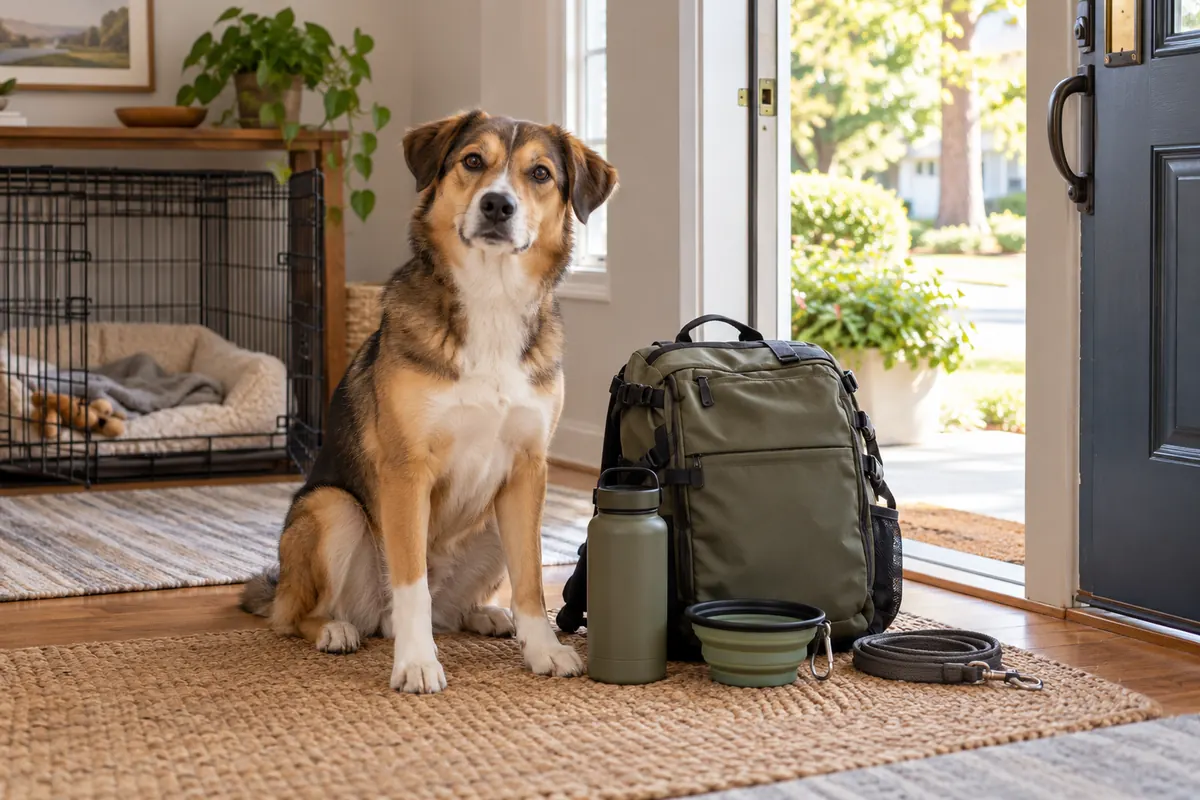
Keep supplies accessible, check them regularly and replace expired or damaged items. Prepare enough for delays rather than assuming an immediate return.
Hurricane and Wildfire Evacuation With a Dog Who Has Separation Anxiety: dog evacuation go-bag
- Usual food in a sealed container.
- Clean drinking water.
- Food and water bowls.
- Familiar blanket or washable mat.
- A safe, familiar toy.
- Rubber food toy, if your dog uses it safely.
- Well-fitting collar with current ID tag.
- Harness and leash.
- Spare leash.
- Familiar crate or carrier, if comfortable and suitable.
- Waste bags and cleanup supplies.
- Absorbent towels and spare bedding.
- Recent printed and digital photos.
- Vaccination and relevant medical records.
- Microchip number and registration contact information.
- Regular and emergency veterinary contacts.
- Destination and backup caregiver contacts.
- Written caregiver handover sheet.
- Copies of any existing veterinary care instructions.
- Pet first-aid supplies selected with your vet.
- Secure document pouch.
- Phone charging equipment with the family emergency supplies.
A ready bag saves decisions, but do not delay an ordered evacuation to locate missing comfort items or paperwork.
ID, records and practice runs
Check that your dog's tag displays a current phone number and that microchip registration details are accurate. Keep a recent photo showing identifying features and another showing you together.
Store records in accessible paper and digital forms. Include health needs and handling information a caregiver might need quickly.
The ASPCA page also recommends a rescue alert sticker, placed on or near your front door, so rescue workers know pets are inside, and writing “EVACUATED” across it if you leave with your pets and time allows. Keep its information current; it does not replace taking your dog when you evacuate.
Before the season, practice calmly gathering supplies, loading the car and taking short drives. Introduce a crate or carrier gradually, using pleasant experiences without forcing the dog inside; our crates for anxious dogs guide covers this.
If a crate causes panic, discuss a suitable alternative transport arrangement with your vet ahead of time. Never shut a panicking dog in a crate and leave; a panicking dog can injure itself trying to escape. Our crate escape guide explains the warning signs.
Arrange caregiver introductions and small practice handovers while conditions are ordinary. A familiar person is easier to rely on than a stranger met during an evacuation.
Leave early, together
Where officials advise or allow early departure, use that opportunity rather than waiting until conditions deteriorate. Wildfires can change quickly, so do not assume there will be time for every planned step.
Assign responsibilities: who secures the dog, who collects the go-bag and who checks the destination. Keep the dog away from open doors during loading.
Secure your dog appropriately for travel and keep supplies reachable. Plan stops so a responsible person remains with the dog throughout. If your dog is also nervous in the car itself, our car travel anxiety guide can help before the season.
Never leave your dog behind, tied up, outside or alone in a car. If you are away when evacuation becomes necessary, contact your designated caregiver and follow official instructions for assistance. Nobody should enter an unsafe area or bypass restrictions.
For ordinary transport logistics, use our guide to traveling with a dog who has separation anxiety. During evacuation, current official directions take priority.
If you have to be split up
Tell staff or the caregiver clearly that your dog struggles with separation. Describe behavior rather than relying only on a label: “tries to chew the exit when left” is useful safety information.
Leaving suddenly for a family crisis rather than a disaster? Our family emergency trip guide has a short-notice trip decision table and a spare-key plan so a trusted person can step in.
Prefer a familiar designated caregiver when available, while following emergency placement instructions. Our care options guide compares sitters, boarding and family care in more depth. Confirm who receives the dog, where they will be and how you will reconnect.
Give them a concise handover covering:
- Your contact details and a backup contact.
- Food, water, potty and rest routines.
- Veterinary contacts and relevant health information.
- Current alone-time comfort and whether continuous company is needed.
- Early distress signs, escape risks and handling sensitivities.
- What helps the dog settle and which barriers cause difficulty.
- Supply locations, update arrangements and reunification plans.
Ask about visits if allowed and safe. Watch whether they help your dog settle or lead to renewed distress afterward.
Keep a written record of the placement. Do not assume a busy caregiver will remember every detail from a hurried conversation.
At a shelter, hotel or family home
Call ahead and check whenever possible. Confirm whether pets are accepted, whether people and animals stay together and what procedures apply.
Create a quiet corner with familiar bedding, water and a person nearby. Keep routines recognizable without expecting exact home conditions.
If your dog already rests comfortably in a crate, it may provide familiarity. A partial cover may reduce visual activity for some dogs, but only use it if familiar, safe and not restricting ventilation or increasing heat.
Do not leave a dog who panics alone in a strange room. Coordinate errands and care between adults, or ask staff about available arrangements.
Offer food without pressure. A toy may provide calm enrichment, but it is enrichment, not a treatment for panic. Our boarding guide and guide on preparing a pet sitter cover fuller caregiver arrangements; use only what fits the emergency setting.
Coming home and settling back in
Return only when local officials say it is safe. Before your dog enters the home or yard, check for broken glass, sharp debris, damaged fencing, exposed wires and other hazards. Follow official guidance about utilities, water and access.
Keep your dog leashed during the first inspection and outdoor trips. Familiar surroundings may have changed.
Restore ordinary meals, potty breaks and rest gradually. Avoid immediately adding a long absence while you handle cleanup or errands.
When your dog is comfortable, restart alone-time practice at an easy level and record it. Increase only while they remain relaxed, arranging company for longer gaps.
A difficult return does not mean previous progress has disappeared. It means the plan needs to account for what your dog has just experienced. If you end up moving to a new home instead, our dog anxiety after moving guide covers settling in.
When to see the vet or a behavior professional
Ask your vet before the season about strong distress and travel stress. Preparation is especially important for a dog who panics quickly or injures themselves during escape attempts.
Contact your vet early if your dog refuses food, seems unwell or shows a sudden change. Coughing or breathing changes after smoke exposure also need prompt veterinary advice.
Breathing difficulty, collapse or serious injury require emergency care. Do not dismiss physical symptoms as anxiety.
Seek a qualified reward-based behavior professional when distress persists or prevents workable care arrangements. Our separation anxiety red flags guide can help you organize observations, but it does not replace urgent veterinary attention.
Never punish barking, accidents or damage. Review safety, health and the support available instead.
Helpful products
Picks on this page are a research-based assessment of features and intended use — not hands-on testing. We earn a small commission if you buy through the Amazon links on this page, at no extra cost to you. Affiliate disclosure
| Product type | Why it helps | Notes |
|---|---|---|
| Folding wire crate your dog already knows: MidWest iCrate | May provide a familiar resting place during transport and temporary stays. | Our top pick, but only useful if your dog is already comfortable in a crate; choose the size on the Amazon page. Limitation: a panicking dog can injure itself trying to escape, so never shut a distressed dog in and leave. Alternative: a familiar bed or mat with a person nearby. |
| Rubber food toy: KONG Classic | Offers familiar enrichment during calm moments. | Limitation: it is enrichment, not a treatment for panic, and many stressed dogs won't eat in a new place; pick a size your dog can't swallow. Alternative: safe sniffing activities or a sniffy walk when conditions permit. |
Swipe the table sideways to see every column.
Do not introduce unfamiliar equipment during the emergency if it creates more difficulty. Physical safety and appropriate company matter more than any product.
Bottom line
Prepare destinations, caregivers and supplies before the season, then follow local officials' evacuation orders. Take your dog with you, communicate their needs clearly and rebuild comfortable routines once everyone is safely settled.