On this page
- Why a yard sale day is hard on an anxious dog
- Who keeps your dog company
- Set up a quiet back room
- Early setup and other departure cues
- Practice in the weeks before
- Keep doors and gates secure
- Yard sale day planner
- Never tied outside or in the car
- Before your yard sale checklist
- Check-ins and breaks during the day
- Shopping other sales
- A calm evening after the sale
- When to see the vet or a behavior professional
- Helpful products
- Bottom line
You may be only a few steps away in the driveway, yet your dog cannot reach you. Add strangers, car doors, conversation and repeated trips through the house, and a Saturday garage sale can become a difficult day indoors.
We are dog owners who researched this topic, not vets, trainers or product testers, and the products mentioned here were chosen from research, not from personal product testing. This guide focuses on a practical sale-day arrangement: familiar company, a comfortable retreat, secure doors and a quieter evening afterward.
Why a yard sale day is hard on an anxious dog
Being home does not necessarily mean being available to your dog. They may hear your voice in the driveway while finding the separation uncomfortable.
The ASPCA's page on separation anxiety describes separation anxiety as distress when dogs are left alone or separated from the people they're attached to, and explains that treatment focuses on gradually teaching the dog to be comfortable alone.
Sale day adds other possible triggers: strangers approaching, items moving, unusual noise and doors opening repeatedly. Barking may have several causes, so do not assume every reaction is separation anxiety.
A full morning in the driveway is not a gradual practice session. Arrange support for what your dog cannot currently handle.
Furbo 360° Dog Camera
A pet camera helps you observe settling in the quiet room during the sale, with a helper available to respond.
Check price on AmazonWe earn a small commission if you buy through this link, at no extra cost to you. Disclosure
Who keeps your dog company
Choose a familiar sitter, trusted neighbor or family member who can stay inside with your dog. Give them that specific responsibility rather than expecting them to help with shoppers too.
A walker can provide a break alongside someone who covers the remaining time. A brief walk cannot prevent distress during the rest of the sale.
A short daycare day may be another option if your dog has tried it and settled comfortably there. Cover the periods before drop-off and after pickup.
Do a trial run of whichever arrangement you choose. A dog who likes the helper while you are present may still struggle when you move to the driveway.
Our care options guide covers the broader choices, and our home showings guide covers a similar day with strangers at the house.
Set up a quiet back room
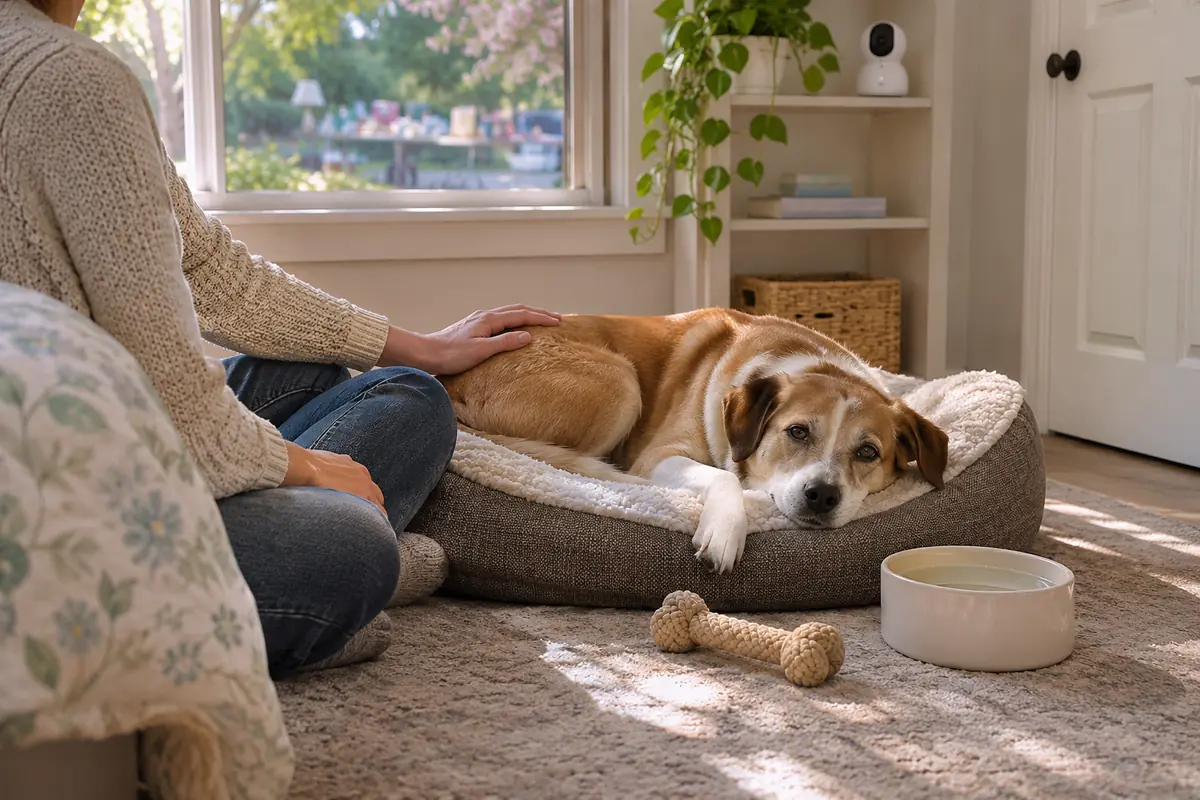
Choose a familiar room away from driveway activity where possible. Add your dog's bed, fresh water and a comfortable place for the helper to sit.
Try closing curtains if watching shoppers makes settling harder. Low-volume familiar audio, a fan or other sound masking may soften some noise from the driveway, but it is not a treatment for panic.
The room must be comfortable in practice, not simply distant from the sale. Some dogs become distressed behind a closed door even with company.
Test the arrangement beforehand and change it if needed. Never shut your dog away to panic.
A familiar chew or sniffing activity can be offered with supervision as enrichment, alongside quiet company.
Early setup and other departure cues
Carrying boxes to the driveway, unfolding tables and putting on shoes may start the day's worry before shoppers arrive.
Prepare items in small, calm sessions beforehand. On ordinary days, move one box, then return to your normal home routine rather than immediately building up to the whole setup.
Notice whether your dog follows, pants or watches the door. If the activity is already worrying them, simplify it.
Have the helper arrive before loading and early setup begin. That avoids expecting your dog to cope alone during the busiest part of the morning.
Our departure cues guide explains the longer process of working with these signals.
Practice in the weeks before
Start about two weeks ahead if possible, while allowing more time if your dog needs it. The sale date is not a deadline for training progress.
Spend relaxed time in the proposed room together. Then trial the helper staying while you briefly move elsewhere.
Keep practice below the point where your dog becomes distressed. That may mean seconds initially. Record short sessions and watch for actual settling.
Increase gradually only while your dog remains comfortable. If distress appears, return calmly and make the next session easier; do not wait for silence before helping. Our separation anxiety training plan covers this slower work.
If the setup remains difficult, arrange familiar care away from the sale or have someone else manage the sale while you stay with your dog.
Keep doors and gates secure
Decide how items will leave the house and where your dog will be during each trip. Avoid carrying sale stock through their resting area.
Have one adult confirm the dog is secure with the helper before exterior doors open. Do not rely on someone remembering to watch the doorway while carrying a table.
Keep doors closed between trips and check gates before walking or potty breaks. Tell everyone helping that shoppers should not enter the dog's area.
As a general safety step, check that your dog's ID tag and microchip contact details are current. They help if a dog slips out, but they do not replace careful door management.
Yard sale day planner
These checkpoints organize care and practice; they do not promise a particular training timeline.
| When | What to do | Why it helps |
|---|---|---|
| About two weeks before | Choose the main helper and a backup arrangement. | Leaves time to find suitable company. |
| During early preparation | Move sale items in small, calm sessions. | Reduces one large burst of unusual activity. |
| Before sale week | Introduce the quiet room during relaxed home time. | Checks whether the space is comfortable. |
| On a practice day | Trial the helper staying while you briefly step away. | Shows what happens when you are out of reach. |
| Several days before | Plan the item-carrying route and door routine. | Keeps traffic away from your dog. |
| The evening before | Prepare food, equipment and written instructions. | Makes an early start simpler. |
| Before setup | Provide a comfortable walk and potty opportunity. | Meets everyday needs before activity begins. |
| During setup | Have the familiar helper remain with your dog. | Covers the noisy, door-heavy period. |
| During the sale | Maintain company and planned rest and potty breaks. | Prevents care from being forgotten during busy periods. |
| If distress develops | Simplify the situation and activate the backup plan. | Avoids leaving your dog to struggle. |
| During pack-up | Keep the same company and door precautions in place. | Covers another period of carrying items. |
| The evening after | Restore quiet routines and review what worked. | Supports rest and future planning. |
Swipe the table sideways to see every column.
Never tied outside or in the car
Never tie your dog outside or leave them loose in the driveway or yard during the sale. Shopper activity and repeated arrivals are not a suitable waiting arrangement for a stressed dog.
Never leave your dog alone in a car as the alternative, in any weather.
A camera cannot make an unsupported plan workable. Arrange familiar company indoors or suitable care elsewhere.
If you cannot provide that care, change who manages the sale or adjust the plan rather than leaving your dog to struggle.
Before your yard sale checklist
Spring Yard Sale and Garage Sale Weekends With a Dog Who Has Separation Anxiety: before your yard sale checklist
- Choose a familiar main helper.
- Confirm that dog care is their specific role.
- Prepare a backup arrangement.
- Trial the helper with you out of reach.
- Test the quiet-room setup.
- Check comfort with the door arrangement.
- Prepare familiar bedding.
- Leave fresh water available.
- Provide a comfortable seat for the helper.
- Test sound masking at a modest volume.
- Reduce the driveway view if it causes distress.
- Plan supervised enrichment.
- Keep sale stock out of the resting area.
- Choose a route for carrying items to the driveway.
- Explain the door routine to every helper.
- Check doors and gate latches.
- Check the ID tag.
- Check microchip contact details.
- Prepare the leash and walking equipment.
- Plan walking and potty breaks.
- Leave feeding instructions.
- Describe distress signs and settling preferences.
- Provide regular and emergency veterinary contacts.
- Test the camera with the helper's knowledge.
- Keep camera cords inaccessible.
- Maintain care through pack-up.
- Plan a quiet evening afterward.
Check-ins and breaks during the day
Agree when the helper will update you and how they will get your attention if the dog struggles. Ask about resting, potty breaks, eating and responses to noise.
Check the room in person without turning every visit into an excited reunion. If your repeated exits upset your dog, let the helper maintain company while you receive updates.
Plan potty breaks away from shoppers, using a checked route and walking equipment. Do not open the quiet-room door directly into busy carrying activity.
If your dog cannot settle despite support, change the arrangement promptly. A shorter sale or familiar off-site care may be needed.
Shopping other sales
A family morning visiting other sales is a separate absence, with driving, browsing and extra stops included.
Arrange company at home for the time your dog cannot comfortably manage alone. Confirm how long the helper can stay before adding another stop.
Choose a shorter route while training continues. Practice comfortable absences separately, when you can return promptly.
Never leave your dog waiting in the car while you browse, even for one quick look. Our errands guide covers managing shorter everyday outings, and if the sale falls during a school break, our spring break guide covers the rest of that week.
A calm evening after the sale
Keep support in place until the last items are put away and doors stop opening repeatedly.
Then return to familiar meals, a comfortable walk and quiet company. Avoid trying to compensate with an exhausting activity or ambitious training session.
Your dog may appear tired yet keep following you or watching the door. Review the helper's observations rather than assuming tiredness means they are comfortable alone.
Keep the next practice session easy. Use what you learned to decide whether the same arrangement is suitable for another sale day.
When to see the vet or a behavior professional
Contact your dog's vet early if they refuse food, seem unwell or show marked changes in sleep, energy or behavior. Strong distress, injury or escape attempts need prompt attention.
Share useful recordings and the helper's notes, including whether the dog struggled with noise, confinement, your absence or several things together.
A qualified reward-based behavior professional can help when the quiet-room arrangement remains difficult or comfortable separation stays very short. If you are wondering about medication for a busy sale day, ask your vet; never give your dog any medication without their advice. Our separation anxiety red flags guide explains which signs are urgent.
Never punish barking, howling, damage or accidents; they are signs of distress, not spite. Never shut a panicking dog in a room and leave. Maintain suitable care while seeking help.
Helpful products
Picks on this page are a research-based assessment of features and intended use — not hands-on testing. We earn a small commission if you buy through the Amazon links on this page, at no extra cost to you. Affiliate disclosure
These are optional helpers, chosen from research, not personal product testing, and not substitutes for company or gradual training. They support observation and enrichment; neither treats separation panic.
| Product type | Why it helps | Notes |
|---|---|---|
| Pet camera: Furbo 360° camera | Lets you or the helper observe settling in the back room. | Our top pick. Limitation: it needs 2.4GHz Wi-Fi and power and only shows what happens; it cannot comfort your dog or replace the helper, and you may miss alerts while serving shoppers. Alternative: the helper checking in person and texting you. |
| Snuffle mat: AWOOF snuffle mat | Offers a supervised sniffing activity with the helper during quiet time. | Limitation: it is enrichment, not a treatment for panic, many stressed dogs will not eat or sniff, and some dogs chew or tear the fabric, so supervise every use. Alternative: a short sniffy walk before setup. |
Swipe the table sideways to see every column.
Remove enrichment if your dog chews or damages it. Eating does not prove comfort with separation; consider their overall behavior.
Bottom line
Arrange familiar company before setup starts, trial the resting area and keep door traffic separate from your dog. Maintain care through pack-up.
A quiet room works only when your dog is comfortable there. Adjust the sale-day plan if they struggle, and protect a restful evening afterward.