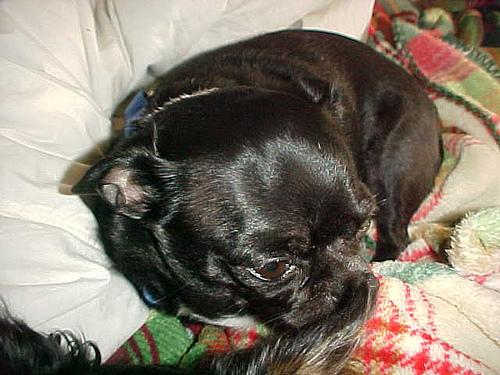
Understanding the Chihuahua Temperament
Chihuahuas are one of the oldest dog breeds in the Americas, developed in Mexico and believed to descend from the Techichi — a small companion dog kept by the Toltec civilization. They were bred for one purpose: to be close, loyal human companions. This bred-in bonding instinct is intense and is the foundation of both their greatest charm and their primary anxiety problem.
The Chihuahua is the smallest breed in the world but possesses a personality that does not register its own size. They are bold, alert, opinionated, and deeply attached to their chosen person. In a world scaled for creatures three to ten times their size, they operate under a constant, low-grade perception of threat — and their nervous systems reflect this. Chihuahuas have among the highest rates of anxiety-related behaviors of any breed seen in veterinary behavioral practices.
Understanding their anxiety requires understanding their size and the perceptual world it creates. A standard adult human approaching a Chihuahua is, proportionally, like a 20-foot giant approaching a person. The Chihuahua's defensive behaviors — trembling, growling, hiding, snapping — are not personality flaws. They are survival responses from a small dog navigating a large world.
Trembling in Chihuahuas: What It Actually Means
The Three Causes of Chihuahua Trembling
Chihuahua trembling has three distinct causes, and owners frequently misidentify the most common one. Getting this right matters because the treatments are completely different:
- Cold: Chihuahuas have very little body fat and often a short, thin coat. They genuinely get cold. Cold trembling is consistent across temperature-related situations and resolves with warmth.
- Hypoglycemia (low blood sugar): More common in puppies and very small adults. Accompanied by weakness, disorientation, and sometimes seizures. A medical emergency requiring immediate veterinary attention.
- Anxiety: The most frequently overlooked cause. Anxiety trembling is accompanied by other stress signals — pinned ears, tucked tail, wide "whale eye," reduced appetite, and clinginess. It occurs in specific social or environmental contexts: when strangers approach, during loud events, when left alone, or in unfamiliar environments.
If your Chihuahua trembles primarily around triggers (strangers, noise, solitude) and shows other fear signals, anxiety is the driver. Covering them with a sweater addresses only the cold — the anxiety requires a separate, targeted approach.
Small Dog Syndrome: Anxiety Disguised as Attitude
What Small Dog Syndrome Actually Is
"Small dog syndrome" is not a clinical diagnosis — it describes a behavioral pattern that develops when small dogs are never given the same training and behavioral boundaries expected of large dogs, because their behaviors seem less dangerous or more amusing. A Chihuahua that growls when picked up, guards its food bowl, refuses commands, or lunges at other dogs is not exhibiting dominant personality — it is a dog living with poorly managed fear and anxiety.
The core problem is one of reinforcement history. When a Chihuahua growls at a stranger and the stranger backs away, the growl worked — the threat retreated. The dog's brain logs "growling removes threats" as an effective strategy and applies it more broadly. Over time, this generalizes into a dog that growls at everything unfamiliar, which is really a dog that finds almost everything threatening and has one tool for managing that threat.
Treating Small Dog Syndrome
Small dog syndrome treatment is anxiety treatment. The goal is to reduce the chronic fear state driving the defensive behavior, not to punish the defensive behavior itself — which eliminates the warning signal without addressing the fear and typically results in dogs that bite without warning.
- Apply the same training expectations you would to a 50-pound dog. Size does not exempt a dog from needing boundaries.
- Counterconditioning: pair the appearance of feared triggers (strangers, other dogs) with high-value treats at a safe distance, gradually decreasing distance as comfort increases.
- Stop forcing contact. Never allow strangers to approach, grab, or pick up a Chihuahua that is showing avoidance or stress signals.
- Practice calm greetings. Ask guests to ignore the dog until the Chihuahua chooses to approach voluntarily — this gives the dog control and reduces defensive behavior dramatically.
Senior Chihuahua Anxiety: Specific Considerations
Why Anxiety Often Worsens With Age
Chihuahuas are long-lived dogs (14-18 years is common), which means a substantial portion of their life is spent as seniors. Several age-related changes exacerbate anxiety in older Chihuahuas:
- Hearing and vision loss: A Chihuahua that previously relied on sight and sound to monitor their environment now receives incomplete information, increasing hypervigilance and anxiety responses
- Canine cognitive dysfunction (CCD): The canine equivalent of dementia, affecting an estimated 28% of dogs aged 11-12 and 68% of dogs aged 15+. Symptoms include disorientation, altered sleep cycles, increased anxiety, and apparent forgetting of trained behaviors
- Chronic pain: Arthritis, dental disease, and other age-related pain conditions lower a dog's threshold for anxiety responses and can cause a formerly calm senior to become reactive or defensive
- Reduced thermoregulation: Senior Chihuahuas feel cold more intensely and are more susceptible to anxiety from temperature discomfort
Calming Supplements Safe for Senior Chihuahuas
Senior dogs require more care in supplement selection because of potential drug interactions, reduced kidney and liver function, and increased sensitivity to sedative effects. The following are safest for senior Chihuahuas:
- Zylkene 75mg: Alpha-casozepine derived from milk protein. No drug interactions, safe for dogs with organ concerns, and effective for chronic low-grade anxiety. Give one 75mg capsule daily mixed into food.
- Composure Bite-Sized Chews (half dose): For acute situational anxiety (vet visits, thunderstorms). A half chew is typically sufficient for a Chihuahua under 6 lbs.
- Melatonin (0.5mg): For sleep disruption associated with CCD or noise anxiety at night. Use the lowest effective dose; confirm with your vet for dogs on other medications.
Common Anxiety Triggers for Chihuahuas
Strangers and Novel People
The #1 anxiety trigger for most Chihuahuas. Being approached, picked up without warning, or forced into contact with unfamiliar people is acutely distressing for this breed. Their defensive response (growling, snapping) is frequently punished, which removes their warning system without addressing the fear and escalates to unpredictable biting.
Noise and Environmental Overwhelm
Chihuahuas have excellent hearing and perceive sounds at a greater intensity than many larger breeds. Fireworks, thunderstorms, construction, and even household appliances (vacuum cleaners, blenders) can trigger acute anxiety. See our noise phobia guide for protocols applicable to small breeds.
Being Alone
Chihuahuas bond to one person with remarkable intensity. Separation anxiety is common but often less dramatic than in large working breeds — Chihuahuas may not destroy furniture, but they frequently pace, vocalize, and refuse to eat for hours after their person leaves. This quiet suffering is easy to miss without a camera.
Veterinary Visits and Handling
Vet visits are a perfect storm of Chihuahua anxiety triggers: strange environment, unfamiliar humans, other animals, and physical handling. Pre-medicating with a calming chew 30-45 minutes before departure and bringing a familiar blanket with the owner's scent significantly reduces acute stress. See our vet visit anxiety guide for the full protocol.
Product Recommendations for Chihuahua Anxiety
Thundershirt — XXS (Most Chihuahuas)
The Thundershirt XXS fits chest girths of 13-18 inches and is appropriate for most adult Chihuahuas (4-6 lbs typical range). Larger or heavier Chihuahuas (6-10 lbs) may need an XS (chest 18-23 inches). Always measure the chest at the widest point behind the front legs. Introduce the Thundershirt with positive associations — put it on, give a treat, remove it — before using it in an anxiety situation. A Chihuahua that has only ever worn it during stressful events may react fearfully to the wrap itself.
View on Amazon →Calming Donut Bed — 18-inch Diameter
A self-warming donut bed with raised bolster edges gives a Chihuahua an enclosed, den-like space that reduces the constant hypervigilance common in this breed. The raised edges allow the dog to press against a boundary — a known anxiety-reducing effect. Look for a bed in the 18-20 inch range for a standard Chihuahua. Machine-washable is a practical requirement. Place it in a low-traffic corner away from windows where the dog won't be startled by outdoor stimuli.
View on Amazon →Zylkene 75mg — Senior and Everyday Anxiety
The 75mg capsule is sized for small dogs and seniors. Alpha-casozepine reduces anxiety without sedation, making it ideal for Chihuahuas that need daily support without becoming drowsy or disoriented. Open the capsule and sprinkle on food. Safe for long-term use and has no known drug interactions — an important consideration for senior Chihuahuas on multiple medications. Allow 2-3 weeks of consistent use before evaluating effectiveness for chronic anxiety.
View on Chewy →VetriScience Composure Bite-Sized Chews
The bite-sized (not regular) version is appropriately portioned for very small dogs. Give one chew (or half a chew for dogs under 5 lbs) 30 minutes before a known trigger: vet visits, grooming, car trips, fireworks, or guests. The combination of L-theanine, thiamine, and colostrum calming complex reduces reactivity without sedation. For senior Chihuahuas, start with a half dose and observe for 45 minutes before deciding if a full chew is needed.
View on Amazon →Adaptil Calm Home Diffuser
Dog-appeasing pheromone diffuser for constant passive calming. For a small-home or apartment setting where a Chihuahua spends most of their time, one diffuser plugged into the main living area creates a consistent baseline calming environment. Particularly effective for Chihuahuas whose anxiety is ambient — never acutely panicking but always slightly on edge. Replace refill monthly. Do not place the diffuser near the dog's sleeping area; a mid-room outlet provides better dispersion.
View on Amazon →When to See a Vet About Chihuahua Anxiety
Small size does not mean small suffering. Seek veterinary help when:
- Trembling is frequent, severe, or accompanied by weakness, disorientation, or appetite loss
- Defensive snapping or growling has escalated to a bite (even a small bite requires professional assessment)
- A senior Chihuahua shows nighttime disorientation, vocalization, or reversal of sleep/wake cycles (CCD symptoms)
- The dog cannot be handled for routine care — nail trims, ear cleaning, medication administration — due to fear-based aggression
- Anxiety is significantly affecting quality of life: refusing to eat, unable to rest, constantly trembling
For Chihuahuas with moderate-to-severe anxiety, vets often prescribe trazodone for situational use, or fluoxetine for chronic cases. Medication is safe and effective for small breeds when properly dosed by weight, and it makes behavioral training significantly more effective by reducing the emotional noise that prevents the dog from learning.