On this page
- Why a cruise is different for an anxious dog
- Choose the right care
- Book early and do a trial stay
- Cruise countdown plan
- Set up a backup person on land
- Sitter handover sheet
- Keeping in touch from the ship
- Coming home and settling back in
- When to see the vet or a behavior professional
- Helpful products
- Bottom line
Leaving an anxious dog for a cruise takes a different kind of preparation from an ordinary evening out. You may be away for a week or longer, with periods when checking messages or returning home quickly is difficult.
We are dog owners who researched this topic, not vets, trainers or product testers, and the products mentioned here were chosen from research, not from personal product testing. This guide focuses on building dependable care before sailing, including trials, a land-based backup and clear decisions that do not depend on your internet connection. If your dog will travel with you instead, see our guide to traveling with a dog who has separation anxiety.
Why a cruise is different for an anxious dog
A longer trip means the caregiver handles ordinary weekdays, evenings and overnight routines. Those needs continue whether you are reachable or not. For shorter family trips, our spring break guide and holiday travel guide fit better.
Internet at sea may be limited, unreliable or costly. Check the current terms, but prepare the care arrangement to work without live updates.
Returning early may also be complicated. “I'll come home if it goes badly” cannot be the main backup plan. If you ever have to leave at short notice instead, our family emergency trip guide covers finding care fast.
The ASPCA's page on separation anxiety describes separation anxiety as distress when dogs are left alone or separated from the people they're attached to, and explains that treatment focuses on gradually teaching the dog to be comfortable alone.
Your dog may settle with another familiar person, or may struggle specifically when you leave. A cruise booking does not establish which is true. That is what introductions and trial stays need to explore before departure.
Furbo 360° Dog Camera
A pet camera helps the sitter—and you when connected—review settling, while a local person remains responsible for care.
Check price on AmazonWe earn a small commission if you buy through this link, at no extra cost to you. Disclosure
Choose the right care
A live-in sitter your dog knows can preserve familiar surroundings. Confirm actual presence, though: living in your home does not automatically mean providing company throughout the day.
Ask about work, errands and other commitments. Every absence must fit what your dog currently manages, with additional cover where needed.
A trusted family member may stay at your home or host the dog. Assess their schedule, handling ability, other pets and the dog's comfort in that setting.
Consider boarding only if your dog has already done well there. Confirm the current arrangement, including overnight staffing, how long your dog would spend without people and responses to distress, rather than assuming a previous stay will be repeated exactly.
Do not use overnight solitude, drop-in visits alone or a camera as the care plan. Never use an unattended car or outdoor space as a fallback.
Our boarding guide and pet sitter preparation guide cover the wider comparisons. For a cruise, the essential question is whether care remains suitable when you cannot intervene personally.
Book early and do a trial stay
Start looking when your sailing dates become likely. Leave time for a trial and an alternative if the first arrangement does not work.
Begin with a relaxed introduction and short handover while you remain nearby. If comfortable, arrange one or two trial stays or overnights before sailing.
Match the trial to the proposed care. A short daytime visit does not show how the dog handles bedtime with the sitter, and an overnight does not reveal every daytime gap.
Ask about eating, drinking, potty breaks, sleep and the ability to rest after you leave. Review brief recordings where appropriate and with consent.
If your dog cannot settle, change the arrangement and seek help before extending the trial. Do not assume a longer stay will make them adjust.
Confirm dates, delayed-return coverage and cancellation arrangements. Check the current terms of bookings and prepare the backup before the final packing week.
Cruise countdown plan
Use these checkpoints for organization, not as deadlines for your dog's progress.
| When | What to do | Why it helps |
|---|---|---|
| About three months before sailing | Review care needs and seek veterinary advice for strong distress. | Leaves time to address problems before departure. |
| About two months before | Contact familiar sitters, family or established boarding care. | Allows time to assess availability and suitability. |
| Several weeks before | Arrange introductions and a short handover. | Shows how the dog responds to the caregiver. |
| Before finalizing the care plan | Complete suitable trial stays or overnights. | Tests the actual arrangement while you can respond. |
| About two weeks before | Confirm the land-based backup and veterinary arrangements. | Makes decisions possible when you are unreachable. |
| Week before sailing | Update instructions, records, access and supplies. | Reduces last-minute confusion. |
| Departure day | Complete a calm handover before leaving. | Prevents an unsupported gap. |
| During the cruise | Let the agreed local care plan operate independently. | Avoids relying on ship connectivity. |
| Return day | Offer a warm, low-key reunion and ordinary care. | Supports a manageable transition. |
| Week after returning | Review easy absences and restore familiar routines. | Helps identify setbacks before longer gaps resume. |
Swipe the table sideways to see every column.
Set up a backup person on land
Choose a trusted adult who is willing, available and comfortable handling your dog. Introduce them beforehand and explain what responsibility they are accepting.
Give them a working key or tested access arrangement, the dog's records and both caregivers' contact details. If boarding, confirm how the facility can involve that person.
Ask your veterinary clinic how to authorize care while you are away. Discuss its required paperwork, decision-making process and payment arrangements before sailing rather than assuming the clinic can accept instructions relayed later.
Identify a 24/7 emergency veterinary service and confirm its current details. Give the sitter and backup the same information.
Agree on what triggers action: food refusal, illness, injury, persistent distress, sitter unavailability or an unsafe home situation.
The backup should be able to coordinate replacement care or veterinary help without waiting indefinitely for your reply. Our guide to what to do when a pet sitter cancels has a ranked backup list you can adapt. Do not make a worried sitter choose between necessary action and an instruction to contact you first.
Sitter handover sheet
Keep a concise summary beside fuller records, and talk through the important points before departure.
Going on a Cruise With a Dog Who Has Separation Anxiety at Home: sitter handover sheet
- Your name and available contact methods.
- Travel dates and expected arrival home.
- A clear note that you may be unreachable.
- Primary sitter's contact details.
- Land-based backup's contact details.
- Confirmed backup availability and responsibilities.
- Working keys and tested entry arrangements.
- Regular veterinary contact.
- Current 24/7 emergency veterinary details.
- Clinic-required authorization arrangements.
- Relevant medical records and existing care instructions.
- Veterinary decision and payment arrangements discussed beforehand.
- Usual food, portions and meal times.
- Food sensitivities and foods to avoid.
- Water-bowl locations and normal drinking habits.
- Potty routine and usual signals.
- Walk preferences and suitable activity.
- Leash, harness and supply locations.
- Sleeping routine and familiar resting areas.
- Current comfortable alone-time level and how it was observed.
- Whether continuous company is needed.
- Early distress signs and known triggers.
- What helps the dog settle.
- Handling or barriers the dog finds difficult.
- Safe enrichment and items to remove.
- Camera location, access and recording consent.
- Routine update schedule and urgent-action instructions.
- Replacement-care plan if the sitter becomes unavailable.
- Coverage if your return is delayed.
- Final handover arrangements when you return.
Ask the sitter and backup to confirm the plan in their own words. A brief conversation can uncover an assumption that a checklist alone misses.
Keeping in touch from the ship
Agree on a short daily update the sitter can send whether or not you can read it immediately. Ask for useful observations: meals, potty breaks, rest and any changes.
Keep the dog's familiar walk, feeding and sleep routine as consistent as practical. The sitter should not increase alone-time practice to fit errands or demonstrate progress while you are away.
A camera can add context for the sitter and for you when connected. Watch for repeated pacing, panting, drooling, howling or exit-focused behavior, not just whether the dog is quiet.
If distress appears, the sitter needs to respond locally and involve the backup as agreed. A recording does not provide company.
Do not assume speaking through the camera will comfort your dog. Some become unsettled by a familiar voice they cannot find.
Avoid making missed messages an emergency by themselves. The local plan should already specify how the sitter gets help, even if you have no internet.
Coming home and settling back in
Greet your dog warmly and calmly. Offer a potty break, water and familiar company, then allow time to rest.
Ask the sitter for a summary before they leave. Note changes in appetite, sleep, potty habits and how the dog handled any permitted absences.
Resume familiar routines without immediately adding a long departure for errands. Begin with easy, recorded alone-time practice and increase only while your dog stays relaxed.
If your dog seems more watchful or cannot settle, make practice easier and retain appropriate care cover. One difficult return does not erase every previous success, but it does require responding to current behavior.
Our separation anxiety after vacation guide provides a fuller re-entry plan. Keep this first week manageable for yourself too; unpacking and returning to work may need extra help.
When to see the vet or a behavior professional
A dog with strong distress should see the vet before the cruise. Share recordings and explain the proposed caregiver and backup arrangements.
Contact your vet early if your dog refuses food, seems unwell or shows a sudden behavior change. The sitter should follow the agreed local plan rather than waiting for your next connection.
Persistent panic, escape attempts or self-injury need prompt attention. Serious injury, collapse or breathing difficulty require emergency veterinary care. Our separation anxiety red flags guide explains which signs are urgent.
A qualified reward-based behavior professional can help when trials remain difficult or your dog cannot settle with another person.
Never shut a panicking dog in a crate or room and leave. Never punish barking, howling, damage or accidents; review health, safety and the suitability of care.
If a workable arrangement is still missing, reconsider the trip's timing rather than relying on being able to return quickly.
Helpful products
Picks on this page are a research-based assessment of features and intended use — not hands-on testing. We earn a small commission if you buy through the Amazon links on this page, at no extra cost to you. Affiliate disclosure
| Product type | Why it helps | Notes |
|---|---|---|
| Pet camera: Furbo 360° camera | Helps the sitter, and you when connected, review settling. | Our top pick. Limitation: it needs 2.4GHz Wi-Fi and power at home and only shows what happens; it cannot comfort your dog or replace the sitter, and you may have little or no internet on the ship. Alternative: a short daily written update from the sitter. |
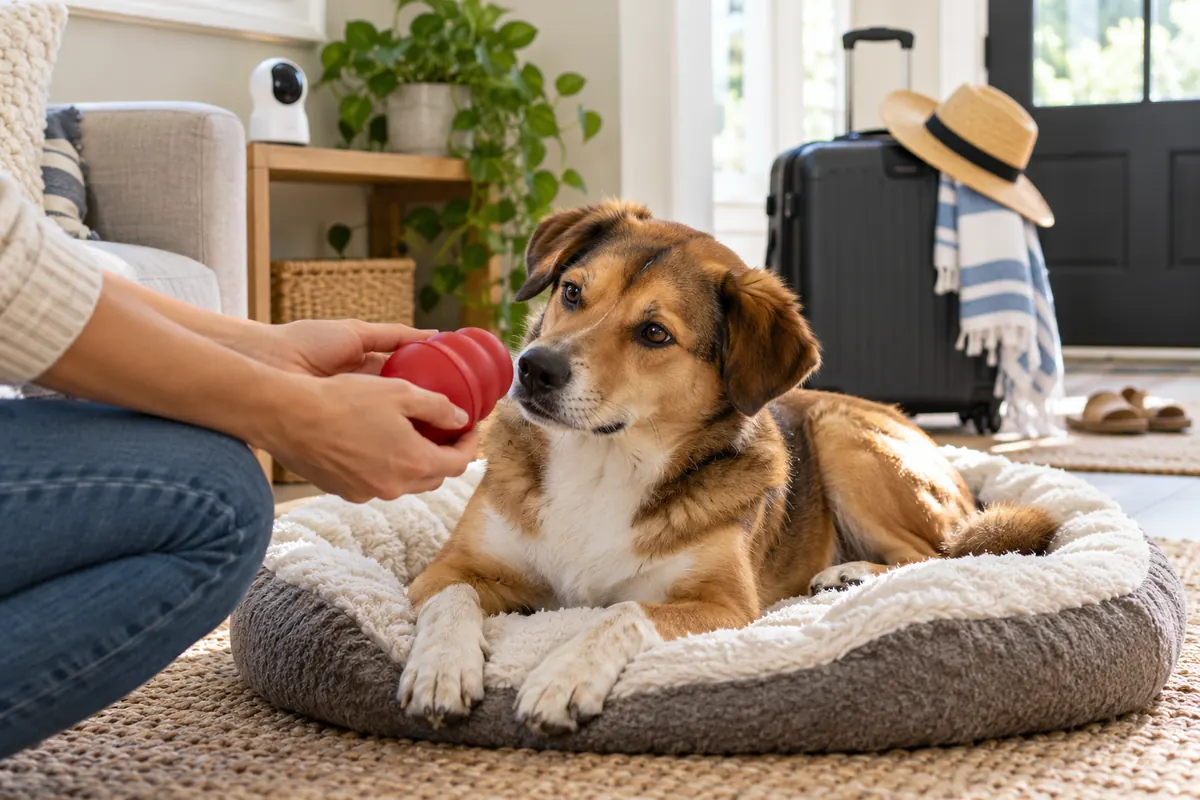
| Rubber food toy: KONG Classic | Offers familiar enrichment during comfortable departures. | Limitation: it is enrichment, not a treatment for panic, and many anxious dogs won't eat when alone; pick a size your dog can't swallow. Alternative: a sniffy walk or sniff games beforehand. |
Swipe the table sideways to see every column.
Test toys under supervision and check for damage. Eating is useful information, not proof your dog remains comfortable afterward.
A sitter's departure is appropriate only when the resulting absence is already manageable. Enrichment cannot fill an unsupported care gap; it is enrichment, not a treatment for panic.
Bottom line
A cruise care plan needs to work without you online or able to return quickly. Trial familiar care, appoint a capable backup on land and complete veterinary arrangements before sailing.