On this page
- What is dog dementia (canine cognitive dysfunction)?
- Why dogs with dementia get worse at night
- Rule out other causes first
- Daytime habits that help nights
- A calm evening wind-down routine
- Set up a safe night space
- What to do at 3 a.m.
- Helpful products
- Night routine checklist
- Keep a 7-night log for your vet
- Treatment options to ask your vet about
- Looking after yourself
- Bottom line
The house is quiet, but your older dog keeps wandering. They may pace between rooms, pant beside the bed, or cry without an obvious reason. When this happens repeatedly, both of you can become exhausted—and it can be difficult to know whether your dog needs comfort, a bathroom break, or medical help.
This guide explains practical ways to support a senior dog through restless nights, including a printable-style checklist and seven-night log. We are dog owners, not veterinarians, and we have not lab-tested the products discussed here. New or worsening symptoms should be assessed by your vet.
What is dog dementia (canine cognitive dysfunction)?
Canine cognitive dysfunction, or CCD, is an age-related condition affecting brain function. Owners often call it dog dementia. It can change how a dog recognizes familiar surroundings, interacts with people, remembers routines, and sleeps.
Not every older dog who is unsettled at night has dementia. Our guide on separation anxiety in senior dogs covers pain, hearing and vision changes, and new distress about being alone, so you can describe the whole picture to your vet.
Possible changes include getting stuck behind furniture, staring at walls, seeming confused near doors, altered social behavior, and toileting indoors. Some dogs sleep more during the day and wander at night.
These signs do not confirm CCD on their own. A dog with poor vision, pain, or urinary problems may show similar behavior.
Diagnosis involves looking at the pattern and checking for other explanations. Your vet may recommend an examination and appropriate tests, then discuss a plan based on your dog’s health and daily needs.
FurHaven Deluxe Orthopedic Mattress Dog Bed
An orthopedic bed offers a supportive resting surface for an older dog; comfort matters, although a bed cannot treat cognitive dysfunction.
Check price on AmazonWe earn a small commission if you buy through this link, at no extra cost to you. Disclosure
Why dogs with dementia get worse at night
Owners sometimes use “dog sundowning” to describe confusion or agitation that becomes more noticeable in the evening. It is a description of a pattern, not a separate diagnosis.
Changes in the sleep-wake cycle can leave a dog resting much of the day and becoming active when the household goes to bed. Darkness may also make navigation harder, especially when vision has declined.
A dog who loses track of where they are may wander, vocalize, or seek you out. However, arthritis, needing to urinate, and other discomfort may also become apparent overnight.
Do not assume every bad night is progression of dementia. Note whether symptoms follow particular activities, medication changes, accidents, or trouble getting comfortable.
Rule out other causes first
A vet check comes before choosing sleep supplements. Senior dog pacing at night can reflect more than cognitive changes.
Pain: Arthritis or another painful condition can make lying down, standing up, or changing position uncomfortable.
Urinary needs: Increased thirst, urinary disease, or other health problems may mean your dog needs more frequent bathroom breaks.
Sensory changes: Vision or hearing loss can make familiar rooms feel less predictable, particularly in darkness.
Other medical problems: Thyroid conditions, other hormonal disorders, neurological problems, and systemic illness may affect sleep or behavior. Medication effects also deserve review.
Tell your vet about appetite, thirst, toileting, mobility, and daytime behavior—not just nighttime crying. Bring the complete medication and supplement list.
Seek urgent care for breathing difficulty, collapse, seizures, obvious severe pain, or repeated unsuccessful attempts to urinate. Sudden marked confusion also warrants prompt advice. Do not wait to complete a log when your dog appears unwell.
Daytime habits that help nights
Give the day a gentle structure: regular meals, bathroom opportunities, companionship, and activities your dog can manage comfortably.
Offer short walks and sniff time instead of trying to exhaust your dog. Let mobility, breathing, weather, and your vet’s guidance determine the pace.
Provide safe exposure to natural daylight, such as a comfortable outdoor visit. Avoid heat and do not leave your dog outside unattended.
Allow short naps between activities, along with the rest your dog needs. Avoid deliberately keeping an elderly dog awake all day to force nighttime sleep.
Try easy brain games: finding visible food pieces, familiar cues, or a simple puzzle feeder. Keep sessions brief and end before frustration develops.
A snuffle mat should be easy enough for your dog to use. If they become confused, switch to a simpler activity rather than increasing the challenge. Our slow feeders and lick mats guide covers easy, low-frustration options.
A calm evening wind-down routine
Choose a bedtime sequence you can repeat: a gentle bathroom outing, quiet company, a comfort check, and settling in the sleeping area.
Reduce energetic play and unnecessary commotion late in the evening. Keep meal timing predictable and give medications only as prescribed.
Offer the last potty break close to bedtime. Allow enough time for your dog to move comfortably and finish without being rushed. Provide a safe, non-slip route outdoors.
Check that the resting area is neither too warm nor too cold. Keep water accessible unless your vet has given specific instructions; do not restrict drinking simply to prevent accidents.
If using white noise, start at a low, steady volume. It should soften household sounds, not overwhelm your dog or prevent you from hearing them.
Set up a safe night space
Choose a familiar area where you can hear your dog and respond. Keep the layout consistent, with a clear route between bed, water, and the bathroom exit.
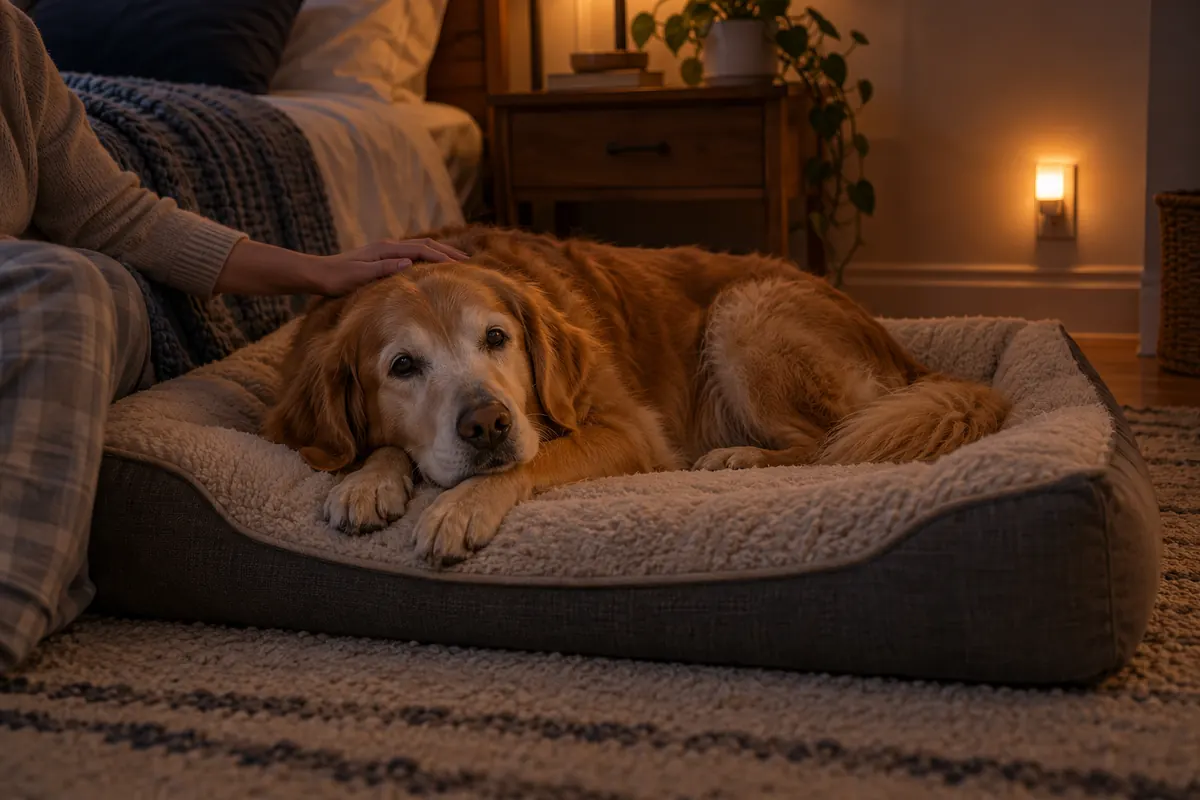
An orthopedic or memory foam dog bed is our top practical comfort pick. Look for an accessible edge, adequate space to change position, and a washable cover. Deep sides can make entry harder for dogs with limited mobility.
Use non-slip rug runners over slippery flooring. Secure loose edges so they do not become trip hazards.
Block stairs and other unsafe areas. A pet playpen or exercise pen may reduce wandering into hazards, but introduce it gently. If confinement increases panic, reconsider the setup with professional guidance.
Soft night lighting may help a dog navigate. A plug-in motion night light is an option, but check that activation does not startle them. A steady light may suit some dogs better.
Keep cords, chemicals, and small objects out of reach. Bedding should not obstruct movement or create a chewing hazard.
What to do at 3 a.m.
Approach calmly and use a familiar voice. Avoid shouting, punishment, or suddenly turning on bright overhead lights.
First, check for an immediate need: do they need to urinate, appear painful, have wet bedding, or seem too hot? Notice whether breathing is comfortable.
Offer a quiet potty trip if appropriate. Keep it simple rather than turning the wake-up into playtime.
Help your dog find the bed again. Gentle reassurance may be useful, but do not force contact if they appear startled or uncomfortable.
If wandering continues, stay nearby and prevent access to hazards. Do not repeatedly shut a distressed dog into a crate.
Record what happened once your dog is safe. Persistent or worsening episodes need a veterinary discussion rather than repeated attempts to soothe symptoms without investigating them.
Helpful products
We earn a small commission if you buy through the Amazon links on this page, at no extra cost to you. Affiliate disclosure
These are product types to consider, not treatments for CCD. Choose around your dog’s mobility, comfort, and response.
| Product type | Why it helps | Notes |
|---|---|---|
| Orthopedic/memory foam dog bed | Provides a supportive resting surface | Choose easy access, enough room, and a washable cover |
| Plug-in motion night light | Adds light for nighttime navigation | Watch for startling; steady lighting may be preferable |
| Pet playpen/exercise pen | Can limit access to hazards | Introduce gradually; stop if confinement causes distress |
| ThunderEase/Adaptil pheromone diffuser | May provide additional environmental reassurance | Evidence is mixed; follow placement and replacement instructions |
| White noise machine | May soften sudden household sounds | Use low volume and monitor your dog’s comfort |
| Snuffle mat or easy puzzle feeder | Offers gentle daytime enrichment | Supervise and simplify if your dog struggles |
| Washable pee pads/belly bands | Help manage accidents and cleanup | Change promptly; bands do not replace bathroom breaks |
| Non-slip rug runners | Improve traction along familiar routes | Secure edges and keep pathways clear |
Swipe the table sideways to see every column.
Pheromone diffusers do not restore memory or treat pain. A brief trial may be considered alongside other changes, but continue only if it seems useful.
Washable pads and belly bands require regular checks. Keep skin clean and dry, and investigate new accidents rather than assuming they are unavoidable aging.
Night routine checklist
Print this checklist or copy it into your notes. Adapt it to your vet’s plan and your dog’s needs.
How to Calm a Dog With Dementia at Night: night routine checklist
- Followed the usual meal and prescribed medication schedule.
- Offered comfortable daytime movement, sniffing, and daylight.
- Kept evening activity gentle and predictable.
- Completed an unhurried final potty break.
- Checked bedding for comfort, dryness, and easy access.
- Left drinking water accessible as advised.
- Cleared pathways and secured non-slip rugs.
- Blocked stairs and checked gates or pen boundaries.
- Set gentle lighting and optional low-volume white noise.
- Prepared the log and agreed who handles wake-ups.
A completed checklist does not mean your dog must sleep through the night. It helps you keep the setup consistent and notice what still needs attention.
Keep a 7-night log for your vet
Use one page or note per night. Write down observations rather than guessing the cause.
Record:
- Bedtime, final potty break, and daytime naps.
- Wake-up times and approximate episode length.
- Pacing, panting, whining, barking, wandering, or confusion.
- Urination, bowel movements, and accidents.
- Signs of pain or difficulty changing position.
- What you tried and whether your dog settled afterward.
- Medication or supplement timing as prescribed.
- Any unusual events or changes that day.
A simple entry might read: “Woke at 2:40 a.m.; paced and whined. Urinated outside, returned to bed, then settled with company.” This is an example, not a prediction.
Short videos can help your vet understand the behavior if recording does not delay care. After seven nights, summarize recurring patterns. Contact the clinic sooner if symptoms worsen.
Treatment options to ask your vet about
Your vet may address pain, urinary needs, sensory changes, and other conditions alongside suspected CCD. Several adjustments may be needed rather than one nighttime product.
Ask about prescription options where appropriate. Selegiline (sold as Anipryl) is FDA-approved in the US for controlling clinical signs associated with canine cognitive dysfunction in dogs. Your vet can decide whether it fits your dog’s situation.
Short-term sleep or anti-anxiety medication may also be discussed. Do not use leftover prescriptions or combine medicines independently; interactions matter.
Ask before giving melatonin. Human products vary and may contain xylitol, which is toxic to dogs. Do not assume an over-the-counter supplement is suitable.
Your vet may discuss diets or supplements intended to support cognition. Evidence varies, and suitability depends on other health needs. Agree on what improvement to monitor and when to reassess.
Looking after yourself
Repeated wake-ups are tiring. Feeling frustrated or worried does not mean you care less about your dog.
Share overnight duties when possible and keep bathroom supplies, spare bedding, and the log ready. Small preparations can make interruptions easier to handle.
Arrange trusted help for rest if available. Leave clear instructions about mobility, nighttime behavior, and when to contact you or the vet.
Discuss the burden honestly with your veterinary team. Include your dog’s daytime enjoyment, comfort, and ability to recover—not only how many hours everyone sleeps.
If distress remains difficult to manage, ask for a quality-of-life discussion. You do not have to make complicated care decisions without support.
Bottom line
To calm a dog with dementia at night, begin with a veterinary assessment and address discomfort before adding sleep aids. Then build a predictable routine, a safe resting area, and calm responses to wake-ups.
Use the checklist and seven-night log to make changes observable. The goal is better comfort and manageable care, with regular reassessment as your dog’s needs change.