On this page
- What separation anxiety can look like in an older dog
- Why it can start later in life
- What changed? Possible reasons
- See your vet first
- Notes to bring to the vet
- Separation anxiety, confusion, or confinement stress?
- Make home easier for an older dog
- Senior-friendly home checklist
- A gentle alone-time plan for senior dogs
- Gentle 2-week alone-time plan for an older dog
- Nighttime clinginess
- If your dog is losing hearing or sight
- Mistakes to avoid
- When to get extra help
- Helpful products
- Bottom line
Your dog once slept through your errands. Now they follow you between rooms, call when you disappear, or struggle to settle after you leave. A change like this can be worrying, especially after years of comfortable independence.
We are dog owners, not vets or trainers, and the products in this guide were chosen from research, not from personal testing. This guide focuses on new concerns in older dogs—often noticed around eight and up, sometimes earlier in giant breeds—while recognizing that senior status varies.
What separation anxiety can look like in an older dog
Possible concerns include increased following, pacing, panting, whining or howling, night waking, house soiling, and refusing familiar food when alone.
Older dogs who lose a companion animal or person can change quickly, and not eating, weight loss or new lethargy needs the vet. Our guide to dog separation anxiety after losing another pet or person shows which signs to call the vet about and how to keep their days steady.
The timing matters. Does the behavior begin during departure preparations, after the door closes, or throughout the day even with company?
The ASPCA's Behavior Problems in Older Dogs page lists increased following, a greater desire for contact, and increased anxiety when left alone among the concerns guardians of aging dogs report. It advises that the first step for any behavior change is a vet visit to find out whether there is a medical cause.
These signs do not establish separation anxiety. A dog may be uncomfortable, confused, worried about confinement, or experiencing several difficulties together.
Furbo 360° Dog Camera
A pet camera records daytime and nighttime changes, giving your vet clearer observations of your older dog's behavior when you are absent.
Check price on AmazonWe earn a small commission if you buy through this link, at no extra cost to you. Disclosure
Why it can start later in life
Comfort and confidence can change with age. Pain or stiff joints may make it harder to get up, find a comfortable position, or reach water and the toilet area.
Vision or hearing changes can reduce the information your dog uses to navigate daily life. Your presence may become a reassuring reference point.
Age-related brain changes are another possibility, but cognitive dysfunction requires veterinary assessment. Following or night waking alone cannot identify it.
Changes outside the dog matter too: a move, altered furniture, loss of a companion, visitors, or a new owner work schedule may make an established routine less predictable.
What changed? Possible reasons
Use this table to prepare questions. The possible reasons are not diagnoses, and home adjustments do not replace assessment.
| What you notice | Possible reason to discuss with your vet | What you can do at home |
|---|---|---|
| Follows closely and struggles to lie down | Pain or difficulty getting comfortable | Offer accessible resting options and non-slip footing |
| Hesitates on smooth floors | Mobility, balance, or confidence changes | Secure non-slip runners along familiar routes |
| Bumps into objects or worries in dim rooms | Vision changes | Keep furniture stable and provide gentle lighting |
| Startles when approached or misses familiar sounds | Hearing changes | Approach visibly and use predictable cues |
| Wakes, wanders, or seems lost | Sleep disruption, discomfort, or cognitive changes | Keep routes clear and record the pattern |
| Has new accidents | Urinary, digestive, mobility, or other health changes | Offer more frequent toilet access |
| Refuses food, including while you are home | Dental discomfort, appetite changes, or illness | Report promptly and avoid difficult chewing tasks |
| Becomes distressed after a companion is lost | Household and social changes | Preserve familiar routines and provide suitable company |
| Panics only behind a closed barrier | Confinement may contribute | Stop that setup and assess alternatives while home |
| Struggles after an owner schedule change | Longer absences or altered expectations | Arrange care and rebuild manageable separations |
Swipe the table sideways to see every column.
See your vet first
Book an appointment for new clinginess or alone-time distress rather than assuming your dog simply needs more training.
Describe physical changes as well as behavior. A dog who paces at night and hesitates on stairs provides a different picture from one who rests comfortably until you pick up your keys.
Your vet can assess health, discomfort, sensory function, and whether further investigation is needed. Only a veterinary professional can evaluate possible cognitive dysfunction.
Bring existing video and notes, but do not prolong distress to collect evidence. Our Separation Anxiety Vet Visit Prep guide helps organize the appointment.
Notes to bring to the vet
- When you first noticed the change.
- Whether onset was sudden or gradual.
- Departure times and typical absence lengths.
- What happens before and after you leave.
- Daytime behavior while someone is home.
- Night waking, pacing, or vocalizing.
- Changes in appetite, drinking, or toileting.
- Mobility, handling, or dental concerns.
- Possible hearing or vision changes.
- Recent moves, losses, or schedule changes.
- Current veterinary care and any recent changes.
- Representative video clips and their timestamps.
Write “unknown” where information is missing. Accurate gaps are more useful than guessed details.
Separation anxiety, confusion, or confinement stress?
Separation-related distress is more concerning when difficulty closely follows a person's departure. Confusion may also occur with company present, such as getting stuck or struggling to navigate familiar spaces.
Confinement stress can appear when a door, gate, or crate restricts access. An older dog who never accepted a crate may panic when suddenly placed in one to manage accidents.
These patterns can overlap. A dog with discomfort or reduced vision may also become worried about separation.
Compare situations carefully without staging difficult tests. Our Velcro Dog guide explains why following alone is not enough to identify an anxiety problem.
Make home easier for an older dog
Create clear, familiar routes between bed, water, and the outdoor exit. Secure rugs so they do not slide or create raised edges to trip over.
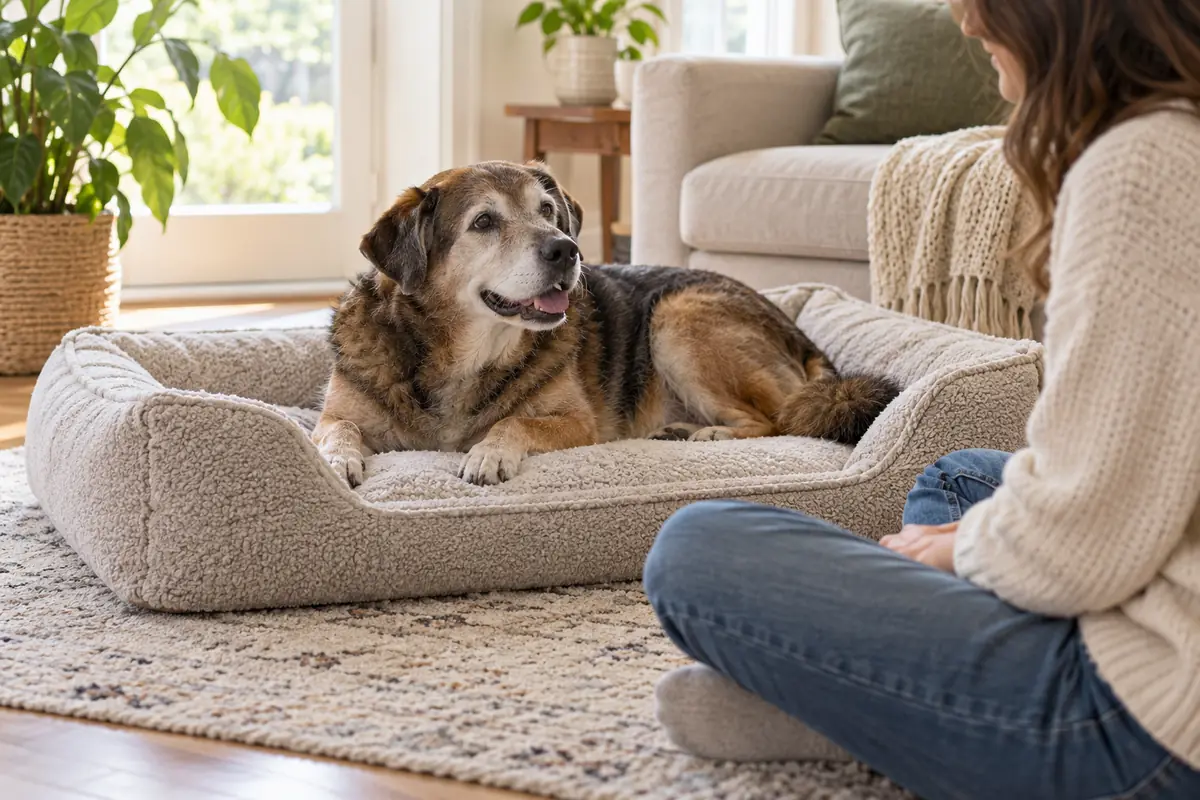
Choose a bed your dog can enter and leave without climbing. Some prefer supportive padding; others choose a cooler, firmer surface. Offer safe options rather than insisting on one bed.
Keep furniture and bowls in predictable places. Provide gentle light where dimness causes hesitation, and block access to dangerous stairs or drops.
Arrange more frequent potty opportunities where needed. A camera can show that your dog is struggling to stand, but a caregiver is needed to provide actual assistance.
Senior-friendly home checklist
Separation Anxiety in Senior Dogs: Why Your Older Dog Suddenly Hates Being Alone: senior-friendly home checklist
- Clear familiar routes through the home.
- Secure non-slip rugs or runners.
- Remove loose rug edges and clutter.
- Provide a low-entry resting place.
- Offer comfortable temperature choices.
- Keep water easy to reach.
- Keep bowls and furniture in familiar positions.
- Provide gentle lighting in difficult areas.
- Prevent unsafe access to stairs and drops.
- Plan toilet breaks around current needs.
- Check that doors and gates do not create distress.
- Keep camera equipment and cables inaccessible.
- Leave only safely introduced enrichment.
- Confirm who can help during necessary absences.
A gentle alone-time plan for senior dogs
Begin after discussing new concerns with your vet and addressing immediate comfort needs.
Choose a relaxed moment after a potty opportunity and appropriate gentle activity. Practice a tiny movement away while your dog rests, then return before worry develops.
Build from visible distance to a moment out of sight only when comfortable. Do not combine a new room, a closed door, and a longer duration in the same step.
Use a camera if helpful, watching posture, breathing, movement, and recovery. If concern appears, return calmly and make the next practice easier.
Arrange suitable company for absences beyond current tolerance. Our Separation Anxiety Training Plan explains the wider approach, but an older dog may need smaller steps and more practical assistance.
Gentle 2-week alone-time plan for an older dog
This is an organizing example, not a deadline. Medical needs or distress may mean pausing or repeating any stage.
| Days | Goal | What to do | Move on when |
|---|---|---|---|
| 1–2 | Establish safety and health priorities | Contact vet, note changes, arrange care | Immediate needs have been assessed or a safe interim plan agreed |
| 3–4 | Improve physical comfort | Adjust footing, bed access, water, and potty arrangements | Dog uses the space comfortably |
| 5–6 | Build relaxed nearby resting | Reward settling while you sit close | Rest remains loose and comfortable |
| 7–8 | Introduce tiny visible distance | Stand or step away briefly, then return | Dog stays relaxed across easy repetitions |
| 9–10 | Try a moment out of sight if ready | Use an interior doorway without forcing confinement | No worry appears and recovery is easy |
| 11–12 | Repeat manageable gaps | Mix very easy repetitions with small variations | Comfort remains consistent |
| 13–14 | Review rather than chase duration | Compare notes and seek adjustments where needed | Next steps match health and observed comfort |
Swipe the table sideways to see every column.
A slower pace is fine. The useful outcome is comfortable experience, not completing every row.
Nighttime clinginess
An older dog may become unsettled when the household goes quiet or their person sleeps. The ASPCA notes that geriatric, or late-onset, separation anxiety can show up as anxiety at night, almost as if the dog views your sleeping as a form of separation, and that it calls for a thorough vet exam.
That description is not a diagnosis or a literal explanation of what your dog thinks. Pain, toilet needs, sensory changes, and sleep disruption also need consideration.
Keep nighttime responses calm: check immediate needs, offer a safe potty opportunity when appropriate, and help your dog return to a familiar resting place.
Our Dog Dementia Night Calming guide and Nighttime Anxiety guide cover these patterns in more detail. Do not assume night waking proves cognitive dysfunction.
If your dog is losing hearing or sight
Approach where your dog can see you when possible. Avoid reaching suddenly toward a sleeping or unaware dog.
For hearing changes, familiar visual signals may help. A qualified professional can teach gentle touch cues or a light floor vibration as a predictable signal, provided your dog finds it comfortable. Do not startle them or use aversive vibration devices.
For vision changes, use a calm voice before approaching if hearing remains useful. Familiar bedding and ordinary household scents can provide continuity; special scented products are unnecessary.
Preserve routines and allow time to orient. Repeating a cue more loudly or moving faster may make the situation harder.
Mistakes to avoid
- Dismissing sudden changes as “just old age.”
- Assuming following means separation anxiety.
- Diagnosing cognitive dysfunction from a checklist.
- Crating a worried senior to contain accidents.
- Expecting a previous alone-time routine to remain suitable.
- Using vigorous exercise to exhaust the dog.
- Scolding or punishing vocalizing, accidents, or contact-seeking, which can make fear worse; use reward-based methods instead.
- Ignoring a distressed dog's calls for comfort, which can make worry worse.
- Relying on a bed, toy, or camera instead of care.
Adjusting expectations is part of caring for an aging dog.
When to get extra help
Contact your vet promptly for rapid changes, appetite or drinking concerns, persistent panting, pain, repeated accidents, or significant confusion.
Injury, dangerous escape attempts, breathing difficulty, or collapse requires urgent attention.
A qualified, reward-based behavior professional or veterinary behaviorist can help when your dog cannot tolerate tiny separations or the pattern remains unclear after health assessment.
Share brief records and existing clips. Our How to Record Your Dog When You Leave guide explains safe observation without forcing a longer absence.
Helpful products
Picks on this page are a research-based assessment of features and intended use — not hands-on testing. We earn a small commission if you buy through the Amazon links on this page, at no extra cost to you. Affiliate disclosure
These are comfort and observation tools, chosen from research, not from personal testing.
| Product type | Why it helps | Notes |
|---|---|---|
| Pet camera with two-way audio: Furbo 360° camera | Records daytime and nighttime behavior for veterinary review | Limitation: it shows behavior but does not resolve the cause, and speaker audio may confuse dogs with hearing changes. Alternative: an old phone or laptop with a free video call app. |
| Orthopedic memory-foam dog bed: FurHaven orthopedic bed | Offers supportive resting comfort | Limitation: it does not treat pain or anxiety, and some dogs prefer a cooler, firmer surface. Alternative: a thick folded blanket on a non-slip mat. |
| Stuffable rubber food toy: KONG Classic | Provides familiar food enrichment during comfortable practice | Limitation: sore teeth or low appetite may limit use, so ask your vet about dental concerns. Alternative: a lick mat or supervised scatter feeding. |
Swipe the table sideways to see every column.
If you use a food toy, fill it with soft food and choose a size that suits your dog's mouth. None of these replaces a vet check, company during longer absences, or a gentle plan.
Bottom line
New alone-time distress in an older dog deserves a vet check first. Comfort, mobility, sensory changes, and daily care needs belong alongside behavior observations.
Make the home easier to navigate, arrange suitable company, and rebuild separations gently. Your dog's needs can change, and the plan can change with them.