On this page
- Why dogs lick or chew their paws when left alone
- Paw licking: distress or something physical?
- Signs that need the vet
- Call the vet soon or book a visit?
- How to check your dog's paws
- Quick paw check
- What to film and note
- Protecting the skin kindly
- A calmer set-up
- Calm set-up checklist
- Paw licking plan in 5 steps
- What to do when you get home
- Absences you can't avoid
- Mistakes to avoid
- When to get extra help
- Helpful products
- Bottom line
You return to find your dog’s front paws wet, their light fur stained or one patch looking sore. Perhaps they rarely lick while you watch, making anxiety seem like the obvious explanation. But being alone can also give a dog uninterrupted time to attend to an itchy or painful paw.
We are dog owners, not vets or trainers. This guide helps you check gently, record useful details and recognize when veterinary care comes first. If separation distress is involved, the aim is comfortable alone time alongside protection for the skin.
Why dogs lick or chew their paws when left alone
Brief grooming is different from repeated licking or chewing that is difficult to interrupt or damages skin. Some dogs may use repetitive licking as a self-soothing activity when worried.
Some worried dogs shake or tremble instead of licking their paws. Our guide to dog shaking or trembling when left alone explains how to tell fear about being left from feeling cold, pain or illness.
Concern about separation increases when licking begins with your departure and accompanies pacing, whining, drooling or food refusal. It still does not establish the cause.
The ASPCA’s separation anxiety advice recommends seeing a vet to rule out medical issues before treating a behavior problem as separation anxiety. Itch and worry can also occur together.
Furbo 360° Dog Camera
A pet camera shows when paw licking begins and what accompanies it, helping you share useful observations with your vet.
Check price on AmazonWe earn a small commission if you buy through this link, at no extra cost to you. Disclosure
Paw licking: distress or something physical?
Look at the pattern across the whole day. These comparisons are clues, not a diagnosis, and an apparently normal paw can still be uncomfortable.
| What you see | More likely distress about being left | More likely itch, allergy, injury or pain, ask your vet |
|---|---|---|
| Start time | Begins with keys, shoes or departure | Occurs at unrelated times too |
| Other behavior | Pacing, whining or exit watching accompanies licking | Scratching or licking other body areas |
| After walks | No consistent outdoor connection | Licking repeatedly follows outdoor activity |
| Nighttime | Mostly absent during relaxed company | Wakes to lick or chews paws at night |
| Number of paws | Pattern changes with separation circumstances | One painful paw or several persistently itchy paws |
| Skin appearance | No visible changes initially | Redness, swelling, scabs or hair loss |
| Fur | Becomes wet during worried episodes | Persistent rusty-brown staining suggests repeated saliva exposure |
| Smell or discharge | No new changes noticed | Unusual odor, moisture or discharge |
| Walking | Moves comfortably outside episodes | Limping, reluctance to walk or favoring a paw |
| Nails and toes | No visible injury | Broken nail, wound or object between toes |
Swipe the table sideways to see every column.
Staining does not identify the cause, and licking itself can create redness. Our separation anxiety signs guide explains the wider distress pattern.
Signs that need the vet
Contact your vet for persistent or excessive licking, even without obvious damage. Redness, swelling, odor, scabs, hair loss, limping or a broken nail deserve assessment.
Raw, bleeding or open skin needs prompt attention because continued licking can worsen injury. Do not wait for a training plan to solve a wound.
Dogs Trust’s separation anxiety advice notes that physical health can influence behavior without obvious pain or illness, and advises a vet check when behavior has recently changed. A sudden new licking habit belongs in that conversation.
Call the vet soon or book a visit?
Call if you are unsure; the clinic can assess urgency from your description.
| Sign | What to do |
|---|---|
| Heavy bleeding, a deep wound or severe injury | Seek urgent veterinary care immediately |
| Raw, bleeding or open skin from licking | Contact your vet today for assessment and protection advice |
| Cannot bear weight or appears very painful | Seek urgent veterinary assessment |
| Broken nail or something embedded between toes | Call promptly; do not dig into the paw or pull an embedded object |
| Swelling, discharge, strong odor or worsening redness | Contact your vet promptly, ideally today |
| Repeated licking with staining, scabs or hair loss | Book a veterinary visit soon |
| Persistent licking despite normal-looking skin | Arrange an assessment rather than assuming a behavioral cause |
| Rapid swelling with breathing difficulty, weakness or collapse | Seek emergency veterinary care immediately |
Swipe the table sideways to see every column.
How to check your dog's paws
Choose a calm moment, including after walks. Let your dog remain in a comfortable position and begin with what you can see without lifting or squeezing the paw.
Compare paws, pads, nails and the skin between toes only as your dog comfortably allows. Stop if they pull away, stiffen, growl or show pain. A sore dog may bite even when normally gentle.
Do not force a detailed examination or dig for an object. Photograph visible changes if easy, and let your vet perform the examination your dog needs.
Quick paw check
Dog Licking or Chewing Paws When Left Alone: Stress, Itch or Pain?: quick paw check
- Notice whether your dog stands evenly.
- Look for limping or a lifted paw.
- Compare both front and back paws.
- Look for redness or swelling.
- Check for wet fur and saliva staining.
- Look for scabs, hair loss or open skin.
- Notice unusual odor or discharge.
- Look for a split or broken nail.
- Check between toes only if comfortably permitted.
- Note visible debris without probing.
- Stop handling if your dog seems uncomfortable.
What to film and note
Record the first 10–20 minutes only if your dog remains comfortable that long. This is an observation window, not a required absence. Return earlier if distress develops, and never prolong licking that is damaging skin.
Dog Licking or Chewing Paws When Left Alone: Stress, Itch or Pain?: what to film and note
- Start recording before departure preparations.
- Include the resting area and exit.
- Keep paws visible where practical.
- Capture the whole body and sound.
- Note when you left.
- Mark when licking first began.
- Record which paw or paws were involved.
- Note licking versus biting or chewing.
- Record approximate duration and breaks.
- Note pacing, whining or trembling.
- Record food interest and comfortable resting.
- Note recent walks or environmental changes.
- Compare with behavior while you are home.
- Record visible skin changes afterward.
If paws disappear behind furniture, mark that period unknown. Our best pet camera guide covers practical options.
Protecting the skin kindly
Ask your vet whether a soft cone, recovery suit or dog booties would appropriately protect the affected area. These options are not interchangeable: some do not prevent access to paws, and fit matters.
Introduce any recommended equipment gently while you are home, using comfortable short sessions and rewards. Follow the vet’s instructions about use and supervision.
Never use a cone as punishment or improvise tight coverings. Tell your vet if equipment causes panic, rubbing or difficulty moving, drinking or resting. Protection can prevent further damage, but does not address the underlying itch, pain or fear.
A calmer set-up
Choose a familiar resting space with water, comfortable bedding and suitable room conditions. Keep floors and surroundings free of sharp debris, accessible chemicals and objects your dog might chew apart.
Meet appropriate exercise, sniffing and potty needs before leaving, then allow time to settle. More exercise is not automatically helpful, particularly with a sore paw.
Avoid introducing unfamiliar confinement to stop licking. Never shut a panicking dog in a crate. If no setup prevents distress or self-injury safely, arrange company and professional support.
Calm set-up checklist
Dog Licking or Chewing Paws When Left Alone: Stress, Itch or Pain?: calm set-up checklist
- Follow your vet’s skin-protection instructions.
- Check paws after walks without forcing handling.
- Choose a familiar resting area.
- Provide comfortable bedding.
- Leave drinking water accessible.
- Check room comfort and ventilation.
- Remove sharp debris and household hazards.
- Keep chemicals and cleaners inaccessible.
- Inspect food toys for damage.
- Allow recovery after suitable activity.
- Avoid exercise that worsens paw discomfort.
- Confirm comfort with any barrier or equipment.
- Test the camera view.
- Arrange care beyond your dog’s current ability.
Paw licking plan in 5 steps
There is no fixed timetable. Skin health and comfortable behavior take priority over increasing absence length.
| Step | What you do | Move on when |
|---|---|---|
| 1. Assess physical causes | Discuss persistent licking and skin changes with your vet | Urgent concerns are addressed and practice is appropriate |
| 2. Protect and simplify | Follow the care plan and establish a comfortable resting setup | Your dog can rest without equipment-related distress |
| 3. Find an easy starting point | Practice a separation shorter than the time worry usually begins | Comfortable behavior continues throughout |
| 4. Repeat and build gradually | Mix easy repetitions with small increases while observing | Repeated comfort supports another manageable step |
| 5. Apply to everyday routines | Practice relevant departures and cover longer gaps | Your dog stays comfortable without worsening skin damage |
Swipe the table sideways to see every column.
Start with seconds if necessary. Return before worry builds; if distress appears, come back calmly and make the next attempt easier. Do not wait for silence during panic.
Use our separation anxiety training plan. If preparations already trigger worry, work separately with the departure cues guide. Less licking is not progress if a device simply prevents it while your dog remains distressed.
What to do when you get home
Offer a calm greeting and a quick visual paw check. Avoid repeatedly grabbing a sore foot or turning every reunion into a lengthy examination.
Note wetness, redness, any new damage and how your dog behaves after you return. Contact your vet about worsening skin or pain.
Record facts in our separation anxiety log: which paw, when licking started and what else occurred. If drooling accompanies episodes, our drooling when left alone guide covers that separate symptom.
Absences you can't avoid
Arrange a familiar caregiver before your dog exceeds their comfortable limit. Confirm that your dog actually relaxes with that person and explain the veterinary care plan.
A brief walker visit cannot cover distress before and afterward. A sore paw may also change what walking is appropriate.
Our care options guide helps organize company and backups. Cameras reveal behavior but cannot prevent self-injury or provide in-person care.
Mistakes to avoid
Do not assume licking only noticed on camera is caused by separation anxiety. Itch and pain may simply be less interrupted while your dog is alone.
Avoid punishment, scolding, bitter sprays and leaving your dog to cry. Do not use protective equipment to force a longer absence.
Skip unprescribed creams, home remedies and improvised coverings. Follow veterinary guidance rather than treating the appearance of the paw yourself.
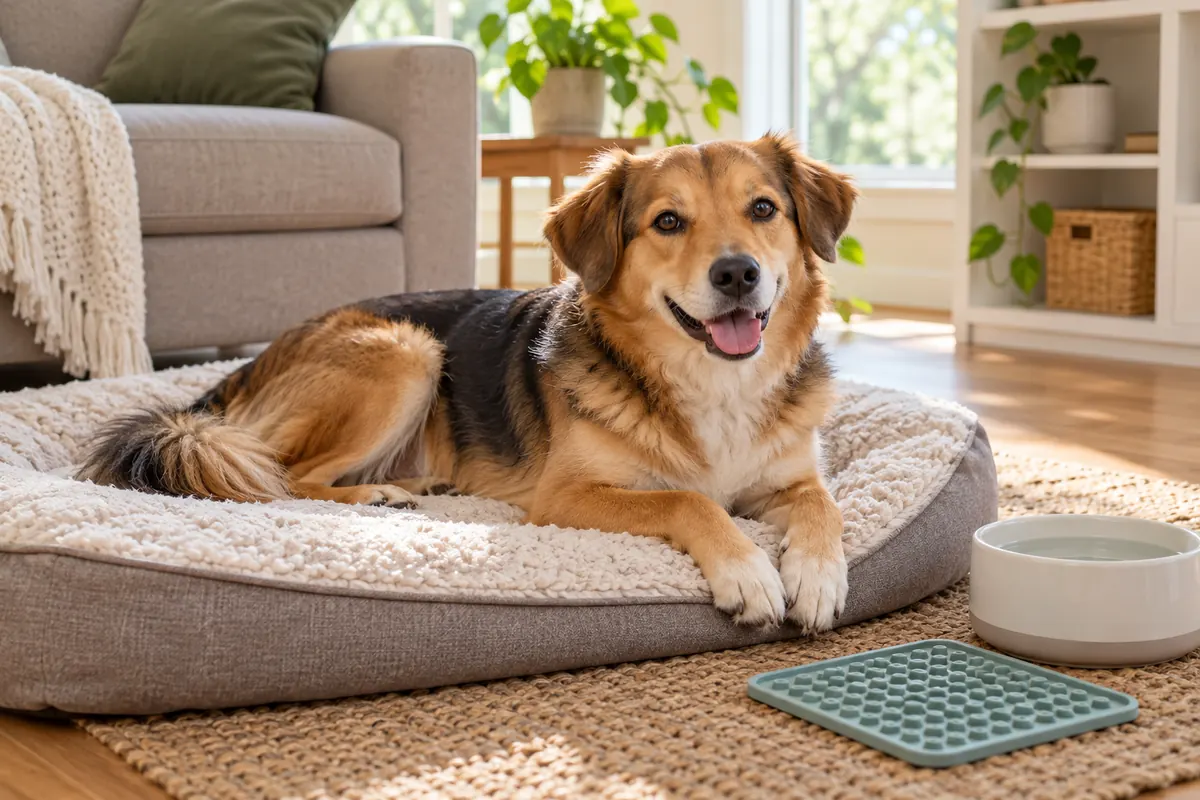
Finally, a lick mat is enrichment, not treatment for inflamed skin or separation distress.
When to get extra help
Seek veterinary reassessment if licking persists, skin worsens or your dog cannot rest comfortably. Report any change in mobility, appetite or overall behavior.
Get a qualified, reward-based professional experienced in separation difficulties involved if panic begins quickly, your dog injures themselves or manageable practice is not helping.
Bring short clips and notes using our vet visit preparation guide. Medical care and behavior support may need to proceed together rather than treating them as competing explanations.
Helpful products
Picks on this page are a research-based assessment of features and intended use — not hands-on testing. We earn a small commission if you buy through the Amazon links on this page, at no extra cost to you. Affiliate disclosure
These picks are chosen from research, not from personal product testing. They are practical support options, not a fix on their own, and none of them replaces a vet check, kind skin protection or care cover.
| Product type | Why it helps | Notes |
|---|---|---|
| Pet camera: Furbo 360° camera | Shows when licking begins and accompanying behavior | Limitation: it needs Wi-Fi and cannot stop licking or explain its cause. Alternative: an old phone or laptop recording or on a video call. |
| Lick mat: LUKITO 2-pack | Offers a quiet tongue-based activity for some comfortable dogs | Limitation: it can be chewed, so supervise at first and leave it only with dogs who use it safely. Alternative: a frozen stuffed food toy. |
| Stuffable rubber food toy: KONG Classic | Provides a familiar activity during manageable alone time | Limitation: a worried dog usually ignores food, so not eating it is useful information, but it does not fix distress. Alternative: scatter feeding. |
Swipe the table sideways to see every column.
Bottom line
Persistent paw licking deserves a health check before being labeled anxiety. Protect sore skin with your vet’s guidance, observe the whole behavior pattern and rebuild comfortable separations gradually. The goal is healthy paws and a dog who feels safe.