On this page
- Why dogs shake or tremble when you leave
- Shaking: fear or something physical?
- Signs that need the vet
- Call the vet now, soon or book a visit?
- Is your dog simply cold?
- Is my dog cold?
- What to film and note
- A warmer, calmer set-up
- Calm set-up checklist
- Shaking plan in 5 steps
- What to do when you get home
- Absences you can't avoid
- Mistakes to avoid
- When to get extra help
- Helpful products
- Bottom line
Your dog starts trembling when you put on your shoes, or a camera shows them shivering near the door after you leave. It is understandable to wonder whether they are frightened. Yet shaking can also mean they feel cold, sore or unwell.
Start with their health and surroundings rather than assuming anxiety. We are dog owners, not vets or trainers. This guide helps you recognize warning signs, collect useful observations and plan comfortable separations once physical concerns have been addressed.
Why dogs shake or tremble when you leave
Fear can produce trembling. A connection with departure becomes more plausible when shaking starts with keys or shoes and accompanies whining, pacing, panting, drooling or refusal of familiar food.
It may ease when you return or when your dog settles, but that does not establish the cause. Your arrival can also change their activity or surroundings.
The ASPCA’s separation anxiety advice recommends seeing a vet to rule out medical issues before treating a behavior problem as separation anxiety. New trembling deserves that cautious approach.
Furbo 360° Dog Camera
A pet camera shows when trembling starts and whether your dog settles, giving you useful observations to discuss with your vet.
Check price on AmazonWe earn a small commission if you buy through this link, at no extra cost to you. Disclosure
Shaking: fear or something physical?
These are clues, not diagnostic rules. Fear, cold and discomfort can occur together, and normal-looking behavior between episodes does not exclude illness.
| What you see | More likely fear about being left | More likely cold, pain or illness, ask your vet |
|---|---|---|
| Start time | Begins with departure preparations | Happens during ordinary time together too |
| Location | Waits tensely near the exit | Trembles in a drafty or cool resting area |
| Other behavior | Whining, pacing or repeated door checking | Hunched posture or reluctance to move |
| Food interest | Refuses food during separation but eats comfortably later | Appetite changes continue while you are home |
| Movement | Walks normally outside worried episodes | Limping, stiffness, weakness or wobbliness |
| Touch | No new sensitivity noticed | Flinches, withdraws or resists handling |
| Digestive signs | None observed alongside departure worry | Vomiting, diarrhea, gulping or apparent nausea |
| Rest and nighttime | Mostly linked to being separated | Shakes at rest or wakes trembling |
| Head position | No new change | New head tilt or loss of balance |
| After your return | Eases as comfortable behavior returns | Continues despite company and a comfortable room |
Swipe the table sideways to see every column.
Our separation anxiety signs guide explains the broader behavior pattern. A camera cannot distinguish medical causes reliably.
Signs that need the vet
Contact your vet for new, unexplained, persistent or worsening trembling. Mention changes in eating, drinking, movement, sleep or toileting, even if they seem unrelated.
Dogs Trust’s separation anxiety advice explains that physical health can influence behavior without obvious pain or illness, and recommends veterinary advice when behavior has recently changed.
Do not dismiss new shaking in an older dog as simply aging. Pain, weakness and other health changes need assessment.
Trembling with collapse, seizure-like movements, breathing difficulty, pale gums or a swollen belly requires emergency attention rather than a training adjustment.
Call the vet now, soon or book a visit?
If you are unsure, call your vet or emergency clinic and describe what you see.
| Sign | What to do |
|---|---|
| Collapse, trouble breathing or pale gums | Seek emergency veterinary care immediately |
| New seizure-like movements or altered awareness | Contact an emergency vet immediately; keep clear of the mouth and do not restrain |
| Swollen belly, especially with unsuccessful retching or marked restlessness | Seek emergency care now |
| Sudden weakness, wobbliness or a new head tilt | Seek urgent veterinary advice now |
| Shaking after possible toxin exposure or injury | Call your vet or emergency clinic immediately |
| Trembling with significant pain, repeated vomiting or diarrhea | Contact your vet promptly today; severe weakness makes this an emergency |
| New trembling in an older dog or changes in appetite, thirst or movement | Call your vet soon to arrange assessment |
| Recurring departure-linked trembling without urgent signs | Book a veterinary visit and bring observations; seek advice sooner if worsening |
Swipe the table sideways to see every column.
Do not delay urgent help to obtain a better recording. If seizure-like movements occur, move nearby hazards only when safe and follow the clinic’s guidance.
Is your dog simply cold?
Cold is one possibility, especially for small, short-coated, thin, very young or older dogs. Check the resting area itself: drafts, cool flooring and household heating changes may matter more than how warm you feel elsewhere.
Provide a comfortably warm room and familiar cozy bedding. Your dog should be able to move away from the bed or blanket.
Improvement with warmth is useful information, but not proof that nothing else is wrong. Persistent shivering, unusual sleepiness or any other concerning change still needs veterinary advice.
Is my dog cold?
These questions help assess comfort; they do not diagnose the cause of shaking.
Dog Shaking or Trembling When You Leave: Fear, Cold or Pain?: is my dog cold?
- Is my dog small or short-coated?
- Are they very young, older or thin?
- Is their resting area cooler than other rooms?
- Is there a draft near the bed?
- Are they lying directly on cool flooring?
- Is their coat or bedding damp?
- Does household heating change after I leave?
- Can they access comfortable, dry bedding?
- Can they move away if they become too warm?
- Does trembling persist despite a comfortable room?
What to film and note
Capture the first 10–20 minutes only if your dog can remain comfortable that long. This is an observation window, not a required test duration. Return earlier if distress develops, and avoid provoking another episode when medical concerns are present.
Dog Shaking or Trembling When You Leave: Fear, Cold or Pain?: what to film and note
- Start recording before departure preparations.
- Include the resting area and exit.
- Capture the whole body where practical.
- Check that sound records.
- Note when keys, shoes or a bag appeared.
- Record the time you left.
- Mark when trembling first became visible.
- Note which body areas appeared affected.
- Record pacing, whining, panting or drooling.
- Note food interest and drinking.
- Record any comfortable resting.
- Note room conditions and recent activity.
- Compare with behavior while you are home.
- Record recovery after your return.
Avoid diagnosing movements from a blurry clip. Our best pet camera guide covers practical recording choices.
A warmer, calmer set-up
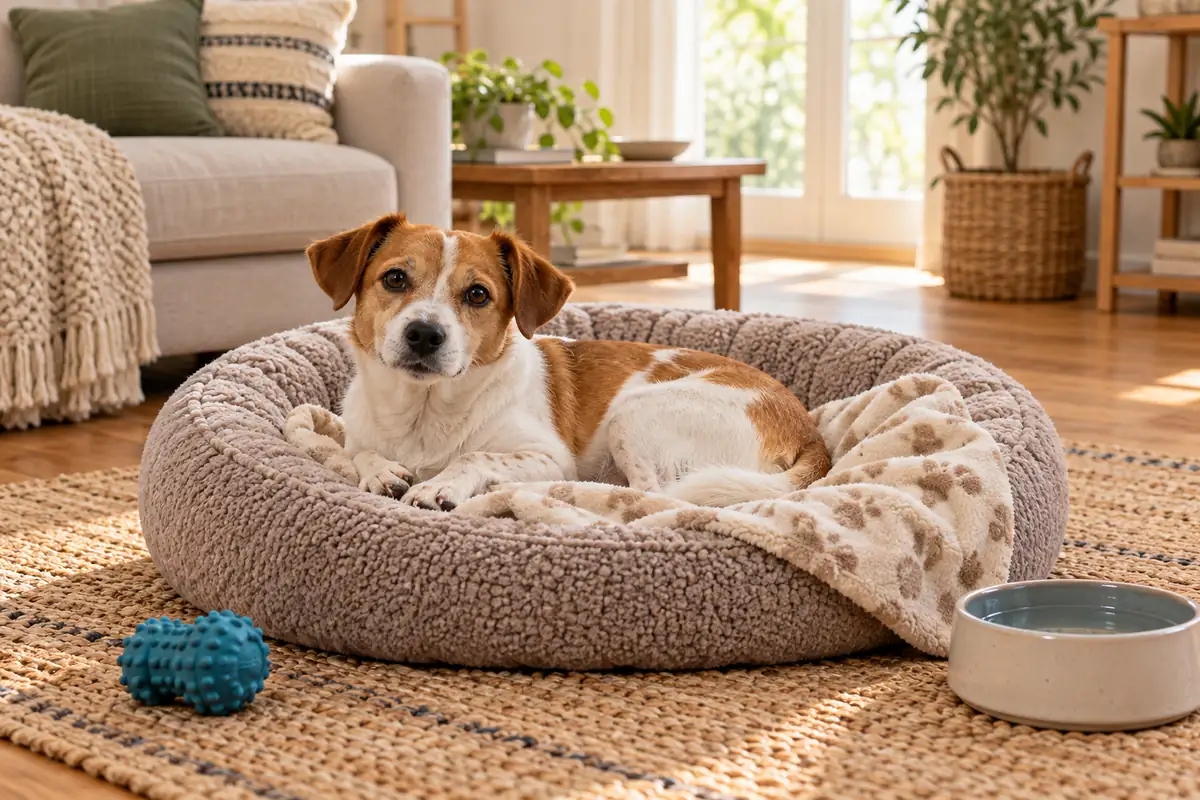
Use a familiar resting spot away from drafts and busy windows. Provide dry bedding your dog can use safely, with water accessible nearby.
A raised-edge bed may feel comfortable for a dog who likes curling up, but some dogs prefer a flatter surface. Let their preference guide the choice.
Keep cords and heating equipment inaccessible. Avoid improvised heat sources or wrapping your dog tightly to stop movement.
Trial any barrier while you are home. Never shut a panicking dog in a crate; confinement can add another difficulty rather than help them settle.
Calm set-up checklist
Dog Shaking or Trembling When You Leave: Fear, Cold or Pain?: calm set-up checklist
- Check that the room feels comfortably warm.
- Consider heating changes during the absence.
- Move bedding away from drafts.
- Provide dry, familiar bedding.
- Allow access to another safe resting surface.
- Keep drinking water accessible.
- Remove damaged bedding or swallowable pieces.
- Secure cords and household hazards.
- Keep heaters inaccessible.
- Offer an appropriate potty opportunity.
- Meet suitable exercise and sniffing needs.
- Allow a calm transition after activity.
- Confirm comfort with any boundary.
- Arrange company beyond the current comfortable absence.
Shaking plan in 5 steps
Progress depends on health and comfortable behavior, not a fixed schedule.
| Step | What you do | Move on when |
|---|---|---|
| 1. Address physical concerns | Discuss new trembling and accompanying signs with your vet | Urgent concerns are addressed and practice is appropriate |
| 2. Improve comfort | Check warmth, bedding, water and the resting setup | Your dog rests comfortably with company |
| 3. Find an easy starting point | Practice a separation shorter than the time worry usually begins | Comfortable behavior continues throughout |
| 4. Repeat and build gradually | Mix easy repetitions with small increases while observing | Repeated comfort supports another manageable step |
| 5. Apply to everyday routines | Practice relevant departures and cover longer gaps | Your dog remains comfortable in those situations |
Swipe the table sideways to see every column.
“Below threshold” means practice stays easy enough that fear does not build. Start with seconds if necessary and return before distress develops.
If worry appears, come back calmly and make the next attempt easier. Do not wait for silence during panic.
Use our separation anxiety training plan. If preparations already trigger trembling, work on those separately using the departure cues guide.
What to do when you get home
Offer a calm, kind greeting and assess your dog’s condition. Check whether trembling continues and whether movement, awareness or breathing seems unusual.
Follow the urgency guidance above rather than assuming persistent shaking is reunion excitement. Avoid handling painful areas or forcing cuddles.
Note timing, accompanying behavior and recovery in our separation anxiety log. Record uncertainty honestly. If footage is missing, do not count that period as a comfortable absence.
Absences you can't avoid
Arrange suitable company before your dog exceeds their current ability. A familiar friend, family member or sitter may help, but trial the handover rather than assuming any person will reassure them.
A walker’s brief visit cannot cover panic before and afterward. Some dogs need company across the entire gap.
Our care options guide helps organize coverage and backups. A camera shows behavior but cannot provide warmth, assess illness or protect your dog by itself.
Mistakes to avoid
Do not assume all small dogs shake harmlessly or that older dogs tremble only because of age.
Avoid longer test absences, forced confinement and trying to exhaust fear through exercise. Never punish trembling, use aversive collars or leave your dog to cry until exhausted.
Do not withhold affection to make departures “easier.” Comfortable independence grows through manageable experiences.
Finally, food refusal is useful information, not proof of anxiety. A toy cannot replace medical assessment or make an overwhelming separation appropriate.
When to get extra help
Seek veterinary reassessment if trembling persists, worsens or occurs outside departures. Contact your vet promptly for injury, unsafe escape attempts or physical warning signs.
Get a qualified, reward-based professional experienced in separation difficulties involved if panic starts quickly or comfortable practice is hard to establish.
Bring short clips and factual notes using our vet visit preparation guide. Our pacing and panting guide and drooling guide discuss those accompanying symptoms.
Helpful products
Picks on this page are a research-based assessment of features and intended use — not hands-on testing. We earn a small commission if you buy through the Amazon links on this page, at no extra cost to you. Affiliate disclosure
These picks are chosen from research, not from personal product testing. They are practical support options, not a fix on their own, and none of them replaces a vet check, a warm, comfortable room or care cover.
| Product type | Why it helps | Notes |
|---|---|---|
| Pet camera: Furbo 360° camera | Shows when trembling starts and whether rest follows | Limitation: it needs Wi-Fi and cannot stop the shaking or explain why. Alternative: an old phone or laptop recording or on a video call. |
| Self-warming calming dog bed with raised sides: Best Friends by Sheri calming donut bed | Offers cozy rest for dogs who like curling up | Limitation: a cozy bed helps a cold or tired dog rest but does not fix fear of being alone, and some dogs chew beds. Alternative: a folded blanket in a draft-free corner. |
| Stuffable rubber food toy: KONG Classic | Offers a familiar activity during manageable alone time | Limitation: a frightened dog usually ignores food, so not eating it is useful information, but it does not fix fear. Alternative: scatter feeding. |
Swipe the table sideways to see every column.
Bottom line
New trembling deserves attention to health and comfort before being labeled separation anxiety. Provide appropriate warmth, observe manageable absences and arrange care for longer gaps. The goal is a dog who feels safe and comfortable, not simply one who stops visibly shaking.