On this page
- Why dogs scratch or chew the door when left alone
- Door damage: distress or boredom?
- Why the door is the target
- First, keep your dog safe
- What to film
- A safer set-up away from the exit
- Safer set-up checklist
- Protecting the door without punishment
- Door protection options
- Door damage plan in 5 steps
- What to do when you get home
- Absences you can't avoid
- Mistakes to avoid
- When to get extra help
- Helpful products
- Bottom line
Coming home to a shredded door frame is upsetting, especially when you worry about repair costs or your dog getting hurt. It is tempting to focus on stopping the scratching, but the more useful question is what happened before those paws reached the door.
Damage at the exit can be an attempt to follow you or escape an upsetting situation. We are dog owners, not vets or trainers. This guide helps you observe the pattern, reduce immediate risks and organize a gradual plan that addresses more than the woodwork.
Why dogs scratch or chew the door when left alone
A dog may scratch because separation is frightening, a closed barrier is frustrating or something outside attracts their attention. A puppy may also investigate a wooden frame with their teeth.
The concerning pattern is concentrated exit damage soon after departure, alongside inability to settle. Dogs Trust’s separation anxiety advice lists scratching and chewing doorways, plus spending considerable time near the door you left through, among possible signs.
Damage alone cannot establish a diagnosis. Timing, body language and what your dog does afterward matter.
Furbo 360° Dog Camera
A pet camera shows when door scratching starts and what happens beforehand, helping you plan safer care and manageable training.
Check price on AmazonWe earn a small commission if you buy through this link, at no extra cost to you. Disclosure
Door damage: distress or boredom?
These patterns can overlap. An outside noise or urgent potty need can also prompt door-focused behavior.
| What you see | More likely distress about being left | More likely boredom or chewing needs |
|---|---|---|
| Location | Concentrated damage at exits or barriers | Chewing accessible objects throughout the home |
| Start time | Begins during preparations or shortly after departure | Starts after relaxed activity or sleep |
| Movement | Repeated pacing between door and window | Varied exploration with comfortable pauses |
| Vocalizing | Persistent whining or howling accompanies scratching | Occasional barking linked to outside events |
| Body language | Trembling, heavy panting or drooling | Loose movement and ordinary investigation |
| Food | Familiar food is ignored while worry continues | Eats comfortably and engages with suitable enrichment |
| Rest | Cannot settle or stays vigilant at the exit | Rests between chewing or exploring |
| Type of chewing | Frantic biting at the door edge or frame | Chews whatever is accessible, including toys |
| Barrier response | Repeated climbing, digging or escape attempts | Calm investigation without escalating distress |
Swipe the table sideways to see every column.
For broader damage patterns, see Dog Destructive When Left Alone.
Why the door is the target
The door marks where you disappeared. Scratching, digging or biting may be your dog’s attempt to reach you. Windows and crate doors can become targets for similar reasons.
The ASPCA’s separation anxiety advice explains that escape attempts can be extreme and cause self-injury and destruction, especially around windows and doors.
Some dogs struggle whenever nobody is present; others become distressed when one particular person leaves. Our Separation Anxiety vs Isolation Distress guide explains why that distinction affects care arrangements.
First, keep your dog safe
Check for limping, damaged nails, bleeding paws, mouth injuries or difficulty eating. Contact your vet promptly about suspected broken teeth, significant wounds or swallowed material. Heavy bleeding, collapse or breathing difficulty needs emergency care.
Keep your dog away from splintered wood, exposed fixings and damaged glass until repairs are safe.
Do not leave them in the same situation to see whether it happens again. Never shut a panicking dog in a crate: they may attack the bars or door and suffer further injury.
What to film
Aim to capture the first 10–20 minutes when your dog can remain comfortable that long. This is an observation window, not a requirement to leave a distressed dog for that duration. Stop early and return if worry escalates.
Dog Scratching or Chewing the Door When Left Alone: Why It Happens and What Helps: what to film
- Start recording before picking up keys or a bag.
- Include the exit and your dog’s resting area.
- Capture the whole body where possible.
- Check that sound is recording.
- Note the exact departure time.
- Mark the first sign of worry.
- Mark when scratching or chewing begins.
- Note pacing, panting, drooling or vocalizing.
- Record outside noises immediately before reactions.
- Note whether food is approached or abandoned.
- Record any comfortable resting.
- Note when you returned and why.
Do not extend an absence to obtain dramatic footage. Our Separation Anxiety Signs guide helps you interpret observations cautiously.
A safer set-up away from the exit
Choose somewhere your dog already likes, rather than moving them abruptly into an unfamiliar room. A bed farther from the entrance may reduce exposure to hallway activity.
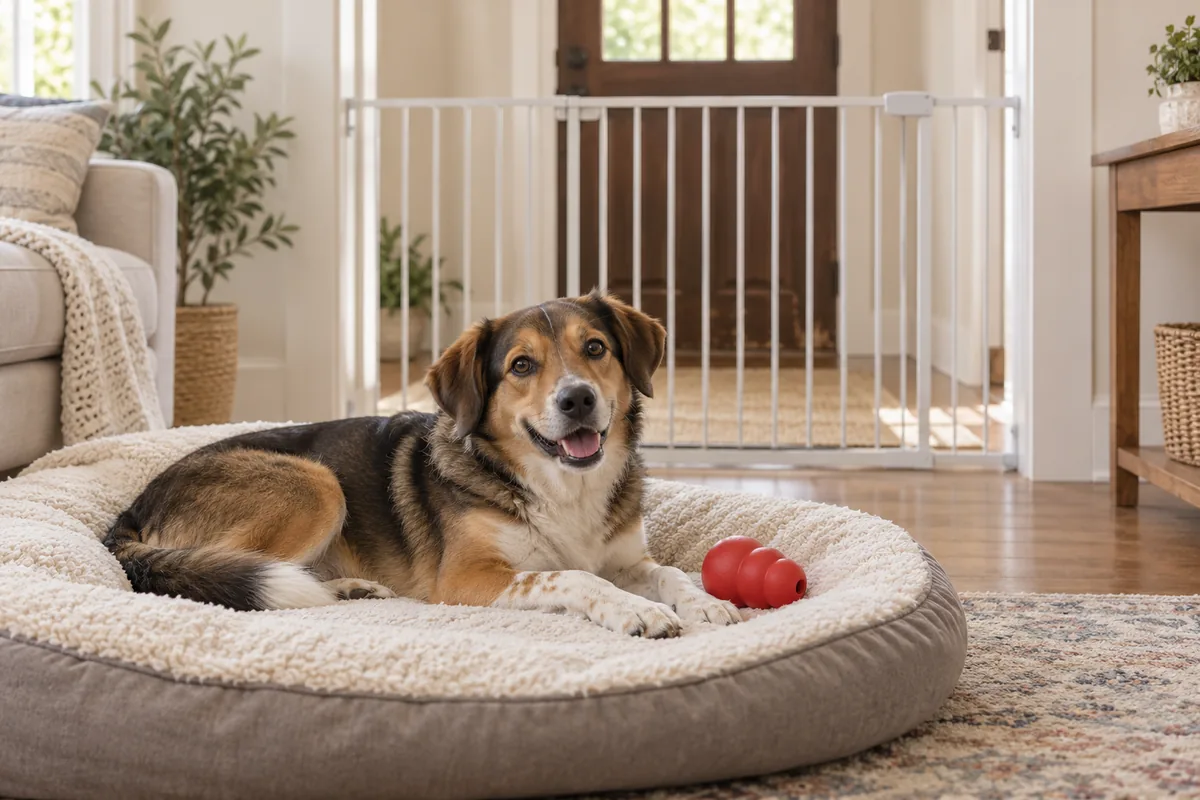
A gate set back from the exit can prevent access for a dog who remains comfortable behind it. For another dog, that extra barrier may increase frustration or fear.
Trial changes while you are home, then during very brief separations. Watch for relaxed behavior, not merely an undamaged door. A closed interior door is only an alternative when your dog rests comfortably behind it.
Safer set-up checklist
Dog Scratching or Chewing the Door When Left Alone: Why It Happens and What Helps: safer set-up checklist
- Choose a familiar resting area.
- Provide comfortable bedding your dog uses safely.
- Keep water accessible.
- Remove cords and electrical hazards.
- Secure rubbish, food and household chemicals.
- Remove swallowable objects.
- Keep furniture away from accessible windows.
- Check window latches and blind cords.
- Inspect gates for gaps and climbing opportunities.
- Keep damaged wood or exposed fixings inaccessible.
- Trial boundaries with you present.
- Confirm comfort during brief separations.
- Arrange company if no confinement option feels comfortable.
Protecting the door without punishment
Protection is useful management while you address the cause. It should reduce access to hazards or protect a surface without trapping paws, adding sharp edges or blocking emergency exits.
Check installations frequently. A determined dog may chew a protective panel or redirect efforts elsewhere.
Do not use bitter sprays, frightening mats or punishment as the answer. Making the doorway unpleasant does not help a dog feel safe when alone. If a barrier causes frantic behavior, change the arrangement rather than strengthening it.
Door protection options
| Option | What it does | Watch out for |
|---|---|---|
| Smooth fitted door guard | Covers a scratch-prone surface | Loose edges, chewable material and sharp fixings |
| Smooth door-frame protector | Shields vulnerable trim | Gaps or pieces that could be pulled off |
| Gate set back from the exit | Limits access for a comfortable, gate-trained dog | Jumping, pushing or barrier distress |
| Familiar dog-proofed room | Provides an alternative resting location | New door damage if confinement causes panic |
| Bed moved away from the entrance | Encourages rest away from some triggers | Does not physically prevent door access |
| Window covering | Reduces visual triggers near the exit | Keep cords inaccessible; outside sounds remain |
| Professional repair of damaged trim | Removes splinters and restores a sound surface | Keep the dog away during work and until materials are safe |
Swipe the table sideways to see every column.
Door damage plan in 5 steps
These steps have no fixed timetable. Preventing panic comes before increasing absence length.
| Step | What you do | Move on when |
|---|---|---|
| 1. Address safety | Check injuries, remove hazards and arrange company | Immediate risks are addressed and care is available |
| 2. Find a comfortable setup | Trial familiar space and any barriers while home | Your dog can rest without attacking boundaries |
| 3. Establish an easy starting point | Record a separation shorter than the time worry usually begins | Comfort is observable throughout |
| 4. Repeat and build gradually | Mix easy repetitions with small increases | Several observations support another manageable increase |
| 5. Apply to everyday departures | Practice relevant routines while covering longer gaps | Your dog remains comfortable in those situations |
Swipe the table sideways to see every column.
Start with seconds if necessary. Return before distress develops; if it appears, come back calmly and make the next attempt easier. Do not wait for silence during panic.
Use our Separation Anxiety Training Plan for detailed absence work. If preparations already trigger worry, practice those separately with the Departure Cues guide.
Record absence length, first worry and recovery in the Separation Anxiety Log. An intact door is not progress if your dog remains frightened.
What to do when you get home
Greet your dog calmly, check their condition and guide them away from debris. Clean up without confrontation. Photograph damage if useful for repairs or professional advice.
Dogs Trust advises against punishment and explains that dogs do not understand being told off on your return for something done hours earlier.
A lowered posture does not establish that your dog understands the damage as wrongdoing. Focus on what needs changing before the next departure, rather than trying to teach a lesson afterward.
Absences you can't avoid
Arrange someone your dog genuinely relaxes with: a familiar friend, family member or sitter. Daycare may suit a dog who enjoys that environment, but trial it first.
A walker’s short visit does not cover distress that starts immediately after you leave. Some dogs need company across the entire absence.
Our Care Options guide helps you build coverage and backup arrangements. Care should begin before your dog’s current comfort limit is exceeded, including during commuting delays.
Mistakes to avoid
Do not assume stronger doors or crates solve the problem. They may leave the fear unchanged and create different injury risks.
Avoid repeatedly testing your dog’s maximum, adding several new barriers at once or relying on a food toy to distract them through panic.
Do not shout through the door or camera speaker. Avoid punishment, aversive collars and leaving your dog to cry until exhausted.
Meeting exercise, sniffing and potty needs matters, but exhausting a dog is not a substitute for teaching comfortable alone time.
When to get extra help
Contact your vet when door scratching is sudden or accompanies appetite, sleep, movement or toilet changes. Medical discomfort can affect coping.
Seek prompt help for injury, dangerous escape attempts or panic that begins almost immediately. You do not need to complete a home-training trial before asking.
A qualified, reward-based behavior professional experienced in separation problems can help if progress stalls or you cannot find a comfortable setup. A veterinary behaviorist may be appropriate for severe or complex difficulties.
Bring brief videos and factual notes rather than repeatedly recreating distress for assessment.
Helpful products
Picks on this page are a research-based assessment of features and intended use — not hands-on testing. We earn a small commission if you buy through the Amazon links on this page, at no extra cost to you. Affiliate disclosure
These picks are chosen from research, not from personal product testing. They are practical support options, not a fix on their own.
| Product type | Why it helps | Notes |
|---|---|---|
| Pet camera: Furbo 360° camera | Shows what happens at the exit and when worry begins | Limitation: it needs Wi-Fi and only shows distress; it cannot stop it. Alternative: an old phone or laptop recording or on a video call. |
| Wide walk-through dog gate: Carlson walk-thru gate | Can keep a comfortable dog back from the exit | Limitation: some dogs jump or push gates, and it is not for a dog who panics when confined. Alternative: a familiar dog-proofed room with the door closed, if your dog relaxes there. |
| Stuffable rubber food toy: KONG Classic | Offers a familiar settling activity during manageable absences | Limitation: a panicking dog usually ignores food, so it helps calm dogs settle but won't fix distress. Alternative: scatter feeding or a frozen lick mat where safe. |
Swipe the table sideways to see every column.
Supervise new toys first and remove damaged items. Do not assume an alternative barrier or enrichment tool is suitable without observing your dog’s response.
Bottom line
Exit damage deserves attention to your dog’s feelings and physical safety. Protect surfaces safely, arrange care beyond their current comfort level and rebuild absences gradually. The goal is a dog who feels comfortable, alongside a door that stays intact.