On this page
- Why game days are hard on an anxious dog
- Map the season before kickoff
- Book game-day care early
- Football season dog care plan
- A pre-game walk and settle routine
- Keep every game day within your dog's limit
- Hosting or going to a watch party
- Game day checklist
- Big games: Thanksgiving, playoffs and the Super Bowl
- When to see the vet or a behavior professional
- Helpful products
- Bottom line
A football game can become a much longer outing than the time on the field. Add a tailgate, parking, the walk back and traffic, and your dog may face an absence far beyond anything they currently handle.
We are dog owners who researched this topic, not vets, trainers or product testers, and the products mentioned here were chosen from research, not from personal product testing. This guide focuses on planning football season around your dog's needs, so each Saturday, Sunday or evening game has dependable cover.
Why game days are hard on an anxious dog
Your dog may be used to having everyone home on weekends. A sudden long absence, followed by a late meal or bedtime, can be difficult even when weekday routines seem settled.
The ASPCA's page on separation anxiety describes separation anxiety as distress when dogs are left alone or separated from the people they're attached to, and explains that treatment focuses on gradually teaching the dog to be comfortable alone.
A long game-day absence is not a suitable way to build that skill. A dog who copes with a short errand is not automatically ready for travel, a game and a post-game gathering.
Hosting can also be challenging. Shouting, doorbells and guests moving around may make resting harder, especially if the dog is then shut away from everyone.
Furbo 360° Dog Camera
A pet camera helps you or the sitter observe settling during game days, with a person ready to respond.
Check price on AmazonWe earn a small commission if you buy through this link, at no extra cost to you. Disclosure
Map the season before kickoff
Put expected game days, watch parties, away trips and holiday gatherings on one calendar. For each outing, write down when you actually leave home and when you could realistically return.
Include the whole trip: meeting friends, tailgating, parking, travel and possible delays. Recheck arrangements when plans change.
Then compare each absence with your dog's current comfortable alone time, based on recent video rather than an old success. Our guide to how long a dog can be left alone explains why potty needs and emotional comfort are separate questions.
Mark every gap that needs company. If your dog currently panics soon after departure, plan care from before you leave until you return. A halfway visit leaves unsupported time on either side.
Book game-day care early
Ask a familiar person about recurring dates before the season gets busy. A regular sitter or trusted family member can make game days more predictable. If your weekdays already need cover too, our working full-time guide has a workday plan you can build on.
Trial the arrangement first. Let the helper spend time with your dog while you are home, then try a short departure that the dog can manage. A dog who likes someone during a visit may still struggle when you leave.
Daycare may suit a dog who enjoys that setting and rests comfortably there. Confirm availability and collection arrangements, and check the current terms. It should not be a first experiment on an important game day.
A walker can provide exercise and a potty break, but cannot cover hours of panic before and after the walk. Our daycare vs. dog walker guide compares those limits; our pet sitter preparation guide helps with the handover.
Football season dog care plan
Use these checkpoints to organize care. They are not deadlines for increasing alone time.
| When | What to do | Why it helps |
|---|---|---|
| August, before the season | Review recent alone-time video and list expected outings. | Bases care on what your dog handles now. |
| Before the first game | Meet the sitter or trial familiar daycare. | Checks comfort before a long day. |
| Early September | Confirm recurring care and a backup contact. | Avoids rebuilding the plan every weekend. |
| Each week | Share departure and realistic return times. | Covers the complete absence. |
| Before an away-game trip | Arrange care for travel days and nights. | Prevents gaps around the game itself. |
| Before Thanksgiving games | Confirm holiday availability and backup cover. | Accounts for competing family plans. |
| During the playoffs | Recheck dates and care as plans develop. | Keeps uncertain outings from becoming rushed decisions. |
| Before the Super Bowl | Arrange outing cover or quiet company for hosting. | Supports either kind of game day. |
| After the Super Bowl in February | Return to the usual routine and review training. | Helps manage another schedule change. |
Swipe the table sideways to see every column.
A pre-game walk and settle routine
Leave enough time for an unhurried walk with sniffing and a potty opportunity. Choose an activity your dog enjoys rather than trying to exhaust them before departure.
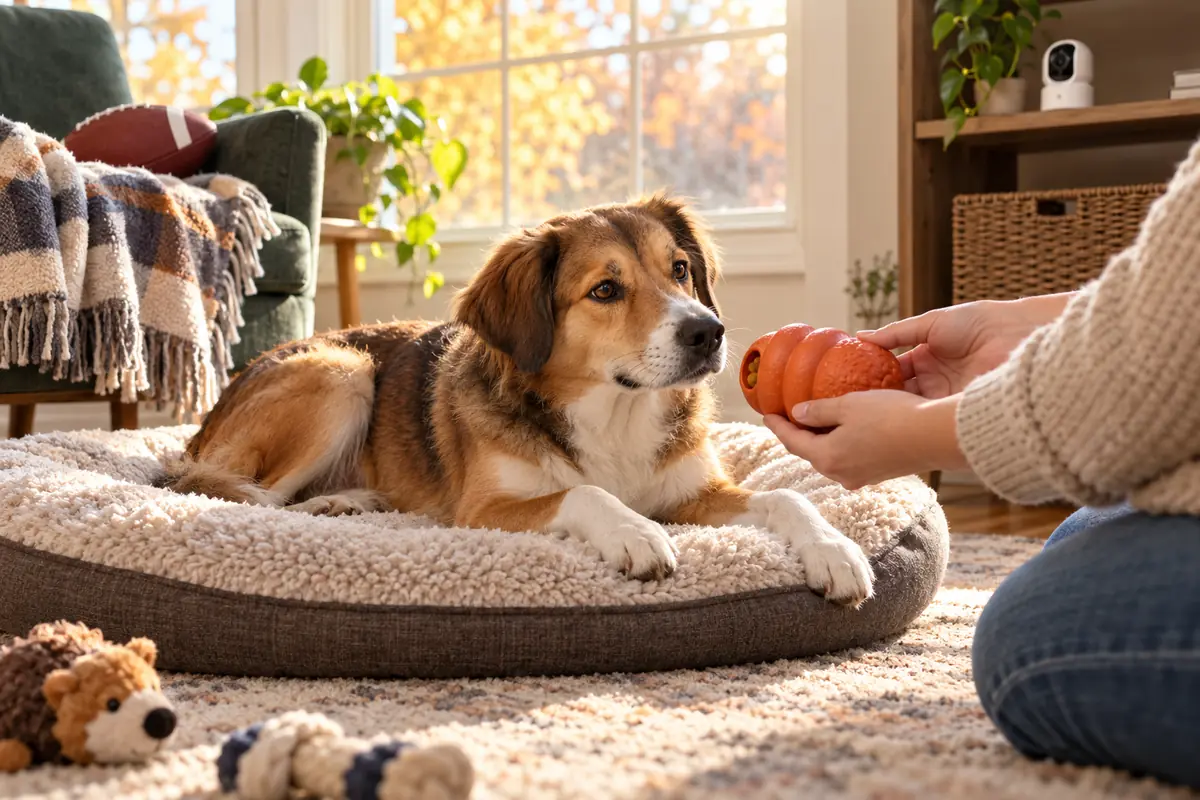
Keep meals close to their usual time. After the walk, allow a quiet settling period with water, a comfortable bed and familiar company. A rubber food toy can be offered if your dog uses it safely.
Have the sitter arrive before you start heading out. Give a brief update about eating, potty breaks and anything unusual that morning, then make your goodbye calm and ordinary.
Keep the same basic sequence across the season. Avoid squeezing the walk into the final rushed minutes before kickoff. If you cannot fit everything in, shorten the tailgate or leave later.
Keep every game day within your dog's limit
Your dog's limit is the absence they currently handle comfortably, not the length of your plans. Do not extend it because tickets are booked or the last game went well.
Options include a shorter tailgate, watching selected games at home, or taking turns with a partner or friend. Check that the dog actually settles with the person staying behind.
Record a typical game day with the sitter's knowledge. Review how the dog behaves after you leave, during any agreed brief absence and around your return. Our guide to recording your dog when left alone explains camera placement.
Look for pacing, repeated barking or howling, panting, drooling, scratching at exits or escape attempts. Quietness alone does not prove comfort.
If distress appears, the sitter or backup should respond and change the arrangement. Do not wait for the dog to endure it. For evening games, see our date night guide: daytime tolerance may not carry over unchanged.
Hosting or going to a watch party
At home, give your dog a familiar quiet room or resting area away from speakers and busy doorways. Arrange for someone the dog knows to stay with them if they need company. Brief checks are not enough if they panic between visits.
Introduce the space calmly before guests arrive. It should be a comfortable option, not somewhere the dog is shut away to struggle.
Tell guests who handles doors and who supervises the dog. Keep party food, drinks, serving dishes and trash inaccessible. Ask guests not to feed the dog, and supervise children so they do not crowd a resting animal.
If you attend someone else's party, arrange care for the full outing. Bringing your dog is only suitable if they enjoy that environment, you have permission and you can leave promptly if they become uncomfortable.
Game day checklist
Football Season Game Days With a Dog Who Has Separation Anxiety: game day checklist
- Check your dog's current comfortable alone-time limit.
- Count the full door-to-door absence.
- Include tailgating and travel time.
- Allow for a delayed return.
- Confirm the main caregiver.
- Confirm a backup person.
- Test keys and building access.
- Share your realistic return plan.
- Agree who acts if you cannot answer.
- Leave veterinary and emergency contact details.
- Complete an unhurried walk or sniff activity.
- Provide a potty opportunity before departure.
- Keep meals near the usual time.
- Leave fresh water available.
- Prepare a familiar resting place.
- Check any food toy for damage.
- Start the camera with the caregiver's knowledge.
- Keep camera cords inaccessible.
- Have the helper arrive before you leave.
- Keep your goodbye low-key.
- Confirm daycare collection cover if applicable.
- Set door and food rules for watch-party guests.
- Arrange quiet company for a dog overwhelmed by hosting.
- Review the day before booking the next outing.
Big games: Thanksgiving, playoffs and the Super Bowl
Treat bigger games as separate care bookings, even if ordinary weekends are covered. Your usual helper may have family plans, and your own outing may run later than expected.
For Thanksgiving, account for meals and visits around the game. During the playoffs, tell helpers when plans are provisional and confirm them promptly once you know.
For a Super Bowl party, decide early whether you are hosting or going out. A familiar sitter can provide quiet company while guests gather, or cover your absence elsewhere.
Never rely on a camera as the fallback. Cell signal in a big crowd can be patchy, so the person on the ground needs clear instructions and authority to contact the backup.
For away games involving overnight travel, arrange overnight care with enough daytime company too. Our holiday season guide covers the extra household changes around winter gatherings.
When to see the vet or a behavior professional
Contact your vet early if your dog refuses food, seems unwell or shows a sudden behavior change. Do not assume a busy weekend explains everything.
Strong panic, injury and escape attempts need prompt attention. A qualified reward-based behavior professional can help assess what your dog tolerates and how to build comfortable absences.
Share short clips and simple notes: who was present, how long you were gone and what happened. If the dog struggles even with the sitter there, revise the care arrangement before another long outing.
Never punish barking, howling, damage or accidents; they are signs of distress, not spite. Never shut a panicking dog in a crate, pen or room and leave. Our separation anxiety red flags guide explains which signs are urgent.
Helpful products
Picks on this page are a research-based assessment of features and intended use — not hands-on testing. We earn a small commission if you buy through the Amazon links on this page, at no extra cost to you. Affiliate disclosure
These are optional helpers, chosen from research, not personal product testing. A food toy is enrichment, not a treatment for panic, and monitoring does not provide care.
| Product type | Why it helps | Notes |
|---|---|---|
| Pet camera: Furbo 360° camera | Lets you or the sitter observe settling during a game day. | Our top pick. Limitation: it needs 2.4GHz Wi-Fi and power at home and only shows what happens; it cannot comfort your dog or replace a person, and your phone signal at a crowded game may be patchy. Alternative: a short sitter update at halftime. |
| Rubber food toy: KONG Classic | Offers a familiar activity during the pre-game settle. | Limitation: it is enrichment, not a treatment for panic, and many anxious dogs won't eat when alone; pick a size your dog can't swallow. Alternative: a sniffy walk or sniff games. |
Swipe the table sideways to see every column.
Supervise a food toy before using it during absences and remove it if damaged. Eating is not proof that your dog is relaxed.
Bottom line
Plan the whole game-day absence, then arrange care that matches your dog's current needs. A familiar helper, a calm pre-game routine and backup cover for delays make the season easier to manage.
Review what happens each time. Shortening an outing or watching at home is a practical adjustment when your dog's needs change.