On this page
- Why a renovation is hard for a dog with separation anxiety
- Plan before the work starts
- Set up a quiet room away from the work
- Escape and safety with contractors in the house
- Renovation dog plan
- The loudest days: move your dog out or stay with them
- Contractor day checklist
- Keeping the routine during the project
- Settling back after the job
- When to see the vet or a behavior professional
- Helpful products
- Bottom line
A kitchen or bathroom remodel changes more than the room being renovated. Workers arrive, doors open repeatedly, tools start unexpectedly and your dog's familiar resting places may disappear behind supplies.
We are dog owners who researched this topic, not vets, trainers or product testers, and the products mentioned here were chosen from research, not from personal product testing. This guide focuses on planning care through the project, keeping your dog separate from the work safely and protecting comfortable alone-time practice without expecting them to endure construction.
Why a renovation is hard for a dog with separation anxiety
Your dog may experience strangers, unpredictable noise and changes to familiar routes through the house. Meanwhile, you may be distracted by decisions or leaving more often to collect supplies.
Being shut away can add another difficulty. A dog who normally follows you may become distressed behind a bedroom door even though you are still home.
The ASPCA's page on separation anxiety describes separation anxiety as distress when dogs are left alone or separated from the people they're attached to, and explains that treatment focuses on gradually teaching the dog to be comfortable alone.
Construction noise and separation distress can overlap without being the same problem. A dog may fear tools while you are present, panic when separated from you or struggle with both. Our construction and loud noise guide covers sound-related fear on its own.
The plan needs to address the actual situation rather than assuming a closed door solves everything.
Furbo 360° Dog Camera
A pet camera helps you and a caregiver review settling in the quiet room while someone remains responsible for care.
Check price on AmazonWe earn a small commission if you buy through this link, at no extra cost to you. Disclosure
Plan before the work starts
Ask your contractor for the expected schedule, the loudest tasks, delivery arrangements and likely changes in access. Ask which days the home may be unsuitable for your dog because of dust, products or other work conditions.
Choose a quiet area well away from the project and begin introducing it before the first workday. Check that reaching it does not require passing through the work zone.
Book familiar care for demolition, sustained noisy work or any day when the home cannot provide a suitable resting environment. Our comparison of daycare, dog walkers and sitters explains how to trial each option first. Keep a backup because project schedules can change.
If you work away from home, arrange an actual caregiver or care elsewhere. Contractors being present does not mean your dog has company they trust or supervision.
Tell the contractor who manages the dog and how schedule changes should be communicated. Keep that responsibility with your household or designated caregiver.
Set up a quiet room away from the work
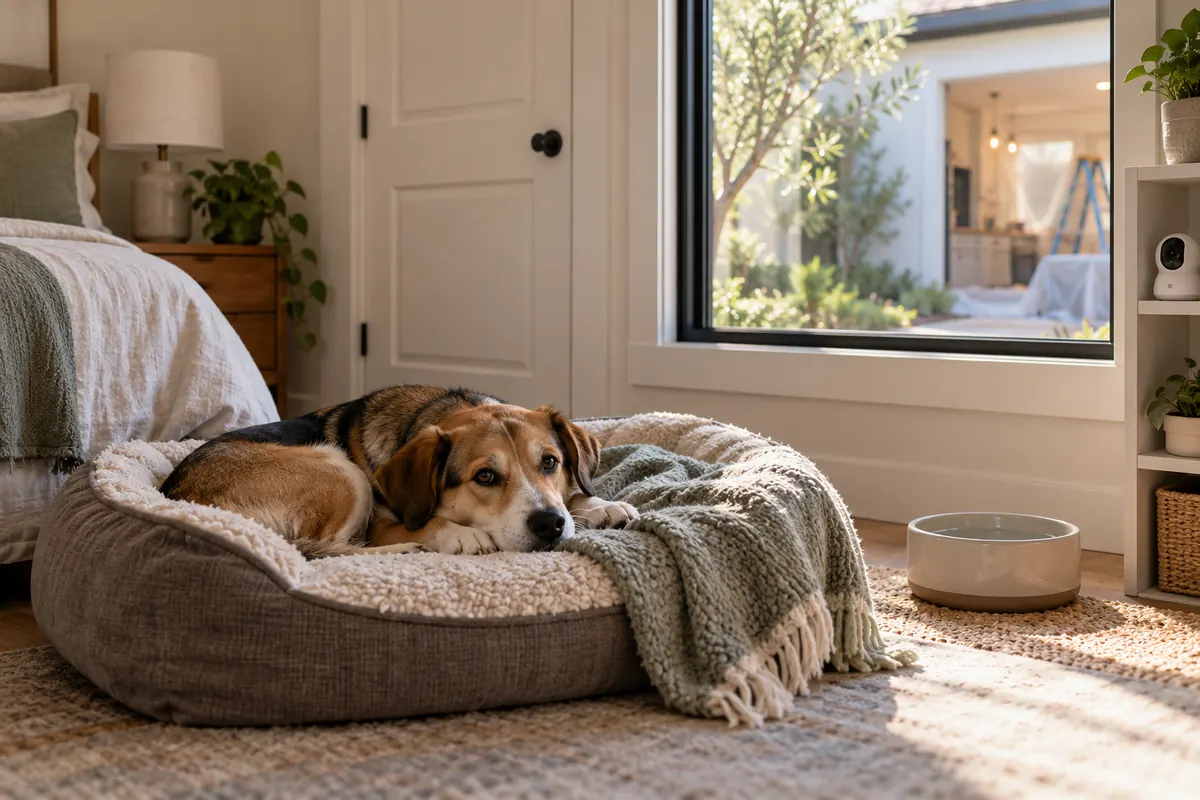
Use a room your dog already likes where possible. Add familiar bedding, fresh water and safe enrichment, keeping cords and swallowing hazards out of reach.
Spend calm time there together before work starts. Practice ordinary movement around the room and any necessary door or gate use in tiny steps.
A closed door may reduce activity your dog sees, but some dogs become more worried when shut away. If your dog scratches, pants, paces or cannot rest, change the arrangement rather than increasing confinement. If you use a crate at all, our crates for anxious dogs guide explains when a crate is not right for a dog.
Have a familiar person check in according to your dog's needs. If brief visits leave them distressed, that person needs to stay or care must move elsewhere.
Low-volume familiar audio may soften some sounds. It cannot remove loud tool noise, dust or fumes, and it does not treat panic.
A room being quieter does not establish that it is suitable during every stage. Ask your contractor about the day's work conditions.
Escape and safety with contractors in the house
Discuss the dog with every worker, including anyone joining later. Ask that the designated room and its access route remain clear, and agree on door and gate procedures.
A clear sign on the dog's room can remind people not to enter, but it is a reminder rather than a complete safety system.
Keep your dog supervised during movement between areas. Use a leash for transfers where appropriate, and do not allow wandering through deliveries or open entrances.
Check ID tags and microchip contact details. Remove access to debris, nails, tools, cords, packaging, chemicals and paint.
Ask your contractor how materials are stored and when affected areas can be used again. Do not assume that something dry, covered or out of sight is safe for your dog.
Never leave your dog alone with strangers and open doors. If you must leave, a responsible familiar caregiver needs to take over in a suitable area—or take the dog to suitable care elsewhere.
Renovation dog plan
Use these stages to organize care, not to set deadlines for your dog's adjustment.
| Stage | What to do | Why it helps |
|---|---|---|
| About two weeks before work | Discuss the schedule, noise and access with the contractor. | Identifies likely care gaps early. |
| Before the first workday | Introduce the quiet room with familiar company. | Avoids a sudden new boundary. |
| During preparation | Trial familiar off-site care and confirm backup help. | Provides an alternative before it is urgent. |
| First workday | Have a responsible person available to observe your dog. | Shows whether the proposed setup works. |
| Loudest work stages | Move the dog to familiar suitable care when needed. | Avoids expecting them to tolerate overwhelming conditions. |
| Any schedule change | Reconfirm care before the next arrival or task. | Prevents assumptions from creating unsupported gaps. |
| Each day's cleanup | Check access, debris and the dog's resting area. | Keeps changing work conditions in view. |
| Work completion | Ask when areas are ready for the dog and inspect access. | Avoids treating the last worker's departure as automatic clearance. |
| First days afterward | Introduce changed rooms gently with company. | Lets the dog explore without pressure. |
| About two weeks afterward | Review routines and recorded alone-time practice. | Helps identify setbacks or further support needs. |
Swipe the table sideways to see every column.
The loudest days: move your dog out or stay with them
A familiar sitter, family member or daycare your dog enjoys may be more comfortable than staying beside a demolition project.
Confirm transport and handover before workers arrive. Ask the caregiver for a quiet resting opportunity rather than filling the day with constant activity.
If you stay home, remain with your dog in the prepared room when they need company. Watch whether they can genuinely rest.
Your presence does not make every workday suitable. If noise remains overwhelming or work conditions affect the room, move the care arrangement elsewhere after discussing access with your contractor.
Do not use your dog’s distress as a reason to make them “get used to it.” The goal is supported care while the job happens.
Our care options guide compares alternatives, and our noise guide covers sound-related fear separately. Neither requires keeping your dog in an unsuitable environment.
Contractor day checklist
Home Renovation and Contractors With a Dog Who Has Separation Anxiety: contractor day checklist
- Confirm today's tasks and expected work hours.
- Ask about changes to noise, access or deliveries.
- Ask whether work conditions affect the dog's resting area.
- Confirm who is responsible for the dog.
- Book familiar care elsewhere when needed.
- Confirm a backup for schedule changes.
- Complete the handover before you leave.
- Remind every worker about the dog.
- Agree on exterior door and gate handling.
- Put a clear reminder sign on the designated room.
- Keep the route to the dog clear.
- Check ID tags and microchip contact information.
- Keep tools, debris and packaging inaccessible.
- Keep chemicals and paint inaccessible.
- Check the quiet room for cords and swallowing hazards.
- Provide fresh water and familiar bedding.
- Offer a potty break and sniffing activity.
- Use only enrichment already handled safely.
- Test the camera and agree on caregiver consent.
- Confirm who responds if distress appears.
- Check cleanup and safe access before moving the dog.
- Note appetite, rest and any behavior changes.
Keeping the routine during the project
Protect meals, potty breaks, walks and sleep even when appointments and decisions become demanding. Put care tasks on the calendar instead of relying on spare time.
Ask a familiar helper to cover walks if work commitments interfere. Use quieter routes and suitable sniffing activities without trying to exhaust your dog into coping.
Keep alone-time practice separate from construction management. Practice only during calm periods in a suitable setting, at a level where your dog remains relaxed.
Record sessions and look at posture and settling, not just sound. A quiet dog may still be tense or frozen.
Return before worry develops whenever possible. If distress appears, return calmly and make the next session easier. Do not push practice forward because the project is inconvenient.
If a day is especially difficult, prioritize rest and appropriate company rather than adding another challenge.
Settling back after the job
Ask your contractor when the changed area is ready for use, then check for accessible leftovers, tools, packaging and other hazards before your dog enters.
Let your dog explore with you at their own pace. New flooring, furniture or smells may attract attention or cause hesitation. Do not force an inspection.
Restore familiar resting places and household routines where practical. Keep the temporary quiet spot available if your dog still chooses it.
Begin short, easy absences again before assuming the previous comfortable duration still applies. Record what happens and arrange cover for longer gaps if needed.
Look for easier resting, ordinary exploration and a return to familiar activities. Persistent door watching, pacing or inability to settle means the plan needs reviewing.
Our dog anxiety after moving guide covers larger environmental changes, but a remodeled room may simply need a gentle introduction.
When to see the vet or a behavior professional
A dog with strong distress should see the vet before work starts where possible. Explain both the construction conditions and the dog's response to separation.
Contact the vet early if your dog refuses food, seems unwell or develops a sudden behavior change. Do not assume discomfort is only anxiety.
If your dog may have swallowed debris or contacted a harmful product, seek veterinary advice promptly and provide available product information. Breathing difficulty, collapse or serious injury require emergency care. Our separation anxiety red flags guide explains which signs are urgent.
A qualified reward-based behavior professional can help when the quiet-room setup or gradual practice repeatedly causes distress.
Never shut a panicking dog in a crate or room and leave. Never punish barking, howling, damage or accidents; change the support arrangement and review health and safety.
Helpful products
Picks on this page are a research-based assessment of features and intended use — not hands-on testing. We earn a small commission if you buy through the Amazon links on this page, at no extra cost to you. Affiliate disclosure
| Product type | Why it helps | Notes |
|---|---|---|
| Pet camera: Furbo 360° camera | Helps you and the sitter review settling in the quiet room. | Our top pick. Limitation: it needs 2.4GHz Wi-Fi and power and only shows what happens; it cannot comfort your dog or replace the caregiver. Alternative: a recording on an old phone or laptop. |
| Rubber food toy: KONG Classic | Offers familiar enrichment during comfortable departures. | Limitation: it is enrichment, not a treatment for panic, and many anxious dogs won't eat when alone; pick a size your dog can't swallow. Alternative: a sniffy walk or sniff games beforehand. |
Swipe the table sideways to see every column.
Introduce toys under supervision and check for damage. Eating is useful information, not proof that the dog remains comfortable after the food is gone.
A camera cannot assess whether work conditions are suitable or keep doors secure. It supplements a responsible caregiver and a practical plan.
Bottom line
Plan around the work rather than expecting your dog to tolerate it. A practiced quiet area, suitable company, clear contractor communication and familiar care elsewhere can protect both daily comfort and alone-time progress.