On this page
- Why a new baby can trigger separation anxiety
- Signs your dog is struggling
- Normal adjustment or separation stress?
- Preparing in the months before
- Before baby timeline
- Setting up gates and a safe space
- Gate and safe space set-up
- Practising being apart behind the gate
- The hospital days
- Hospital days dog care plan
- Bringing the baby home
- The first weeks home
- First 2 weeks home
- Keeping alone-time training going
- When baby and dog are both upset
- Mistakes to avoid
- When to get extra help
- Helpful products
- Bottom line
A new baby changes the whole household. Your dog may hear unfamiliar crying, lose their usual sleeping spot or suddenly find you on the other side of a nursery door. A dog who already struggles with separation may find those changes especially difficult.
You do not need a perfect schedule or lengthy training sessions. Early preparation, dependable help and small, comfortable practice opportunities can make daily life more manageable. We are dog owners, not vets or trainers; safety and your individual dog’s behavior should guide every step.
Why a new baby can trigger separation anxiety
A baby brings new sounds, smells, equipment and demands on your attention. Walks may happen at different times, and familiar people may come and go unexpectedly.
Separation-related stress can occur while you are home but unavailable. A dog who previously followed you everywhere may become distressed behind a gate or closed door.
The ASPCA’s “Dogs and Babies” advice describes these changes and recommends preparing months ahead, pairing new experiences with rewards, and starting routine changes one to two months before arrival.
Carlson Extra Wide Walk-Thru Dog Gate
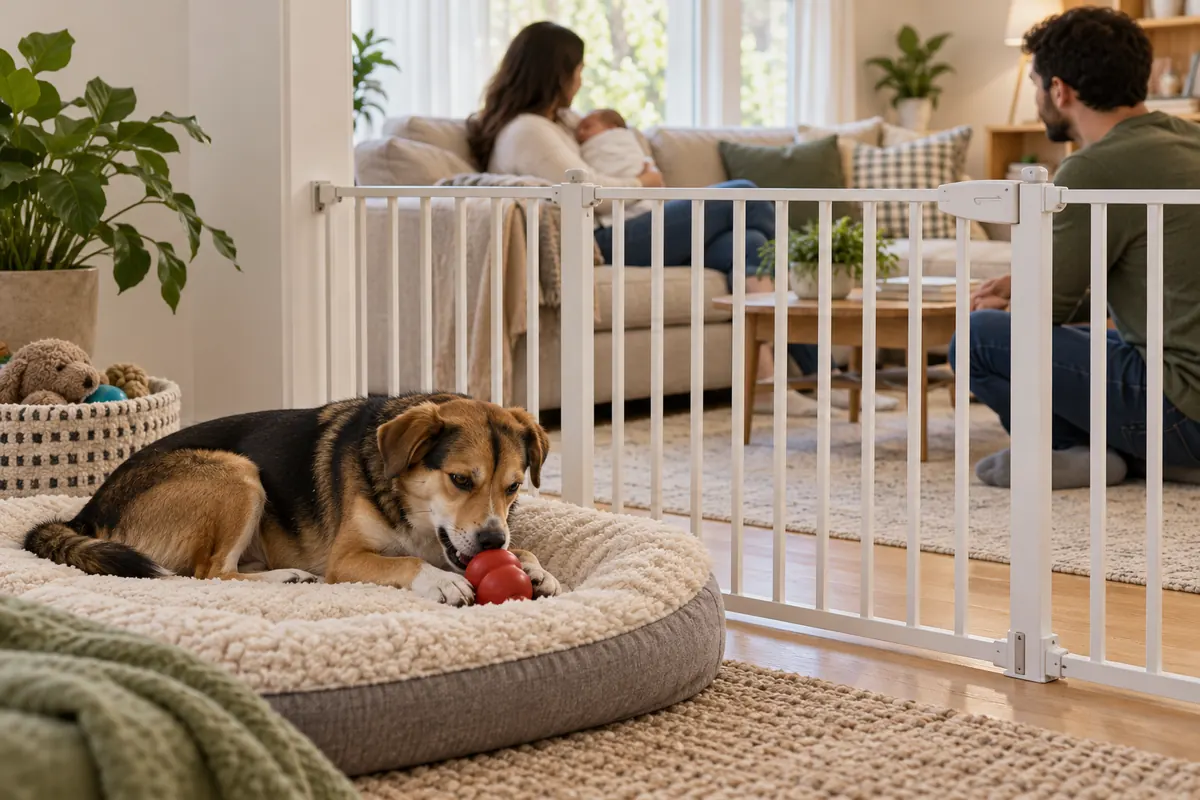
A walk-through gate introduced gradually can create familiar boundaries while your dog learns to rest comfortably apart from you.
Check price on AmazonWe earn a small commission if you buy through this link, at no extra cost to you. Disclosure
Signs your dog is struggling
Watch for repeated pacing, panting unrelated to heat or exercise, whining, trembling, drooling, door scratching or difficulty resting. Some dogs stop eating when their person moves out of reach.
Following you more closely does not establish separation anxiety. Look at the whole pattern: does your dog recover and rest, or does worry build?
Growling, stiffening or inability to settle around the baby means keep them apart and get a qualified behavior professional involved. Do not punish warning signals.
Normal adjustment or separation stress?
These clues help you decide what to record and discuss, rather than diagnose the cause.
| What you see | Usually adjustment | Could be separation stress |
|---|---|---|
| Following you | Your dog also chooses independent rest | They cannot settle whenever you move |
| Watching new equipment | Brief investigation followed by disengagement | They remain tense or avoid the area |
| Whining at a gate | Brief uncertainty resolves with an easier setup | Vocalizing builds or repeats with separation |
| Checking the nursery door | They move away and rest | They pace, scratch or remain fixed there |
| Less daytime sleep | Rest returns with quieter opportunities | They stay vigilant despite a suitable resting place |
| Leaving food | An isolated change without other concerns | Refusal repeatedly accompanies separation |
| Indoor accidents | A missed potty opportunity explains them | They occur during distress or represent a new change |
| Excited reunion | Your dog settles afterward | Agitation continues long after you return |
Swipe the table sideways to see every column.
Use our Separation Anxiety Signs guide for a fuller picture.
Preparing in the months before
Introduce changes individually. If sleeping arrangements must change, begin gradually rather than moving your dog abruptly when the baby comes home.
Dogs Trust’s new-baby advice recommends introducing equipment gradually in the months ahead, allowing investigation at the dog’s pace with treats. It also advises preparing for changes in attention, walks and access to rooms long before the due date.
The ASPCA lists settling, relaxing in a crate and moving away on cue as useful skills. Use a crate only if your dog already feels comfortable there.
Before baby timeline
This example is flexible. If you have less time, prioritize safe management and familiar care rather than rushing exposure.
| When | What to change | Why it helps |
|---|---|---|
| 4+ months before | Review existing separation difficulties and seek support | Leaves time for an individual plan |
| Around 3 months before | Introduce equipment gradually | Avoids many unfamiliar objects appearing together |
| Around 2 months before | Begin realistic walk, feeding and caregiver changes | Makes the future routine more familiar |
| Around 1 month before | Practice gates, resting spaces and brief separations | Builds comfort before boundaries become necessary |
| Around 2 weeks before | Trial the hospital caregiver and handover | Reveals gaps while alternatives remain possible |
| Hospital bag week | Confirm written care and backup arrangements | Reduces last-minute decisions |
Swipe the table sideways to see every column.
Setting up gates and a safe space
Choose a quiet area your dog already likes, with comfortable bedding, water and room to move away from activity. The safe space should remain a place of rest, not somewhere they are sent after trouble.
Fit a suitable gate according to its instructions. Consider jumping, climbing, pushing and gaps; a gate that contains one dog may not contain another.
Never leave a baby and dog together unsupervised, even a gentle dog. A camera or parent sleeping nearby is not active supervision. Use secure separation when your attention is elsewhere.
Gate and safe space set-up
Separation Anxiety When a New Baby Arrives: Keeping Your Dog Calm: gate and safe space set-up
- Choose a familiar, comfortable dog resting area.
- Keep the bed away from busy walkways.
- Provide accessible drinking water.
- Check temperature and ventilation.
- Fit the gate according to its instructions.
- Check gaps and potential climbing points.
- Confirm every caregiver can operate the latch.
- Keep furniture from becoming a jumping platform.
- Remove cords and swallowable objects.
- Keep baby items outside the dog’s area.
- Keep food toys away from baby areas.
- Practice before the boundary is needed.
- Arrange another safe setup if the dog panics.
- Plan secure separation whenever active supervision stops.
Practising being apart behind the gate
Start without the baby present. Let your dog explore the area while the gate is open, then practice briefly closing it while you remain nearby.
Offer a familiar food toy if appropriate. Take one step away and return before worry begins. Progress to momentary out-of-sight gaps only when your dog stays comfortable.
Food should support practice, not distract your dog through an overwhelming absence. Observe what happens after eating ends.
If your dog becomes distressed, safely reduce the separation and make the next attempt easier. Do not leave them struggling until they become quiet.
The hospital days
Choose someone your dog already knows and trusts. Arrange a trial that resembles the actual plan, whether care happens at your home or elsewhere.
Explain your dog’s current separation limit, including whether another person’s presence is enough. A brief drop-in cannot cover hours of panic between visits.
Confirm backup care for an unexpectedly long stay. Our Care Options guide helps you compare arrangements without assuming one option suits every dog.
Hospital days dog care plan
Separation Anxiety When a New Baby Arrives: Keeping Your Dog Calm: hospital days dog care plan
- Name the main caregiver.
- Confirm a backup caregiver.
- Complete a comfortable trial handover.
- Write down meal instructions.
- List potty and exercise needs.
- Explain sleeping arrangements.
- Record the current comfortable separation level.
- Describe early signs of distress.
- Explain gate, door and escape precautions.
- Leave veterinary contact information.
- Agree on updates and urgent contact reasons.
- Arrange extra coverage if the hospital stay extends.
Bringing the baby home
Keep the arrival quiet and manageable. If possible, have one adult help your dog settle while another carries the baby. Allow distance; there is no requirement for an immediate greeting or close sniff.
Do not hold the baby toward the dog or use food to lure the dog closer. Reward comfortable behavior at a safe distance and allow retreat.
If your dog particularly depends on the returning parent, plan a gradual handover of enjoyable care. Our Dog Attached to One Person guide explains that process.
The first weeks home
Protect a simple routine: food, water, potty opportunities, suitable exercise, rest and kind contact. Let helpers take over chores and walks so basic needs do not depend on one exhausted parent.
Preserve small moments your dog enjoys, such as a sniff walk with a familiar person or quiet company while another adult handles baby care.
Do not suddenly withdraw affection. Building independence means creating manageable experiences, not making your dog feel rejected.
First 2 weeks home
This is an example for organizing help, not a training deadline.
| Days | Minimum dog routine | Who can help |
|---|---|---|
| 1–2 | Familiar meals, potty breaks, quiet rest and secure separation | Partner or trusted caregiver |
| 3–5 | Continue basics and familiar sniffing or play opportunities | Friend, relative or established walker |
| 6–8 | Add easy settling practice when the household is calm | Adult not currently caring for the baby |
| 9–11 | Repeat comfortable separations and review observations | Consistent caregiver |
| 12–14 | Keep routines steady and adjust support to current needs | Household plus backup helper |
Swipe the table sideways to see every column.
Keeping alone-time training going
Choose moments when another adult has the baby and your dog is ready to rest. A few easy repetitions can be enough; there is no need to practice during a difficult feeding or unsettled evening.
Start from your dog’s current comfort, even if that is shorter than before. Follow our Separation Anxiety Training Plan for actual absence work.
Use the Separation Anxiety Log to note what happened. Missing days stay blank. Our Velcro Dog guide covers everyday room-to-room independence.
When baby and dog are both upset
Prioritize safe separation. If two adults are available, one cares for the baby while the other helps the dog in their familiar space.
If you are alone, place the baby safely in their crib or bassinet while arranging secure separation. Avoid carrying the baby toward an agitated dog or opening a barrier into the baby’s space.
Once everyone is safe, contact your helper. This is a management moment, not an opportunity to push training.
Mistakes to avoid
Do not introduce every restriction after the baby arrives or force your dog near crying to “get used to it.”
Avoid punishment, scolding and leaving a distressed dog behind a barrier until they stop protesting. Never punish growling; it is information that the situation needs changing.
Do not rely on a food toy, gate or calm-looking photograph as proof of safety. Keep monitoring behavior and maintain secure separation whenever supervision is unavailable.
When to get extra help
See your vet for sudden clinginess, especially in an older dog, or changes in appetite, mobility, sleep or toilet habits. Medical discomfort can affect coping.
Keep dog and baby apart and promptly seek a qualified, reward-based behavior professional for growling, stiffening, guarding or inability to settle around the baby. Choose someone experienced with infant safety and separation difficulties.
Injury or dangerous escape attempts need prompt veterinary attention. Ask for help before exhaustion makes safe management difficult.
Helpful products
Picks on this page are a research-based assessment of features and intended use — not hands-on testing. We earn a small commission if you buy through the Amazon links on this page, at no extra cost to you. Affiliate disclosure
These picks are chosen from research, not from personal product testing.
| Product type | Why it helps | Notes |
|---|---|---|
| Walk-through pet/baby gate: Carlson walk-thru pet gate | Creates a boundary that can be introduced gradually | Limitation: a dog who panics when shut out may jump, chew or push at it, so practise weeks ahead and never leave a panicking dog behind it. Alternative: a practiced cozy room with a closed door or an exercise pen. |
| Stuffable rubber food toy: KONG Classic | Offers a familiar activity in the dog’s safe space | Limitation: keep it away from baby areas and supervise if your dog guards food. Alternative: scatter feeding in the separate safe space. |
| Pet camera: Furbo 360° camera | Helps reveal how the dog copes during brief separations | Limitation: it needs Wi-Fi and only shows distress; it cannot stop it or replace supervising the baby. Alternative: an old phone or laptop video call. |
Swipe the table sideways to see every column.
Bottom line
Prepare boundaries and routines early, arrange dependable help and keep practice comfortably small. Never leave baby and dog together unsupervised. When your dog struggles, change the setup and seek support rather than asking everyone to push through.