On this page
- Why separation anxiety can appear or return at 6–18 months
- Separation anxiety or teenage boredom?
- Signs to watch for
- Check what changed
- What changed?
- Meet their needs before you leave
- Before you leave
- Rebuilding alone time step by step
- Rebuild alone time in 4 stages
- A safe set-up while you train
- Absences you can't avoid
- Sample weekday for a teenage dog
- Mistakes to avoid
- When to get extra help
- Helpful products
- Bottom line
Your puppy used to nap when you left. Now, at nine months, they are chewing cushions, howling at the door or following you whenever you reach for your shoes. It can feel as though months of progress have disappeared.
Adolescence brings changing needs, but that does not explain every difficult behavior. We are dog owners, not vets or trainers. This guide helps you distinguish ordinary teenage exploration from possible separation distress and build a manageable reset plan without pushing your dog into panic.
Why separation anxiety can appear or return at 6–18 months
Adolescence varies by dog, roughly spanning six months to two years, sometimes longer in larger breeds. A dog may look nearly grown while still needing substantial support with rest, chewing and independence.
The American Kennel Club’s adolescent puppy article describes an individual timeline that may begin around eight months and continue until about two years. It also notes increased exploration, too much freedom too soon and a second chewing phase around eight to ten months.
Meanwhile, owners may return to the office, move house or extend absences because the puppy seems older. New or returning distress may follow those changes. Age alone does not establish the cause.
KONG Extreme Dog Toy
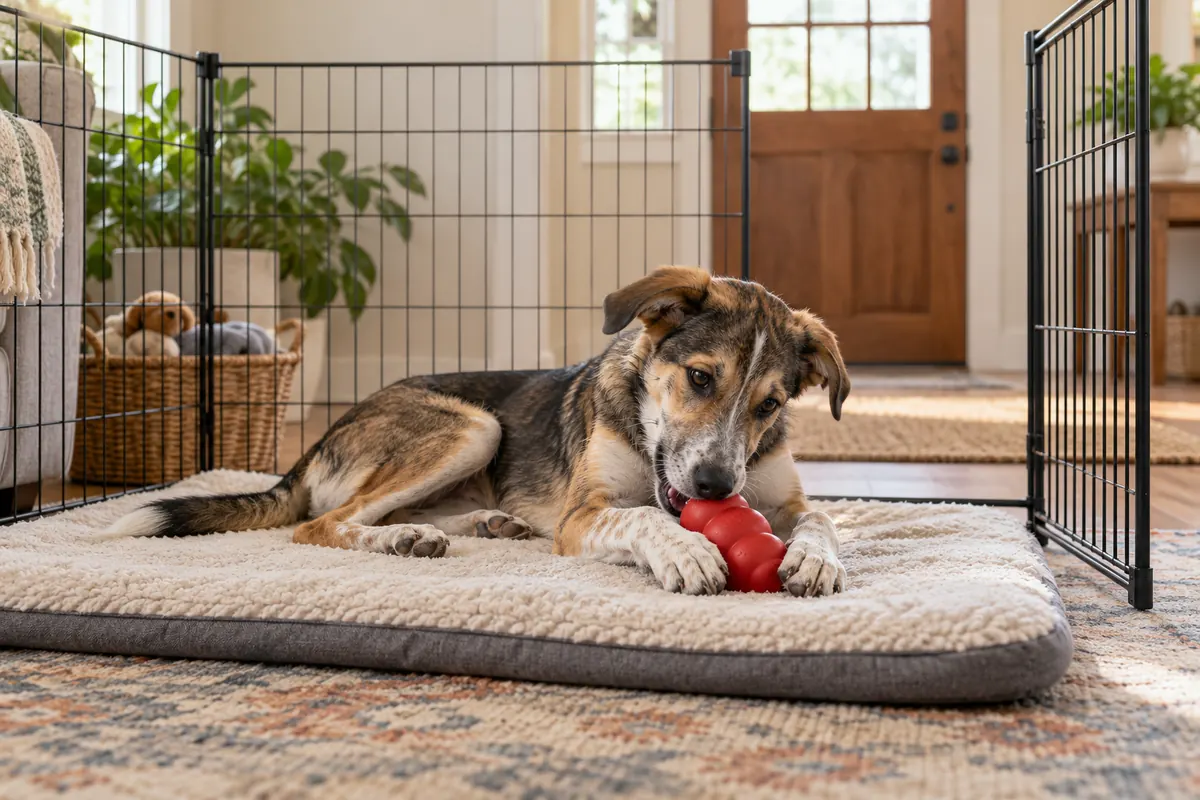
A correctly sized rubber food toy offers a suitable chewing outlet and a familiar settling activity for some teenage dogs.
Check price on AmazonWe earn a small commission if you buy through this link, at no extra cost to you. Disclosure
Separation anxiety or teenage boredom?
Chewed belongings cannot tell you what your dog felt. Record the sequence, including what happened before and afterward. These patterns are clues, and boredom, frustration and fear can overlap.
| What you see | More likely boredom or frustration | More likely separation distress |
|---|---|---|
| Chewing | Explores accessible shoes or cushions, then rests | Repeatedly attacks exit doors or windows |
| Timing | Activity follows waking or running out of things to do | Worry begins during departure preparations or soon afterward |
| Vocalizing | Brief bursts linked to outside events | Persistent howling or whining with other distress |
| Movement | Varied exploration with comfortable pauses | Repetitive pacing and repeated exit checking |
| Food toy use | Eats comfortably and later settles | Abandons familiar food while remaining tense |
| Response to enrichment | Suitable activities help comfortable settling | Food and toys do not interrupt escalating worry |
| Barrier behavior | Calmly investigates an accessible route | Frantic climbing, chewing or digging |
| Body language | Loose movement and ordinary exploration | Trembling, heavy panting or drooling |
| Rest | Comfortable sleep between activities | Cannot rest or remains vigilant |
| After your return | Quickly resumes ordinary behavior | Remains highly agitated or exhausted |
Swipe the table sideways to see every column.
Our Separation Anxiety Signs guide explains the wider pattern. Quietness, eating or lying still alone does not prove comfort.
Signs to watch for
Look for panic at the door, persistent howling, repeated pacing, drooling, scratching at barriers or refusal of food specifically during separation. Self-injury and unsafe escape attempts are urgent concerns.
Notice subtle changes too: abandoning a resting spot whenever you stand, freezing near the exit or remaining watchful throughout an absence.
One sign does not provide a diagnosis. Record what you observe without labeling your dog stubborn or spiteful. Sudden changes deserve a veterinary check, even during an age when behavior commonly shifts.
Check what changed
Compare the current week with the last period your dog coped comfortably. Include the actual time alone, not just your working hours. Commutes, errands and delayed pickups can quietly lengthen the day.
Also review freedom and confinement. Access to the whole house may expose tempting rubbish or window activity. A newly closed crate may create a different problem.
Write down changes in sleep, appetite, exercise and health. “Teenage behavior” should not become a reason to overlook discomfort.
What changed?
Separation Anxiety in Adolescent Dogs: New Anxiety or Regression at 6–18 Months: what changed?
- Someone returned to office work or school.
- Absences became longer or more frequent.
- Commuting or errands extended the day.
- A move changed the home environment.
- A familiar caregiver became unavailable.
- A person or animal joined or left the household.
- Walks or sniffing opportunities decreased.
- The dog gained more unsupervised freedom.
- A crate, pen or room became newly restricted.
- Construction, deliveries or outside noise increased.
- Sleep was disrupted by a busier household.
- Appetite, movement or toilet habits changed.
- A frightening event happened while the dog was alone.
- Previously comfortable practice stopped for a while.
Meet their needs before you leave
Offer an age- and health-appropriate walk with opportunities to sniff, followed by a potty break and time to settle. More intense exercise is not always better; avoid turning departure preparation into a frantic workout.
Add a brief training game, scent search or easy food puzzle. The AKC highlights mental stimulation, including food-dispensing toys and training games, as useful outlets for adolescent dogs.
Use part of a normal meal where appropriate. Begin enrichment while you are home so you know the activity is comfortable and manageable. A toy cannot make an overwhelming absence suitable.
Before you leave
Separation Anxiety in Adolescent Dogs: New Anxiety or Regression at 6–18 Months: before you leave
- Check that your dog appears comfortable and well.
- Offer a suitable walk or sniffing opportunity.
- Provide a potty break.
- Allow a calm transition after activity.
- Keep drinking water accessible.
- Choose a familiar resting area.
- Remove rubbish, cords and swallowable objects.
- Inspect any food toy for damage.
- Check toy size against your dog’s current mouth size.
- Confirm the camera view and connection.
- Keep the planned absence within demonstrated comfort.
- Confirm care cover for longer gaps.
- Have a backup contact for delays.
Rebuilding alone time step by step
Start with an absence easier than the one that caused worry. That may mean a brief room-to-room gap or only seconds outside. There is no need to test how long your dog can endure.
Watch on camera and return before distress develops. If worry appears, come back calmly and make the next attempt easier. Do not wait for silence while your dog panics.
Repeat comfortable practice and make small, varied changes, including easier repetitions. Use our Separation Anxiety Training Plan for the detailed method.
If keys, shoes or a bag trigger worry, work on those separately using our Departure Cues guide. For younger dogs or unresolved early difficulties, revisit Puppy Separation Anxiety.
Rebuild alone time in 4 stages
Stages are based on behavior, not dates. Repeat or step back whenever needed.
| Stage | What you practise | Move on when |
|---|---|---|
| 1. Comfortable independence at home | Reward voluntary resting while you move nearby | Your dog remains loose and can disengage from you |
| 2. Brief out-of-sight moments | Practice easy room-to-room gaps without adding a difficult barrier | Comfort repeats across several opportunities |
| 3. Short departures | Step outside briefly and observe live footage | Your dog remains comfortable throughout |
| 4. Gradual everyday absences | Extend cautiously, mixing familiar easy absences with small increases | Repeated observations support the next step |
Swipe the table sideways to see every column.
Use our Separation Anxiety Log to record duration, first worry and whether your dog rested. Missing observations stay blank.
A safe set-up while you train
Choose a dog-proofed room, suitable pen or gated area your dog already finds comfortable. Introduce changes while you are home. Check whether growing size and jumping ability have made the old setup unsuitable.
A crate is an option only for a dog who already relaxes in it, including during the relevant absence. Never shut a panicking dog inside or reinforce confinement to overcome escape attempts.
Supervise new chews, inspect them regularly and remove damaged items. No toy is indestructible. Avoid leaving fabric enrichment or unfamiliar objects with a dog who may shred and swallow them.
For damage-specific safety advice, see Dog Destructive When Left Alone.
Absences you can't avoid
Separate training from necessary workday coverage. Your dog’s current comfortable duration determines where help is needed.
Dogs Trust’s separation anxiety advice recommends avoiding absences longer than the dog can cope with and using friends, family, sitters or daycare where possible.
Trial the arrangement first. A walker may break up a comfortable day but cannot cover panic before and after the visit. Some dogs need someone present throughout the gap.
Our Care Options guide helps you organize suitable company and a backup plan.
Sample weekday for a teenage dog
This example assumes care covers absences beyond the dog’s current ability. Adjust activity, meals and potty opportunities to individual needs.
| Time | What happens | Why it helps |
|---|---|---|
| Early morning | Sniffy walk and potty opportunity | Meets movement, exploration and toilet needs |
| Breakfast | Meal with an easy food activity if suitable | Provides manageable mental work |
| Before departure | Quiet settling period and caregiver handover | Avoids rushing from excitement into separation |
| Midmorning | Caregiver provides company and a potty opportunity | Covers the gap the dog cannot manage |
| Midday | Suitable walk, brief play or scent activity, then rest | Balances activity with recovery |
| Afternoon | Continued appropriate care and comfortable downtime | Avoids relying on a toy for company |
| Evening | Walk, meal, connection and optional easy practice | Supports needs without making every session harder |
| Bedtime | Final potty opportunity and familiar sleeping routine | Protects rest and predictability |
Swipe the table sideways to see every column.
Mistakes to avoid
Do not suddenly extend absences because your dog has reached a particular birthday. Physical growth and bladder capacity do not establish emotional readiness.
Avoid treating all chewing as anxiety—or dismissing panic as ordinary adolescence. Both assumptions can lead to the wrong plan.
Do not punish damage, use aversive collars or leave your dog to cry until exhausted. Avoid increasing exercise endlessly while overlooking sleep, discomfort or fear.
Finally, do not expect every practice session to set a new record. Comfortable repetitions are useful work.
When to get extra help
Contact your vet for sudden changes, appetite problems, altered movement, accidents or other health concerns. Get prompt veterinary help for injuries, suspected swallowed objects or dangerous escape attempts.
The RSPCA’s adolescent puppy advice recommends a vet check first when nothing seems to help, because behavior can have a medical cause, followed by behavior expertise if needed. It also emphasizes patience and avoiding punishment.
Seek a qualified, reward-based professional experienced in separation difficulties when worry persists, worsens or prevents manageable practice. Maturing may change some teenage behavior, but established separation distress should not be left untreated while you wait.
Helpful products
Picks on this page are a research-based assessment of features and intended use — not hands-on testing. We earn a small commission if you buy through the Amazon links on this page, at no extra cost to you. Affiliate disclosure
These picks are chosen from research, not from personal product testing.
| Product type | Why it helps | Notes |
|---|---|---|
| Durable rubber chew and food toy: KONG Extreme | Offers a suitable chewing outlet and familiar activity | Limitation: no toy is indestructible, and it keeps a bored dog busy but won't fix true panic; pick the right size and check it for damage. Alternative: a frozen stuffed toy or familiar suitable chew. |
| Metal exercise pen: MidWest 30-inch exercise pen | Can define a comfortable, dog-proofed resting area | Limitation: some dogs climb or push a pen, and it is not for a dog who panics when confined. Alternative: a dog-proofed room or suitable baby gate. |
| Pet camera: Furbo 360° camera | Shows timing, body language and ability to settle | Limitation: it needs Wi-Fi and only shows distress; it cannot stop it. Alternative: an old phone or laptop video call. |
Swipe the table sideways to see every column.
Bottom line
A teenage dog needs suitable outlets, comfortable rest and alone-time expectations based on current behavior. Record what happens, check sudden changes with your vet and rebuild gradually. Regression is a reason to adjust support, not proof that you failed.