On this page
- Why the alone-time area matters
- Gate vs pen vs closed door vs free run
- How to choose for your dog
- Which area fits your dog?
- Setting up the area safely
- Safe alone-time area checklist
- Introducing the area while you're home
- Helping or making it worse?
- Mistakes to avoid
- When to get extra help
- Helpful products
- Bottom line
Choosing where to leave an anxious dog can feel like a compromise between protecting your home and giving your dog enough space. A gate may work beautifully for one dog, while another rests better in a larger room—or becomes worried whenever any barrier is closed.
We are dog owners, not vets or trainers. The goal is to find an area your dog can use comfortably and safely while you work on gradual alone-time training. The camera, your dog's behavior and practical safety checks will guide that choice.
Why the alone-time area matters
A familiar place with water, a comfortable bed and few hazards can make the day easier. Some dogs prefer a small, quiet area; others settle better when they can see into the home or move between rooms.
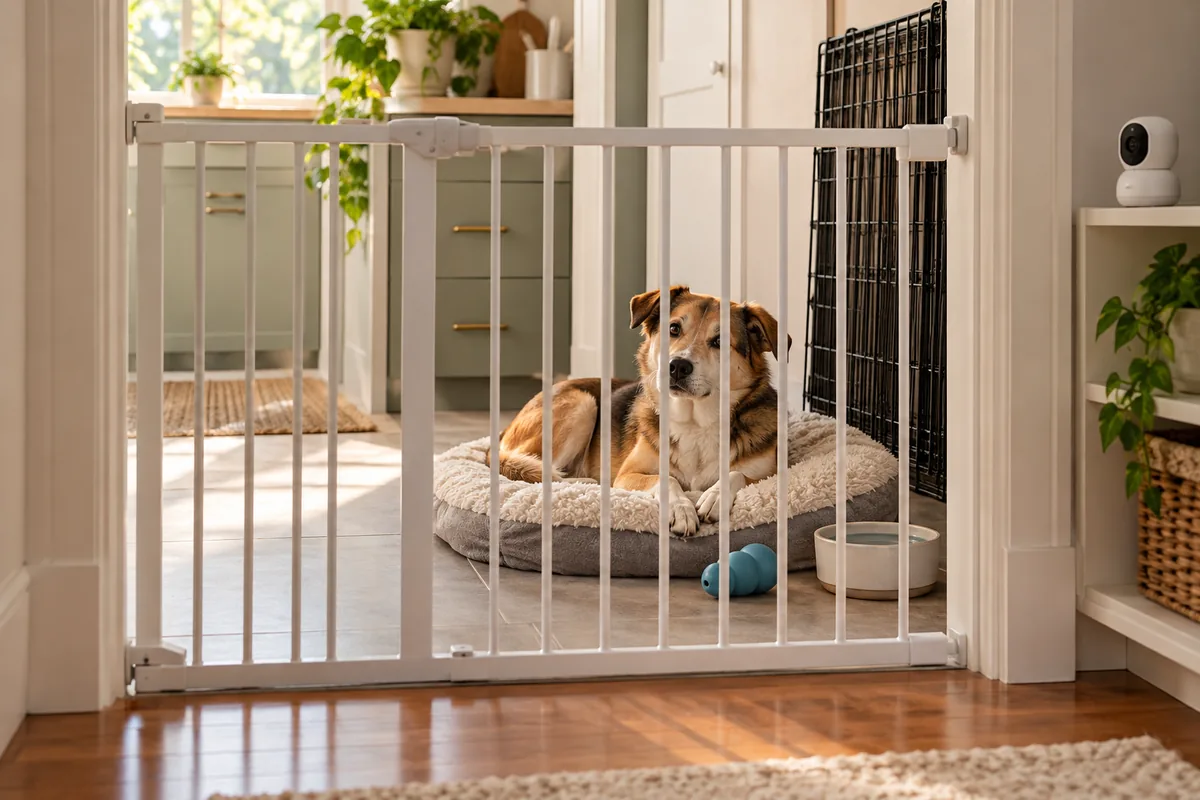
The wrong setup can add another source of worry. A dog who wants to follow you may scratch at a closed door. A dog who is uncomfortable in an exercise pen may push or climb its panels. A gate can create similar frustration even though the dog can see through it.
Confinement does not treat separation anxiety. If your dog is frightened about being alone, the underlying work is gradual practice at a level they can handle, with company for longer absences.
A dog fighting a barrier can injure their mouth, teeth, paws or nails. Stop the attempt, return calmly and change the plan with professional support. Never leave a panicking dog shut in a pen or room.
Furbo 360° Dog Camera
A pet camera helps you compare how your dog behaves with each setup and notice trouble before an absence becomes overwhelming.
Check price on AmazonWe earn a small commission if you buy through this link, at no extra cost to you. Disclosure
Gate vs pen vs closed door vs free run
| Option | Best for | Watch out for | Example set-up |
|---|---|---|---|
| Gate across a doorway | A dog comfortable in a room who benefits from seeing and hearing the home | Jumping, climbing, pushing or chewing the gate | A dog-proofed kitchen with a secure walk-through gate |
| Exercise pen | A dog who already relaxes in a defined area within a larger room | Pushing panels, climbing, chewing or getting caught | A securely assembled pen in an uncluttered living room |
| Closed door | A dog who rests comfortably in a familiar room without a view out | Scratching, chewing or distress about being shut away | A quiet, dog-proofed bedroom with water and a bed |
| Free run of the home | A dog who is calm with more space and safe around household items | Access to hazards, windows or outside triggers | Dog-proofed rooms with unsafe areas securely blocked |
Swipe the table sideways to see every column.
These are starting points, not recommendations to test by leaving for a long period. Check each arrangement while you are home and use very short, comfortable absences.
How to choose for your dog
Begin with what you already know. Where does your dog choose to rest when you are home? Can they relax behind a gate while you remain nearby? Do they become worried as soon as a door closes?
If possible, film a brief absence in the current safe setup while watching live. Return before your dog becomes distressed. If they show worry sooner than expected, return calmly and note what happened. You do not need to wait for a panic episode to get useful footage.
Then introduce a possible change while you are home. Once the dog is comfortable, record another short absence under similar conditions. Compare their body language and settling, rather than simply counting barks.
A dog may be quiet behind a barrier but remain rigid or tremble. Another may move between two resting places and settle comfortably. Look at the whole pattern.
Our dog escaping the crate guide discusses injury risks for dogs who fight confinement. For information specific to crates, see our crates for anxious dogs guide.
Which area fits your dog?
Try only an option your dog can explore safely and gradually while you are present.
| If your dog... | Try first | Avoid |
|---|---|---|
| Rests near you but likes seeing into other rooms | A familiar room with an open gate, then brief gentle gate practice | Closing the gate for a long absence immediately |
| Relaxes in a smaller familiar area | A dog-proofed room or pen introduced gradually | Assuming a small area will suit every dog |
| Pushes or climbs a gate | A safer dog-proofed area without that barrier, with professional guidance | Leaving the dog to fight or jump the gate |
| Scratches a closed interior door | More accessible space if safe, tested while you are home | Repeating long closed-door absences |
| Panics behind several kinds of barrier | Company and a plan with a qualified professional | Shutting the dog away to make them adjust |
| Rests safely across multiple rooms | A carefully dog-proofed larger area | Access to cords, unsafe windows or toxic items |
| Reacts to people outside a window | A familiar resting area away from that view | Giving access to a window that repeatedly triggers barking |
| Chews household items when comfortable | A smaller dog-proofed area they already accept | Leaving loose chewable hazards within reach |
Swipe the table sideways to see every column.
More space can help a dog who dislikes confinement, but it cannot be assumed to fix fear of separation. Likewise, a quiet room can reduce stimulation without making every dog feel secure.
Setting up the area safely
Get down to your dog's level and inspect what they can reach, pull down, chew or climb. Remove electrical cords, cleaning products, medicines, toxic plants, small objects and anything your dog may swallow.
Provide fresh water at all times and a comfortable resting place. If your dog chews bedding, choose a safer arrangement and discuss options with your vet or behavior professional.
Check windows, doors and latches. Move furniture away from gates so it cannot become a launching point. Make sure the gate or pen is appropriate for the opening and assembled according to its instructions; no barrier is safe for a dog actively trying to escape.
Offer only toys your dog has used safely under supervision. A food toy can give a relaxed dog an enjoyable activity, but many distressed dogs ignore food. Our enrichment guide offers more ideas for calm activities.
Safe alone-time area checklist
Dog Gate vs Exercise Pen vs Closed Door: Choosing a Safe Alone-Time Area for a Dog With Separation Anxiety: safe alone-time area checklist
- Remove accessible electrical cords and chargers.
- Store medicines and cleaning products securely.
- Remove toxic plants and unsafe food.
- Clear small objects and chewable hazards.
- Provide fresh water in a stable bowl.
- Add a comfortable resting place the dog uses safely.
- Check windows and outside doors are secure.
- Keep furniture away from gates and pen edges.
- Check barriers for gaps that could trap a body part.
- Confirm the gate or pen is securely installed.
- Remove unsafe window views or other known triggers.
- Check room ventilation and comfort.
- Place camera equipment and cables out of reach.
- Leave only toys already shown to be safe for this dog.
Introducing the area while you're home
Start with the dog free to explore. Place their bed and water in the area and spend quiet time nearby. You can scatter a little of their usual food or offer a familiar toy if they enjoy it, but do not use food to lure them into a space they are trying to avoid.
If the dog chooses to enter and rest, let that be enough for the first practice. For a gate or pen, begin with it open. If the dog is comfortable, briefly move the barrier while you stay close, then reopen it before the dog worries.
Next, practice a tiny movement away. Some dogs are comfortable with you walking across the room; others need a smaller step. Build only while their body language remains relaxed.
When the setup is comfortable with you nearby, practice very brief absences with a live camera. Return before worry begins. If the dog paws at the barrier, pants, becomes rigid or tries to get out, return calmly and make the next attempt easier—or reconsider the setup.
The ASPCA's separation anxiety advice describes treatment as helping a dog tolerate being alone by gradually getting used to short absences. While you work on it, the ASPCA suggests avoiding leaving the dog alone except during training, for example by having a family member, friend or sitter stay with them, or using doggy daycare.
Our separation anxiety training plan explains this work in more detail. If keys or shoes already trigger worry, see our departure cues guide.
Helping or making it worse?
Compare recordings from similar, short practice absences. These observations are clues, not a diagnosis.
| What you see on video | Likely helping | Likely making it worse |
|---|---|---|
| Resting | Loose body and comfortable settling | Rigid stillness or hiding near the barrier |
| Movement | Changes position, then rests | Repeated pacing or circling |
| Barrier attention | Briefly notices it, then moves away | Scratches, bites, pushes or climbs it |
| Breathing | Returns to normal after activity | Persistent panting alongside other worry |
| Vocalizing | Settles comfortably after a brief sound | Barking or howling continues or escalates |
| Food activity | Eats comfortably and can rest afterward | Abandons familiar food or becomes distressed after finishing |
| Door behavior | Can move away from the exit | Remains fixed at it, drools or tries to escape |
| Toileting | Uses normal toilet opportunities outside | Accidents during short absences with other distress |
Swipe the table sideways to see every column.
One calm clip does not establish that a long absence is safe. Keep notes about the setup, duration and first signs of worry, and look for patterns across comfortable attempts.
Mistakes to avoid
Do not close a new gate, pen or door and leave for the workday. Introduce the area gradually, then train alone time separately.
Avoid making a barrier stronger in response to panic. A determined dog may continue trying to escape and hurt themselves. Remove the dog from immediate danger and get help choosing a safer plan.
Never punish barking, accidents or damage, use bark-control devices, or leave a distressed dog to cry until quiet. Do not use a camera speaker to scold or interrupt them.
Avoid assuming free run is safe without checking the entire accessible area. More room also means more possible hazards and more windows or doors to investigate.
When to get extra help
Dogs Trust's separation anxiety advice explains that changes in behavior are often influenced by physical health, so see your vet if your dog's behavior has recently changed.
Contact your vet promptly if your dog has injured their mouth, teeth, paws or nails, or has made a dangerous escape attempt. Share video when available, but do not repeat an unsafe situation to get a better clip.
A qualified, reward-based behavior professional can help when your dog struggles behind any barrier, panics quickly or cannot settle despite easier practice. Arrange a family member, friend, sitter or suitable daycare for necessary absences while you work on the plan.
Our how long can a dog be left alone guide covers general needs, but a dog experiencing separation distress may need company even during a short gap.
Helpful products
Picks on this page are a research-based assessment of features and intended use — not hands-on testing. We earn a small commission if you buy through the Amazon links on this page, at no extra cost to you. Affiliate disclosure
These picks are chosen from research, not from personal product testing, and none of them replaces company or a gradual training plan.
| Product type | Why it helps | Notes |
|---|---|---|
| Pet camera: Furbo 360° camera | Shows how your dog copes in each setup | Our top pick. Limitation: it needs Wi-Fi and only shows what happens; it cannot comfort your dog. Alternative: an old phone or laptop on a video call. |
| Walk-through pet gate: Carlson walk-thru gate | Separates a dog-proofed room while allowing a view | Limitation: some dogs jump or climb gates, and a gate does not treat anxiety. Alternative: a door held slightly open with a secure child-safe stopper, only if the dog is calm and cannot become trapped. |
| Metal exercise pen: MidWest 30-inch exercise pen | Defines an area within an open room | Limitation: a determined or worried dog may push, climb or chew panels, so watch on camera during safe practice first. Alternative: a dog-proofed small room behind a gate, if the dog accepts it. |
Swipe the table sideways to see every column.
Our best pet camera guide explains recording options. A camera shows what happens; it cannot physically prevent an escape or replace care.
Bottom line
The best alone-time area is the one your dog can use safely and comfortably, whether that is a gated room, pen, closed room or larger dog-proofed space. Introduce it while you are home, review short recordings and change course if a barrier adds distress. Pair the setup with gradual training and suitable company.