On this page
- Why on-call weeks are hard on an anxious dog
- Plan the on-call week before it starts
- Line up a standby care person
- On-call week dog care plan
- When the phone rings: calm departures
- Keep the go-bag from becoming a panic cue
- Call-outs that run into a workday
- Before your on-call week checklist
- Keep training separate from real call-outs
- Rest and recovery after a busy week
- When to see the vet or a behavior professional
- Helpful products
- Bottom line
An unexpected call can mean leaving before dawn, during dinner or just after you have gone to bed. When your dog has separation anxiety, not knowing when you will return makes a casual “someone can check later” arrangement difficult to rely on.
We are dog owners who researched this topic, not vets, trainers or product testers, and the products mentioned here were chosen from research, not from personal product testing. This guide focuses on preparing an on-call week so dog care can begin without a rushed search when the phone rings.
Why on-call weeks are hard on an anxious dog
Sudden departures combine several changes: an unusual time, hurried movement, an unfamiliar goodbye and an absence with no clear end. Your dog may also get less predictable exercise and company after a busy night.
The ASPCA's page on separation anxiety describes separation anxiety as distress when dogs are left alone or separated from the people they're attached to, and explains that treatment focuses on gradually teaching the dog to be comfortable alone.
A real call-out offers little control over duration, so it cannot serve as a planned training step. Familiar care needs to cover absences your dog is not ready for.
The goal is a routine that still works when you are tired, cannot answer immediately or remain away longer than expected.
Furbo 360° Dog Camera
A pet camera helps you or your standby helper observe your dog after a call-out, with someone available to respond.
Check price on AmazonWe earn a small commission if you buy through this link, at no extra cost to you. Disclosure
Plan the on-call week before it starts
Review recent video to establish what your dog comfortably handles now. Do not use the longest absence they once endured as the basis for a night with an unknown finish. Our guide on how long a dog can be left alone explains why your own dog's comfort matters more than general rules.
Map the full standby period, including weekends, nights and any normal workdays afterward. Count travel and possible delays when discussing cover.
Check your own employer's on-call policy before relying on assumptions about availability or communication. Resolve practical care gaps ahead of time.
Prepare a written dog care card near the door. Include meals, walks, current comfortable alone time, distress signs, veterinary contacts and who takes over if you cannot reply.
Keep access codes secure. The visible card can tell an agreed helper where instructions are kept without displaying sensitive entry information.
Line up a standby care person
Choose someone who knows your dog and has explicitly agreed to the dates and hours. “Call me if you need anything” is less dependable than a clear arrangement.
Trial a comfortable departure with that person present. A dog who enjoys their company while you are home may still struggle when you leave.
Agree how the helper is contacted, how they confirm the message and when the backup is activated. If your dog panics immediately, a helper traveling over after departure leaves an unsuitable gap; arrange company already there.
Test the key or lockbox together, including building access. Confirm whether the helper can stay overnight and hand over to daytime care if needed.
Our care options guide and pet sitter prep guide explain broader choices and a fuller handover.
On-call week dog care plan
These checkpoints organize support rather than set deadlines for training progress.
| When | What to do | Why it helps |
|---|---|---|
| The week before standby begins | Review current comfort and expected coverage needs. | Bases care on the dog you have today. |
| Before confirming the arrangement | Trial the main helper and meet the backup. | Checks comfort before a real call-out. |
| Before the week starts | Test entry and complete the care card. | Removes avoidable access problems. |
| At the start of each standby period | Confirm who is available and where they are. | Prevents reliance on an unavailable helper. |
| When a call arrives | Activate the agreed care arrangement. | Starts support without searching from scratch. |
| After departure | Have the helper confirm arrival and settling. | Verifies that responsibility has transferred. |
| If the call runs late | Extend care or arrange a direct handover. | Prevents an unsupported gap. |
| If it continues into a workday | Activate next-day meals, walks and company. | Covers the complete absence. |
| When you return | Greet calmly and review care notes. | Supports a predictable transition home. |
| During recovery days afterward | Restore routines and keep practice easy. | Gives both of you room to rest. |
Swipe the table sideways to see every column.
When the phone rings: calm departures
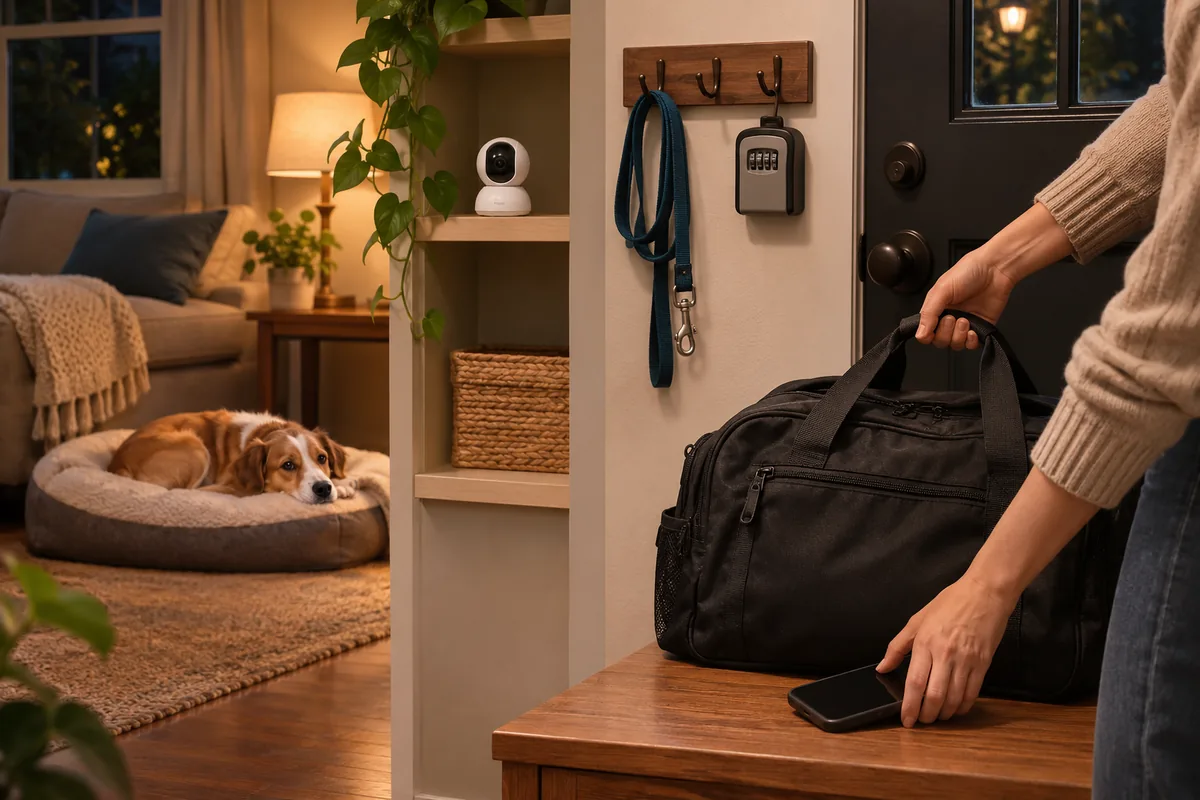
Prepare the practical parts beforehand: walking equipment, food instructions and the go-bag. That reduces hurried searching around your dog.
When a call comes, use the agreed message to activate care. Keep your movements and goodbye as ordinary as possible within the situation.
Provide a potty opportunity if practical, but do not build the plan around having spare time after every call. The helper must know what needs doing if you leave abruptly.
A calm goodbye cannot compensate for an absence beyond your dog's ability. If there is no comfortable gap before help arrives, the arrangement needs revising before standby begins.
Never take your dog along on a call, and never leave them waiting in a car or truck or outside. A camera is not alternative care.
Keep the go-bag from becoming a panic cue
Your dog may learn that a phone sound or lifted bag predicts separation. Practice smaller versions during ordinary home time, without an actual departure afterward.
For example, briefly move the empty bag, then sit down again. Choose a version your dog notices without becoming worried.
If even that causes pacing or whining, make it easier rather than repeating the full sequence until the dog stops reacting. Our departure cues guide covers this work in more detail.
Do not stage a realistic emergency rush as practice. Keep the bag accessible but out of your dog's resting space, and avoid repeatedly handling it in an agitated way.
Strong distress around mild cues is a reason to seek qualified help.
Call-outs that run into a workday
Plan this possibility before the first night. A helper who can stay until morning may not be available through the following day.
Name the next caregiver and arrange a direct handover where continuous company is needed. Share feeding and walking notes so tasks are not missed or repeated.
Do not assume a brief visit home resets your dog's comfort with another absence. Consider the whole period, including company, potty breaks, meals and rest.
If you return home needing sleep, arrange help with walks and potty breaks. Your presence may reassure your dog, but it does not automatically meet every daily need.
Our shift work guide covers those wider scheduling questions.
Before your on-call week checklist
On-Call Work With a Dog Who Has Separation Anxiety: before your on-call week checklist
- Review recent alone-time video.
- Record your dog's current comfortable absence.
- Map the complete standby period.
- Include weekends and overnight coverage.
- Check your own employer's on-call policy.
- Confirm the main standby caregiver.
- Confirm a familiar backup person.
- Trial care before relying on it.
- Resolve any gap before the helper can arrive.
- Agree how messages are acknowledged.
- Agree when to activate the backup.
- Test keys or lockbox access.
- Test building entry where relevant.
- Keep access details secure.
- Place the care card near the door.
- Leave regular and emergency veterinary contacts.
- Prepare food and feeding instructions.
- Set out walking equipment.
- Keep fresh water available.
- Confirm overnight staying arrangements.
- Confirm next-workday care.
- Agree who acts if you cannot answer.
- Test the camera with the helper's knowledge.
- Keep camera cords inaccessible.
- Plan help while you catch up on rest.
- Reconfirm availability if circumstances change.
Keep training separate from real call-outs
Practice when you can observe your dog and return promptly. Start with an absence they already handle comfortably, which may be only seconds.
Increase gradually while they remain relaxed, following our separation anxiety training plan. If distress appears, return calmly and make the next attempt easier. Do not wait for silence before helping.
Keep real call-outs covered by suitable company rather than using them to test progress. One successful practice session does not establish readiness for an unpredictable night away.
Record a representative call-out with the caregiver's knowledge. Review departure, any agreed gaps and handovers. Look for relaxed rest as well as pacing, panting, drooling, repeated vocalizing or exit scratching.
A difficult event is information for changing support, not evidence that all progress has disappeared.
Rest and recovery after a busy week
Offer a quiet greeting when you return, a potty opportunity and comfortable company. Calm does not mean ignoring your dog.
Ask the helper about eating, sleep, potty breaks and settling. Review short clips if something seemed different.
Restore familiar meals and walks without trying to compensate with exhausting activity. Keep training easy or pause structured sessions while arranging needed cover.
Protect your own rest too. A helper handling a walk or some daytime company can make recovery more manageable.
Before the next on-call week, update the plan around what actually happened: access problems, delayed handovers or a dog who needed more support than expected.
When to see the vet or a behavior professional
Contact your vet early if your dog refuses food, seems unwell or shows a sudden behavior change. Do not assume disrupted routines explain everything.
Strong panic, injury, escape attempts or potty accidents only when alone need veterinary discussion. Share video and explain whether distress happens with the helper present or only without company.
A qualified reward-based behavior professional can help with sudden-departure distress, worrying cues or gradual practice that is not progressing. Our separation anxiety red flags guide explains which signs are urgent.
Never punish barking, howling, damage or accidents; they are signs of distress, not spite. Never shut a panicking dog in a crate or room and leave. Increase support while you review the plan.
Helpful products
Picks on this page are a research-based assessment of features and intended use — not hands-on testing. We earn a small commission if you buy through the Amazon links on this page, at no extra cost to you. Affiliate disclosure
These are optional helpers, chosen from research, not personal product testing, and not substitutes for care or gradual training. They support an existing care arrangement; neither provides company.
| Product type | Why it helps | Notes |
|---|---|---|
| Pet camera: Furbo 360° camera | Lets you or the standby helper observe your dog after departure. | Our top pick. Limitation: it needs 2.4GHz Wi-Fi and power and only shows what happens; it cannot comfort your dog or replace a person. Alternative: a short text update from the helper after they arrive. |
| Key lockbox: browse options on Amazon | Gives an agreed helper access without a rushed key handover. | Limitation: it only helps if a reliable helper who knows your dog is already lined up, and you need a secure spot for it. Alternative: give a spare key to a trusted neighbor in advance. |
Swipe the table sideways to see every column.
Choose secure access arrangements appropriate to your home and test them. Camera footage is useful only when someone can respond to distress.
Bottom line
Arrange standby care before the week starts, including the arrival gap, overnight company and a possible next-day handover.
Keep instructions simple, access tested and a backup ready. Separate gradual training from real call-outs, then use recovery days to restore familiar routines.