On this page
- Why shift work is hard for an anxious dog
- Know your dog's current alone-time limit
- Anchors that stay the same on every shift
- Same-every-shift anchors checklist
- Covering long or changing absences
- Shift cover options compared
- Sleeping during the day with an anxious dog
- Daytime sleep set-up checklist
- Night shifts: what to plan for
- Rotating rosters: planning week by week
- Rotating roster week
- Training around shift work
- Before every shift checklist
- Mistakes to avoid
- When to get extra help
- Helpful products
- Bottom line
A rotating roster can turn ordinary dog care into a moving puzzle. You may leave before dawn, return after midnight or need uninterrupted sleep while the neighborhood is busy. Advice built around a steady office day often misses those realities.
You can build a workable plan without making every day identical. We are dog owners, not vets or trainers. The priorities are suitable company, familiar routines and manageable training that fits around both your dog’s needs and your recovery between shifts.
Why shift work is hard for an anxious dog
Changing hours can alter when your dog eats, walks, rests and spends time with you. A long shift also becomes longer once commuting, handovers and delays are included.
For a dog with separation anxiety, the difficult part may begin immediately after departure. Waiting for a midday or overnight visit may already exceed their ability.
Your sleep period matters too. Being home does not automatically provide the potty breaks, exercise and interaction your dog needs. Plan those needs explicitly rather than counting daytime sleep as ordinary shared time.
Furbo 360° Dog Camera
A pet camera shows how your dog copes across changing hours, helping you check whether the planned care meets their needs.
Check price on AmazonWe earn a small commission if you buy through this link, at no extra cost to you. Disclosure
Know your dog's current alone-time limit
Use a camera during a brief absence you expect to be comfortable. Do not test a full shift to discover the limit. Start with seconds if necessary, and return before worry builds.
Look for relaxed resting and the ability to disengage from the exit. Pacing, trembling, repeated whining, drooling or escape attempts indicate that the setup or duration needs reviewing.
Observe relevant times of day without forcing distress. Comfortable daytime behavior does not establish readiness for nighttime departures.
Our Best Pet Camera guide covers equipment. General ranges in How Long Can a Dog Be Left Alone? cannot establish an anxious dog’s individual limit.
Anchors that stay the same on every shift
An anchor is a familiar sequence that can happen at different clock times. For example: suitable walk, food, potty opportunity, quiet settling and a calm caregiver handover.
Keep the resting area and return routine familiar where practical. These patterns offer continuity even when your roster changes.
Avoid making the routine so rigid that one delayed meal causes the whole day to unravel. Aim for recognizable care with flexibility.
If shoes, keys or work clothes already trigger worry, practice those cues separately using our Departure Cues guide.
Same-every-shift anchors checklist
Shift Work and Dog Separation Anxiety: same-every-shift anchors checklist
- Use a familiar walk-feed-settle sequence where appropriate.
- Offer sniffing as part of suitable exercise.
- Provide a potty opportunity before departure.
- Use the same comfortable resting area.
- Keep water accessible.
- Offer familiar enrichment your dog uses safely.
- Allow quiet time after activity.
- Keep departures brief and kind.
- Use a familiar caregiver handover.
- Keep returns calm and still affectionate.
- Give carers consistent handling instructions.
- Preserve comfortable sleep and rest opportunities.
Covering long or changing absences
For a dog with true separation anxiety, a long shift usually needs substantial care cover while training continues. Write down every unsupported gap, including travel and delays.
The ASPCA’s separation anxiety advice recommends avoiding alone time outside training while addressing the problem. Its suggested alternatives include a family member, friend or sitter staying with the dog, suitable daycare or taking the dog to work where possible.
Trial the arrangement rather than assuming another person’s presence is enough. Some dogs need a particular familiar caregiver.
Our Care Options guide explores the choices. Our Working Full Time guide covers the broader challenge of combining employment and training.
Shift cover options compared
| Option | Works best for | Watch out for |
|---|---|---|
| Family member or partner | Dogs comfortable with that person | Overlapping shifts and assumptions about availability |
| Familiar friend | Occasional or shared coverage | Confirm actual attendance and backup arrangements |
| Trusted neighbor | Nearby help and short handovers | A brief visit may not cover distress between visits |
| In-home sitter | Dogs who prefer familiar surroundings | Confirm overnight attendance and the sitter’s own absences |
| Dog walker or drop-in visit | Dogs comfortable during the gaps around visits | Does not address panic that begins shortly after departure |
| Daycare matching shift hours | Social dogs who enjoy that setting | Opening times, transport and adequate rest |
| Care swap with another shift worker | Compatible households with different schedules | Trial both dogs and agree responsibilities clearly |
| Taking your dog to work where permitted | Dogs comfortable in a suitable workplace | Permission, hazards, interruptions and genuine rest opportunities |
Swipe the table sideways to see every column.
Sleeping during the day with an anxious dog
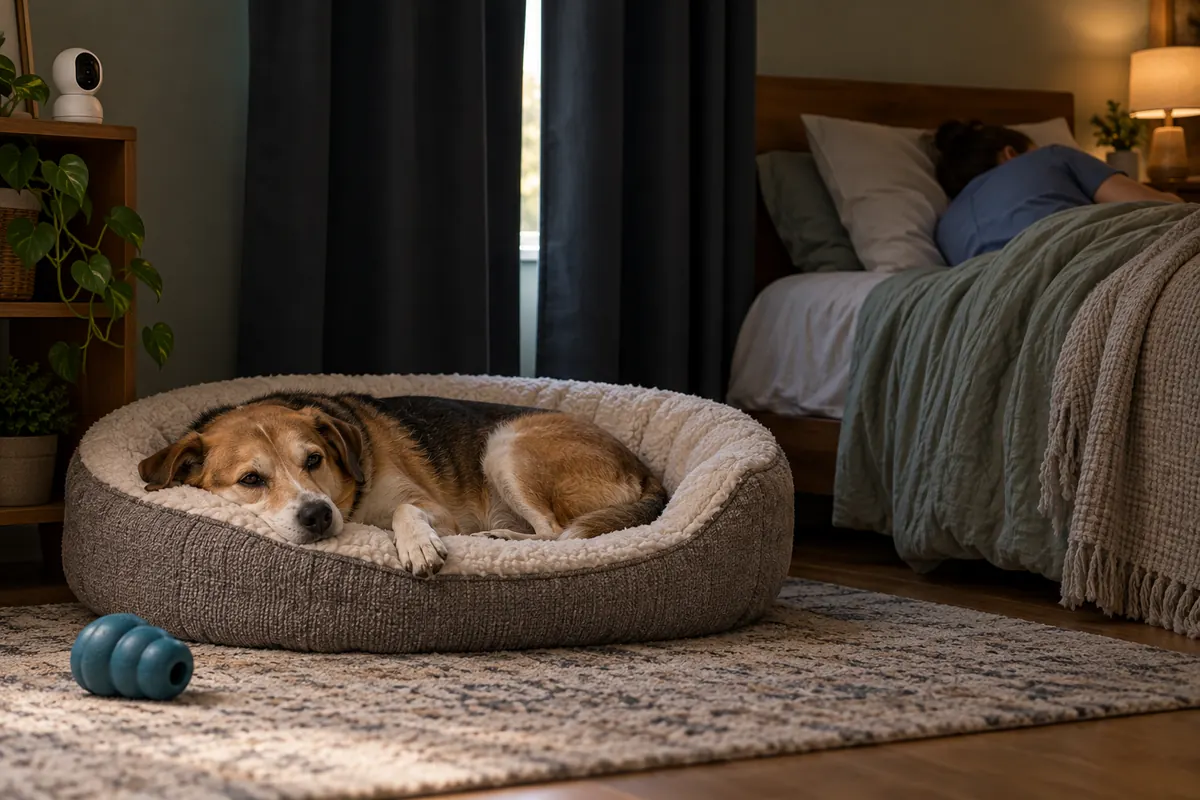
Before sleep, provide an appropriately long, unhurried sniffing walk for your dog’s health and age, a potty opportunity and their usual food routine. If you are exhausted after work, ask a helper to handle the walk.
Your dog may rest nearby or in another familiar spot they already find comfortable. Do not suddenly close them away and expect silence.
Low white noise may mask some outside activity for both of you. Introduce it while awake and stop if your dog dislikes it.
Plan who provides the next potty break or interaction. A food toy offers a short settling activity, not coverage for your whole sleep period.
Daytime sleep set-up checklist
Shift Work and Dog Separation Anxiety: daytime sleep set-up checklist
- Meet suitable exercise and sniffing needs before sleep.
- Provide a potty opportunity.
- Follow the usual feeding routine.
- Arrange the next necessary care break.
- Choose a familiar resting spot.
- Keep water accessible.
- Check room comfort and ventilation.
- Reduce direct sunlight and avoidable outside triggers.
- Keep curtain cords inaccessible.
- Test low background sound while awake.
- Remove toys that require active supervision.
- Confirm comfort with any bedroom boundary.
- Ask a helper to cover care if your sleep must continue.
A camera recording may help you review rest later, but it cannot supervise or respond while you sleep.
Night shifts: what to plan for
Many dogs sleep overnight, but an anxious dog may remain awake after you leave. Do not assume darkness makes a long absence easier.
Arrange evening and overnight company according to observed needs. Ask an overnight sitter exactly when they arrive, leave and take their own breaks.
Plan safe potty access and a calm morning handover. Your dog may need activity after resting while you need sleep.
For difficulties involving darkness, night waking or bedtime, see our Nighttime Anxiety guide. New nighttime restlessness also deserves veterinary attention.
Rotating rosters: planning week by week
As soon as the roster arrives, map work, travel, sleep and dog care together. Name the responsible person for each block and check handovers for gaps.
Include overtime, training days and possible late finishes. Keep a backup who has already met your dog.
Do not transfer an absence length learned on a calm afternoon directly to a busy early-morning departure. Different circumstances may need easier practice.
Rotating roster week
This example illustrates coverage, not a recommended working pattern. Adjust it to your actual roster and your dog’s current ability.
| Day | Your shift | Who is with the dog | Alone-time practice |
|---|---|---|---|
| Monday | Long day shift | Partner and sitter with overlapping handover | No additional challenge after a demanding day |
| Tuesday | Off | Owner; helper covers errands if needed | Tiny comfortable session if both are rested |
| Wednesday | Night shift | Familiar overnight sitter | Optional easy practice earlier, only if calm |
| Thursday | Post-night recovery | Owner nearby during sleep; helper covers walks and potty needs | Rest day |
| Friday | Night shift | Partner or trialed overnight caregiver | None if the day feels demanding |
| Saturday | Post-night recovery | Owner and helper during the sleep period | Rest day or a familiar easy repetition |
| Sunday | Off | Owner; backup covers necessary gaps | Short comfortable practice and roster review |
Swipe the table sideways to see every column.
Training around shift work
Keep training separate from necessary work absences. The ASPCA describes treatment as helping a dog tolerate being alone by gradually getting used to short absences. A work shift is not a suitable training session.
On calm days off, practice below the point where worry begins. Return before distress develops. If worry appears, come back calmly and make the next attempt easier.
Do not train merely because a day is labeled “off.” Recovery sleep, illness or a disrupted household may make rest the better choice.
Use our Separation Anxiety Training Plan for the detailed method. Small comfortable repetitions are more useful than ambitious practice squeezed in while exhausted.
Before every shift checklist
Shift Work and Dog Separation Anxiety: before every shift checklist
- Confirm the actual departure and expected return.
- Include commuting and handover time.
- Name the caregiver for each unsupported gap.
- Confirm backup help for overtime.
- Check that your dog appears well.
- Meet appropriate exercise and sniffing needs.
- Provide a potty opportunity.
- Follow food and water arrangements.
- Check the resting area for hazards.
- Inspect enrichment items for damage.
- Test the camera connection.
- Agree who responds if distress appears.
- Leave care instructions and veterinary contacts.
- Plan dog care during your following sleep period.
Our Pet Sitter Preparation guide helps make those instructions clear. Include door security, current comfortable separation ability and signs that should trigger a call.
Mistakes to avoid
Do not leave a dog alone through a long shift simply because they are physically able to hold their bladder. Emotional comfort, company and other needs still matter.
Avoid relying on a brief walker visit for a dog who panics immediately, or expecting a food toy to last until you return.
Never shut a panicking dog in a crate and leave. Avoid punishment, aversive collars and letting distress continue until exhaustion.
Do not make days off constant training days or sacrifice essential sleep to chase faster progress. Share care and keep the plan sustainable.
When to get extra help
Dogs Trust’s separation anxiety advice notes that physical health can influence behavior and recommends veterinary advice when behavior has recently changed.
Contact your vet for sudden deterioration, food refusal, pain concerns or unusual nighttime restlessness. Injury, dangerous escape attempts or severe physical symptoms need prompt attention.
A qualified, reward-based behavior professional experienced with separation anxiety can help when panic begins quickly or changing hours make practice difficult. Tell them your real roster, care options and sleep needs so the plan fits your life.
Helpful products
Picks on this page are a research-based assessment of features and intended use — not hands-on testing. We earn a small commission if you buy through the Amazon links on this page, at no extra cost to you. Affiliate disclosure
These picks are chosen from research, not from personal product testing. They are practical support options, not a fix on their own, and none of them replaces care cover or a gradual training plan.
| Product type | Why it helps | Notes |
|---|---|---|
| Pet camera: Furbo 360° camera | Shows coping during covered shift periods or daytime rest | Limitation: it needs Wi-Fi and only shows what happens; it cannot comfort your dog or replace care cover. Alternative: an old phone or laptop on a video call. |
| Stuffable rubber food toy: KONG Classic | Offers a familiar settle activity | Limitation: an anxious dog may ignore food when alone, and it only lasts a short time. Alternative: scatter a few kibbles or offer a supervised snuffle game. |
| White noise machine: Yogasleep Dohm | May soften daytime outside sounds while you sleep | Limitation: it won't help a dog who is distressed about being alone, and some dogs dislike certain sounds. Alternative: a fan or free white-noise app on an old phone. |
Swipe the table sideways to see every column.
Bottom line
Shift work requires a flexible care plan rather than a perfect clock-based routine. Keep familiar anchors, cover absences beyond your dog’s ability and protect daytime sleep with practical help. Train in small steps when both of you have the capacity.