On this page
- Why weekly services can be hard on an anxious dog
- Count the whole absence
- Take turns staying home
- A sitter or neighbor for the service slot
- Dress shoes, bags and other departure cues
- Service week planner
- Practice service-length absences in small steps
- Before you leave for services checklist
- Longer holiday services and special events
- Coming home after services
- When to see the vet or a behavior professional
- Helpful products
- Bottom line
A weekly service may be a familiar part of your life, but your dog experiences everything from getting ready to your eventual return. Travel, conversation afterward and volunteering can turn a short service into a much longer absence.
We are dog owners who researched this topic, not vets, trainers or product testers, and the products mentioned here were chosen from research, not from personal product testing. This guide offers practical, faith-neutral ways to support your dog while making room for regular attendance and community activities.
Why weekly services can be hard on an anxious dog
Dogs can notice the same preparation happening at the same time each week: dress shoes, a particular bag and the household gathering near the door. If previous absences were difficult, those details may begin to predict worry.
The ASPCA's page on separation anxiety describes separation anxiety as distress when dogs are left alone or separated from the people they're attached to, and explains that treatment focuses on gradually teaching the dog to be comfortable alone.
A predictable departure is not automatically a comfortable one. Repeating a long, distressing absence every week does not provide the small, manageable experiences that gradual training needs.
The practical starting point is to provide suitable care while building those skills separately.
Furbo 360° Dog Camera
A pet camera helps you observe your dog's response during services, with a plan for someone to respond if needed.
Check price on AmazonWe earn a small commission if you buy through this link, at no extra cost to you. Disclosure
Count the whole absence
Write down when you leave home and when you realistically return. Include the drive, parking, early arrival, the service and any conversation, fellowship or coffee hour afterward.
Add choir practice, study groups and volunteering as separate commitments when they occur on other days. Each departure needs its own care plan.
Compare the complete outing with recent video showing what your dog handles comfortably. Quietness alone is not enough: look for relaxed resting rather than tense waiting by the door.
If you plan to stay afterward, arrange that time in advance. Don't add an extra gathering just because your dog has probably been fine.
Our guide on how long a dog can be left alone covers emotional comfort alongside potty breaks and other daily needs.
Take turns staying home
Where household arrangements allow it, family members may take turns providing company. Check whether your dog actually settles when a particular person leaves and another stays.
Try that arrangement during a short, easy departure before relying on it for the full service. A dog who remains distressed with someone present may need a different plan and professional support.
If you swap duties partway through a day, include travel time and avoid a gap between caregivers where continuous company is needed.
Make responsibilities clear: who walks the dog, who feeds them and who stays until the next person arrives. Revisit the arrangement if one person is carrying more than they can manage.
A sitter or neighbor for the service slot
A familiar friend, neighbor or sitter may provide a recurring block of company. Ask about the full door-to-door absence rather than only the service time.
Begin with a meeting while you are home, followed by a comfortable short departure. Review whether the dog settles after you leave.
If distress starts immediately, the helper should arrive before departure. A brief visit halfway through cannot cover panic during the gaps before and afterward.
Confirm access, contact details and what happens if you return late. Arrange a backup rather than assuming the helper can always extend.
Our care options guide and pet sitter prep guide explain the wider choices and a fuller handover.
Dress shoes, bags and other departure cues
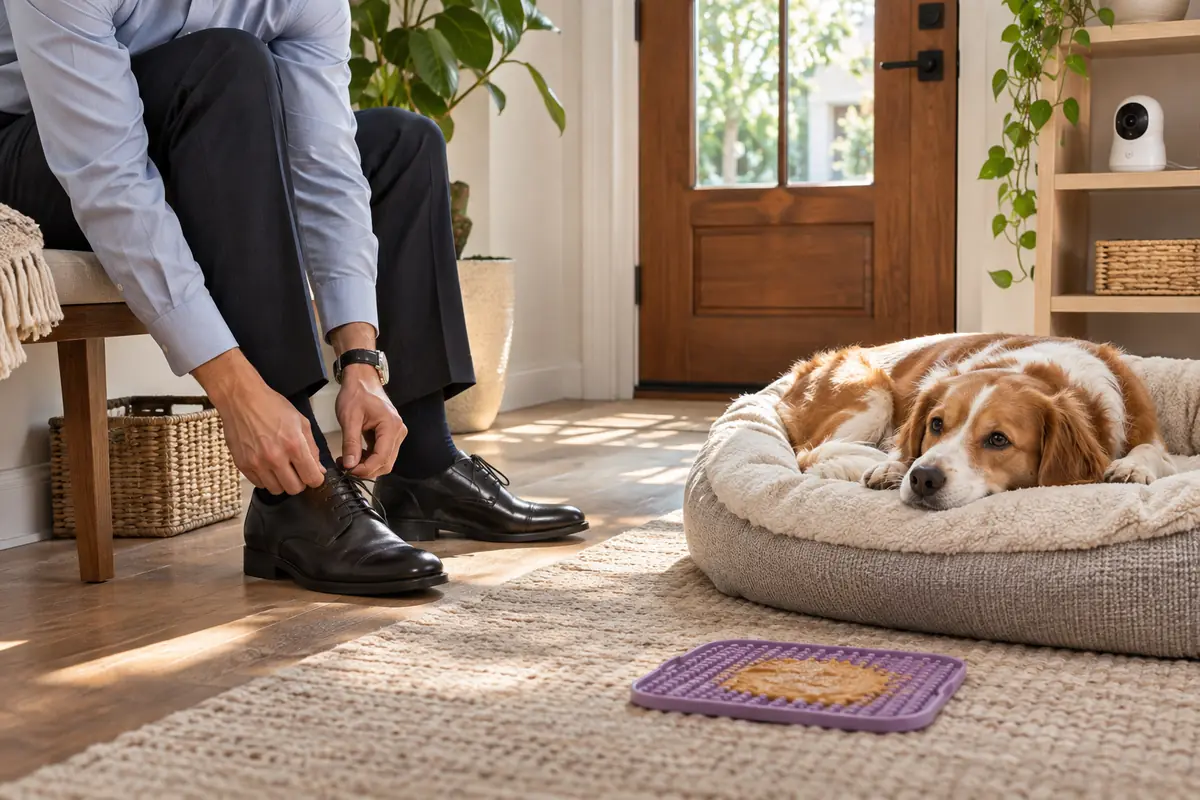
Practice small versions of getting ready during ordinary home time without leaving afterward. Put on the dress shoes and sit down, or move the usual bag briefly before continuing another activity.
Choose a version your dog notices without becoming worried. If shoes, bag and keys together trigger pacing, start with one smaller action.
Do not repeat a distressing sequence until your dog stops reacting. Make practice easier and seek qualified help if even mild cues cause strong worry.
Keep actual preparation unhurried where possible. Set out what you need beforehand, while preserving your dog's resting space and morning routine.
Our departure cues guide explains this work in more detail. Cue practice supports training but does not establish comfort with the eventual absence by itself.
Service week planner
Adapt the days to your routine. The table shows planning and practice opportunities, not a requirement to reach a service-length absence within one week.
| Day | What to do | Why it helps |
|---|---|---|
| Planning day | List services, groups, practice and volunteering. | Shows all expected absences. |
| Early-week practice day | Review recent video and try an easy absence. | Keeps practice based on current comfort. |
| Another ordinary day | Practice one manageable getting-ready cue without leaving. | Separates preparation from departure. |
| Midweek activity day | Use familiar care for any unsupported gap. | Covers commitments beyond the main service. |
| Later-week practice day | Repeat an easy step or increase slightly if relaxed. | Builds experience without rushing. |
| The day before services | Confirm helper timing, access and backup. | Reduces last-minute uncertainty. |
| Service day, before departure | Provide a potty opportunity, comfortable activity and calm handover. | Meets needs without a rushed exit. |
| Service day, afterward | Return gently and offer a walk suited to your dog. | Restores familiar contact and routine. |
| The day after | Review settling and adjust the next booking. | Uses evidence to improve the plan. |
Swipe the table sideways to see every column.
Practice service-length absences in small steps
Start with an absence your dog already handles calmly, which may be only seconds. Record it and return before distress where possible.
Practice on other days when you can observe and come back promptly. Driving away to attend a service is less flexible than a short practice departure close to home.
Increase gradually only while your dog remains relaxed. If distress appears, return calmly and make the next attempt easier. You do not need to wait for silence before helping.
Reaching the full outing length may take longer than you hoped. Keep care in place rather than letting the weekly calendar determine training speed.
Our separation anxiety training plan covers the fuller process. A successful short session does not automatically establish readiness for travel, services and social time combined.
Before you leave for services checklist
Weekly Religious Services With a Dog Who Has Separation Anxiety: before you leave for services checklist
- Count the complete door-to-door absence.
- Include driving and parking.
- Include planned conversation afterward.
- Add volunteering or other duties.
- Review current comfortable alone-time evidence.
- Confirm who provides company.
- Confirm the helper's arrival before departure if needed.
- Agree when the helper can leave.
- Arrange backup for delays.
- Test keys and building access.
- Leave veterinary and emergency contact details.
- Share signs of distress and response instructions.
- Provide a potty opportunity.
- Offer a comfortable walk or sniff activity.
- Keep meals near the usual time.
- Leave fresh water available.
- Prepare a familiar resting place.
- Remove unsafe or chewable hazards.
- Supervise any snuffle-mat activity.
- Put the mat away if unsafe unattended.
- Start the camera with the helper's knowledge.
- Keep camera cords inaccessible.
- Know who responds if distress appears.
- Keep your goodbye low-key.
- Plan a calm return and walk afterward.
Longer holiday services and special events
Treat a longer service or special gathering as a separate care booking. A routine arrangement may not cover earlier preparation, a meal afterward or additional duties.
Confirm the actual duration with your helper and arrange an extension or direct handover if needed. Do not assume your dog can manage longer because the event is occasional.
Keep familiar walks, meals and resting arrangements where possible. If several activities fall close together, map the entire day rather than planning each one in isolation.
Our holiday season guide covers broader December household changes. For the service itself, the key remains suitable care for every unsupported gap.
Coming home after services
Offer a gentle greeting and a potty opportunity. Calm does not mean ignoring your dog or withholding ordinary affection.
When practical, follow with a comfortable walk that includes time to sniff. Match it to your dog's needs rather than trying to make up for the absence with exhausting exercise.
Ask the helper about eating, rest and any difficult moments. An excited welcome alone cannot tell you how the dog felt while you were away.
If the outing ran long, review the care plan before next week. Keep subsequent practice easier if your dog seems unsettled.
When to see the vet or a behavior professional
Contact your vet early if your dog refuses food, seems unwell or shows a sudden behavior change. Do not assume the weekly routine explains every change.
Strong panic, injury, escape attempts or potty accidents only when alone need veterinary discussion. Share short clips and notes showing when distress starts and who is present.
A qualified reward-based behavior professional can help when your dog struggles despite company or gradual practice is not progressing. Our separation anxiety red flags guide explains which signs are urgent.
Never punish barking, howling, damage or accidents; they are signs of distress, not spite. Never shut a panicking dog in a crate or room and leave. Adjust support while seeking help.
Helpful products
Picks on this page are a research-based assessment of features and intended use — not hands-on testing. We earn a small commission if you buy through the Amazon links on this page, at no extra cost to you. Affiliate disclosure
These are optional helpers, chosen from research, not personal product testing, and not substitutes for care or gradual training. They support observation and enrichment; neither treats separation panic.
| Product type | Why it helps | Notes |
|---|---|---|
| Pet camera: Furbo 360° camera | Shows your dog's response during the service absence. | Our top pick. Limitation: it needs 2.4GHz Wi-Fi and power and only shows what happens; it cannot comfort your dog or replace a person. Alternative: record the first sessions on an old phone or laptop. |
| Snuffle mat: AWOOF snuffle mat | Offers a calm sniffing activity before departure. | Limitation: it is enrichment, not a treatment for panic, many anxious dogs will not eat or sniff alone, and some dogs chew or tear the fabric, so use it only while you supervise. Alternative: a short sniffy walk before you leave. |
Swipe the table sideways to see every column.
Remove a snuffle mat if your dog chews or swallows material. It can be used before departure and put away afterward. Eating or sniffing does not prove comfort throughout an absence.
Bottom line
Plan for the full weekly outing, including travel and time afterward. Trial familiar company or share duties while comfortable alone time develops.
Keep practice gradual, arrange extra cover for longer events and return calmly. Your dog's observed comfort should guide the next step.