On this page
- Why tournament weekends are hard on an anxious dog
- Build a season-long weekend care calendar
- Long game days and late finishes
- Tournament season dog care plan
- Out-of-town hotel weekends
- Splitting duties when one parent stays home
- Gear bags as a departure cue
- Tournament weekend checklist
- Keep the weekday training plan steady
- Coming home calmly
- When to see the vet or a behavior professional
- Helpful products
- Bottom line
Tournament weekends can start before breakfast and finish much later than expected. When your dog has separation anxiety, an early departure, extra round or overnight trip needs a care plan that can stretch with the day.
We are dog owners who researched this topic, not vets, trainers or product testers, and the products mentioned here were chosen from research, not from personal product testing. This guide focuses on the tournament season: booking support early, sharing family duties and keeping your dog's progress independent of the weekend schedule.
Why tournament weekends are hard on an anxious dog
Sports bags appear, the household gets busy and everyone leaves together. Your dog may then face a longer absence than usual, followed by a tired family returning late.
The ASPCA's page on separation anxiety describes separation anxiety as distress when dogs are left alone or separated from the people they're attached to, and explains that treatment focuses on gradually teaching the dog to be comfortable alone.
An unpredictable tournament day cannot substitute for gradual practice. Your dog may need company throughout the outing, even while you work on comfortable absences during the week.
Back-to-back weekends also change meals, walks and rest. Planning the season helps prevent each Friday evening from becoming another care scramble.
Furbo 360° Dog Camera
A pet camera helps you or the sitter observe settling during tournaments, with someone available to respond.
Check price on AmazonWe earn a small commission if you buy through this link, at no extra cost to you. Disclosure
Build a season-long weekend care calendar
As soon as the schedule arrives, list home tournaments, travel weekends and possible overnight stays. Mark uncertain dates too, so you can discuss provisional availability with helpers.
Count from leaving your front door to returning. Include driving, parking, gaps between games and the possibility of a late finish.
Compare each absence with recent video showing what your dog comfortably handles today. Do not use the longest time they once endured as the goal. Our guide on how long a dog can be left alone explains why your own dog's comfort matters more than general rules.
Book a familiar sitter or family helper before the season where possible. If considering boarding, arrange a trial first and assess whether your dog eats, rests and settles there.
Track confirmed care separately from people you still need to ask. Our pet sitter prep guide and boarding guide cover the fuller assessment and handover.
Long game days and late finishes
Book care for the realistic day, rather than the earliest possible finish. A delayed game or extra round should not leave your dog unsupported.
If your dog panics soon after departure, company needs to begin before you leave. A midday walk does not address distress during the gaps on either side. Our daycare vs. dog walker guide explains that distinction.
Agree what happens when the day extends. Can the sitter stay, or will a known backup take over? Make sure the backup has access and can act if you cannot answer.
Record a typical tournament day with the caregiver's knowledge. Review departure, any agreed short periods alone and the handover. Look for relaxed resting as well as pacing, panting, drooling, repeated vocalizing or scratching at exits.
Tournament season dog care plan
These checkpoints organize care; they are not deadlines for increasing alone time.
| When | What to do | Why it helps |
|---|---|---|
| When the season schedule comes out | Map home dates, travel and possible overnight stays. | Shows care needs across the season. |
| Before the first tournament | Choose primary care and a backup person. | Avoids a last-minute search. |
| Before relying on a helper | Trial a comfortable departure with them present. | Checks whether your dog actually settles. |
| Before the first overnight weekend | Trial overnight care or suitable boarding. | Assesses the longer arrangement beforehand. |
| At the start of each tournament week | Confirm timing, access and late-return cover. | Keeps bookings aligned with current plans. |
| The evening before departure | Pack early and prepare dog-care supplies. | Protects the morning routine. |
| During long home-tournament days | Use booked company and agreed updates. | Gives someone nearby responsibility for care. |
| Before consecutive travel weekends | Review the dog's response and helper availability. | Allows adjustments before another absence. |
| If games or travel run late | Activate the agreed extension or backup. | Prevents an unsupported gap. |
| At the end of the season | Restore familiar routines and review training. | Supports the next household schedule change. |
Swipe the table sideways to see every column.
Out-of-town hotel weekends
For a weekend away, a familiar person staying at your home may preserve your dog's routine. Confirm daytime availability as well as overnight presence: an overnight sitter may have other commitments.
A trusted family member's home or boarding may be alternatives if trials show your dog copes comfortably. Do not choose solely because a space is available.
Leave written instructions for meals, walks, current alone-time limits, signs of distress and veterinary contacts. Include a backup who can take over if the caregiver becomes unavailable.
Our guide to traveling with a dog who has separation anxiety covers longer trips, including care when your dog stays home. Never replace proper weekend care with drop-ins and a camera.
Do not assume bringing your dog along solves the problem; if you consider it, check the rules yourself before you go. Never leave your dog alone in a hotel room, car or truck during games, not even for one game, and never leave them outside while the family watches.
Splitting duties when one parent stays home
One parent staying with the dog can be a workable choice, provided the dog settles when the other person leaves. Test that arrangement before relying on it.
You might alternate tournament days or swap halfway through a long day. Plan the handover around driving time, with one person remaining until the other arrives if continuous company is needed.
Give the person at home clear responsibility for walks, meals and company. Avoid leaving dog care as an unspoken extra alongside every other household task.
Revisit the split if it becomes difficult to sustain. A familiar sitter for part of the weekend may give both adults more flexibility without pushing the dog beyond their comfort.
Gear bags as a departure cue
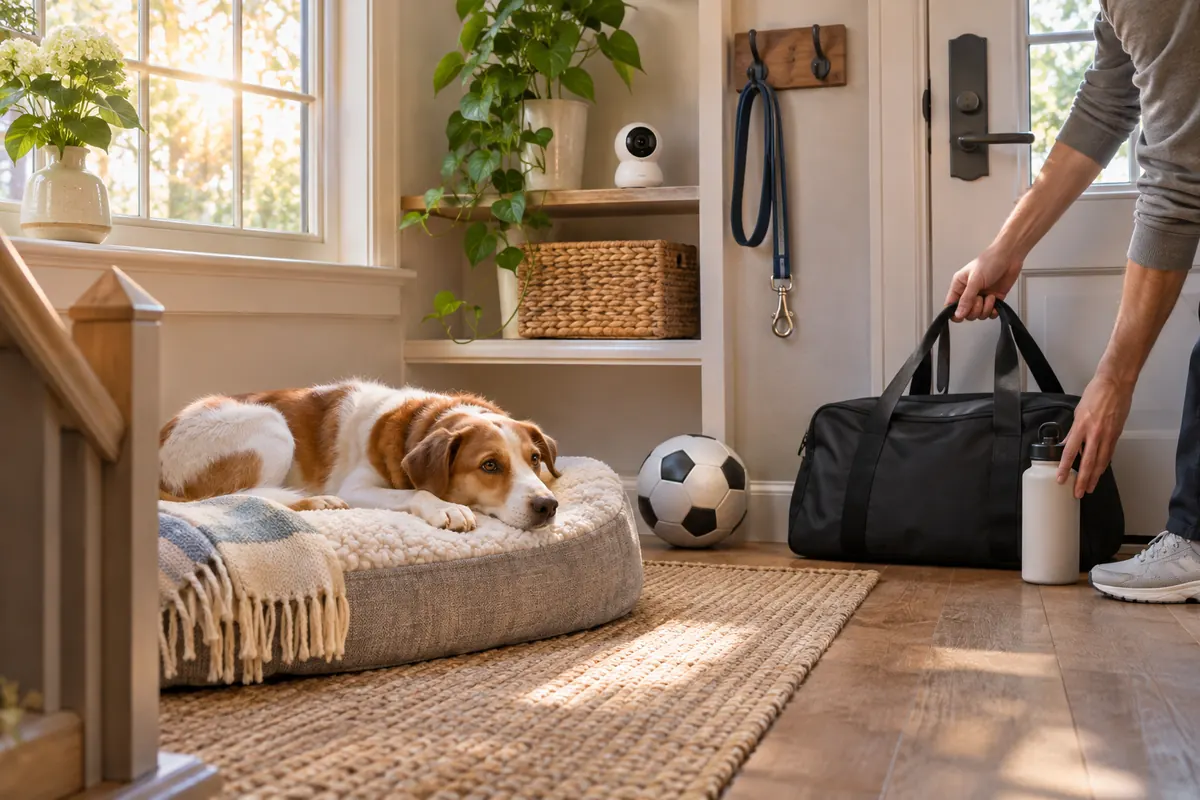
Your dog may associate sports bags with the household disappearing for a long time. Our departure cues guide explains how those signals build up. Packing early can reduce the morning rush, but the cues themselves may need gentle practice.
During an ordinary weekday, briefly move an empty bag, then continue normal home life. Start with a version your dog notices without becoming worried.
If a full packing session triggers pacing or whining, make it smaller. Do not keep repeating the cue until the dog stops reacting.
Keep practice separate from actual departure pressure. A qualified reward-based behavior professional can help if even small packing actions cause strong distress.
On real tournament nights, pack calmly and keep clutter out of your dog's resting area and walking routes.
Tournament weekend checklist
Youth Sports Tournament Weekends With a Dog Who Has Separation Anxiety: tournament weekend checklist
- Check the latest tournament schedule.
- Count driving in both directions.
- Allow for delays and extra rounds.
- Review current comfortable alone-time ability.
- Confirm the main caregiver.
- Confirm arrival and departure times.
- Confirm overnight company for travel weekends.
- Check daytime gaps in overnight bookings.
- Confirm the late-return backup.
- Test keys and building access.
- Agree who acts if you cannot answer.
- Leave veterinary and emergency contact details.
- Provide written food and walking instructions.
- Prepare food and fresh water.
- Set out familiar walking equipment.
- Provide a potty opportunity before departure.
- Arrange an unhurried walk or sniff activity.
- Allow calm settling time.
- Prepare the familiar resting space.
- Check any food toy for damage.
- Start the camera with the caregiver's knowledge.
- Keep camera cords inaccessible.
- Confirm parent-to-parent handovers if relevant.
- Pack bags before the morning rush.
- Keep the goodbye low-key.
- Review how the dog coped before the next weekend.
Keep the weekday training plan steady
Use manageable weekday sessions for alone-time practice, when you can watch and respond, following our separation anxiety training plan. Begin at a level your dog already handles calmly, which may be only seconds.
Build in tiny steps while the dog remains relaxed. If distress appears, return calmly and make the next attempt easier. There is no need to wait for silence before helping.
Keep tournament care in place regardless of a promising practice session. One comfortable absence does not show that your dog is ready for an unpredictable day away.
Busy weekdays may call for easier sessions or a pause while support continues. Your dog does not need to reach a particular duration by the next tournament.
Coming home calmly
Offer a gentle greeting, a potty opportunity and time together. Calm does not mean ignoring your dog; it means avoiding an overwhelming burst of excitement.
Ask the sitter or helper about eating, sleep, potty breaks and difficult moments. An enthusiastic welcome alone cannot tell you how the day went.
Restore familiar meals and rest after travel. If your dog seems unsettled, make the next practice absence easier and maintain care while you reassess.
Plan help for the return evening if everyone will be exhausted. Your dog's needs still matter after the final game and the drive home.
When to see the vet or a behavior professional
Contact your vet early if your dog refuses food, seems unwell or shows a sudden behavior change. Do not assume the tournament schedule explains every change.
Strong panic, injury, escape attempts or potty accidents only when alone need veterinary discussion. Share short clips and notes about who was present and when distress occurred.
A qualified reward-based behavior professional can help if your dog struggles despite company or gradual practice is not progressing. Our separation anxiety red flags guide explains which signs are urgent.
Never punish barking, howling, damage or accidents; they are signs of distress, not spite. Never shut a panicking dog in a crate or room and leave; change the care arrangement while you seek help.
Helpful products
Picks on this page are a research-based assessment of features and intended use — not hands-on testing. We earn a small commission if you buy through the Amazon links on this page, at no extra cost to you. Affiliate disclosure
These are optional helpers, chosen from research, not personal product testing, and not substitutes for care or gradual training. A food toy is enrichment, not a treatment for panic, and monitoring does not replace company.
| Product type | Why it helps | Notes |
|---|---|---|
| Pet camera: Furbo 360° camera | Lets you or the sitter observe settling during tournaments. | Our top pick. Limitation: it needs 2.4GHz Wi-Fi and power at home and only shows what happens; it cannot comfort your dog or replace a person. Alternative: a short text update from the sitter after each visit. |
| Rubber food toy: KONG Classic | Offers a familiar activity during the pre-departure settle. | Limitation: it is enrichment, not a treatment for panic, and many anxious dogs won't eat when alone; pick a size your dog can't swallow. Alternative: a sniffy walk or sniff games. |
Swipe the table sideways to see every column.
Introduce food toys under supervision and remove damaged ones. Eating does not prove your dog is comfortable alone. Camera footage needs a human response plan.
Bottom line
Build dog care into the season calendar, including travel, late finishes and overnight company. Trial familiar help and confirm a backup before each weekend.
Keep training on comfortable weekdays and review what your dog actually experiences. Progress should guide the next practice step, not the tournament timetable.