On this page
- Why crew schedules are hard on an anxious dog
- Plan care around each new schedule
- Who stays with your dog
- Reserve and standby days
- A backup for delays and unplanned overnights
- Commuting to your base
- The roller bag, uniform and other departure cues
- Trip week care planner
- Never alone for a whole trip
- Before your next trip checklist
- Keeping home days calm
- Alone-time practice on your days off
- Staying in touch with the sitter
- Coming home after a trip
- When to see the vet or a behavior professional
- Helpful products
- Bottom line
A two- to four-day trip involves more than finding someone to feed your dog. When your dog struggles with separation, the important questions are who provides company, what happens during daytime gaps and who takes over if you cannot get home.
We are dog owners who researched this topic, not vets, trainers or product testers, and the products mentioned here were chosen from research, not from personal product testing. This guide focuses on the crew schedule itself: changing monthly plans, reserve days, commuting, early departures and the first evening back.
Why crew schedules are hard on an anxious dog
Multi-day absences, early reports and red-eyes can interrupt familiar walks, meals and bedtime. A short-notice call-out may also mean your dog sees you rush through departure preparations.
The ASPCA's page on separation anxiety describes separation anxiety as distress when dogs are left alone or separated from the people they're attached to, and explains that treatment focuses on gradually teaching the dog to be comfortable alone.
A real trip is not gradual practice; our separation anxiety training plan covers that slower work. Your dog needs support for the time they cannot currently manage.
A new monthly schedule can change the pattern again before either of you feels settled.
Furbo 360° Dog Camera
A pet camera helps you and the sitter observe settling during trips, with a person available to respond.
Check price on AmazonWe earn a small commission if you buy through this link, at no extra cost to you. Disclosure
Plan care around each new schedule
When your new schedule arrives, build a matching dog-care calendar. Mark trips, reserve or standby periods, commuting days and expected returns.
For each absence, record the main caregiver, their actual hours and the backup. Include early-morning handovers and evenings after late arrivals.
Name uncovered periods plainly. “Overnight sitter booked” does not tell you who stays during the afternoon.
Keep the calendar easy to update and share changes promptly. Before accepting an additional personal commitment around a trip, check the complete care arrangement again.
Our business trip guide covers occasional work trips; crew planning needs extra room for changing schedules and uncertain returns. If you work long contracts in a new city instead, our travel nurse guide covers that setup.
Who stays with your dog
A familiar live-in sitter or trusted family member may preserve your dog's home routine. Confirm whether they have outside commitments and how those gaps will be covered.
A walker can provide walks and potty breaks alongside a helper who stays when needed. Walking visits alone cannot cover distress between visits.
A trusted neighbor may help if your dog settles with them and they have agreed to the required hours. Do not assume proximity means availability.
Boarding is another option after a successful trial stay. Trial familiar in-home care too, including an overnight, before relying on it for several days.
Our boarding guide and pet sitter prep guide cover those arrangements in more detail, and our care options guide compares them side by side.
Reserve and standby days
A standby helper needs to be confirmed before the reserve period begins. Discuss when they are available, how you will contact them and who responds if they cannot.
Match their arrival time to your dog's current comfort. If your dog cannot be alone at all, care needs to be present before you leave, not promised for later.
Have a familiar backup with tested access. Keep food, walking equipment and a short care note ready.
Do not depend on arranging everything after the call arrives. Reserve-day care may mean company already at home or a prearranged stay with someone your dog knows. Our on-call work guide covers a similar standby setup for people who come home every day.
A backup for delays and unplanned overnights
Plan for the possibility that your return changes. Ask the main sitter whether they can extend and identify someone who can take over if they cannot.
The backup needs access, your dog's routine, veterinary contacts and familiarity with the dog. Arrange a meeting before they become the only available option.
Agree who activates the backup if you are unreachable. If your dog cannot tolerate a gap, the handover must happen while someone remains present.
A delayed or canceled flight should trigger the care plan, rather than a search for last-minute visits after coverage has ended.
Commuting to your base
Count the trip from your front door, not from your report time. Our guide to how long a dog can be left alone explains why the whole absence counts. An air commute may add an earlier departure or another night away from your dog.
Likewise, finishing the work trip does not mean you are home. Include the trip back and realistic uncertainty around connections.
Give the caregiver an expected return range and keep coverage in place until you actually arrive.
If your commute changes, update dog care immediately. A small change on your travel calendar can create a substantial gap at home.
The roller bag, uniform and other departure cues
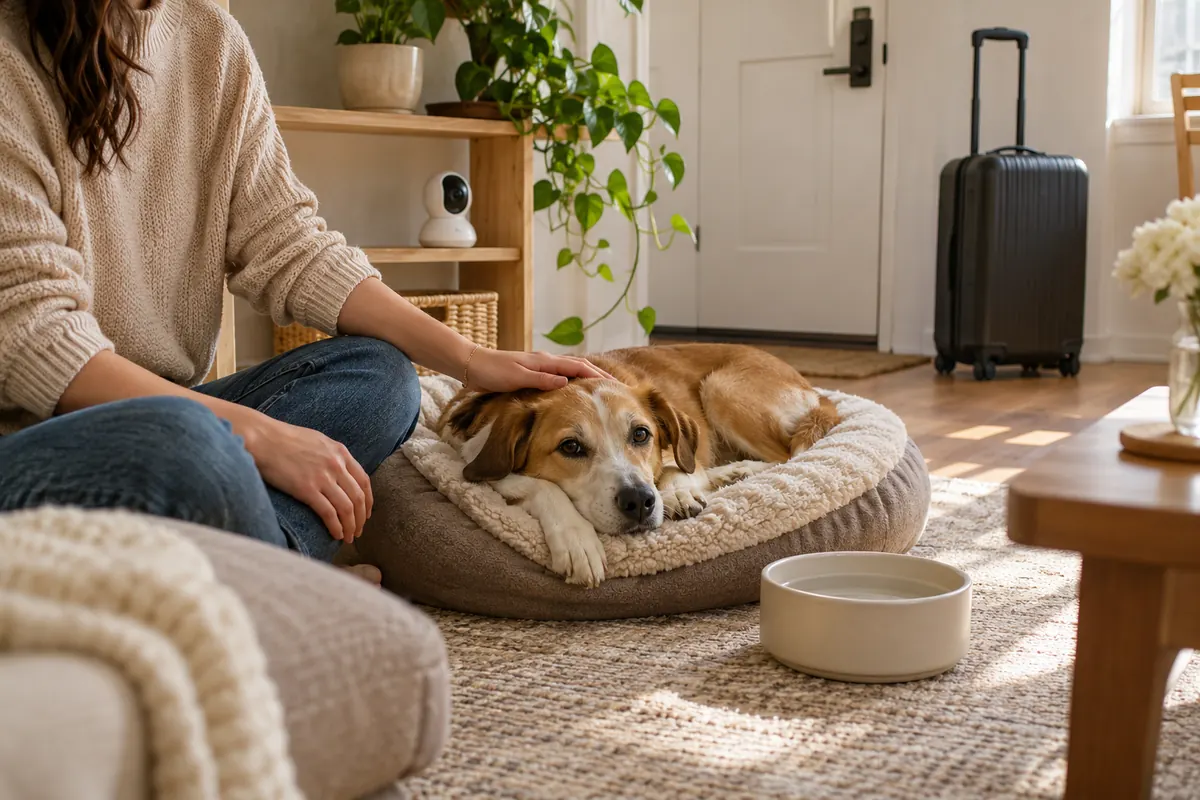
Your dog may react when the roller bag appears, you put on your uniform or you begin moving equipment toward the door.
On ordinary home days, handle one mild cue without departing. Move the bag briefly, then sit down; prepare an item, then continue your usual routine.
Keep this comfortable. If your dog becomes worried, simplify the activity rather than repeatedly rehearsing the full departure. Our departure cues guide covers the fuller process.
Pack calmly before travel day and let the sitter arrive before final preparations where possible. These small practices support the routine, but do not establish readiness for a multi-day absence.
Trip week care planner
These checkpoints organize coverage; they are not deadlines for increasing alone time.
| When | What to do | Why it helps |
|---|---|---|
| When the new schedule arrives | Map trips, reserve periods and commuting days. | Shows the complete care requirement. |
| Before confirming bookings | Check daytime and overnight coverage separately. | Reveals gaps in an overnight arrangement. |
| Before the first trip with a new sitter | Trial a short stay and an overnight. | Checks settling after you leave. |
| Before reserve begins | Confirm the standby helper and backup. | Avoids starting the search during a call-out. |
| Several days before departure | Reconfirm hours, access and extension options. | Reduces assumptions about coverage. |
| The evening before | Pack calmly and update written instructions. | Makes an early handover simpler. |
| Before leaving home | Allow a potty opportunity and calm caregiver handover. | Meets immediate needs without rushing. |
| During the trip | Use agreed updates and maintain local response cover. | Keeps care working when you cannot answer. |
| If travel plans change | Extend care or activate the backup promptly. | Prevents an unsupported gap. |
| Before the sitter leaves | Confirm that you are actually home. | Covers uncertainty in the final leg home. |
| The first evening back | Restore quiet company and familiar routines. | Allows time to settle. |
| The next day | Review notes and choose rest or easy practice. | Avoids pushing after a difficult trip. |
Swipe the table sideways to see every column.
Never alone for a whole trip
Never leave your dog alone for a multi-day trip with food, water and occasional visits. Those visits cannot provide company throughout the unsupported hours.
Never leave your dog crated alone all day, tied outside or alone in a yard; none of these is a care arrangement.
A camera does not change that. It only shows events and cannot provide comfort, walks or emergency help.
Arrange suitable daytime and overnight support, matched to your dog's needs.
Before your next trip checklist
Airline Crew Schedules: Flight Attendants and Pilots With a Dog Who Has Separation Anxiety: before your next trip checklist
- Count the complete door-to-door absence.
- Include commuting to and from your base.
- Include any additional night away.
- Review current comfortable alone-time ability.
- Confirm the familiar main caregiver.
- Complete a short trial.
- Complete a trial overnight.
- Check daytime gaps in overnight care.
- Cover gaps around walking visits.
- Confirm early-report or late-departure handovers.
- Name a reserve-day standby helper.
- Name a backup caregiver.
- Agree how extensions will be activated.
- Test keys and home access.
- Leave written feeding instructions.
- Leave walking and potty details.
- Describe distress signs and settling preferences.
- Provide regular veterinary contact details.
- Provide emergency veterinary contact details.
- Prepare familiar bedding and equipment.
- Agree who acts if you cannot answer.
- Set manageable update times.
- Test the camera with the sitter's knowledge.
- Keep camera cords inaccessible.
- Plan a quiet return.
Keeping home days calm
Use familiar daily anchors: meals, comfortable walks, rest and quiet company. They can remain broadly consistent even when your own sleep and travel patterns vary. Our shift work guide has more on anchors that stay the same when your hours change.
Avoid trying to compensate for every trip with an exhausting outing. Your dog may need ordinary time with you more than a packed home-day schedule.
Keep trusted sitters and helpers involved between trips when practical. A relaxed visit or walk can maintain familiarity without making every appearance predict your departure.
If you need help while resting after travel, arrange it rather than letting your dog's routine disappear.
Alone-time practice on your days off
Practice only on days off when you can observe and return promptly. Keep real trips covered separately.
Start below the point where your dog becomes distressed, even if that means seconds. Record sessions and increase gradually only while your dog remains comfortable.
If pacing, vocalizing, panting or exit scratching appears, return calmly and make the next session easier. Do not wait for silence before helping.
Skip an ambitious session when either of you is tired or unsettled. Days off are not a deadline for making up training progress.
Staying in touch with the sitter
Agree on brief updates about rest, eating, walks and potty breaks. Ask for prompt contact about illness or strong distress.
Avoid relying on constant live camera checks. You may be unavailable, and the sitter needs clear instructions they can use independently.
Name the local person who can help if the sitter needs support. Explain when to contact the vet without waiting for your reply.
A short written routine and an agreed update pattern usually create less confusion than repeated instructions from the road.
Coming home after a trip
Greet your dog gently and offer a potty opportunity. Calm can include ordinary affection; you do not need to ignore them.
Ask how the trip went before assuming an excited welcome means everything was comfortable. Review any difficult moments and useful recordings.
Your dog may follow you closely or struggle to settle during the first evening. Restore familiar quiet time and keep the next practice absence easy.
If that pattern persists, adjust care and seek help rather than expecting each trip to resolve it.
When to see the vet or a behavior professional
Contact your dog's vet early if they refuse food, seem unwell or show marked changes in sleep, energy or behavior. Strong distress, injury or escape attempts need prompt attention.
Share the sitter's notes and recordings, including whether distress continued with another person present.
A qualified reward-based behavior professional can help when comfortable absences remain short or progress stalls. If you are wondering about medication for long trips, ask your vet; never give your dog any medication without their advice. Our separation anxiety red flags guide explains which signs are urgent.
Never punish barking, howling, damage or accidents; they are signs of distress, not spite. Never shut a panicking dog in a crate or room and leave. Maintain suitable care while seeking help.
Helpful products
Picks on this page are a research-based assessment of features and intended use — not hands-on testing. We earn a small commission if you buy through the Amazon links on this page, at no extra cost to you. Affiliate disclosure
These are optional helpers, chosen from research, not personal product testing, and not substitutes for care or gradual training. They support observation and enrichment; neither treats separation panic.
| Product type | Why it helps | Notes |
|---|---|---|
| Pet camera: Furbo 360° camera | Lets you and the sitter observe settling during trips. | Our top pick. Limitation: it needs 2.4GHz Wi-Fi and power at home and only shows what happens; it cannot comfort your dog or replace a person, and you may be working or asleep when an alert comes in. Alternative: ask the sitter for a short text or photo update at agreed times. |
| Snuffle mat: AWOOF snuffle mat | Offers a supervised sniffing activity with the sitter. | Limitation: it is enrichment, not a treatment for panic, many stressed dogs will not eat or sniff, and some dogs chew or tear the fabric, so use it only while someone supervises. Alternative: a short sniffy walk. |
Swipe the table sideways to see every column.
Remove the mat if your dog chews or damages it. Eating alone does not prove comfort with separation.
Bottom line
Build dog care around each complete schedule, including reserve days, commuting and possible extensions. Trial familiar care and prepare a local backup.
Keep home days predictable and training separate from real trips, with a gentle return after each absence.