On this page
- Why deployment and PCS moves are hard for anxious dogs
- Before deployment or TDY
- The at-home parent's routine
- Handing your dog to a family caregiver
- Deployment and PCS timeline
- Homecoming
- PCS moves with an anxious dog
- Base housing and overseas moves
- Caregiver handover sheet
- When to see the vet or a behavior professional
- Helpful products
- Bottom line
Deployment, temporary duty and moving orders can change a dog's household quickly. The person who usually handles breakfast or bedtime leaves, familiar routines shift, and the parent at home may be managing children, work and the dog with much less help.
We are dog owners, not vets, trainers or military advisors, and the products mentioned here were chosen from research, not from personal product testing. This guide offers practical ways to share care, prepare for departures and protect comfortable alone time through military family changes.
Why deployment and PCS moves are hard for anxious dogs
A dog may struggle with the absence of one particular person, being physically alone, or both; our separation anxiety vs isolation distress guide explains the difference. A trusted adult remaining home helps some dogs, but others still become distressed when their favorite person leaves.
The ASPCA's separation anxiety page describes it as being triggered when dogs become upset by separation from the people they're attached to. It explains that treatment aims to teach a dog to enjoy, or at least tolerate, being left alone, starting with short separations that don't cause anxiety.
Military life can combine several difficult changes: a bonded person leaves, the remaining caregiver's schedule becomes busier, and a move removes familiar surroundings. Long field training can create similar disruptions even without a change of address.
Not every quiet or clingy dog has separation anxiety. Record a manageable departure to see whether your dog rests or shows repeated pacing, howling, panting, drooling, exit scratching or an inability to settle.
Furbo 360° Dog Camera
A pet camera lets family members see how the dog settles when connectivity allows, without guessing from a greeting or update.
Check price on AmazonWe earn a small commission if you buy through this link, at no extra cost to you. Disclosure
Before deployment or TDY
When notice allows, begin weeks ahead. Let the person staying home gradually take over enjoyable daily activities: meals, sniffy walks, play and the bedtime routine. The departing person can stay warm and affectionate throughout.
Start with shared activities, then let the remaining caregiver handle them independently. If your dog is comfortable, practice brief departures by the service member while that caregiver stays home.
Separately, practice tiny absences with nobody home, beginning below the point where your dog worries. These are different situations, and success in one does not prove comfort in the other.
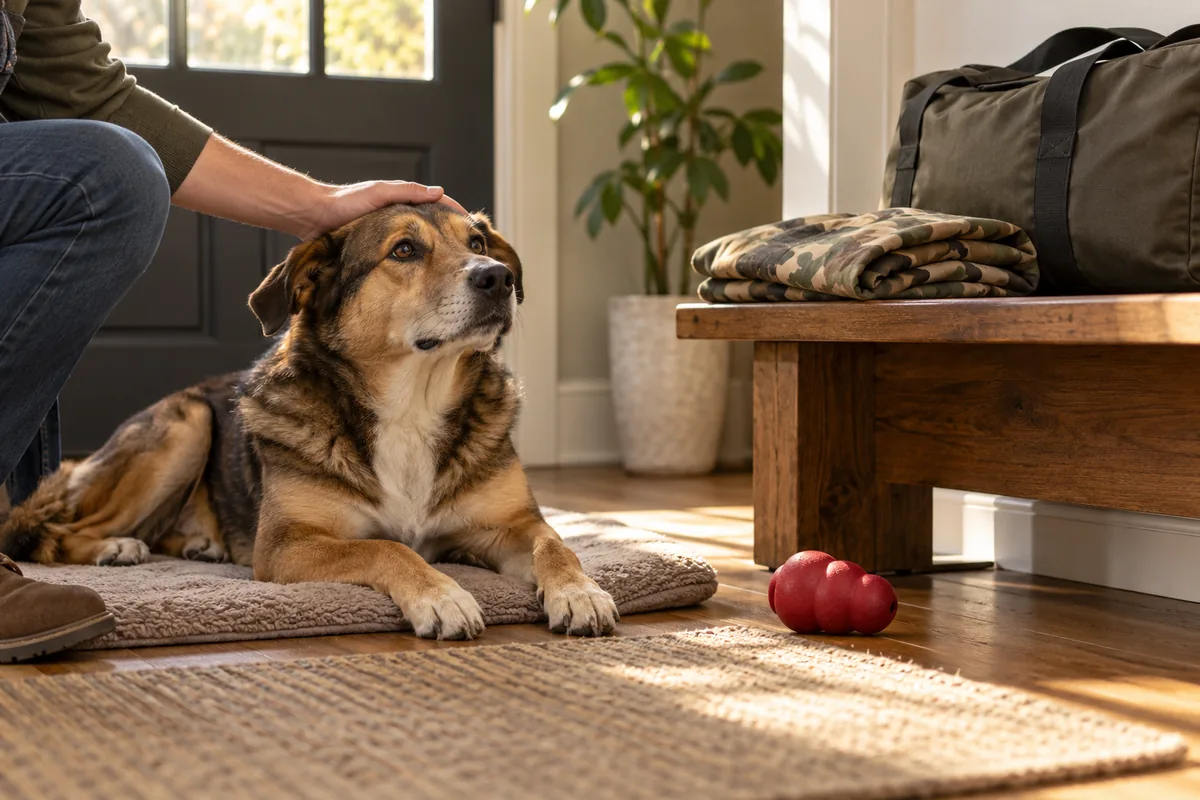
Keep goodbyes calm and familiar. Packing or handling a duffel during ordinary moments can help you notice whether those actions already trigger worry.
Keep a familiar scent item, such as a worn shirt, if your dog will not shred or swallow it. It may offer comfort, but it cannot replace company or gradual practice. With short notice, prioritize care cover over trying to rush training.
For a dog strongly attached to the departing person, our dog attached to one person guide offers more detail on sharing care.
The at-home parent's routine
Build a routine that works on a difficult weekday, not only on an ideal one. Keep a recognizable order for meals, toilet breaks, activity and rest, even when exact times vary.
A simple morning might include a toilet trip, a sniffy walk, breakfast and settling before school or work preparations. Leave room for shorter activities on demanding days.
Ask for specific help: a friend covering an appointment, a sitter staying during errands or a walker handling an afternoon outing. A walker meets activity and toilet needs, but a brief visit does not cover a dog who panics throughout the surrounding absence. Our daycare vs dog walker guide and care options guide compare the choices.
Book regular support where possible and identify a backup for illness, late work or childcare changes. The remaining parent should not have to carry every task alone.
Keep notes short: what happened during an absence, what helped and what needs changing. Share useful updates with the traveling family member when possible without making constant monitoring another obligation.
Handing your dog to a family caregiver
A loving relative still needs preparation. Check that their household, other pets, visitors and work schedule suit your dog.
Arrange a short visit together, followed by time with the caregiver while you step away. If that goes comfortably, try a short stay before relying on an extended arrangement. Do not turn the trial into a test of how much distress your dog will endure.
Send familiar bedding, usual food and safe toys. Explain the dog's current comfortable alone-time duration and how you observed it. If the caregiver leaves for work, agree who covers that absence.
Provide a written handover sheet, veterinary contacts and any authorization the clinic requires. Agree when the caregiver should call you, contact the vet or change the arrangement. A family connection does not automatically make a placement suitable, and reconsidering a struggling arrangement is reasonable. Our pet sitter prep guide has a fuller care sheet and introduction plan.
Deployment and PCS timeline
Use this as a planning guide, not a deadline your dog must meet. Short-notice changes may mean starting with support rather than preparation.
| When | What to do for your dog | Why |
|---|---|---|
| About three months before, if notice allows | Review separation concerns with the vet and identify caregivers. | Creates time to address health and arrange support. |
| About two months before | Start sharing meals, walks, play and bedtime care. | Makes the remaining caregiver's involvement familiar. |
| Several weeks before | Record comfortable short absences and begin caregiver visits. | Establishes a realistic starting point. |
| Before a caregiver stay | Complete a trial visit or short stay and written handover. | Reveals practical gaps before a longer separation. |
| Before PCS travel | Gather records and confirm transport, lodging and destination requirements. | Reduces avoidable last-minute changes. |
| Departure period | Keep routines familiar and cover necessary absences. | Avoids adding unsupported alone time to the transition. |
| First days after departure or arrival | Prioritize company, rest and predictable daily care. | Gives the dog a manageable starting routine. |
| Before homecoming | Agree which care routines will continue. | Prevents another abrupt household change. |
| First weeks after homecoming or arrival | Review footage and rebuild practice according to comfort. | Matches the plan to the dog's current needs. |
Swipe the table sideways to see every column.
Homecoming
Choose a secure setting for the reunion. Let your dog approach at their own pace, and keep doors managed while bags and people come inside.
A warm hello is fine. Avoid crowding, forced hugs or a greeting that keeps escalating when the dog is already overwhelmed. Allow sniffing, pauses and space.
Do not immediately abandon the routines that helped during the absence. The returning person can gradually rejoin walks, meals and play while the remaining caregiver keeps a familiar role.
Leave and reintegration schedules may change again. Continue comfortable short departures rather than spending every moment together and then returning abruptly to long absences. Watch how your dog responds when the service member next leaves the house.
PCS moves with an anxious dog
Plan the dog's needs alongside travel and lodging, rather than after everything else is booked. Gather veterinary records, discuss travel concerns and confirm arrangements for every stop.
Driving to a new duty station? See our drive-day plan for a cross-country move for the days on the road, overnight stops and why your dog should never be left alone in the car.
Temporary lodging deserves its own care plan. Check whether dogs may be left unattended at all. A dog who manages an absence at home may struggle in an unfamiliar room, especially with corridor noise and changing activity. Our guide to traveling with a dog who has separation anxiety covers hotels and rentals.
Plan meals, errands and appointments so someone can remain with the dog when needed. Do not assume a food toy makes an unfamiliar-room absence manageable.
On arrival, introduce a familiar bed, water and a quiet resting area. Allow supervised sniffing and calm time together before expecting independence. Keep exits secure during unloading and prevent access to packing materials.
Start alone-time practice at an easy level in the new home. That may mean seconds rather than the duration your dog handled before. Record practice and return before worry develops; if distress appears, make the next attempt easier.
Our dog anxiety after moving guide covers settling into unfamiliar surroundings in more detail.
Base housing and overseas moves
Pet rules in base and privatized housing vary, so check your installation's pet policy early with the housing office. For an overseas move, ask your vet and check the destination country's official pet import rules, because requirements differ from country to country.
Ask about housing restrictions, required records, identification requirements and any travel-related steps that apply to your dog. Confirm transport arrangements directly with the provider rather than assuming a previous move's process still applies.
Keep copies of important records accessible during travel. Confirm pet arrangements for temporary lodging and any backup accommodation.
This is planning guidance, not advice on military regulations. Recheck requirements when dates, routes or destinations change, and allow for the possibility that your dog's travel and the household's travel need different arrangements.
Caregiver handover sheet
Military Families: Deployment, TDY and PCS Moves With a Dog Who Has Separation Anxiety: caregiver handover sheet
- Dog's usual food, portion instructions and meal routine.
- Food sensitivities and foods to avoid.
- Normal water access and drinking habits.
- Toilet routine and signs the dog needs to go out.
- Walk preferences and suitable activity.
- Collar, harness and leash fitting instructions.
- Regular veterinary contact and relevant records.
- Emergency veterinary contact and transport plan.
- Required veterinary authorization arrangements.
- Primary family contact and backup contact.
- Current comfortable alone-time duration and setting.
- Signs that the dog is becoming distressed.
- What helps the dog settle.
- Situations, handling or barriers the dog finds difficult.
- Safe bedding, toys and enrichment instructions.
- Care cover for the caregiver's own absences.
- Camera arrangements and everyone's consent.
- Instructions for keeping a simple behavior log.
- Plan for food refusal, illness, panic or escape attempts.
- Agreed update schedule and placement review.
When to see the vet or a behavior professional
See the vet for strong distress, sudden behavior changes or signs your dog is uncomfortable or unwell. Contact them early if your dog refuses food; do not assume missing a person explains every change.
Escape attempts, damaged teeth or nails, and self-injury need prompt veterinary attention. Breathing difficulty, collapse or serious injury require emergency care. Our separation anxiety red flags guide explains which signs are urgent.
A qualified reward-based behavior professional can help when your dog panics quickly, cannot settle with the remaining caregiver or is not improving. Share footage, the household schedule and upcoming transitions so the plan is practical. Our guide to finding separation anxiety help in the US explains the options.
Never shut a panicking dog in a crate or room and leave. Arrange company and ask for help adapting the setup. Do not punish barking, damage or accidents after returning; respond by checking health, safety and the difficulty of the absence.
Helpful products
Picks on this page are a research-based assessment of features and intended use — not hands-on testing. We earn a small commission if you buy through the Amazon links on this page, at no extra cost to you. Affiliate disclosure
| Product type | Why it helps | Notes |
|---|---|---|
| Pet camera: Furbo 360° camera | Shows how the dog settles and allows family check-ins when possible. | Our top pick. Limitation: it needs 2.4GHz Wi-Fi and only shows what happens; it cannot comfort your dog, and connectivity during deployment may be limited. Alternative: photos and videos sent by the caregiver at home. |
| Rubber food toy: KONG Classic | Provides familiar enrichment during calm periods and comfortable practice. | Limitation: it is enrichment, not a treatment for panic, and many anxious dogs won't eat when alone; a determined chewer can damage it. Alternative: a sniff game before leaving. |
Swipe the table sideways to see every column.
Test toys under supervision and check for damage. Enrichment is not treatment for panic, and eating does not prove your dog remains comfortable afterward.
Agree who responds if the camera shows distress. Remote viewing cannot replace a caregiver who can reach the dog, and camera audio may upset some dogs rather than reassure them.
Bottom line
Share care before departure when possible, support the person at home and give every caregiver clear instructions. After homecoming or a PCS move, keep useful routines and rebuild alone time from what your dog comfortably manages now.