On this page
- Why apartment life can make separation anxiety harder
- Setting up a calm alone-time space in a small home
- Apartment alone-time set-up
- Hallway, elevator and stairwell departures
- Apartment departure practice ladder
- Noise and thin walls
- Being a good neighbor while you train
- Care cover when you can't avoid absences
- Apartment separation anxiety checklist
- Working or getting worse?
- Mistakes to avoid
- When to get extra help
- Helpful products
- Bottom line
Leaving an anxious dog in an apartment can bring two worries at once: concern for your dog and concern that barking or howling is carrying through the walls. Both deserve attention, and you can work on them without punishing your dog.
We are dog owners, not vets or trainers. This guide focuses on the practical details of apartment life: creating a comfortable space, practicing departures around hallways and elevators, arranging care and keeping neighbors informed.
Why apartment life can make separation anxiety harder
Apartment dogs often hear footsteps, closing doors, deliveries, elevators and other dogs through shared walls or the front door. Some alert at those sounds; others become worried when their person prepares to leave.
The two problems can overlap. Your dog might start pacing when you pick up your keys, then bark again when someone passes in the hallway. A recording helps you notice whether the reaction follows your departure, a building sound or both.
A dog who howls or barks because they are distressed is not being spiteful. If neighbors can hear it, treat that as a reason to make practice easier and arrange company. Never punish your dog for it.
For building noises specifically, our apartment hallway noise guide covers reducing triggers and teaching a calmer response.
Furbo 360° Dog Camera
A pet camera shows when your dog becomes worried and whether hallway sounds or your departure seem to trigger reactions.
Check price on AmazonWe earn a small commission if you buy through this link, at no extra cost to you. Disclosure
Setting up a calm alone-time space in a small home
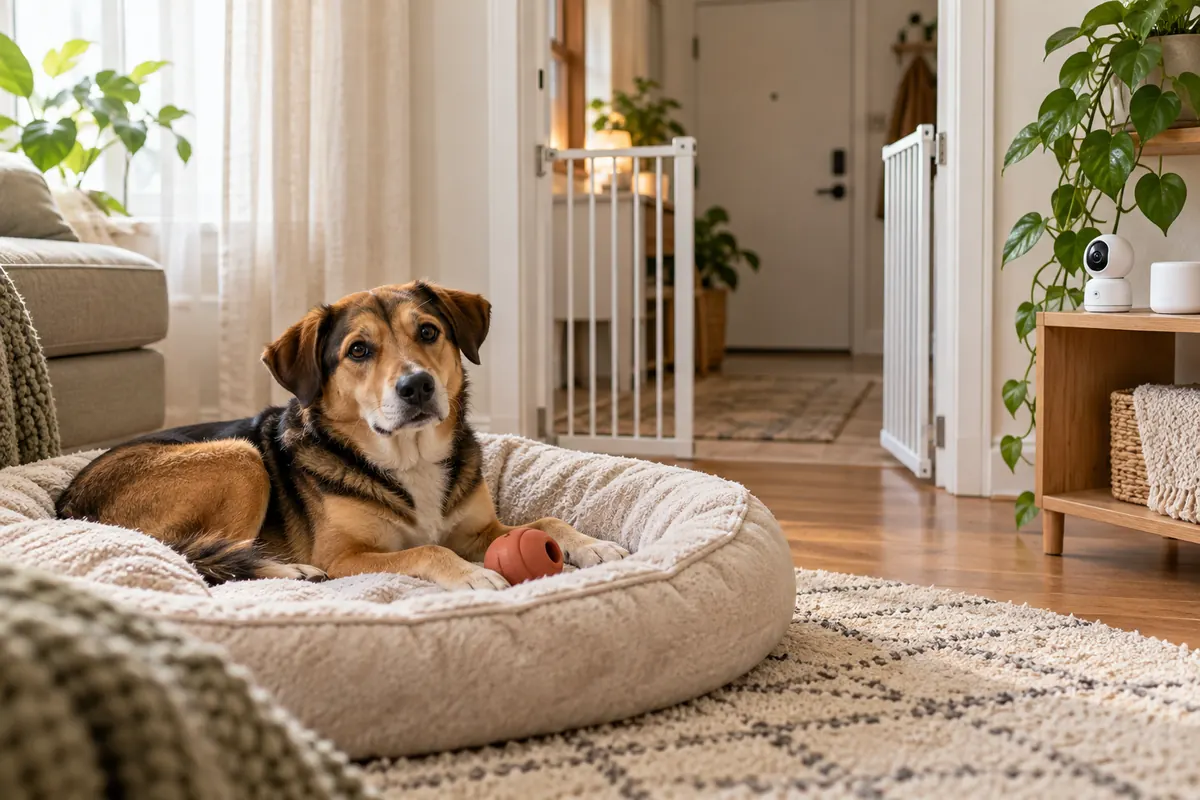
Your apartment does not need an extra bedroom to give your dog a comfortable resting place. Start with a spot they already choose, ideally away from the front door and shared walls where possible.
Provide a comfortable bed, fresh water and a clear route through the area. Remove cords, food, cleaning products and other hazards. A rug or curtains may soften some sounds and make the space feel comfortable, though they will not block every noise.
A gate across a kitchen or bedroom doorway may help manage access if your dog already relaxes behind it. Some dogs become more distressed when confined, so introduce any boundary while you are home and watch their response. Never shut a panicking dog in a crate, pen or room and leave.
A familiar rubber food toy may give a comfortable dog something enjoyable to do. Supervise new toys first; if your dog ignores food when you leave, that is useful information rather than a failure.
Apartment alone-time set-up
| Area or item | What to do | Why it helps |
|---|---|---|
| Resting spot | Place a familiar bed away from the front door where practical | Gives the dog a predictable place to rest |
| Shared wall | Choose a quieter location away from the wall if space allows | May reduce exposure to nearby activity |
| Water | Keep a stable bowl accessible | Meets a basic need throughout the absence |
| Gate or doorway | Introduce a gate gradually while you are home | Can limit access if the dog is comfortable with it |
| Rug and curtains | Use familiar furnishings without blocking ventilation | May soften some sounds and reduce visual activity |
| Food toy | Offer a suitable toy your dog has used safely | Provides a pleasant activity for a relaxed dog |
| Camera | Position it to show the bed and front door | Helps you observe what happens after departure |
| Hazards | Put cords, unsafe food and cleaning products away | Reduces risks in a small, accessible space |
Swipe the table sideways to see every column.
Our dog gate vs exercise pen guide helps you compare arrangements. A small space is not automatically a problem; the key is whether your dog is safe and comfortable in it.
Hallway, elevator and stairwell departures
Apartment departures have several stages: opening the apartment door, stepping into the hallway, passing neighbors and reaching the stairs or elevator. Any of these may be more difficult than simply moving to another room.
Start where your dog remains relaxed. That may mean touching your keys and sitting back down, or opening the door without stepping outside. For a dog who worries quickly, a few seconds may be enough. Our departure cues guide shows how to make keys, shoes and coats less worrying first.
Watch live video and stay close enough to return promptly. Return before distress begins. If your dog whines, paces, pants or scratches, return calmly and make the next attempt easier.
Keep building access safe and considerate. Do not block shared corridors, prop open secure doors or use an elevator as a training destination until your dog can comfortably handle the time required. An elevator may take longer than expected, so walking to it and back can be a later step.
Apartment departure practice ladder
This is an example, not a timetable. Repeat easy steps and move forward only when your dog stays comfortable.
| Step | What you do | Move on when |
|---|---|---|
| 1. Handle a cue | Pick up keys or put on shoes, then remain home | Your dog remains relaxed during the cue |
| 2. Approach the door | Walk to the front door and return to your seat | Your dog can rest or settle again comfortably |
| 3. Move the door | Open and close it without leaving | The door movement does not cause worry |
| 4. Step into the hallway | Step outside briefly, then return | Video shows relaxed behavior during repeated easy attempts |
| 5. Pause nearby | Stay just outside for a few comfortable seconds | Your dog remains calm at that duration |
| 6. Walk a short distance | Take a few steps down the hallway and return | Your dog stays relaxed while you are away |
| 7. Approach the stairs or elevator | Walk toward the stairwell or elevator and return | The full gap remains within your dog's comfort |
| 8. Build a real absence | Gradually extend the route only when ready | Video shows reliable comfort at the current step |
Swipe the table sideways to see every column.
The ASPCA's separation anxiety advice describes treatment as helping a dog tolerate being alone by gradually getting used to short absences. While you work on it, the ASPCA suggests avoiding leaving the dog alone except during training, for example by having a family member, friend or sitter stay with them, or using doggy daycare. Our separation anxiety training plan explains the wider process.
Noise and thin walls
A white noise machine, fan or low-volume calm music may mask some footsteps and door sounds. Test the sound while you are home first: some dogs ignore it, and others may find a particular sound uncomfortable.
Use it during ordinary relaxed time as well as departures. If it only comes on when you leave, the sound itself may become part of the departure routine.
Sound masking does not treat separation anxiety or teach a dog to feel comfortable alone. Loud bangs may still be audible, and increasing the volume can bother your dog or neighbors. Our calming music guide explains how to compare sound and silence using video.
If hallway sounds consistently trigger alert barking even when you are home, work on those sounds separately while keeping alone-time practice easy.
Being a good neighbor while you train
A brief, friendly conversation can reduce uncertainty. You do not need to disclose your dog's full history; let neighbors know you are aware, working on a plan and available if they notice a problem.
Consider asking when they hear noise. Their observations can help you compare the timing with your camera recording. Keep practice short enough that you can return before your dog becomes distressed, and arrange care for unavoidable longer absences.
Here is a note you can adapt:
Example note to neighbors
Hi! I'm working on helping my dog feel more comfortable when I leave. If you notice barking or howling, please let me know when you hear it so I can adjust our plan. You can reach me at the contact details I've provided. Thank you for your patience.
Check your lease and building rules. If someone has already raised a concern, our neighbor or landlord barking complaint guide covers a response plan.
Care cover when you can't avoid absences
Training does not always fit neatly around work, appointments or building schedules. Arrange company for periods longer than your dog can comfortably manage: another household member, a trusted friend, a sitter or a daycare your dog enjoys.
A dog walker can provide a toilet break and activity for some dogs. If your dog panics within minutes, a midday visit alone leaves long unsupported gaps before and after it. A person staying with the dog may be needed.
Check that a sitter knows the building entry procedure, your dog's routine and whom to contact if the dog becomes distressed. Trial the arrangement before relying on it, and make a backup plan for delays.
Our care options guide compares different arrangements. The goal is to protect your dog's comfort while gradual training continues.
Apartment separation anxiety checklist
Dog Separation Anxiety in Apartments: Neighbors, Thin Walls and Small Spaces: apartment separation anxiety checklist
- Provide a toilet break before departure.
- Meet your dog's walking and sniffing needs.
- Keep fresh water accessible.
- Prepare a familiar, comfortable resting spot.
- Remove cords, unsafe food and chewable hazards.
- Check any gate or barrier is safe and familiar.
- Keep the resting spot away from the front door when practical.
- Test sound masking at a comfortable volume while home.
- Position the camera to show the dog and exit.
- Start recording before departure preparations.
- Keep practice within your dog's current comfort.
- Arrange company for longer unavoidable absences.
- Share a way for neighbors to contact you.
- Check your lease and building rules.
- Record what happened and adjust the next attempt.
Working or getting worse?
Compare similar short absences and look at your dog's whole body, not just the amount of noise.
| What you see | Likely working | Likely getting worse |
|---|---|---|
| Resting | Loose posture and comfortable settling | Rigid stillness, trembling or hiding |
| Vocalizing | Briefly notices a sound, then relaxes | Barking or howling continues or escalates |
| Front-door behavior | Can move away from the exit | Scratches, chews or tries to escape |
| Movement | Changes position, then rests | Repeated pacing begins earlier or lasts longer |
| Breathing | Returns to normal after activity | Persistent panting with other signs of worry |
| Food toy | Eats comfortably and rests afterward | Abandons familiar food when you leave |
| Building noises | Notices a sound and settles again | Repeatedly startles and cannot recover |
| Practice duration | Remains relaxed during repeated easy gaps | Shows worry during gaps previously handled |
Swipe the table sideways to see every column.
One quiet session does not mean your dog is ready for a long absence. Note the first sign of worry, what happened beforehand and whether your dog could settle again.
Mistakes to avoid
Do not practice until your dog is barking continuously in the hope they will get used to it. Return calmly when worry appears, then make the next step easier.
Avoid rushing from a few seconds outside the door to a full elevator ride. Building delays and unexpected hallway activity can make the gap longer than planned.
Never punish vocalizing, accidents or damage, or use bark, shock, spray or citronella collars. Do not shut a panicking dog in a crate, pen or room and leave.
Do not rely on music, white noise, a food toy or a camera as treatment. These may support a comfortable setup, but gradual training and appropriate care are still needed. Our how to stuff a KONG guide offers food toy ideas.
When to get extra help
Dogs Trust's separation anxiety advice explains that changes in behavior are often influenced by physical health, so see your vet if your dog's behavior has recently changed.
Contact your vet promptly for injuries, escape attempts, persistent food refusal or other signs of illness. Share recordings if available, but do not repeat an unsafe situation to capture more footage.
A qualified, reward-based behavior professional can help if your dog panics quickly, cannot manage the first practice steps or is becoming more distressed. They can also help distinguish separation-related worry from reactions to building sounds.
Helpful products
Picks on this page are a research-based assessment of features and intended use — not hands-on testing. We earn a small commission if you buy through the Amazon links on this page, at no extra cost to you. Affiliate disclosure
These picks are chosen from research, not from personal product testing, and none of them replaces company or a gradual training plan.
| Product type | Why it helps | Notes |
|---|---|---|
| Pet camera: Furbo 360° camera | Shows when worry begins and what happens after departure | Our top pick. Limitation: it needs Wi-Fi and only shows what happens; it cannot comfort your dog. Alternative: an old phone or laptop on a video call. |
| White noise machine: Yogasleep Dohm | May soften some hallway and neighbor sounds | Limitation: it masks only some sounds and does not treat anxiety; some dogs do not notice it. Alternative: a fan or calm music at low volume. |
| Rubber food toy: KONG Classic | Offers a familiar activity for a comfortable dog | Limitation: a determined chewer can damage it and it only lasts a while, so supervise first. Alternative: a scatter of food or a frozen lick mat. |
Swipe the table sideways to see every column.
Our best pet camera guide explains recording options. Supervise a lick mat initially as some dogs chew it.
Bottom line
An apartment can be a comfortable home for a dog who struggles with separation. Build a safe resting area, use video to guide tiny departures, arrange company for longer gaps and keep communication with neighbors kind and practical.