On this page
- Why city apartments can make separation anxiety harder
- Elevators, hallways and the lobby
- Commutes and delays
- City building plan
- Midday walkers, daycare and sitters
- Building access for your dog walker
- Building noise
- Neighbors, management and your lease
- Small spaces and a calm resting spot
- An emergency plan
- City apartment checklist
- When to get extra help
- Helpful products
- Bottom line
In a city apartment, leaving home involves more than closing the door. There may be an elevator wait, a busy lobby, a front-desk exchange and a commute that can change without warning.
We are dog owners, not vets or trainers, and the products mentioned here were chosen from research, not from personal product testing. This guide focuses on those city-building details: making departures manageable, coordinating walkers and sitters, and ensuring someone can reach your dog if you are delayed.
Why city apartments can make separation anxiety harder
A dog may hear the elevator, hallway doors, delivery carts or a familiar exchange with the doorman before you leave. Those sounds can become part of the departure routine.
Outside, sirens, trucks and construction may interrupt rest. Indoors, a small floor plan can make it difficult to find a quiet spot away from the front door or street-facing windows.
Long commutes add another challenge. Whether you live in New York, Chicago, Los Angeles, Boston, San Francisco or another busy city, the important gap is the whole period between reliable company leaving and returning.
Apartment living does not automatically cause separation anxiety. Record short absences to understand whether your dog reacts to separation, environmental noise or both. Our general apartment guide covers thin walls and everyday setup in more detail.
Furbo 360° Dog Camera
A pet camera shows when worry starts during building departures and helps you check how your dog copes between care visits.
Check price on AmazonWe earn a small commission if you buy through this link, at no extra cost to you. Disclosure
Elevators, hallways and the lobby
Start practice where your dog remains relaxed. That might mean handling your keys, opening the apartment door or stepping just outside for a moment.
Watch live video and remain close enough to return promptly. If worry appears, return calmly and make the next attempt easier. Do not wait for barking or crying to stop.
Gradually, practice may extend to walking a short distance along the hallway, approaching the elevator or stairwell, and eventually reaching the lobby. These are possibilities, not required steps to complete on a schedule.
An elevator introduces uncertainty: it may stop on other floors or take longer to return. Do not ride it until your dog can comfortably handle the full gap with a margin for delays. Never block shared corridors or prop open secure building doors for practice.
If your dog worries at keys, coats or your front-desk routine, use our departure cues guide alongside the training plan.
Commutes and delays
Plan from the last person's departure to the next confirmed arrival, including station walks, traffic, errands and possible overtime. Your dog's comfortable absence is not the same as the length of your shift.
The ASPCA's separation anxiety advice recommends avoiding absences outside training while working on the problem, with alternatives such as a family member, friend or sitter staying with the dog, or suitable daycare.
If your dog panics quickly, a visit halfway through the day is not enough support. Arrange company across the difficult gaps rather than relying on a later walk.
Confirm a backup before leaving. A familiar neighbor or approved sitter nearby may be able to stay if transit stalls, but only if they have agreed, can enter and are comfortable handling your dog.
City building plan
| Situation | Why it's hard | What to do | Backup |
|---|---|---|---|
| Elevator ride out | Return time can be unpredictable | Practice nearby first; ride only when the full gap is comfortable | Stay on the same floor for easier practice |
| Doorman or front desk | Familiar exchanges may signal departure | Keep the routine calm and rehearse easy departures | Arrange company while practicing a harder stage |
| Long commute | Adds time beyond the work shift | Plan care for the complete absence | Adjust work or care arrangements |
| Subway or train delay | You may not return when expected | Contact the backup before the dog is left too long | Nearby authorized carer stays |
| Midday walk | A short visit leaves unsupported gaps | Match the service to the dog's actual needs | In-home sitter or suitable daycare |
| Construction or sirens | Sudden noise can interrupt settling | Choose a calmer resting spot and test low-volume sound masking | Carer stays or uses a familiar quieter setting |
| Deliveries and hallway traffic | Door sounds may trigger barking | Manage the view and place the bed away from the exit | Choose an easier practice time |
| Neighbor complaint | Noise creates pressure to find a quick answer | Review recordings, reduce difficult absences and discuss the plan | Increase suitable care cover |
Swipe the table sideways to see every column.
Midday walkers, daycare and sitters
Dense neighborhoods may offer several services, but proximity does not establish suitability. Ask a prospective city dog walker what they would do if your dog is pacing, drooling or trying to escape when they arrive.
Not sure which kind of cover to book? Our guide on choosing between daycare, a dog walker and a pet sitter compares them side by side.
Clarify whether the walk is individual or shared, who handles the dog and how pickup timing works. Discuss crowded elevators, other dogs in the lobby and your dog's response to unfamiliar people.
Ask how they secure your dog before opening the apartment door, what updates they send and what happens if they are delayed. “Around midday” may not be precise enough for a dog whose care depends on a particular handover.
Daycare is suitable only if your dog enjoys the setting and can manage the journey and routine. A sitter staying at home may be a better fit for some dogs; our pet sitter prep guide covers introductions and a care sheet. Costs vary by city, and our US cost guide has published examples.
Trial the arrangement while you remain available. Our care options guide helps compare services without assuming a walk replaces continuous company.
Building access for your dog walker
Confirm the building's procedure before the first solo visit. Check front-desk requirements, written permission, identification, key-fob handover and any rules about lockboxes.
Give permission through the approved process rather than assuming a doorman knows the arrangement. Make sure the walker understands which entrance to use and whom to contact if entry fails.
Use a secure handover and keep access information private. Do not ask a walker to tailgate behind another resident, borrow an unauthorized fob or leave a secure entrance propped open.
Test the complete arrival process while you are home. A spare apartment key is not useful if the carer cannot get through the lobby or reach your floor.
Keep backup access current too. If your usual walker is unavailable, confirm that the replacement is authorized and your dog is comfortable with them.
Building noise
Use recordings to separate departure-related distress from reactions to sirens, trucks, construction, deliveries or hallway dogs. The timing can help you decide what to change first.
Move the resting spot away from the door or a busy window when possible. Curtains may reduce visual triggers, and a fan, calm music or white noise may soften some sounds.
Test sound masking while you are home and keep the volume comfortable. It does not treat separation anxiety, block every bang or make an otherwise difficult absence safe.
For dogs reacting to building sounds even when you are present, our hallway-noise guide covers that separate work.
Neighbors, management and your lease
Check your lease, building rules and local rules. Ask management about walker access, pet-related procedures and any planned construction that may affect your dog's day.
For the lease side in more depth, including renewals, written notices and ESA questions, see our guide to renting with a dog who has separation anxiety.
Talk early and honestly about practical arrangements. You can explain that you are working on comfortable departures and arranging care, without promising the barking will stop overnight.
If neighbors report noise, ask when they hear it and compare that with your footage. Never punish your dog for it; treat the information as a reason to adjust support.
Our barking-complaint guide covers responding to an actual complaint. This plan is about reducing preventable gaps before pressure builds.
Small spaces and a calm resting spot
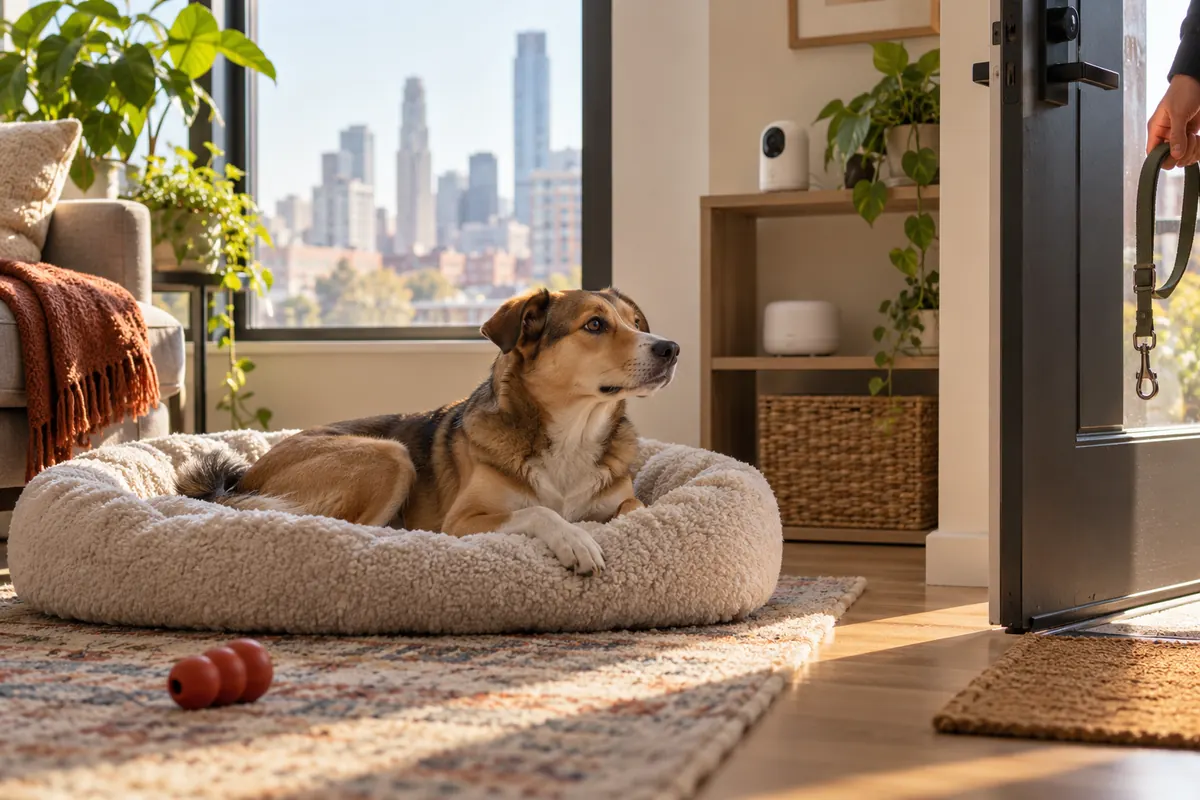
You do not need a yard or spare room to provide comfort. Choose a familiar bed, accessible water and a clear, dog-proofed area away from the busiest noise when practical.
Meet walking, sniffing and toilet needs before a focused rest period. Without a yard, allow time for the elevator journey and street toilet break rather than rushing straight into a departure.
A gate may help manage access only if your dog is comfortable with it. Never turn a closed room into a place where a panicking dog is left alone.
A safe rubber food toy is enrichment, not treatment for panic. Some anxious dogs will not eat; others eat briefly and worry afterward. Supervise new toys and check the full absence on video.
An emergency plan
Write down the person to call if the subway stops, traffic locks up or you are kept late. Confirm that they can stay with the dog, not simply look through the doorway.
Give the authorized backup your contact details, veterinary contact and clear handling notes. Explain that a distressed dog may rush the apartment door and needs a careful entry.
Agree on how they confirm arrival and what happens if they cannot gain access. Do not assume building staff can provide pet care; ask what help, if any, they are able to offer.
If footage shows immediate danger, contact someone who can reach the dog promptly and seek veterinary advice. A camera cannot prevent an escape or replace a person on site. Never tell a carer to leave a panicking dog shut in a room or crate.
City apartment checklist
Dog Separation Anxiety in a City Apartment: A US Owner's Plan: city apartment checklist
- Record an easy departure before increasing difficulty.
- Practice the apartment doorway before the elevator ride.
- Allow for elevator waits and stops.
- Calculate the full commute and workday gap.
- Arrange suitable company beyond current comfort.
- Trial the walker, sitter or daycare arrangement.
- Confirm front-desk and written-permission procedures.
- Test keys, fobs and approved entry routes.
- Check building and local rules about lockboxes.
- Choose a familiar, dog-proofed resting area.
- Provide accessible water and a comfortable bed.
- Keep camera equipment and cords out of reach.
- Save a nearby backup carer's contact details.
- Confirm that the backup can enter and stay.
- Review recordings and neighbor observations together.
- Ask management about disruptive planned work.
When to get extra help
Contact your vet early if your dog is not eating, suddenly changes behavior, seems unwell or shows severe panic. Health can affect how a dog copes, even when the problem appears linked to departures.
Injury, self-harm and escape attempts at the apartment door need prompt veterinary attention. Avoid repeating the unsafe situation while arranging support.
A qualified, reward-based behavior professional can help when the dog cannot handle tiny practice steps or the building routine makes progress difficult. Share clips and a realistic account of your commute and care options.
Never punish barking, accidents or damage, use bark-control devices or leave the dog to cry until quiet.
Helpful products
Picks on this page are a research-based assessment of features and intended use — not hands-on testing. We earn a small commission if you buy through the Amazon links on this page, at no extra cost to you. Affiliate disclosure
| Product type | Why it helps | Notes |
|---|---|---|
| Pet camera: Furbo 360° camera | Shows how your dog copes during building departures and care gaps | Our top pick. Limitation: it needs Wi-Fi and only shows what happens; it cannot comfort your dog or reach your apartment if transit stalls. Alternative: an old phone or laptop on a video call. |
| White noise machine: Yogasleep Dohm Classic | May soften some hallway and street sounds | Limitation: it masks some sound but does not treat separation anxiety, and it will not block sirens or construction bangs; it plugs into a standard US 120V outlet. Alternative: a fan or calm music you already own. |
| Rubber food toy: KONG Classic | Offers enrichment during comfortable quiet time | Limitation: it is enrichment, not a treatment for panic, and some anxious dogs will not eat; eating does not prove the full absence is comfortable. Alternative: scatter part of a meal on a mat. |
Swipe the table sideways to see every column.
Bottom line
A workable city plan combines tiny, observed departures with reliable care and authorized building access. Account for the entire commute, keep a nearby backup and adjust quickly if your dog struggles. The goal is comfortable alone time, not simply getting out of the building quietly.