On this page
- Is it separation anxiety or just adjusting to a new person?
- Adjusting to the change or separation distress?
- Before the move-in
- Before move-in checklist
- Who leaves when: planning the new routine
- Shared household care plan
- Sharing care and alone-time practice
- Keeping the dog's safe space
- Tiny absences: building alone time step by step
- First month together checklist
- Mistakes to avoid
- When to get extra help
- Helpful products
- Bottom line
A partner or roommate moving in brings new sounds, smells, schedules and habits. Your dog may enjoy the extra company, need time to adjust or become unsettled when familiar routines change.
If your dog starts following you more closely or struggles when everyone leaves, take a breath and observe. We are dog owners, not vets or trainers. A calm household plan can help you understand what your dog needs and when to seek support.
Is it separation anxiety or just adjusting to a new person?
A dog may need time to become comfortable with someone sharing their home. They might watch the new person, move to another room or follow their usual caregiver more closely. Those reactions do not automatically mean separation anxiety.
Separation-related distress is more likely when worrying behavior occurs as a person leaves or while the dog is alone. Barking, howling, pacing, panting, drooling, toileting indoors or damage around exits can be clues, particularly when several signs appear together.
A dog might also be comfortable with the new person until their favorite person leaves. That is different from a dog who settles with either person but struggles when the house is empty. Our dog attached to one person guide explores that pattern.
Use a camera to observe short absences. Behavior and body language provide more useful information than guessing from the dog's greeting when you return.
Furbo 360° Dog Camera
A pet camera shows how your dog copes when both household members leave, helping you plan practice and care.
Check price on AmazonWe earn a small commission if you buy through this link, at no extra cost to you. Disclosure
Adjusting to the change or separation distress?
The table offers possibilities, not a diagnosis. Pain, illness, unfamiliar sounds and confinement can also affect behavior.
| What you see | Likely adjusting to the change | Likely separation distress |
|---|---|---|
| Following you | Stays close but can rest independently | Becomes upset whenever you move out of reach |
| Watching the new person | Observes from a distance, then relaxes | Distress starts or escalates when a particular person leaves |
| Vocalizing | Brief sound during a new household activity | Persistent barking or howling after departure |
| Movement | Explores changed rooms, then settles | Repeated pacing after someone leaves |
| Food toy use | Eats and later rests comfortably | Abandons familiar food when left |
| Door behavior | Checks the doorway and moves away | Scratches, chews or repeatedly pushes at exits |
| Toileting indoors | Changed schedule or missed toilet break | Accidents during short absences alongside other distress |
| Quiet behavior | Loose posture and comfortable rest | Trembling, hiding or rigid stillness |
Swipe the table sideways to see every column.
A dog who stiffens, growls or snaps near the new person may be communicating discomfort about that interaction. Give them space and seek qualified help rather than assuming the problem is separation anxiety.
Before the move-in
If possible, give your dog opportunities to meet the new person before they move in. Choose calm, short visits and let the dog decide whether to come closer.
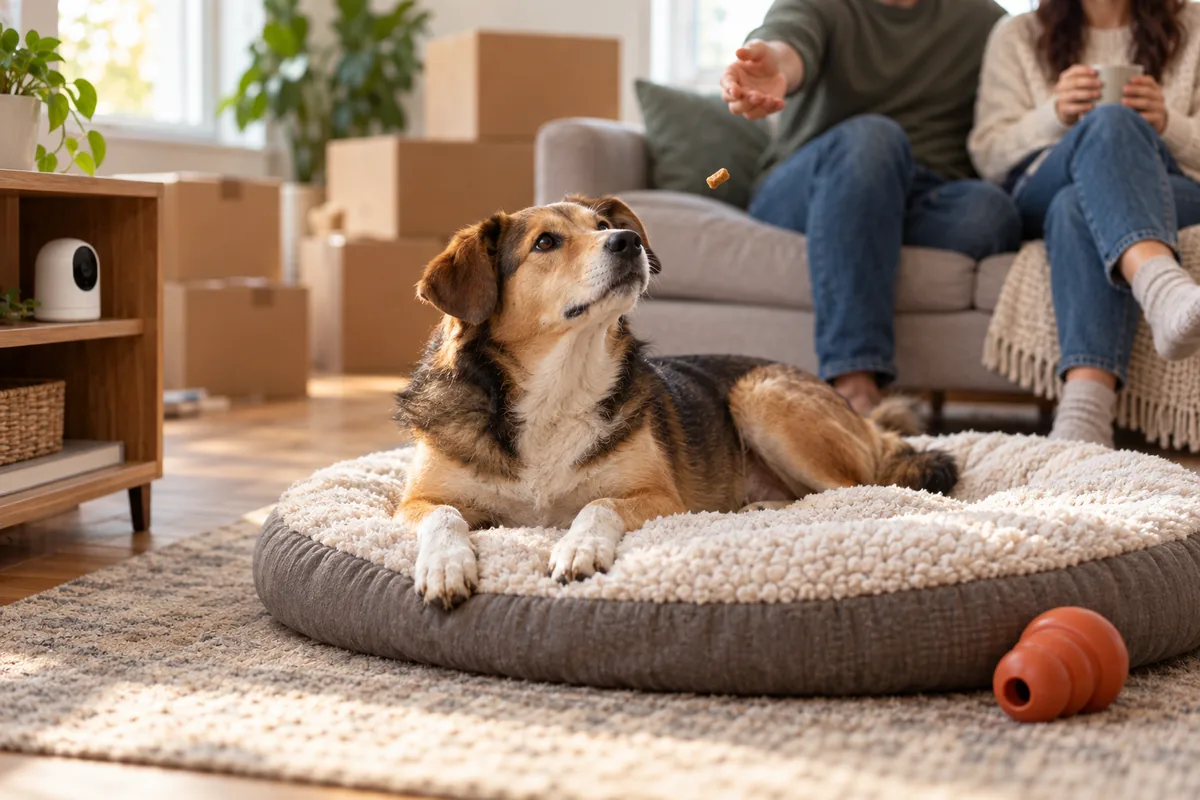
The new person can sit sideways, avoid reaching over the dog and gently toss a treat toward them or slightly away. This gives the dog a chance to enjoy the food without feeling pressured to approach. If food creates tension or guarding, stop and get professional guidance.
A short, pleasant walk or familiar game may help if the dog already feels comfortable enough. Forced cuddles, cornering or repeatedly calling the dog over can make the introduction harder.
Agree on feeding, walks, furniture rules, cue words and quiet-space boundaries before the move. Keep changes gradual where possible. If the household is also changing address, our dog anxiety after moving guide can help.
Before move-in checklist
Separation Anxiety When a New Partner or Roommate Moves In: before move-in checklist
- Plan calm, short introductions if possible.
- Let the dog choose whether to approach.
- Agree that no one will force petting or cuddles.
- Keep the dog's usual meals and toilet breaks in mind.
- Choose shared cue words for everyday routines.
- Agree on furniture and bedroom access.
- Identify a quiet resting place that stays the dog's own.
- Plan where moving boxes and supplies will go.
- Compare work, travel and departure schedules.
- Arrange company for gaps the dog cannot manage.
- Set up a camera with cables out of reach.
- Decide how both people will record observations.
Who leaves when: planning the new routine
Write down the actual times each person leaves and returns, including commuting, errands and unexpected delays. A new roommate's presence may reduce some alone time, but a change in work patterns can create longer empty-house periods too.
Ask what the dog currently handles comfortably. Do not assume someone being home all summer, or previous success in a different routine, predicts what will happen now.
If the dog becomes distressed when their usual person leaves, the new person's presence may not yet be enough. Let the dog build trust at their own pace and watch how they respond during very short, supported practice.
For general needs, see our how long can a dog be left alone guide. A dog experiencing separation distress may need company even during much shorter gaps.
Shared household care plan
This is an example to adapt to your dog and schedules. Change the plan if the dog is uncomfortable with a particular activity or person.
| Task | Who does it | When | Notes |
|---|---|---|---|
| Example: morning walk | Usual caregiver | Before work | Use the familiar route and allow sniffing |
| Example: prepare breakfast | New household member | Morning | Usual caregiver serves it initially if needed |
| Example: evening play | New household member | When the dog chooses | Keep it short and stop if the dog moves away |
| Example: tiny absence practice | Both people | On a calm day | One monitors live video and records behavior |
| Example: longer workday cover | Agreed sitter or household member | When needed | Confirm the dog is comfortable with that carer |
| Example: review notes | Both people | After practice | Record what happened without guessing |
Swipe the table sideways to see every column.
Sharing care and alone-time practice
The new person can gradually become involved in enjoyable routines. Start with low-pressure jobs, such as placing a meal bowl down while the usual caregiver is nearby or preparing a food toy the dog already knows.
Move slowly. If your dog turns away, freezes, refuses familiar food or retreats, give them more space. The new person does not need to win them over immediately.
As the relationship develops, the new household member might join a walk, hold the leash when appropriate or lead a familiar game. Both people should use kind, consistent cues and avoid competing for the dog's attention.
Practice different situations separately: the usual caregiver leaving while the new person stays, the new person leaving while the caregiver stays, and both people leaving. A dog may cope differently in each situation.
Our velcro dog guide offers ideas for supporting independence while maintaining a warm bond.
Keeping the dog's safe space
Preserve a comfortable bed, open crate or quiet room where the dog can rest without being approached. The space should already feel safe to the dog; a new bed alone does not create that feeling.
Agree that neither person will pull the dog out, crowd them or use the space as a place for unwanted interactions. Keep access to water and a clear route to the rest area.
During unpacking, put boxes, cords and household supplies out of reach. If your dog prefers a different quiet spot, consider whether that location can be made safe.
A barrier may help with household management only if the dog remains comfortable behind it. Never shut a panicking dog in a crate and leave.
Tiny absences: building alone time step by step
The ASPCA's separation anxiety advice describes treatment as helping a dog tolerate being alone by gradually getting used to short absences. While you work on it, the ASPCA suggests avoiding leaving the dog alone except during training, for example by having a family member, friend or sitter stay with them, or using doggy daycare.
- Meet the dog's needs first. Offer a toilet break, suitable activity, water and time to settle.
- Agree on who is practicing. Begin with the departure your dog finds easiest.
- Start with a tiny gap. This might mean one person stepping into another room or outside for a few seconds.
- Watch the dog's response. Use a live camera for actual departures; the person leaving should stay close enough to return promptly.
- Return before worry develops. If the dog becomes distressed, return calmly rather than waiting for silence.
- Repeat comfortable attempts. Mix in easy gaps and increase gradually only when the dog remains relaxed.
- Adjust the setup when needed. Shorten the next attempt if the dog struggles, and arrange company for longer absences.
If food helps the dog settle, use a familiar toy. Check what happens when it is finished: eating briefly does not prove the dog can cope with the rest of an absence.
Our separation anxiety training plan covers the full process, and our departure cues guide explains how to practice around keys, bags and shoes.
First month together checklist
Separation Anxiety When a New Partner or Roommate Moves In: first month together checklist
- Review the dog's appetite, sleep and daily routine.
- Keep introductions and affection voluntary.
- Give the dog access to their quiet space.
- Notice whether the dog relaxes near the new person.
- Share enjoyable care tasks at the dog's pace.
- Keep meals, walks and toilet breaks predictable.
- Record who leaves and who stays during practice.
- Watch short absences on camera.
- Note the first signs of worry and when they appear.
- Keep practice within the dog's current comfort.
- Confirm company for longer unavoidable absences.
- Review the shared plan together and make it easier when needed.
- Contact the vet about recent behavior changes.
Mistakes to avoid
Do not interpret every change as “jealousy” or assume your dog is trying to control the household. Focus on what you can observe and what makes the situation easier.
Avoid forcing the dog to greet the new person or using treats to lure them into close contact they are trying to avoid. Do not punish growling: it is information that the dog needs space.
Never scold accidents or damage, use bark-control devices, or leave a distressed dog to cry until quiet. Do not test the dog with a long absence simply because another person has moved in.
Do not assume a new housemate can safely supervise the dog alone before both are comfortable. Build familiarity first and seek professional help if there is guarding or tension.
When to get extra help
Dogs Trust's separation anxiety advice explains that changes in behavior are often influenced by physical health, so see your vet if your dog's behavior has recently changed.
Contact your vet promptly for injuries, escape attempts, persistent food refusal or signs of illness. A qualified, reward-based behavior professional can help if distress begins quickly, practice is not improving or the household cannot arrange safe care.
If your dog growls, snaps or guards food, furniture or a person, keep everyone safely apart and seek professional guidance. Do not punish the warning or force another interaction.
A household change can overlap with other transitions. Our breakup and shared custody guide and new baby guide cover situations with different care needs.
Helpful products
Picks on this page are a research-based assessment of features and intended use — not hands-on testing. We earn a small commission if you buy through the Amazon links on this page, at no extra cost to you. Affiliate disclosure
These picks are chosen from research, not from personal product testing, and none of them replaces company or a gradual training plan.
| Product type | Why it helps | Notes |
|---|---|---|
| Pet camera: Furbo 360° camera | Shows how the dog copes when both people leave | Our top pick. Limitation: it needs Wi-Fi and only shows what happens; it cannot comfort your dog. Alternative: an old phone or laptop on a video call. |
| Stuffable rubber food toy: KONG Classic | Lets the new person help prepare a familiar activity | Limitation: an anxious dog may ignore food when alone, and it only lasts a short time. Alternative: scatter feeding on a familiar mat or a supervised snuffle game. |
| Soft round bed: Best Friends by Sheri donut bed | Gives the dog a comfortable place of their own | Limitation: it is only a comfort item, not a fix for anxiety, and some anxious dogs chew beds, so watch at first. Alternative: a washable blanket or old T-shirt with familiar smells, if safe for the dog. |
Swipe the table sideways to see every column.
Our best pet camera guide explains ways to observe alone time. Agree on household privacy and keep camera cables safely out of reach.
Bottom line
Give your dog time to adjust to the new person, protect their quiet space and make a shared plan for care and departures. Use short, comfortable practice and suitable company while you learn what your dog can handle. If distress persists or safety is a concern, involve your vet and a qualified behavior professional.